Appliance
Maytag range hoods
The smallest branch in this catalog — 43 pages and three numbered conditions — and the appliance most likely to be the microwave above the range rather than a hood at all. On this make the over-the-range microwave carries the ventilation for most kitchens, so a hood call here begins by establishing which appliance is actually over the cooktop. Where there is a dedicated hood, the failures are ordinary and mostly mechanical: the fan motor, the switch, the light, the damper and the duct behind it.
- 1 symptoms we are called out to
- From $89 diagnostic, credited to the repair
- 59 cities and neighborhoods covered
- OEM parts available on order
The short version
What this equipment is, for a repair
Configurations
Under-cabinet and wall-mount · ducted or recirculating
Access
Planned before the visit, not discovered on arrival
Parts
OEM, available on order
Diagnostic
From $89, credited to the repair
What goes wrong with it
Symptoms we are called out to on Maytag range hoods
Each one covers the likely causes in the order they are worth checking, and what to do in five minutes before booking anything.
-
The fan runs and the kitchen still fills with smoke Range hood not pulling air
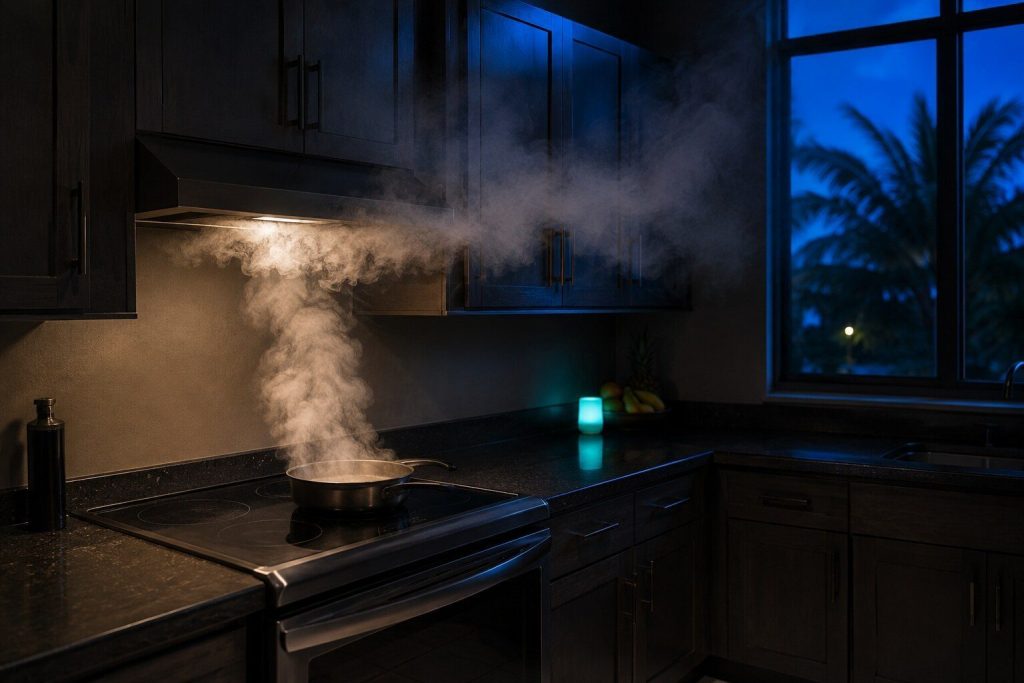
A hood that runs and does not clear the air has either lost its path to the outside or never had one. The second is more common than people expect — a great many hoods in this region recirculate through a filter rather than venting outdoors, and a recirculating hood with a spent filter does almost nothing at all.
- Find out first whether the hood vents outside or recirculates — the repairs are different
- An F or a C on the display is a filter reminder on a timer, not a problem with the hood
- A charcoal filter on a recirculating hood is a consumable, not a part
What we do on it
Repairs we carry out on Maytag range hoods
Starting figures for this equipment in South Florida. The exact cost is confirmed after an on-site diagnostic — and this is not the whole list of what can go wrong, so call if your problem is not here.
-
from $89 Diagnostic visit
We find out what is wrong before anybody quotes a part, and on this make that means two different visits depending on which half of the kitchen we are in. A washer or an oven will usually be showing something, and the first ten minutes are spent reading it. A refrigerator or a freezer will be showing nothing at all, because this maker publishes almost no codes for cold, and those minutes go on thermometers instead. The fee comes off the bill when you go ahead with the work.
- Read first where the machine talks, measure first where it does not
- Age is established early: these machines are routinely older than the kitchen
- Credited toward the repair
-
from $119 Appliance maintenance
The visit that stops the other visits, and on equipment bought to last it is the one that pays for itself twice over. The list is short and specific: the condenser at floor level in a humid kitchen, the dryer duct that gets longer every year in effect if not in fact, the seals this climate works harder than the manual assumed, and the drain that must not stand. None of the four announces itself, and all four are cheaper to keep than to repair.
- Condenser, seals, drains, vents and leveling, on every appliance in the run
- The intervals are set to this climate rather than to the manual's calendar
- You keep a written note of what is aging and roughly when it will matter
-
from $139 Appliance installation
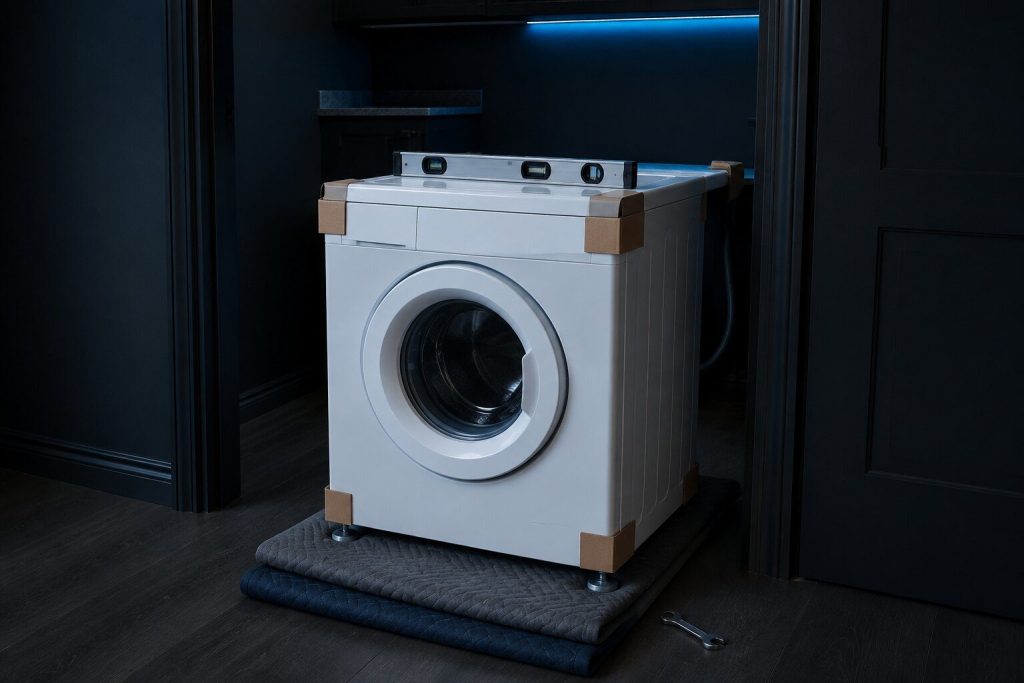
Fitted against the maker's own figures rather than pushed into a hole and switched on. There is a published cutout, a required clearance, an anti-tip fixing and a water connection, and equipment installed to those figures gives years of quiet service. Installed without them, it generates precisely the calls the rest of this site describes: doors that will not seal, coils with nowhere to breathe, laundry that never comes out dry.
- Cutout, clearance and anti-tip against the maker's published figures
- The dryer duct is inspected and measured at installation, not after the first complaint
- Run under load before we leave, not plugged in and left
-
from $265 Appliance control board repair
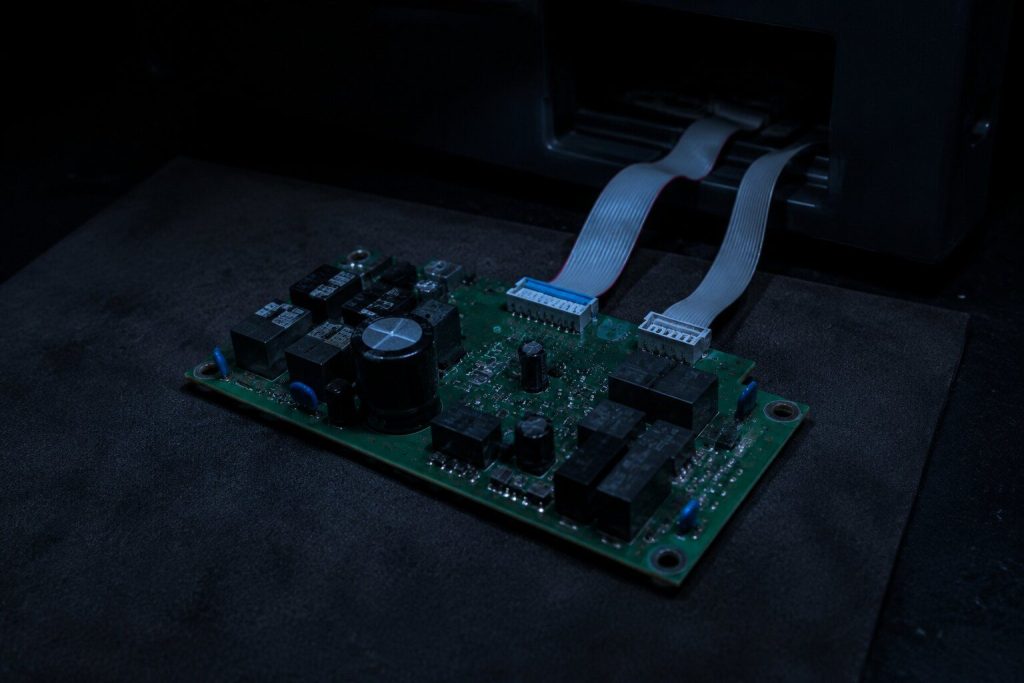
Everybody reaches for this part first, and the manufacturer's own documentation asks that it be proved innocent before it comes out. One control architecture runs across this whole corporation, which is why a letter-and-number on a range looks so much like one on a washer — and why a board diagnosed by resemblance rather than by measurement gets replaced perfectly well and changes nothing. Boards seldom die of nothing, and whatever killed this one is still in the appliance when the new one goes in.
- Proved before it is condemned: supply, harness and the connections into it
- A browned connector or a pin backed out of its housing is cheap; a board is not
- Programmed to your model afterwards, or the appliance behaves oddly in ways nobody links back
-
from $145 Over-the-range microwave vent service
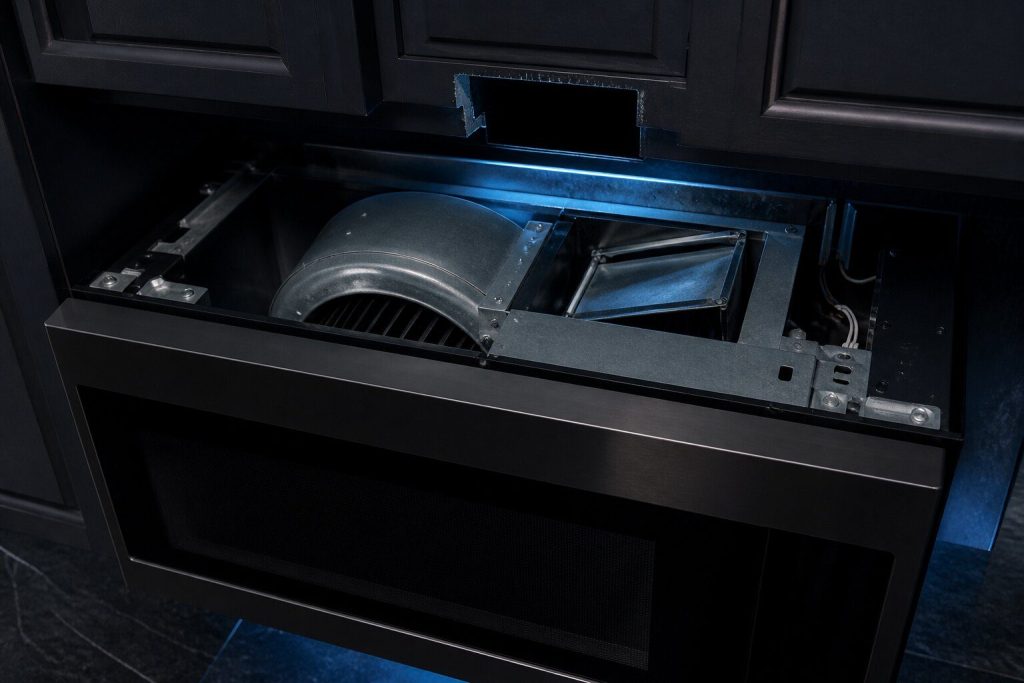
On most Maytag kitchens this appliance is the hood, which is why it gets a row of its own. Blower, damper, grease filters and — on a recirculating installation — the charcoal filter that nobody is told is a consumable. Most of the calls that arrive as smoke in the kitchen are about this half of the machine rather than the cooking half, and most of them are cheaper than the owner expects.
- This is the hood on most kitchens with this badge in them
- Grease filters and the charcoal filter first — both are consumables
- A fan that starts by itself is usually the appliance working correctly
-
from $145 Range hood repair
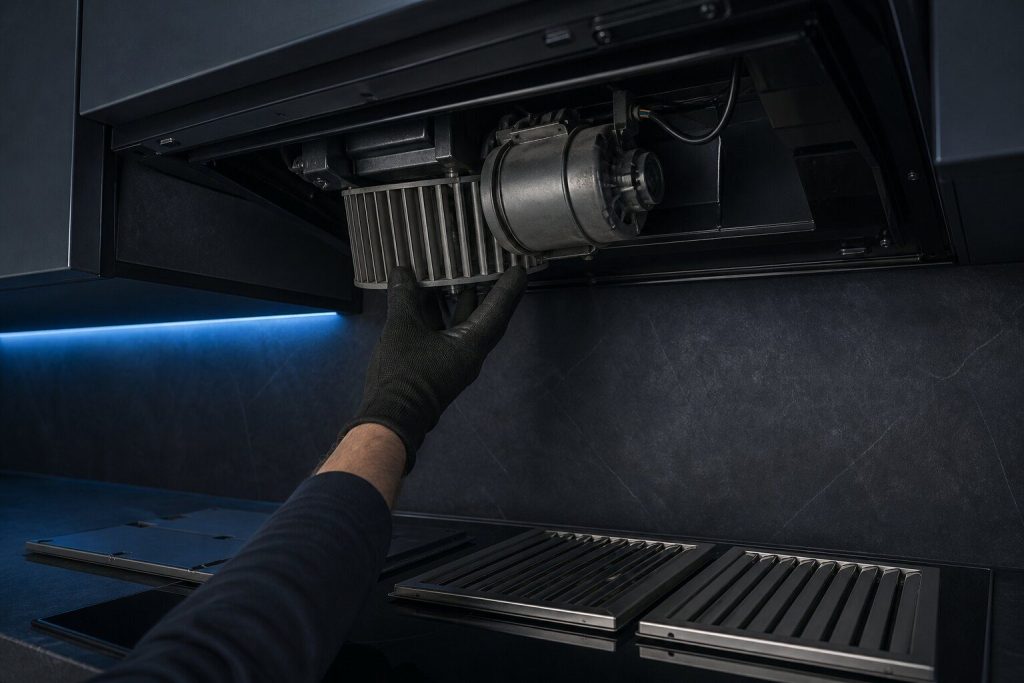
Three published conditions across forty-three pages, so this is diagnosis rather than reading. The failures are ordinary and mostly mechanical — motor, capacitor, switch, lamps and the duct — and the first question is which appliance is actually over your cooktop, because on this make it is more often the microwave doing hood duty than a hood.
- 43 pages and three published conditions: nothing to read, so it is measured
- The first question is which appliance is actually over the cooktop
- A recirculating hood with a spent charcoal filter is not a repair
In more detail
About Maytag range hoods
The appliance that is often another appliance
Most Maytag kitchens do not have a dedicated hood. The over-the-range microwave carries the ventilation — a fan, a damper, a light and either a duct to the outside or a charcoal filter and a grille back into the room — and that is why 67 of this make's microwave code pages exist while the hood branch has three. So the first question on a ventilation call is which appliance is over the cooktop, and the answer changes both the diagnosis and the price.
Ducted or recirculating, and why it decides the complaint
Ducted means the air leaves the building. Recirculating means it is filtered and handed back to the kitchen. The second is far more common in condominiums here, where there is nowhere to duct to, and it has a consequence owners are rarely told: its charcoal filter is a consumable with a life of months, and once it is exhausted the hood is a fan making noise. That is not a repair, and we say so.
This article is based on:
- Official manufacturer documentation
- Internal repair procedures
- Technician repair history
- Company quality standards
Before you book
Questions about Maytag range hoods
It runs, and the smoke stays in the room anyway.
Filters and duct, in that order, and both are usually the owner's to fix. Grease filters over a range in daily use need washing far more often than anybody washes them, and a loaded filter halves the airflow without changing the noise at all. After that it is the duct: a long horizontal run, a crushed section behind the cabinet, or a damper that no longer opens fully against it. A recirculating hood with an exhausted charcoal filter is the third version and the cheapest.
The light works and the fan does nothing.
That separates the supply from the motor, which is useful: power is reaching the appliance. It is then the switch, the control or the motor itself, and on an over-the-range microwave doing hood duty it can also be the thermostat that runs the fan automatically when the range below gets hot. Say which appliance you actually have over the cooktop — it changes the answer completely.
Is it worth repairing a hood?
Usually, and more often than people expect, because the common failures are a motor, a switch or a lamp rather than anything electronic. The case where it is not is a recirculating hood in a kitchen that would be better ducted — at that point the honest conversation is about the installation rather than the appliance.
Where we do it
Across Miami-Dade, Broward, and Palm Beach
Same terms everywhere we go: an on-site diagnostic first, the price agreed in writing, and the exact figure confirmed once we have seen the unit.
Neighborhoods people ask for by name