Appliance
Maytag washers
This is the deepest branch of Maytag's own support base and the oldest thing the badge does — the company has been building washing machines since 1907. 479 pages, and 158 of them are code pages: 86 on the top-load machine, 62 on the front-load. That is more numbered diagnosis than the whole refrigeration half of the catalog gets, and it changes how a washer call starts. On most makes we ask what the machine is doing; here we ask what it is showing, because it will usually be showing something. The top-loader is the one Maytag is bought for and the one that outlives its kitchen — which is also why so many of the machines we open here are older than the room around them.
- 6 symptoms we are called out to
- From $89 diagnostic, credited to the repair
- 59 cities and neighborhoods covered
- OEM parts available on order
The short version
What this equipment is, for a repair
Configurations
Top load · front load · commercial-grade residential
Access
Planned before the visit, not discovered on arrival
Parts
OEM, available on order
Diagnostic
From $89, credited to the repair
What goes wrong with it
Symptoms we are called out to on Maytag washers
Each one covers the likely causes in the order they are worth checking, and what to do in five minutes before booking anything.
-
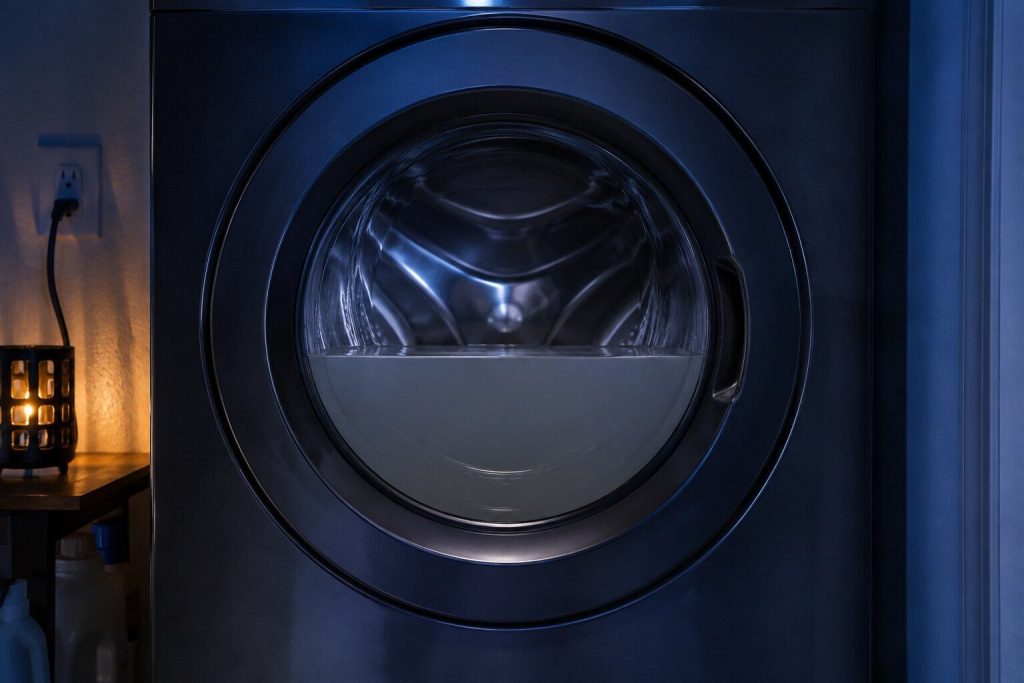
The cycle ended and the tub is still holding water Washer will not drain
A Maytag washer counts the seconds it spends emptying, and when the water has not gone by the time the cycle expected it to, the machine stops and prints a name for it. That name is worth more to us than the puddle is. Get it written down before the power goes off at the breaker, because the display forgets and the standing water does not.
- drn, F9E1 and LF are three labels for the same measurement — water that did not leave on schedule
- A tub that is full at the end of a cycle is a pump or a hose question, and it stays that way until both are cleared
- Front-load machines carry a filter behind the lower panel that most owners have never opened
-
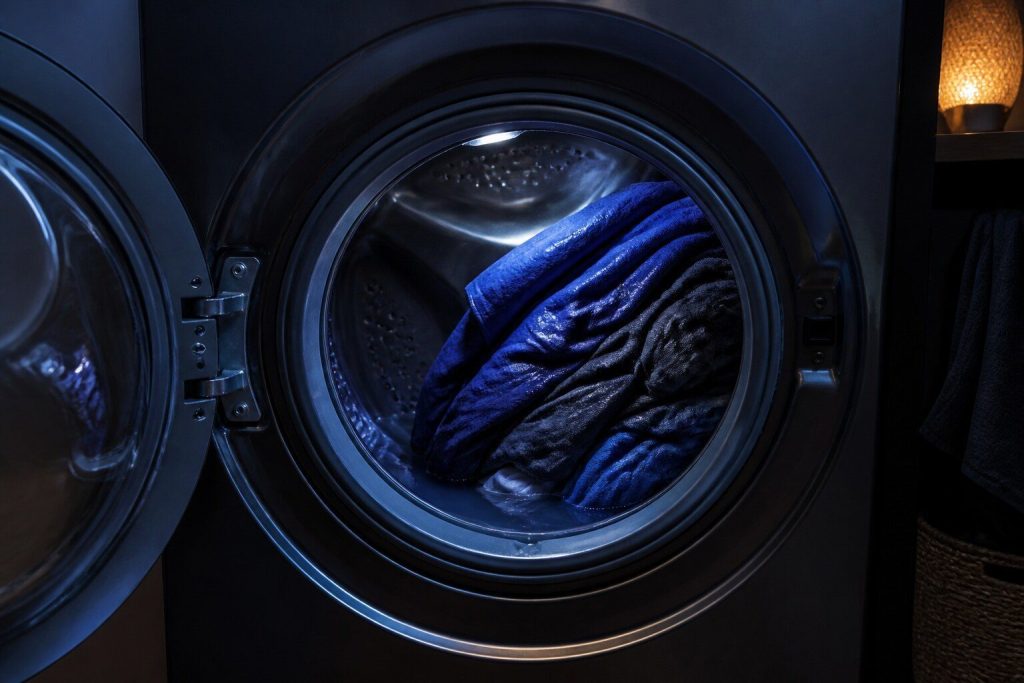
The load comes out soaked and the drum never got up to speed Washer will not spin
A load that finishes sopping wet has usually not failed to spin at all — it has tried, found something it did not like, and given up on purpose. Maytag machines refuse to spin for three different reasons, and they feel identical from outside the door.
- The machine has to drain before it will spin, so a drain problem shows up first as a wet load
- A lid or door that is not locked stops the spin without stopping the wash
- UL and F5E2 both describe balance and lock rather than the motor
-
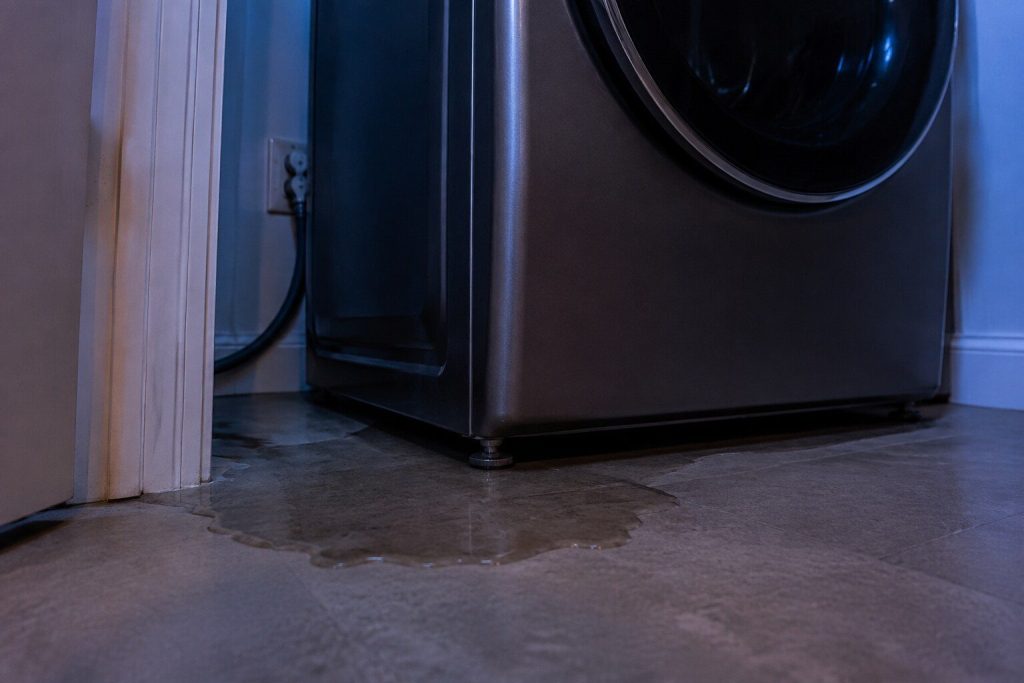
Water on the floor, and it is not obvious where it came from Washer leaking water
Water under a washer travels before it stops, so where you find it is almost never where it left the machine. The useful question is not where the puddle is but when it appears — during the fill, during the wash, or only when the machine empties. Each answer points at a different third of the machine.
- When it leaks matters more than where the water ends up
- Overdosing is a real cause on these machines and shows up as Sud before it shows up on the floor
- A leak on a tile floor in a second-floor laundry closet is worth stopping the same day
-
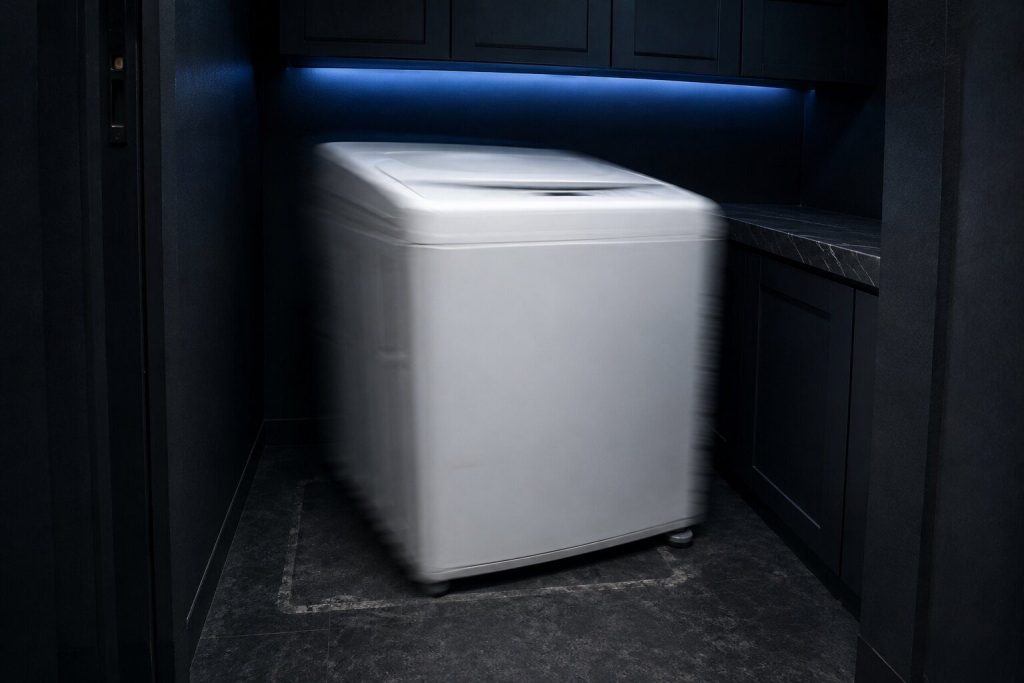
It bangs on the spin and the machine has moved by the end of the load Washer shaking or moving across the floor
A washer that walks is telling you the same thing whether it is six months old or fifteen years old — the basket is moving further than it should. What differs is why. On a new machine it is almost always installation, and on an old one it is almost always suspension. Very little else produces this.
- A new machine that walks was leveled badly or still has its shipping bolts in
- An old machine that walks has worn suspension, and it usually got louder first
- UL is the machine's own word for a load it could not balance
-
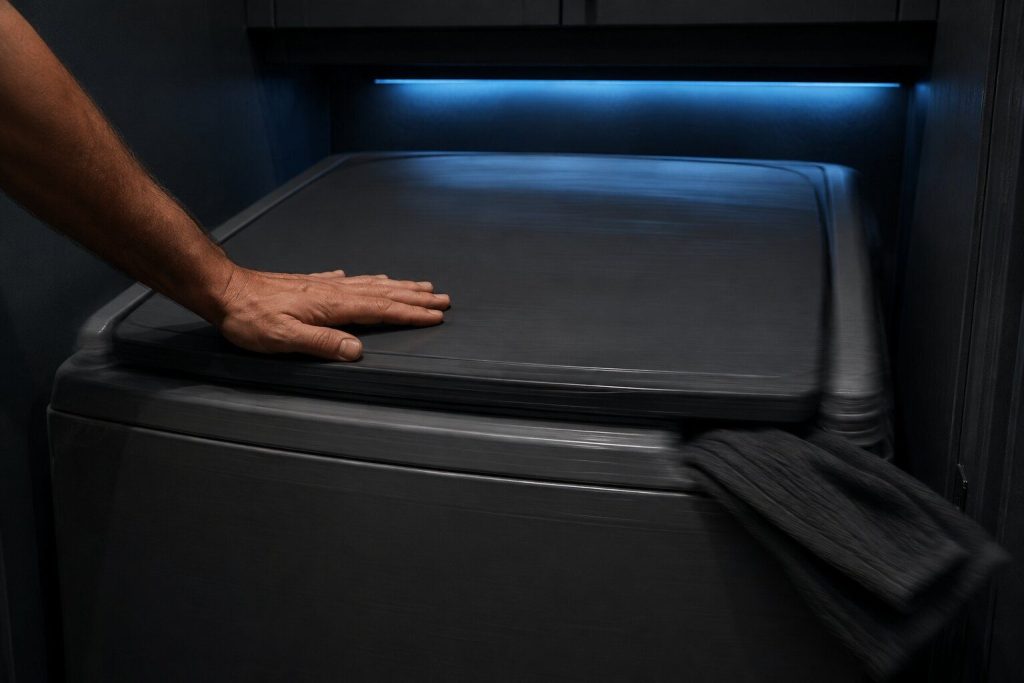
A grinding, roaring or rumbling that arrives with the spin and goes when it stops Washer loud on the spin
Noise on the spin is the one complaint on this badge where the age of the machine changes the answer completely. These get kept a long time, and a bearing that has been talking quietly for a year is a different conversation from a machine that started grinding on Tuesday with a hairpin in the pump.
- A noise that only exists at high speed is a bearing or a bracket, not a pump
- A noise that exists during the drain as well is very often something small and loose
- Bearing noise starts quiet and gets worse over months — the history is part of the diagnosis
-
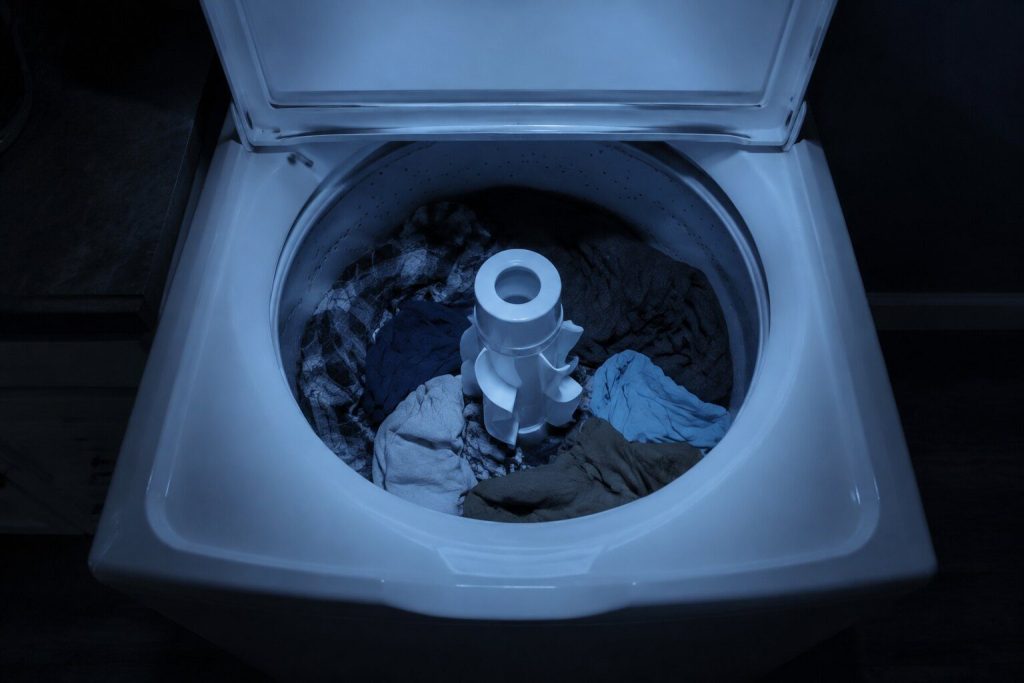
The cycle is selected and nothing happens, or the drum stays dry Washer will not start or will not fill
Two complaints that arrive in the same phone call and are cleared in the same order: is the machine getting power, is it getting water, and is it being allowed to begin. A Maytag washer will not start a cycle it cannot complete, so a machine that sits there is often reporting something rather than broken.
- LF is the machine saying the water took too long to arrive, rather than a verdict on the machine
- A control that has locked itself out looks exactly like a dead machine
- A lid or door that will not report closed stops the cycle before it starts
What we do on it
Repairs we carry out on Maytag washers
Starting figures for this equipment in South Florida. The exact cost is confirmed after an on-site diagnostic — and this is not the whole list of what can go wrong, so call if your problem is not here.
-

from $89 Diagnostic visit
We find out what is wrong before anybody quotes a part, and on this make that means two different visits depending on which half of the kitchen we are in. A washer or an oven will usually be showing something, and the first ten minutes are spent reading it. A refrigerator or a freezer will be showing nothing at all, because this maker publishes almost no codes for cold, and those minutes go on thermometers instead. The fee comes off the bill when you go ahead with the work.
- Read first where the machine talks, measure first where it does not
- Age is established early: these machines are routinely older than the kitchen
- Credited toward the repair
-
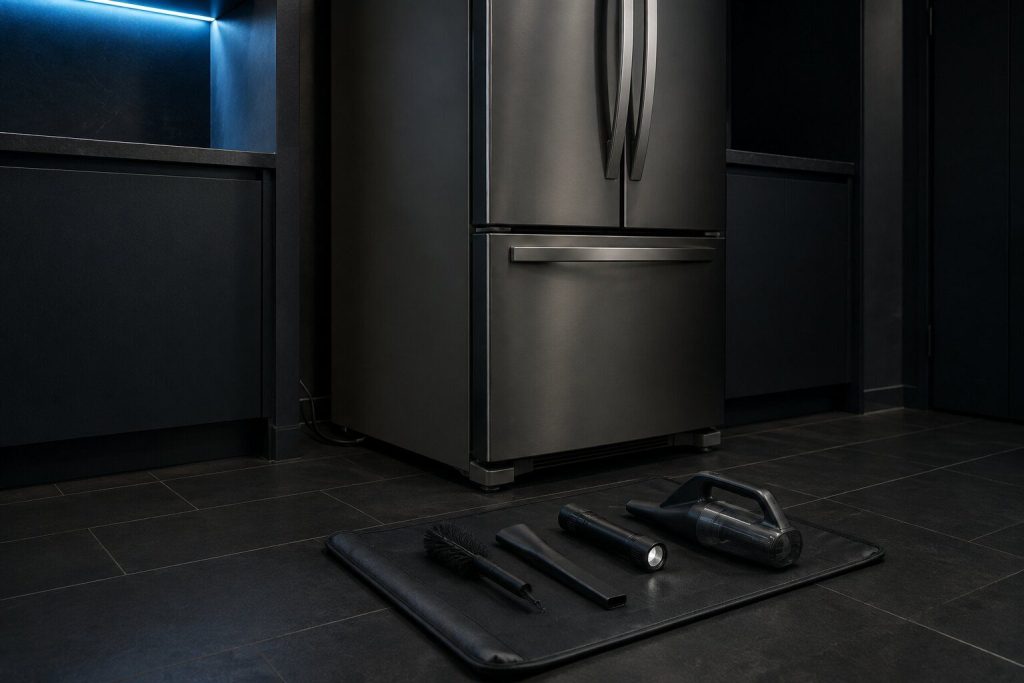
from $119 Appliance maintenance
The visit that stops the other visits, and on equipment bought to last it is the one that pays for itself twice over. The list is short and specific: the condenser at floor level in a humid kitchen, the dryer duct that gets longer every year in effect if not in fact, the seals this climate works harder than the manual assumed, and the drain that must not stand. None of the four announces itself, and all four are cheaper to keep than to repair.
- Condenser, seals, drains, vents and leveling, on every appliance in the run
- The intervals are set to this climate rather than to the manual's calendar
- You keep a written note of what is aging and roughly when it will matter
-
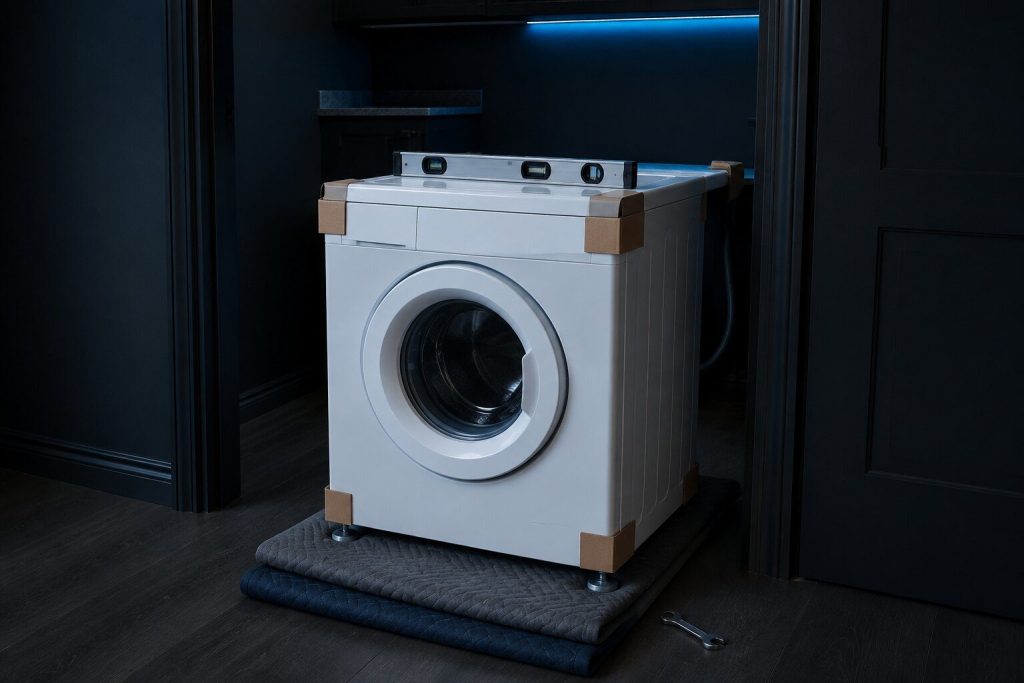
from $139 Appliance installation
Fitted against the maker's own figures rather than pushed into a hole and switched on. There is a published cutout, a required clearance, an anti-tip fixing and a water connection, and equipment installed to those figures gives years of quiet service. Installed without them, it generates precisely the calls the rest of this site describes: doors that will not seal, coils with nowhere to breathe, laundry that never comes out dry.
- Cutout, clearance and anti-tip against the maker's published figures
- The dryer duct is inspected and measured at installation, not after the first complaint
- Run under load before we leave, not plugged in and left
-
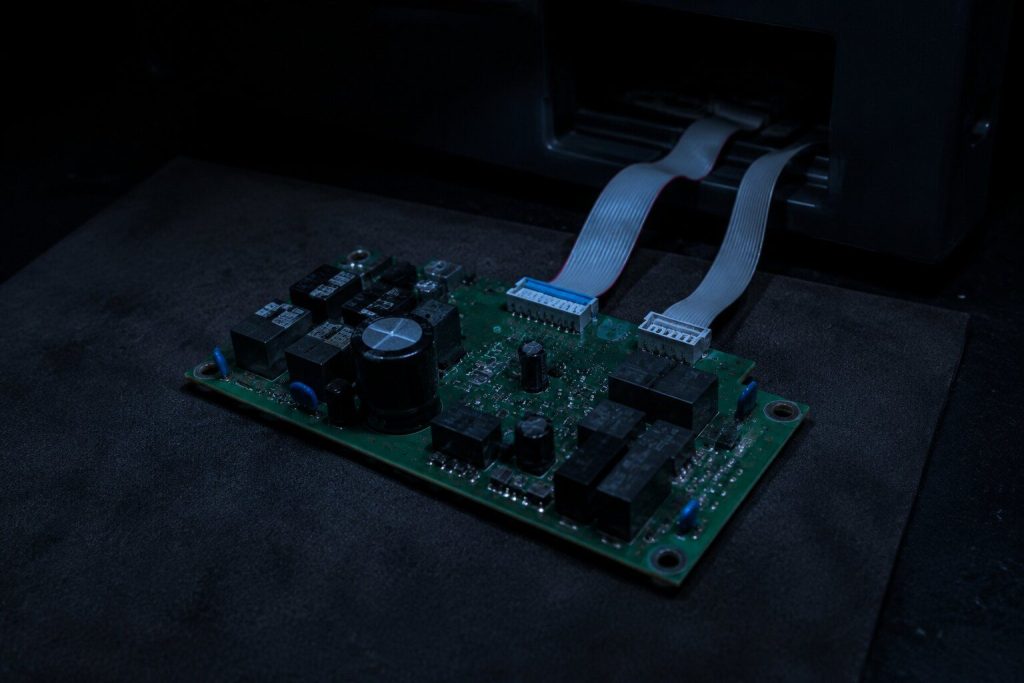
from $265 Appliance control board repair
Everybody reaches for this part first, and the manufacturer's own documentation asks that it be proved innocent before it comes out. One control architecture runs across this whole corporation, which is why a letter-and-number on a range looks so much like one on a washer — and why a board diagnosed by resemblance rather than by measurement gets replaced perfectly well and changes nothing. Boards seldom die of nothing, and whatever killed this one is still in the appliance when the new one goes in.
- Proved before it is condemned: supply, harness and the connections into it
- A browned connector or a pin backed out of its housing is cheap; a board is not
- Programmed to your model afterwards, or the appliance behaves oddly in ways nobody links back
-
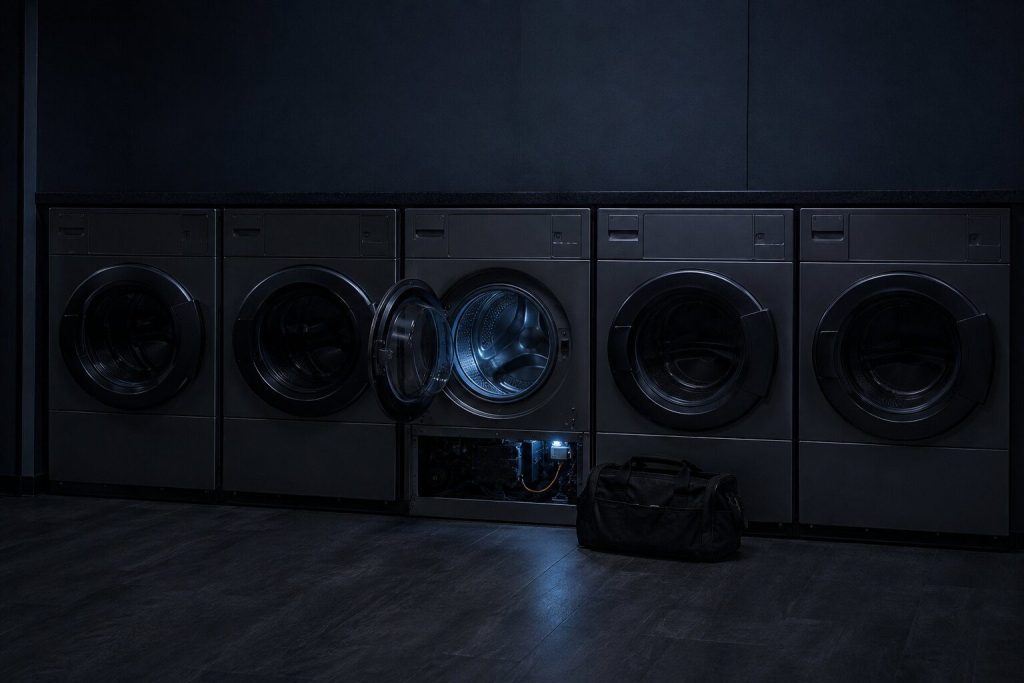
from $159 Commercial appliance repair
This make's commercial line is laundry, and that is what this covers: coin and card washers and dryers in condominium laundry rooms, small buildings, salons and gyms across South Florida. They are not domestic machines with a different badge. They run to a duty cycle, they are opened more often, and their downtime costs somebody money by the hour — so they are scheduled against that rather than against a convenient window.
- Coin and card laundry, which is what this maker's commercial line is
- 142 pages of its own in the maker's base, 39 of them published codes on the dryer
- Scheduled against downtime rather than against a convenient window
-
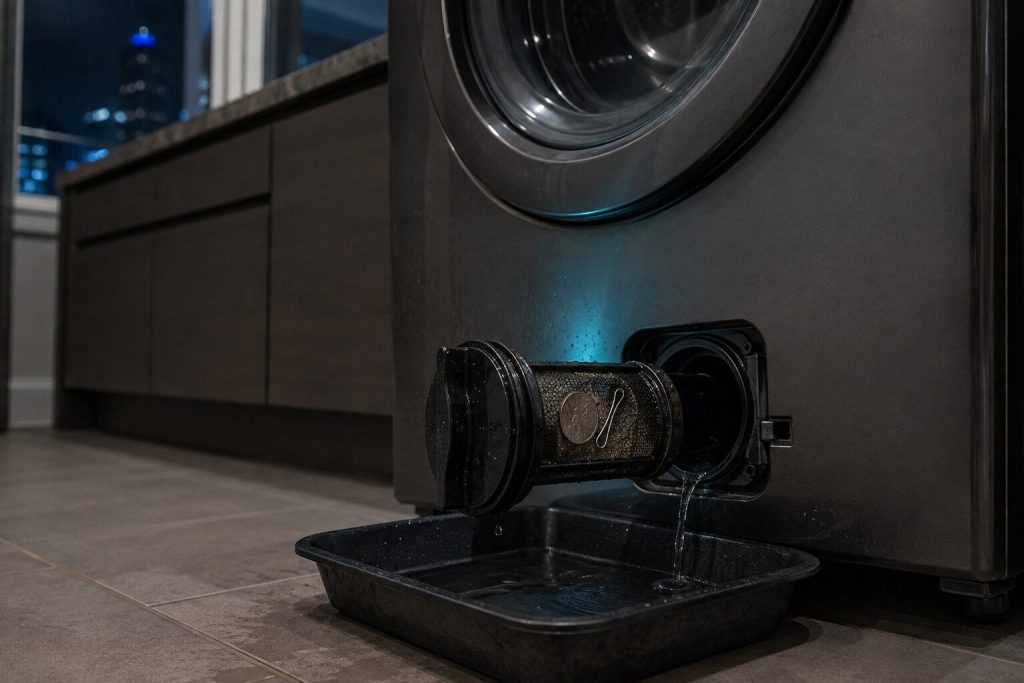
from $175 Washer drain pump replacement
The commonest laundry repair on this make, and one of the cheapest parts behind one of the longer jobs. A machine that stops mid-cycle with a drum of water is usually reporting the pump, the filter in front of it or the hose behind it, and this maker publishes more numbered conditions for washers than for anything else it builds — so there is often something on the panel worth photographing before the power is cut.
- Photograph the panel first: this is the make's most documented appliance
- Filter and hose before the pump — and the coin that got there first
- The standpipe and the sink beside it are checked, because both can defeat the machine
-
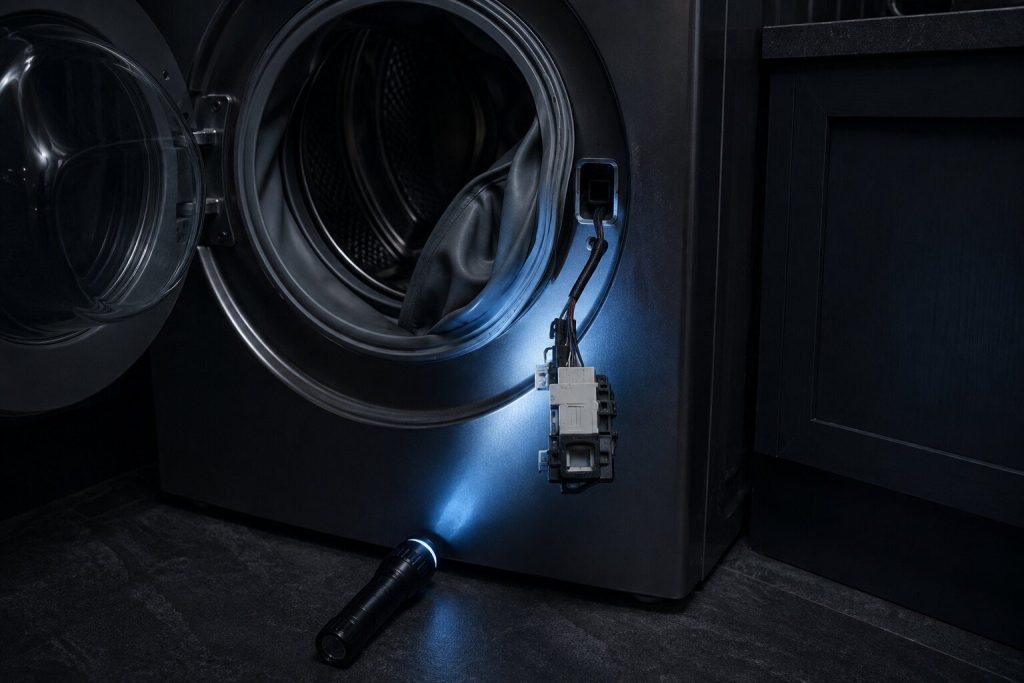
from $145 Washer door lock repair
Front-load machines, where the lock has to hold a door that is carrying its own weight on a hinge. A machine that will not start often believes the door is open; a machine that will not open usually still has water in it and is refusing on purpose. Neither is the same repair, and forcing the door is the one thing that turns an inexpensive part into a panel.
- A door that will not open with water inside is the machine protecting your floor
- Forcing it is the commonest way this repair gets more expensive
- A dropped door is fixed with the lock, or the new lock fails the same way
-
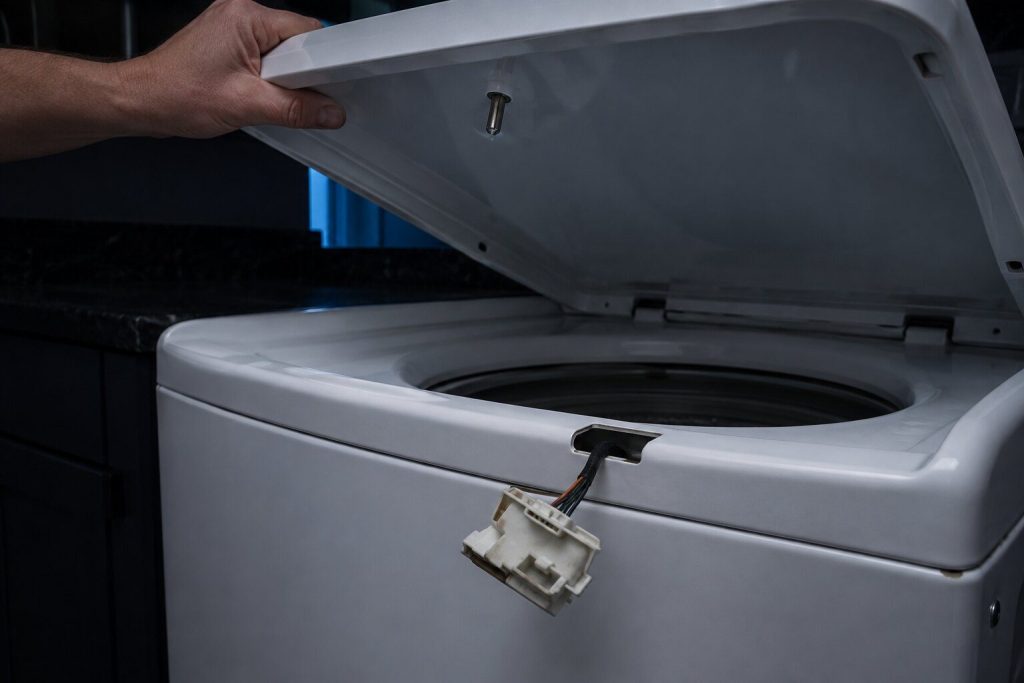
from $139 Washer lid lock and lid switch repair
Top-load machines, and a different part in a different place from the front-load door lock — which is why it has a row of its own rather than being averaged into one. A top-loader will not spin unless it is sure the lid is shut, so a failed lock arrives as a machine that washes and leaves everything soaking. On the older cabinets this is a console-off job.
- A separate part and a separate job from the front-load door lock
- The commonest reason a top-loader washes and will not spin
- On older cabinets the console comes off, which is where the time goes
-
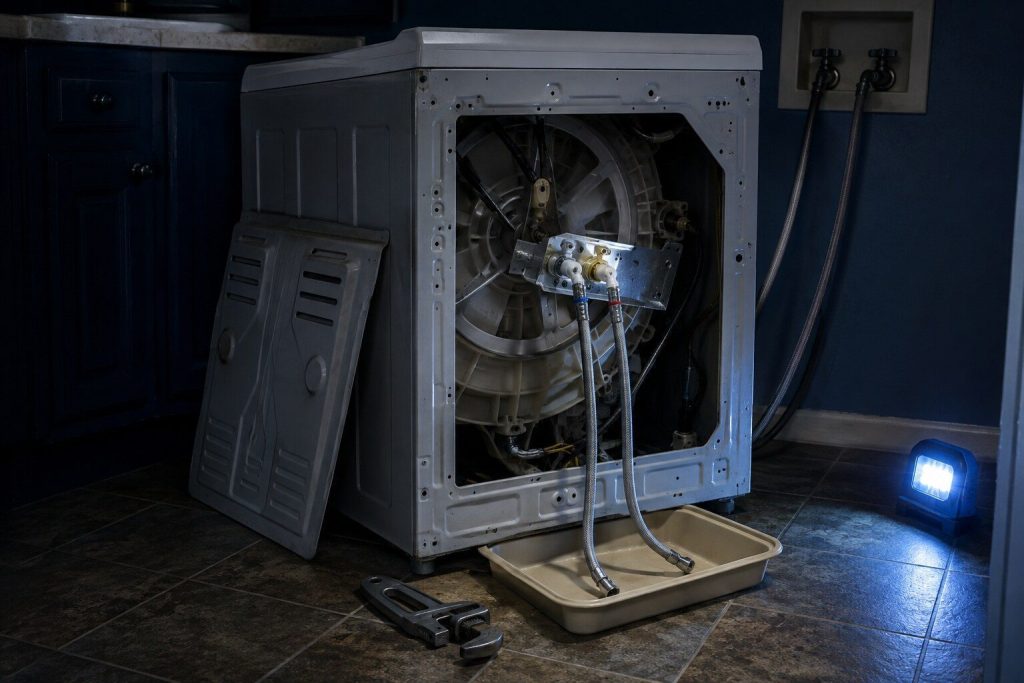
from $139 Washer water inlet valve repair
A machine that fills slowly, fills on one temperature only, or will not fill at all. Most of it is upstream — screens, hoses and shut-offs that have not been turned since the machine was installed — and the valve itself is a modest part. In an older laundry closet the shut-offs are frequently the oldest thing in the room and worth replacing while the machine is out.
- Screens and shut-offs first: they are older than the machine in most closets
- Filling on one temperature only points at one half of the valve
- Measured under pressure, because a valve can pass at rest and stall under load
-
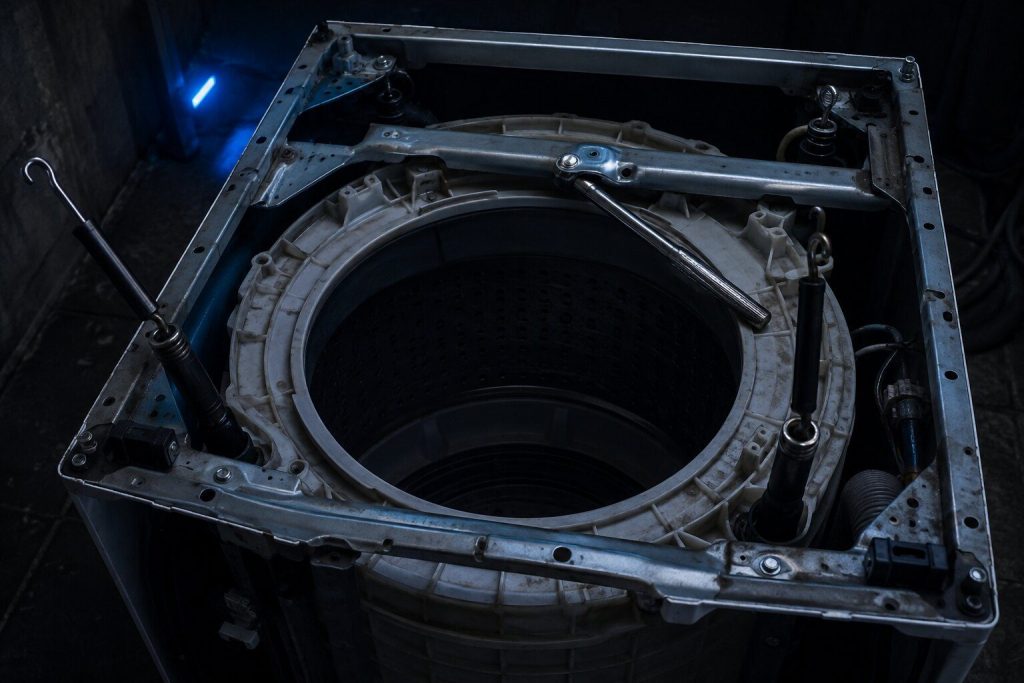
from $195 Washer not spinning and balance repair
A machine that washes and rinses and leaves the load dripping. The first question is whether it is refusing to spin or unable to, and on this make it is refusing far more often than it is failing — a load gathered on one side of the drum will be declined, and a single heavy item has nothing to sit opposite. That is free to demonstrate, and it is demonstrated before anything is quoted.
- Refusing and unable are different, and the first is usually free
- It cannot spin until it has drained, so a drain problem arrives as a spin problem
- Suspension and level are checked on every one of these
-
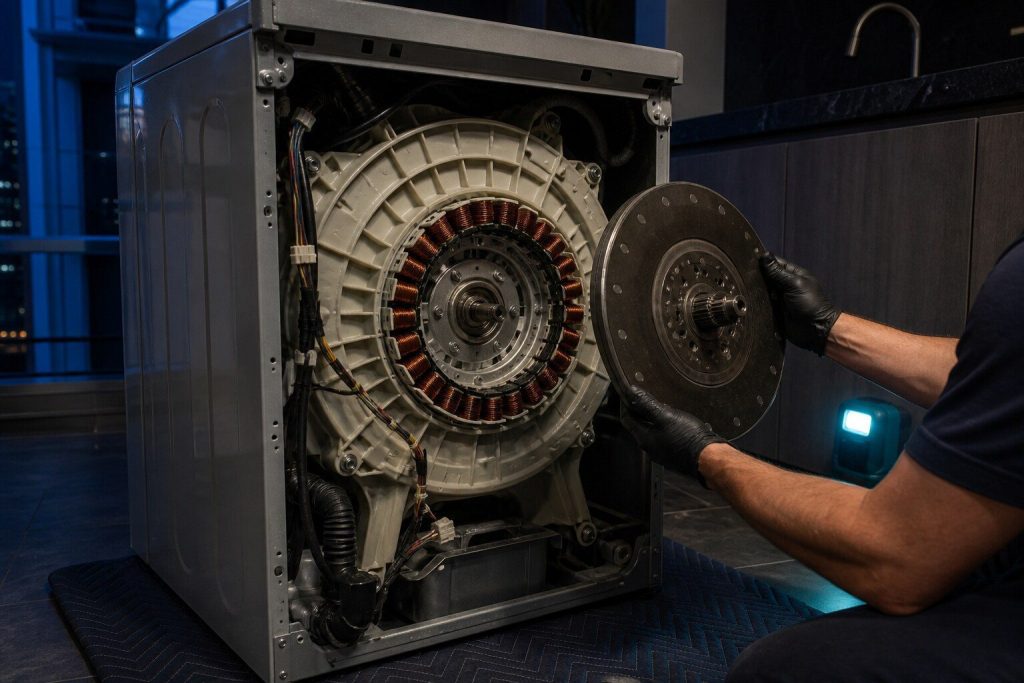
from $265 Washer motor and drive repair
The dearest laundry row and the one where the arithmetic gets said out loud. Motor, drive and the control that runs them, with the drum out on most cabinets, so the job is the strip-down rather than the part. On a machine of the age this badge is usually kept to, that is exactly the point at which somebody deserves a straight answer about whether to do it.
- The strip-down is the job; the part is a fraction of it
- Proved by measurement rather than concluded by elimination
- The arithmetic against the cabinet's remaining life, said before the work
-
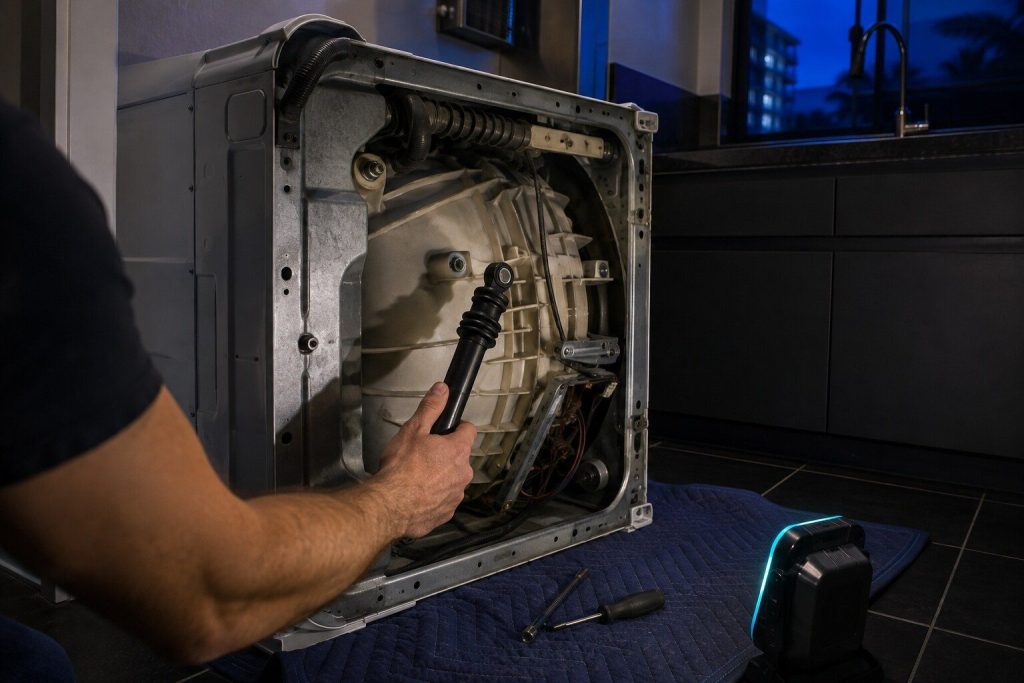
from $285 Washer suspension and bearing repair
The repair this make needs and its sister sites rarely quote, because this is the badge people keep. A noise that arrives with the spin and quiets as it slows is the classic bearing signature, and it does not appear overnight — it is usually years of spinning slightly out of balance, on a machine that has outlived two kitchens. Caught early it is a repair in the middle of a life. Left alone, the bearing takes the drum and the shaft with it.
- Rising with the spin and falling with it: the bearing signature
- Suspension first, because it is what wore the bearing out
- Priced against the cabinet's remaining life, honestly, before the work
-
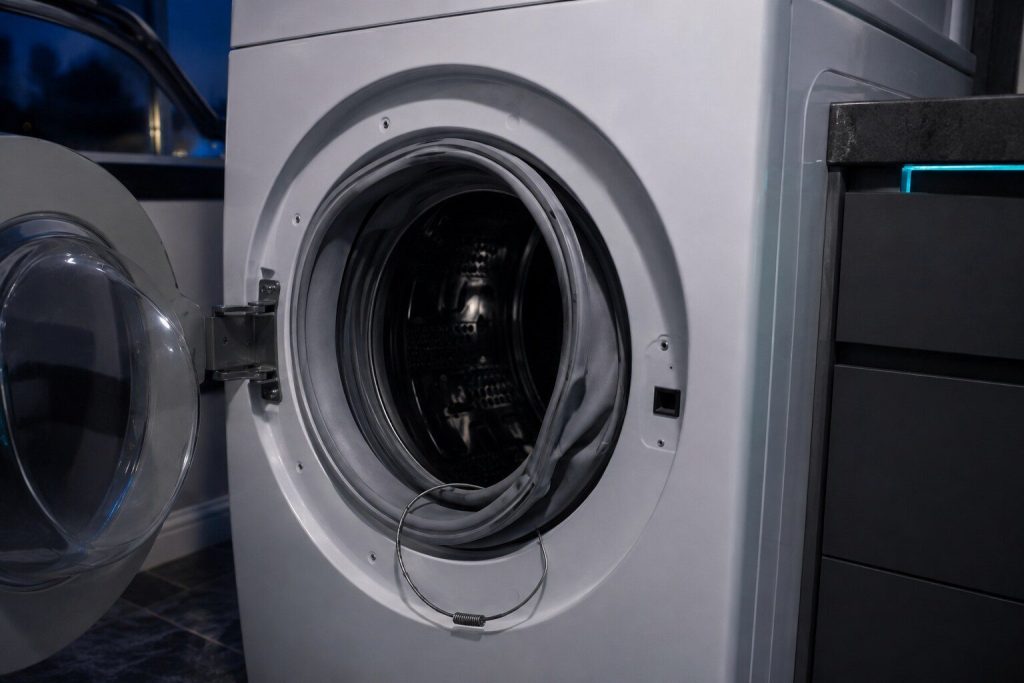
from $155 Washer leak repair
Water on the laundry floor, and on a front-loader the door boot is the usual answer — a rubber seal that spends its life wet in a room that never fully dries. On a top-loader it is more often a hose, the pump seal or the dispenser. Which point of the cycle it appears at narrows it before anything is opened, so that is the first question asked on the phone.
- Which minute of the cycle it leaks at points at which part
- On a front-loader the boot is the usual answer, and it is a drum-in-place job
- The floor and the cabinet under it are checked, not just the machine
-
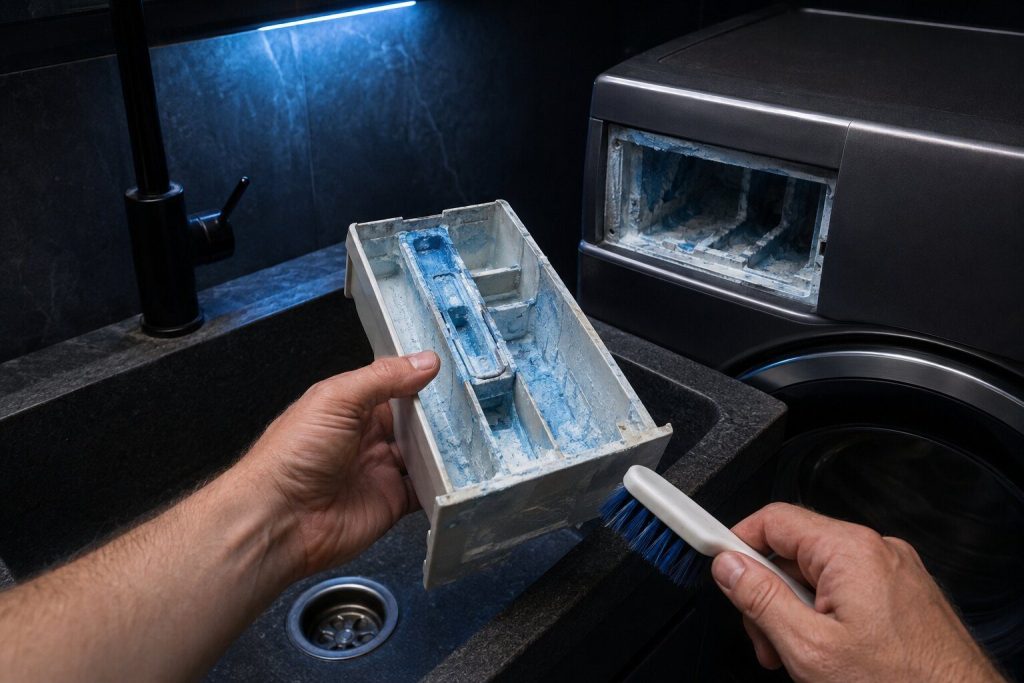
from $99 Washer excess suds service
The cheapest row on this site, and the one most often solved by explanation rather than by parts. A modern machine uses far less water than the one it replaced, so the detergent dose somebody learned twenty years ago is now several times too much — and this water carries enough mineral to change how it behaves. Suds cushion the load, confuse the level sensing, and produce a machine that runs long, rinses badly and smells.
- Usually dose and water rather than any part of the machine
- Suds confuse the level sensing, so this arrives as a cycle-length complaint
- A maintenance cycle and a dose change, and it is measured afterwards
In more detail
About Maytag washers
Why the display matters more on this make than on most
Maytag publishes 158 code pages for its washers, which is more numbered diagnosis than its entire refrigeration line receives. In practice that means a washer here often tells you which subsystem has stopped before anybody puts a meter on it — fill, drain, motor control, door lock, level sensing — and a photograph of the panel taken before the machine is switched off is worth more than any description of the noise it made. That is not true of every appliance in this kitchen, and it is the single most useful habit an owner of this make can have.
Top load and front load are not the same repair
They share a badge and very little else. A top-loader's weight is on a suspension and a drive that the load swings around; a front-loader's is on a bearing and a door seal that spends its life wet, which in this climate is a seal that never fully dries between cycles. So the same complaint — noise, leaking, refusing to spin — points at different parts depending on which machine is in the closet, and the questions asked over the phone differ from the first one.
This article is based on:
- Official manufacturer documentation
- Internal repair procedures
- Technician repair history
- Company quality standards

Before you book
Questions about Maytag washers
The cycle ends and the drum is still full.
Two different machines behind one complaint. If the display is showing something, that is the shorter road — this make publishes more numbered conditions for washers than for anything else it builds, and the number narrows it to the pump, the drain or the level sensing before anybody opens a panel. If nothing is showing, it is the filter and the hose first: the trap at the bottom front on a front-loader, the standpipe height on a top-loader, and the sink beside it, which in an older Miami laundry closet shares a waste and can defeat the machine on its own.
It travels across the laundry floor when it spins.
Almost always load and level rather than a part. A single heavy item — a mat, a duvet, one towel — has nothing to sit opposite, and a machine standing on three feet of four will knock under any load at all. Both are free to correct. What is not free is leaving it: months of an unbalanced spin is how a suspension and then a bearing go, and on a machine somebody expected to keep for fifteen years that is the repair worth preventing rather than the one worth doing.
Is a fifteen-year-old Maytag worth repairing?
More often than it would be on another badge, and the reason is not sentiment. These are simple machines with common parts, and the failures at that age are usually the pump, the lid lock, the suspension or the belt — none of them close to the price of a new machine. You are told the arithmetic before anything is ordered, and told plainly when the cabinet has reached the end of it.
Where we do it
Across Miami-Dade, Broward, and Palm Beach
Same terms everywhere we go: an on-site diagnostic first, the price agreed in writing, and the exact figure confirmed once we have seen the unit.
Neighborhoods people ask for by name