Appliance
Maytag dryers
189 pages and 56 of them numbered, plus a commercial branch of 73 pages with 39 more. Every dryer under this badge is a vented machine — there is no heat-pump model and no compact one, which is a real difference from the sister brands in the same corporation and it decides the whole diagnosis. A vented dryer lives or dies by the duct behind it, and in South Florida that duct is more often long and horizontal than short and vertical, and it carries air that arrived with plenty of moisture of its own. So a dryer here gets slower every season until somebody finally counts the cycles, and the machine at that point is usually fine.
- 4 symptoms we are called out to
- From $89 diagnostic, credited to the repair
- 59 cities and neighborhoods covered
- OEM parts available on order
The short version
What this equipment is, for a repair
Configurations
Electric and gas · vented · commercial-grade residential
Access
Planned before the visit, not discovered on arrival
Parts
OEM, available on order
Diagnostic
From $89, credited to the repair
What goes wrong with it
Symptoms we are called out to on Maytag dryers
Each one covers the likely causes in the order they are worth checking, and what to do in five minutes before booking anything.
-
The drum turns for the full cycle and the clothes come out cold and damp Dryer runs but does not heat
A dryer that tumbles without heating has one of two very different problems, and which one it is depends on whether it burns gas or draws current. On an electric machine the drum and the heat are on separate legs of the same circuit, which is why a machine can run perfectly and still produce no warmth at all.
- An electric dryer that turns but never warms is very often half a breaker rather than a part
- A gas dryer that tries and gives up is an ignition sequence you can hear from the laundry room
- AF is a restricted vent, and a restricted vent looks exactly like a heating problem
-
Everything comes out damp and the load goes round again Dryer takes two or three cycles
This is the complaint that costs the most money and gets reported the latest, because it creeps. A dryer that used to finish a load in fifty minutes and now takes two runs has generally lost airflow rather than heat, and it has been losing it for a year.
- Almost always airflow — the duct, the screen, or the slot the screen sits in
- A moisture sensor that has scaled over will end cycles early on an automatic setting
- The running cost of this doubles quietly, which is why it is worth fixing rather than living with
-
The panel may light, the drum does not turn, and pressing start does nothing Dryer will not start
A dryer that will not begin is either not being allowed to or not being powered, and the two look identical from the front. On this badge the first question is always whether the display is showing anything at all, because a dark panel and a lit one send us to opposite ends of the machine.
- PF means the machine lost power mid-cycle and is waiting to be told what to do
- A control lock stops everything and is easy to set by accident
- A door that does not latch is the most common reason a dryer sits still
-
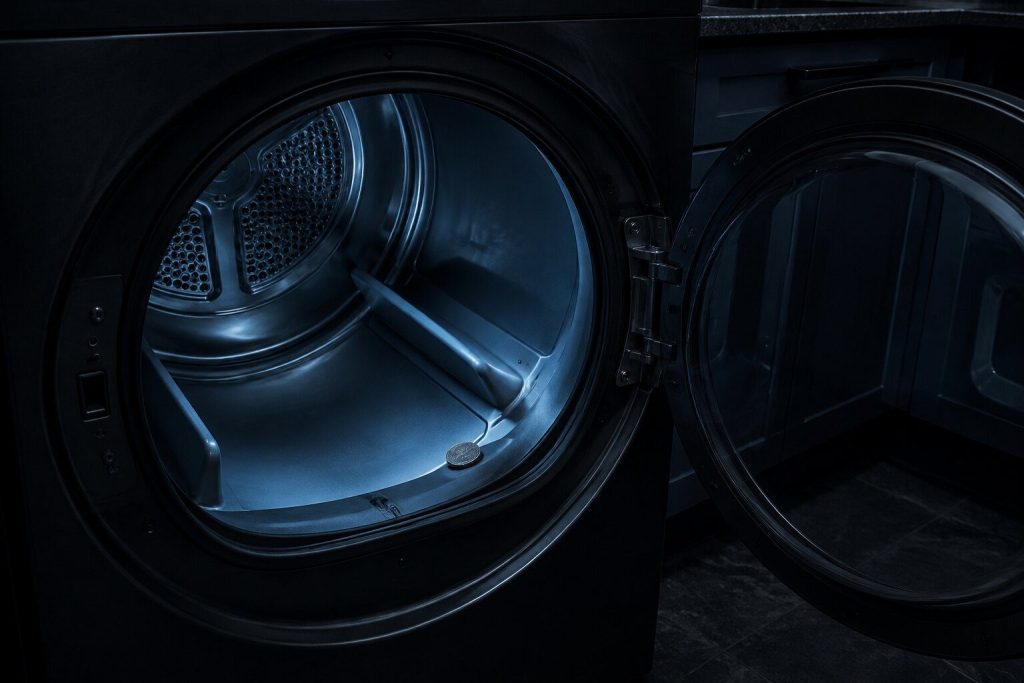
A rhythmic noise that keeps time with the drum Dryer thumping, squealing or grinding
Almost every dryer noise comes from the four things the drum rests and rides on, and each of them has a distinct sound. A dryer is a simple machine, which means the noise really does name the part — the trick is describing it accurately.
- A rhythmic thump that keeps pace with the drum is a roller or a flat spot
- A squeal that rises with the drum is a bearing or the idler
- A grinding scrape usually means something got past the drum seal
What we do on it
Repairs we carry out on Maytag dryers
Starting figures for this equipment in South Florida. The exact cost is confirmed after an on-site diagnostic — and this is not the whole list of what can go wrong, so call if your problem is not here.
-
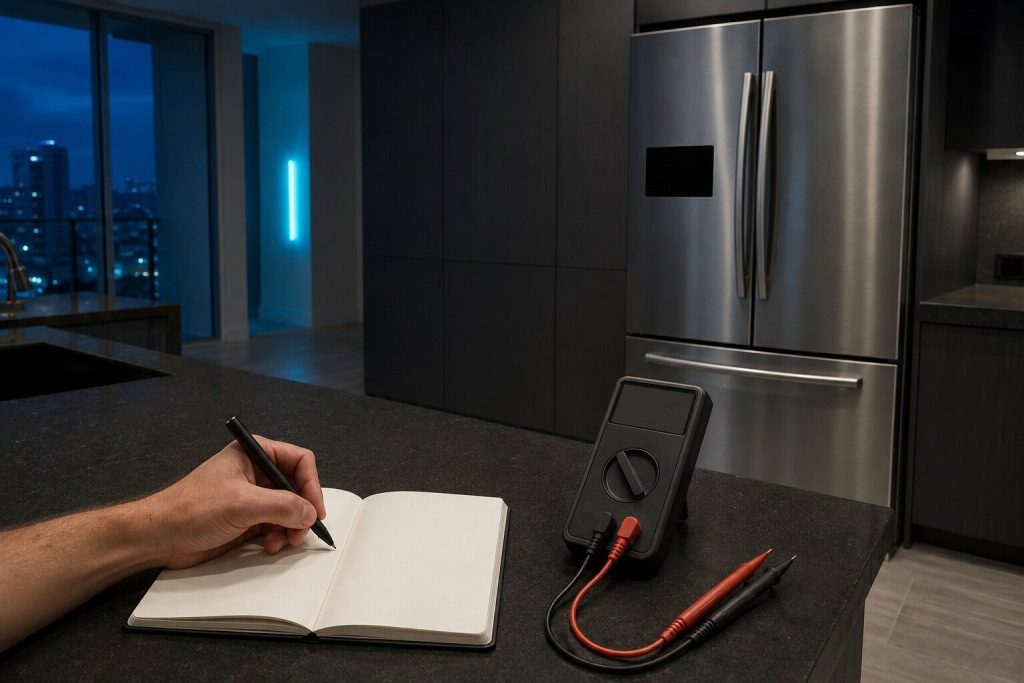
from $89 Diagnostic visit
We find out what is wrong before anybody quotes a part, and on this make that means two different visits depending on which half of the kitchen we are in. A washer or an oven will usually be showing something, and the first ten minutes are spent reading it. A refrigerator or a freezer will be showing nothing at all, because this maker publishes almost no codes for cold, and those minutes go on thermometers instead. The fee comes off the bill when you go ahead with the work.
- Read first where the machine talks, measure first where it does not
- Age is established early: these machines are routinely older than the kitchen
- Credited toward the repair
-
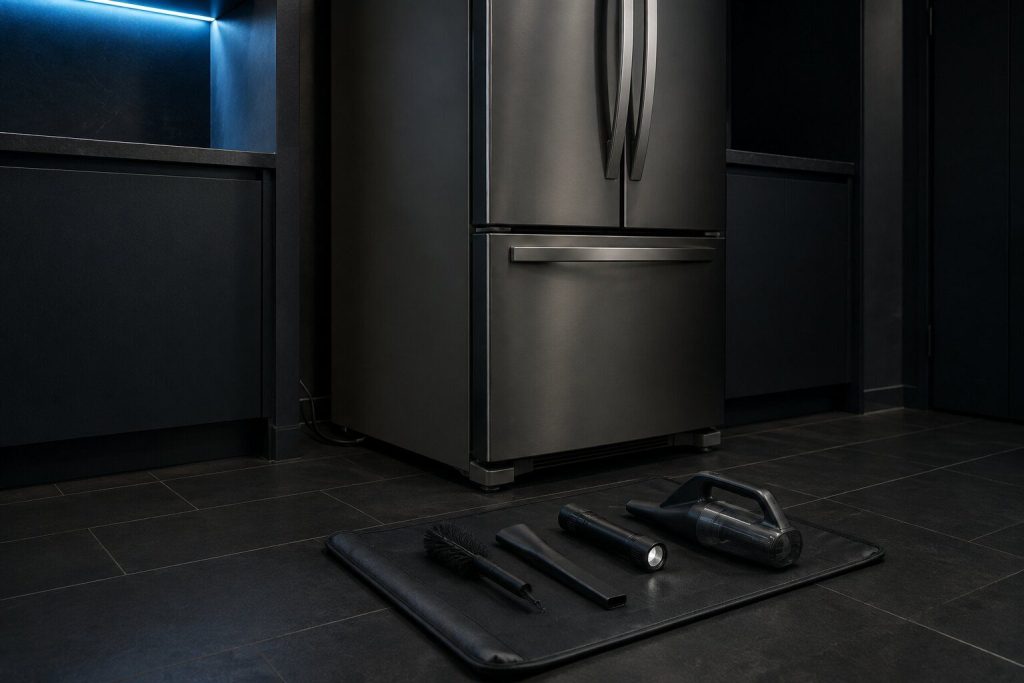
from $119 Appliance maintenance
The visit that stops the other visits, and on equipment bought to last it is the one that pays for itself twice over. The list is short and specific: the condenser at floor level in a humid kitchen, the dryer duct that gets longer every year in effect if not in fact, the seals this climate works harder than the manual assumed, and the drain that must not stand. None of the four announces itself, and all four are cheaper to keep than to repair.
- Condenser, seals, drains, vents and leveling, on every appliance in the run
- The intervals are set to this climate rather than to the manual's calendar
- You keep a written note of what is aging and roughly when it will matter
-
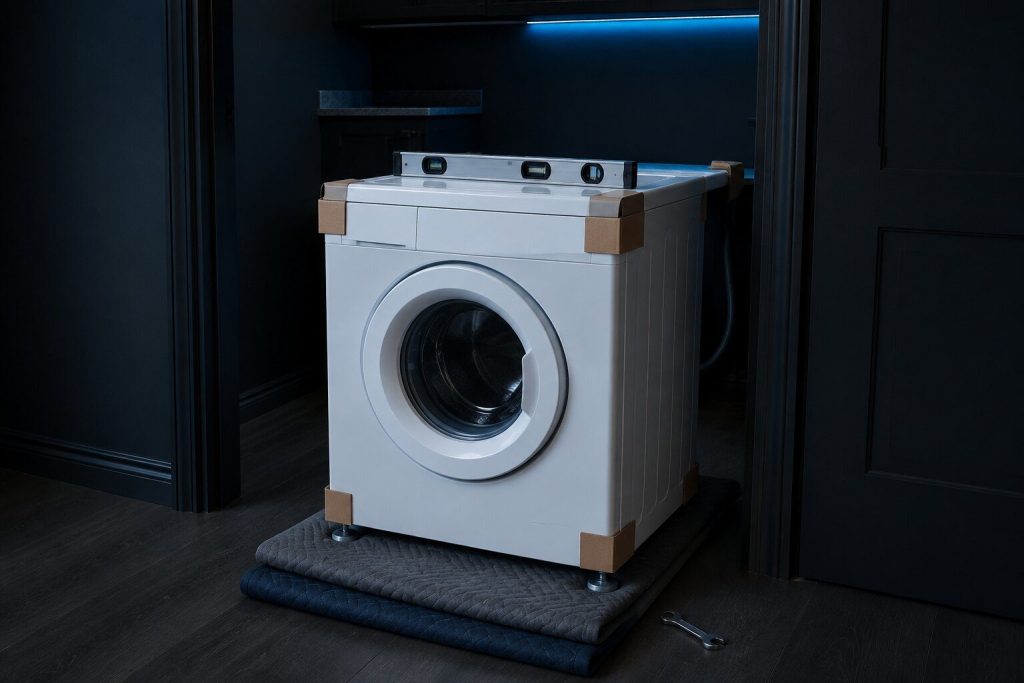
from $139 Appliance installation
Fitted against the maker's own figures rather than pushed into a hole and switched on. There is a published cutout, a required clearance, an anti-tip fixing and a water connection, and equipment installed to those figures gives years of quiet service. Installed without them, it generates precisely the calls the rest of this site describes: doors that will not seal, coils with nowhere to breathe, laundry that never comes out dry.
- Cutout, clearance and anti-tip against the maker's published figures
- The dryer duct is inspected and measured at installation, not after the first complaint
- Run under load before we leave, not plugged in and left
-
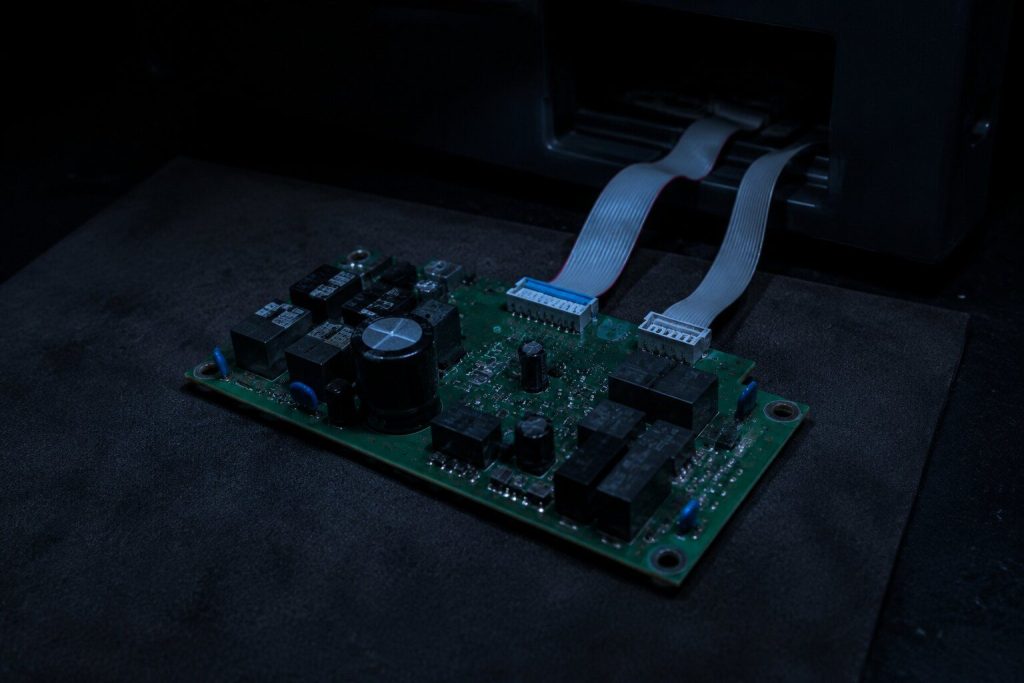
from $265 Appliance control board repair
Everybody reaches for this part first, and the manufacturer's own documentation asks that it be proved innocent before it comes out. One control architecture runs across this whole corporation, which is why a letter-and-number on a range looks so much like one on a washer — and why a board diagnosed by resemblance rather than by measurement gets replaced perfectly well and changes nothing. Boards seldom die of nothing, and whatever killed this one is still in the appliance when the new one goes in.
- Proved before it is condemned: supply, harness and the connections into it
- A browned connector or a pin backed out of its housing is cheap; a board is not
- Programmed to your model afterwards, or the appliance behaves oddly in ways nobody links back
-
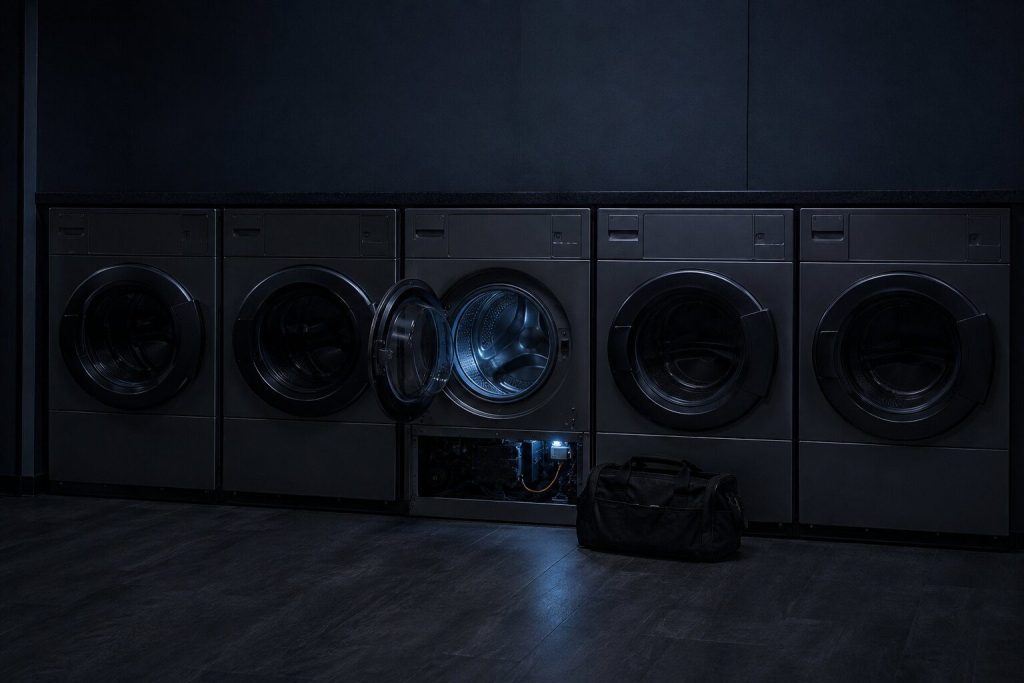
from $159 Commercial appliance repair
This make's commercial line is laundry, and that is what this covers: coin and card washers and dryers in condominium laundry rooms, small buildings, salons and gyms across South Florida. They are not domestic machines with a different badge. They run to a duty cycle, they are opened more often, and their downtime costs somebody money by the hour — so they are scheduled against that rather than against a convenient window.
- Coin and card laundry, which is what this maker's commercial line is
- 142 pages of its own in the maker's base, 39 of them published codes on the dryer
- Scheduled against downtime rather than against a convenient window
-
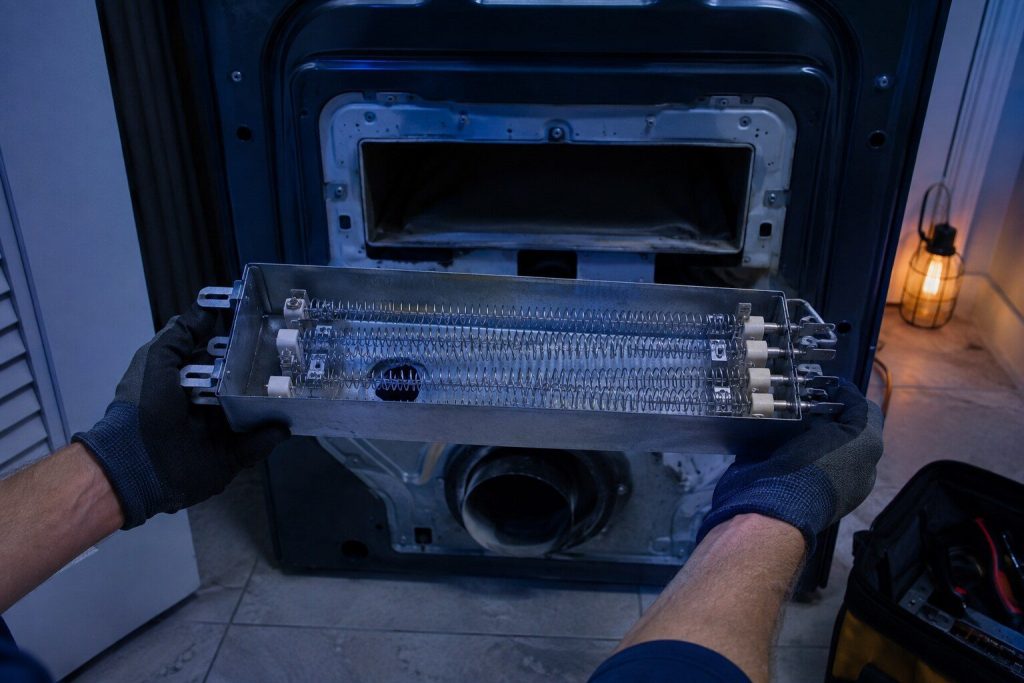
from $145 Dryer not heating repair
Every dryer under this badge is vented — there is no heat-pump machine and no compact one — so this job starts behind the appliance rather than inside it. A run that is long, flat, crushed or full of lint will not let a dryer work however good its element is, and in South Florida those runs carry air that arrived wet. The duct is measured before anything is opened, and that measurement ends a real share of these calls.
- Vented only: the duct is the appliance's real constraint
- Measured with a gauge before and after, not judged by hand
- The thermal cut-out is replaced with the element, because it opened for a reason
-
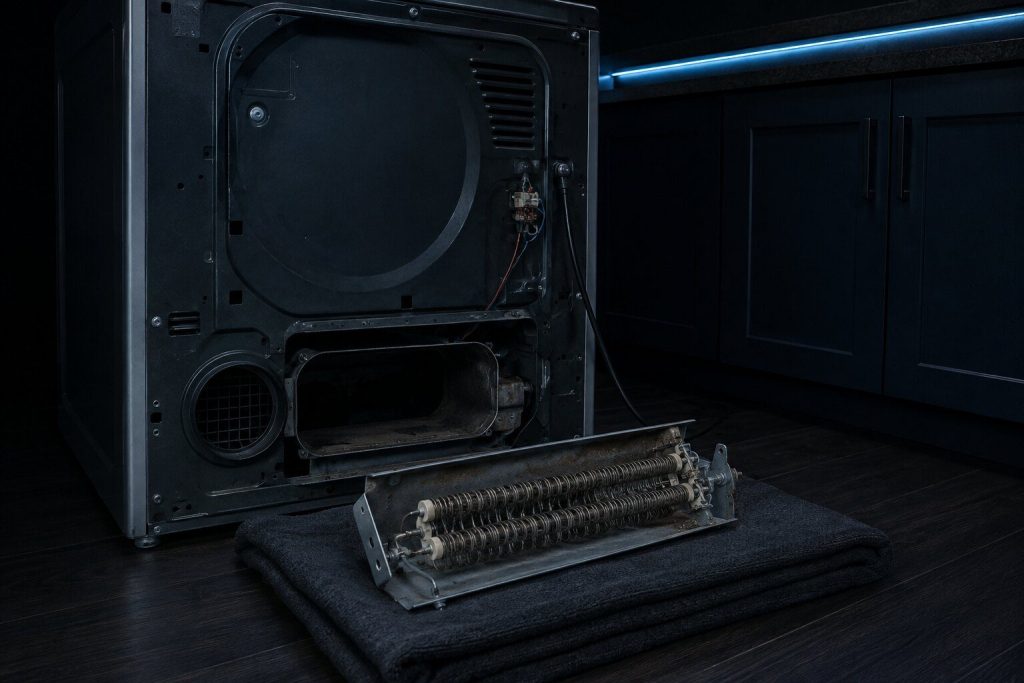
from $175 Dryer heating element replacement
The element, its housing and the thermal cut-out beside it, on electric machines. The cut-out goes in with the element every time — it opened because the machine overheated, and it overheated because the air was not moving. Replacing the element alone gets the dryer hot again for a few weeks and then does exactly the same thing.
- The thermal cut-out is replaced with it, never left in place
- The airflow that caused the overheat is cleared at the same visit
- Measured cold rather than judged by whether the drum feels warm
-
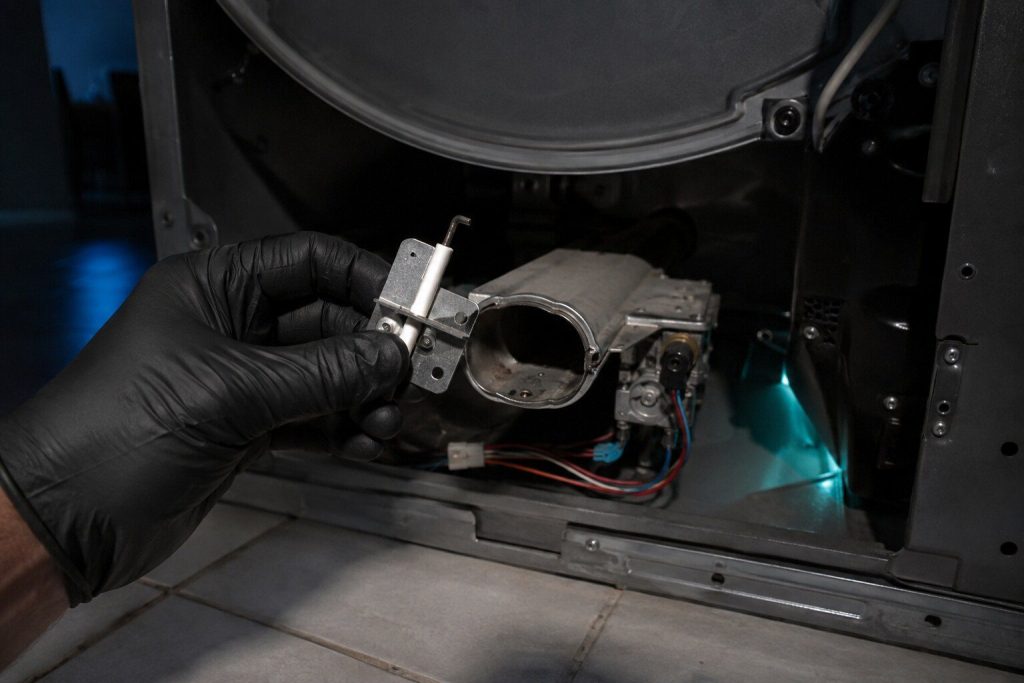
from $175 Gas dryer igniter and valve repair
On a gas machine the igniter is the usual answer and it fails in a way that looks exactly like no heat at all — it weakens for months before it stops, so the complaint that arrives is a dryer taking two cycles rather than a dryer that is cold. After that it is the flame sensor and the valve coils, and the order matters because two of the three are inexpensive and one is not.
- A weakening igniter arrives as slow drying, not as no heat
- Flame sensor and valve coils measured, not swapped in hope
- The duct is checked here too — a gas machine overheats for the same reasons
-
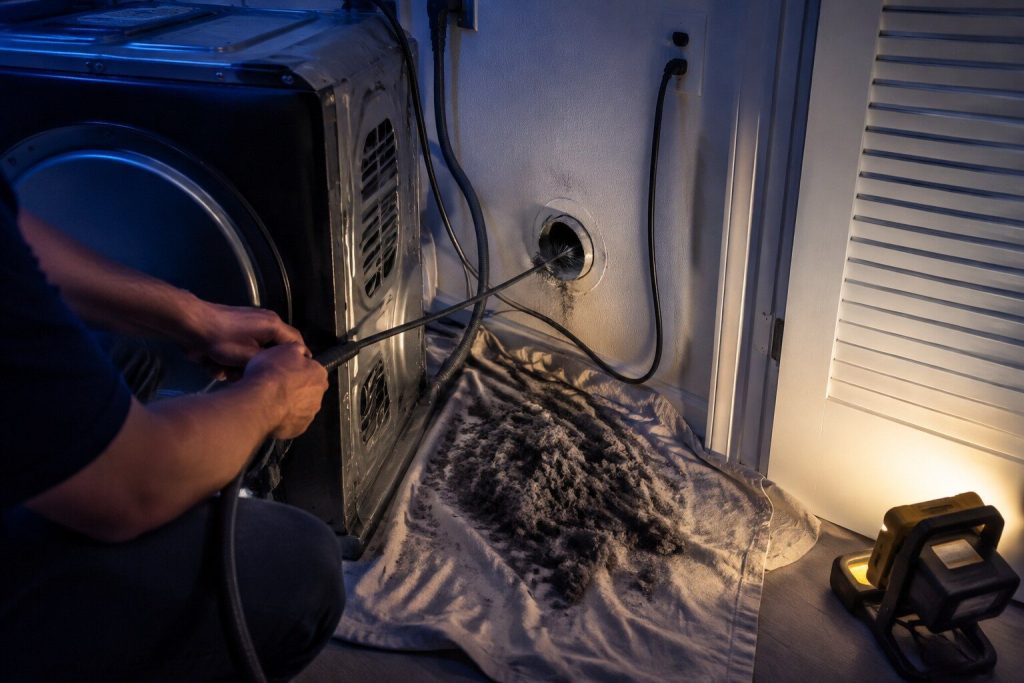
from $129 Dryer vent cleaning
The whole run rather than the first three feet, and measured before and after so the visit has a number behind it. In this region the runs are long and horizontal more often than short and vertical, and they carry humid air, so lint packs rather than blowing through. It is the cheapest thing that keeps a vented dryer working and the one nobody schedules until the machine has already been called broken.
- The whole run, and a reading before and after
- Long flat runs in this region pack rather than clear themselves
- The outside flap is checked, and it is blocked more often than the pipe
-
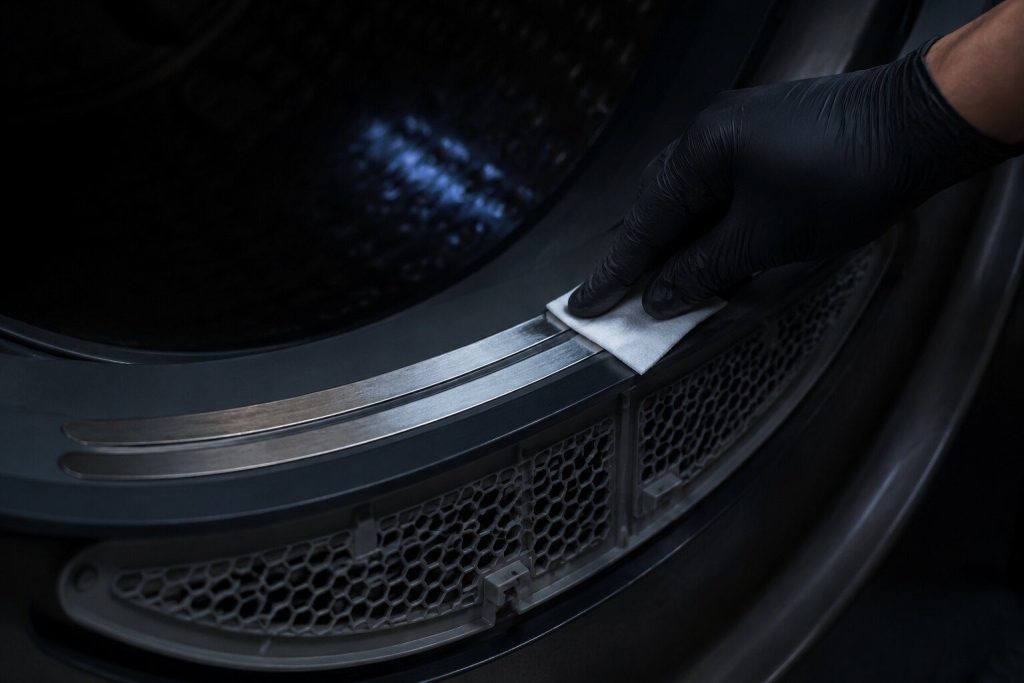
from $109 Dryer moisture sensor service
Two metal strips inside the drum that decide when the load is dry, and fabric softener leaves a film on them. A coated sensor reads a wet load as dry and ends the cycle early, which arrives as a complaint about heat and is nothing of the kind — the machine is warm, the cycle is short, and the clothes come out damp. It is a two-minute job and it is worth ruling out before anything else is booked.
- Softener residue on the sensor ends cycles early: it looks like a heat problem
- Cleaned rather than replaced in most cases
- Auto cycles behave differently from timed ones, and that difference is the clue
-
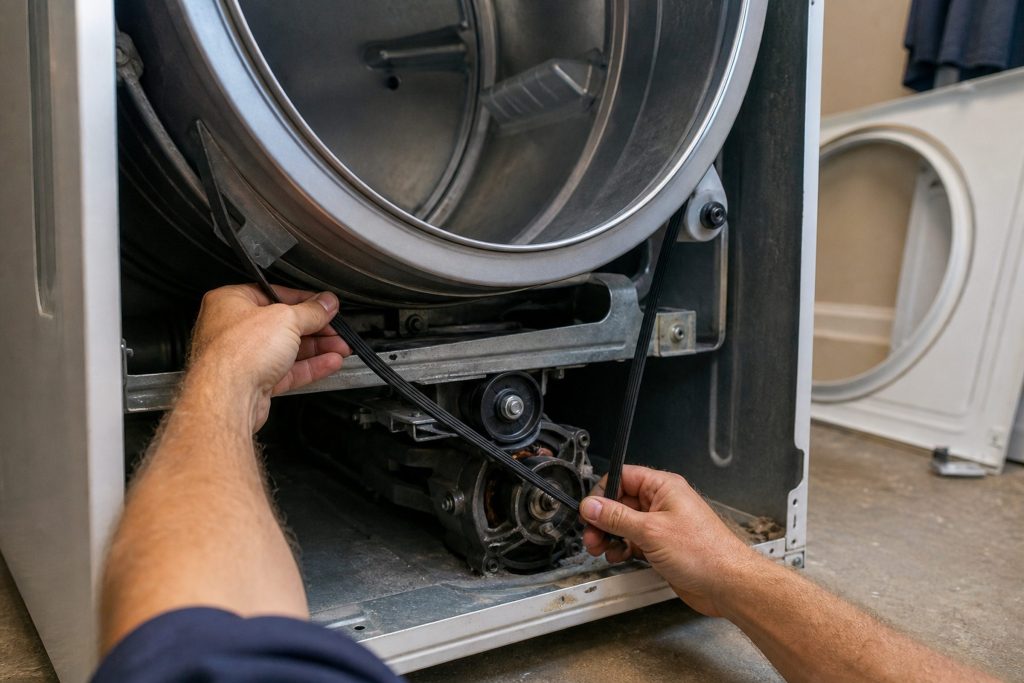
from $185 Dryer drum belt and roller repair
A drum that will not turn, or turns with a rumble that gets worse every week. Belt, idler, rollers and glides go in together on most cabinets because the strip-down is the job and the parts are inexpensive — coming back in a year for the roller that was left in is the expensive version. On the older machines this badge is known for, the rumble has usually been there long enough that the owner has stopped hearing it.
- Belt, idler, rollers and glides together, because the strip-down is the job
- A rumble that worsens weekly is rollers, not the motor
- The drum seals are replaced while the machine is open
-
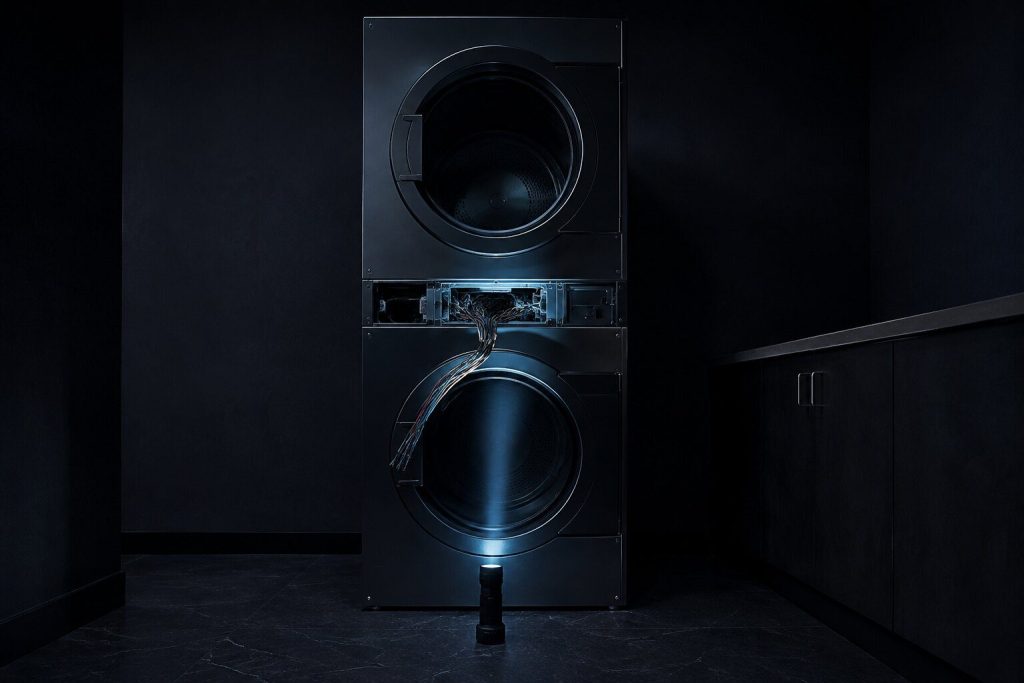
from $185 Commercial dryer service
The commercial-grade laundry dryer, which is a duty-cycle machine rather than a domestic one with a coin box bolted on. This maker publishes seventy-three pages for it and thirty-nine numbered conditions, so it usually says what has stopped — and in a building laundry that matters, because the machine is earning while it runs and costing while it does not.
- A duty-cycle machine with its own published codes — 39 of them
- Scheduled against downtime, not against a convenient window
- The room is assessed as well: drainage, ventilation and level
In more detail
About Maytag dryers
Vented, and that decides everything
Every Maytag dryer sold here is a vented machine. There is no heat-pump model in this catalog and no compact one, and the practical consequence is that the appliance is only ever as good as the duct behind it. A heat-pump dryer recirculates its own air in a sealed loop and can live in a closet with no outlet at all; a vented machine is pushing warm wet air through a run of pipe that somebody else installed, often before the kitchen was last remodelled. That is why the first measurement here is airflow rather than temperature.
The commercial branch, and what it means for a house
Maytag publishes 73 pages for its commercial laundry dryers, 39 of them numbered. Those machines turn up in condominium laundry rooms, small buildings and salons across South Florida, and they are not domestic machines with a badge — they run to a duty cycle, they log differently, and their downtime costs somebody money by the hour. We schedule them against that rather than against a convenient window.
This article is based on:
- Official manufacturer documentation
- Internal repair procedures
- Technician repair history
- Company quality standards

Before you book
Questions about Maytag dryers
A whole cycle goes by and the load comes out wet.
The duct, before the appliance. A vented dryer has to push moist air out of the house, and a run that is long, flat, crushed behind the machine or full of lint will not let it. That is measurable in minutes with a gauge and it settles most of these calls without a part. When the run is clear and the machine still never warms properly, the next questions are the element or the burner, the thermal cut-out and the cycling stat — and on a gas machine the igniter, which fails in a way that looks exactly like no heat at all.
There is a number on the display. Does that help?
Yes, and it is worth photographing before the machine is switched off. Maytag publishes 56 numbered conditions for its dryers, and they point at subsystems — heat, airflow, the motor, the moisture sensor — which is the difference between bringing the right part on the first visit and the second. The number by itself is not the answer; the number together with the machine is.
Fabric softener sheets — do they really matter?
On this make they do, because the moisture sensors are two metal strips inside the drum and softener residue coats them. A coated sensor reads a wet load as dry and ends the cycle early, which arrives as a complaint about heat and is nothing of the kind. Wiping them with rubbing alcohol takes two minutes and is worth doing before anybody books a visit.
Where we do it
Across Miami-Dade, Broward, and Palm Beach
Same terms everywhere we go: an on-site diagnostic first, the price agreed in writing, and the exact figure confirmed once we have seen the unit.
Neighborhoods people ask for by name