Appliance
Maytag refrigerators
Five hundred and nine pages in the maker's own base, and twenty-six of them numbered. Hold those two figures next to the seventy-five percent of wall-oven pages that carry a code and you have the whole character of this make in one comparison. Cold is where it stops explaining itself: seventeen numbered pages behind the French door cabinet, nine behind side-by-side, and on the top-freezer cabinet — eighty-four pages of guidance — not one. A visit here is therefore an hour with instruments rather than ten minutes with a panel, and that is worth knowing before you book. There is no quad-door cabinet and no all-refrigerator under this badge; both belong to a sister brand.
- 4 symptoms we are called out to
- From $89 diagnostic, credited to the repair
- 59 cities and neighborhoods covered
- OEM parts available on order
The short version
What this equipment is, for a repair
Configurations
French door · side-by-side · top freezer
Access
Planned before the visit, not discovered on arrival
Parts
OEM, available on order
Diagnostic
From $89, credited to the repair
What goes wrong with it
Symptoms we are called out to on Maytag refrigerators
Each one covers the likely causes in the order they are worth checking, and what to do in five minutes before booking anything.
-
The freezer is fine and the fresh food side is warm, or neither is cold Refrigerator not cooling
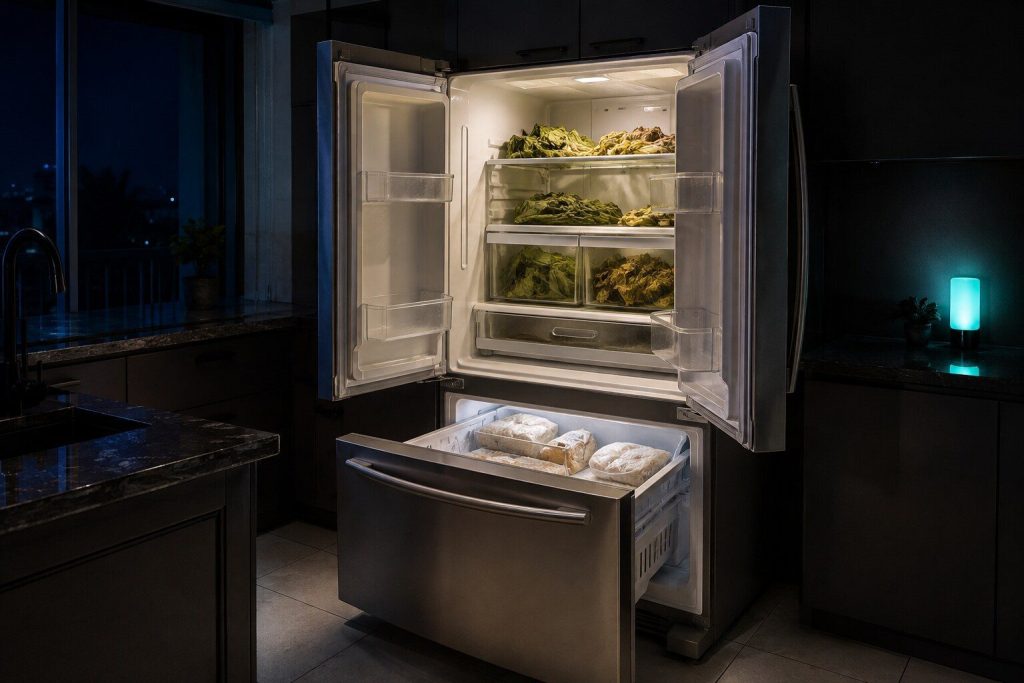
The first thing worth knowing is that this appliance is not going to tell you much. Across five hundred refrigeration pages this maker publishes a handful of indicator conditions and no diagnostic codes worth the name — which means a warm refrigerator is diagnosed by what it does, not by what it says. That is the honest starting point and it changes what we ask you on the phone.
- A cold freezer with a warm fresh food side is the classic defrost or airflow picture
- Both compartments warm together is a different and more serious question
- A cooling indicator switched off will warm the whole cabinet with nothing broken at all
-
A pool under the crisper drawers, or water on the floor at the front Water inside or under the refrigerator
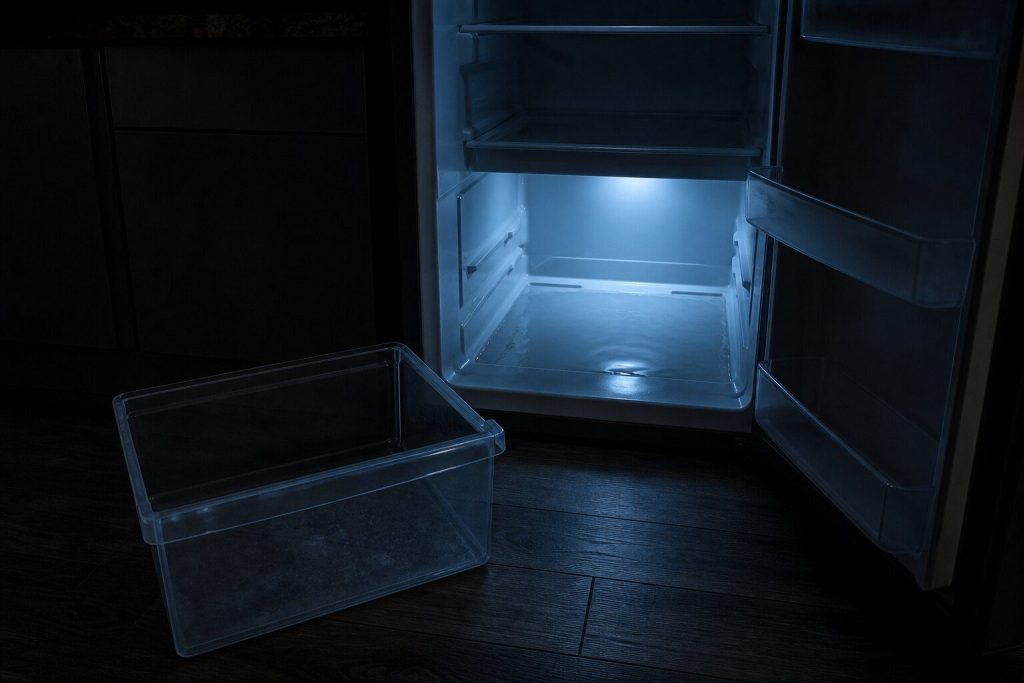
Water inside a refrigerator is nearly always the drain that carries defrost water away, and it has a specific and unglamorous failure — a small tube freezes shut, the water backs up, and it reappears under the drawers. It is one of the more satisfying repairs on this site because the cause is so consistent.
- Water under the crisper drawers is the defrost drain almost every time
- Water on the floor at the front is usually the drain pan or the water line
- This maker publishes an indicator for the water system but nothing for a drain
-
Lettuce turning to ice and milk with crystals in it Refrigerator freezing food
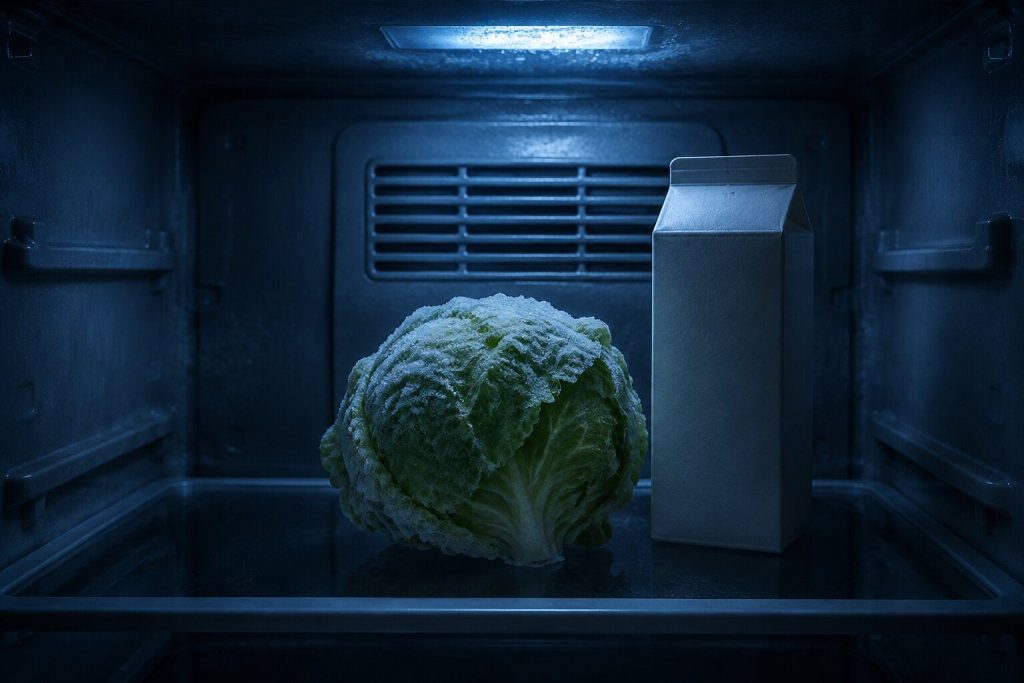
Too cold is a real problem and it gets reported far less than too warm, usually after a month of throwing produce away. It is also one of the few refrigeration complaints with a genuinely good chance of being settled by a setting and a rearrangement rather than by a repair.
- Food directly in front of a vent will freeze in a perfectly healthy refrigerator
- A cabinet that is nearly empty runs colder and swings further
- Consistent freezing everywhere on the shelf points at the control rather than at placement
-
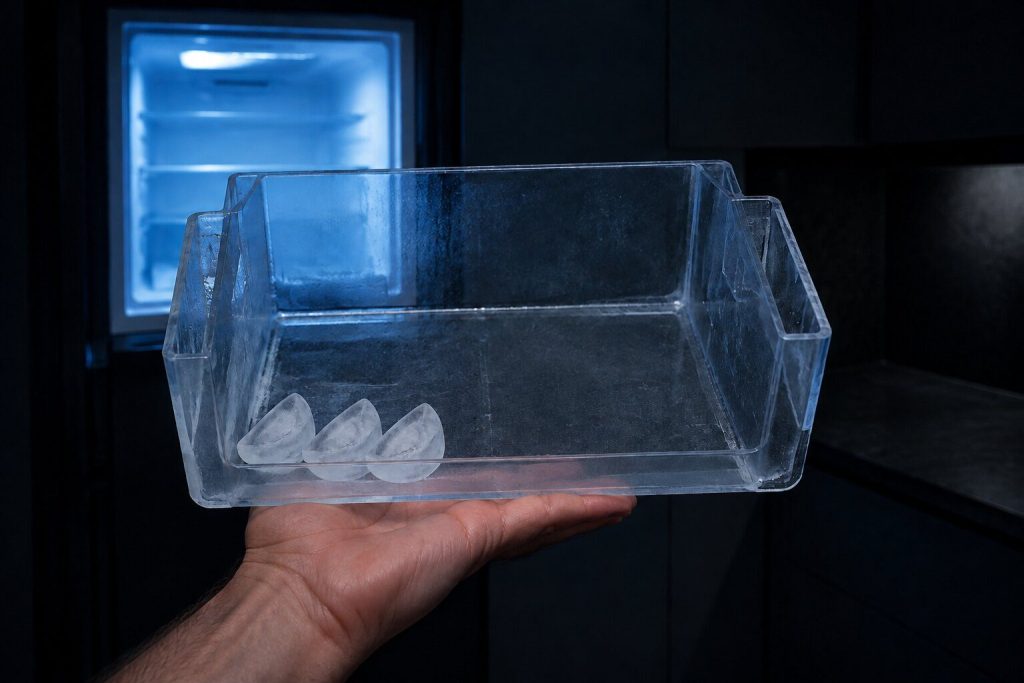
An empty bin, small hollow cubes, or ice that has all stuck together Ice maker not making ice
Ice makers produce more calls than any other single part of a refrigerator and almost none of them are documented — this maker publishes no numbered condition for one anywhere. What it does publish is an indicator for the water system, and beyond that the diagnosis is water, temperature and the mechanism, checked in that order.
- Small or hollow cubes mean water arriving too slowly, not a broken ice maker
- A freezer above five degrees will not make ice reliably no matter what else is right
- The arm or the switch that says the bin is full stops production silently
What we do on it
Repairs we carry out on Maytag refrigerators
Starting figures for this equipment in South Florida. The exact cost is confirmed after an on-site diagnostic — and this is not the whole list of what can go wrong, so call if your problem is not here.
-
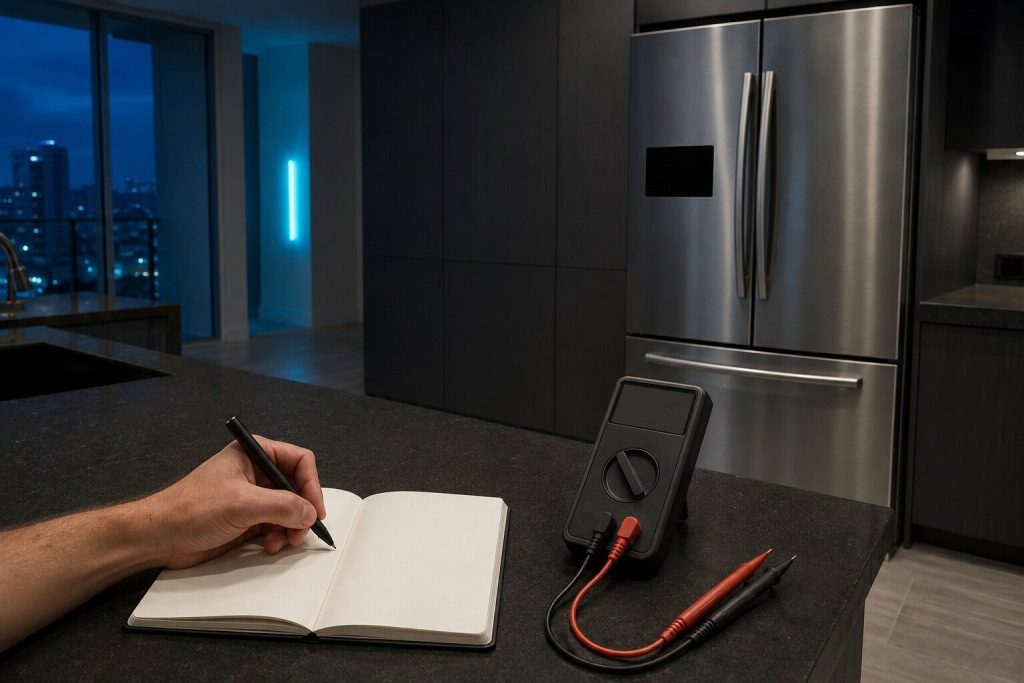
from $89 Diagnostic visit
We find out what is wrong before anybody quotes a part, and on this make that means two different visits depending on which half of the kitchen we are in. A washer or an oven will usually be showing something, and the first ten minutes are spent reading it. A refrigerator or a freezer will be showing nothing at all, because this maker publishes almost no codes for cold, and those minutes go on thermometers instead. The fee comes off the bill when you go ahead with the work.
- Read first where the machine talks, measure first where it does not
- Age is established early: these machines are routinely older than the kitchen
- Credited toward the repair
-
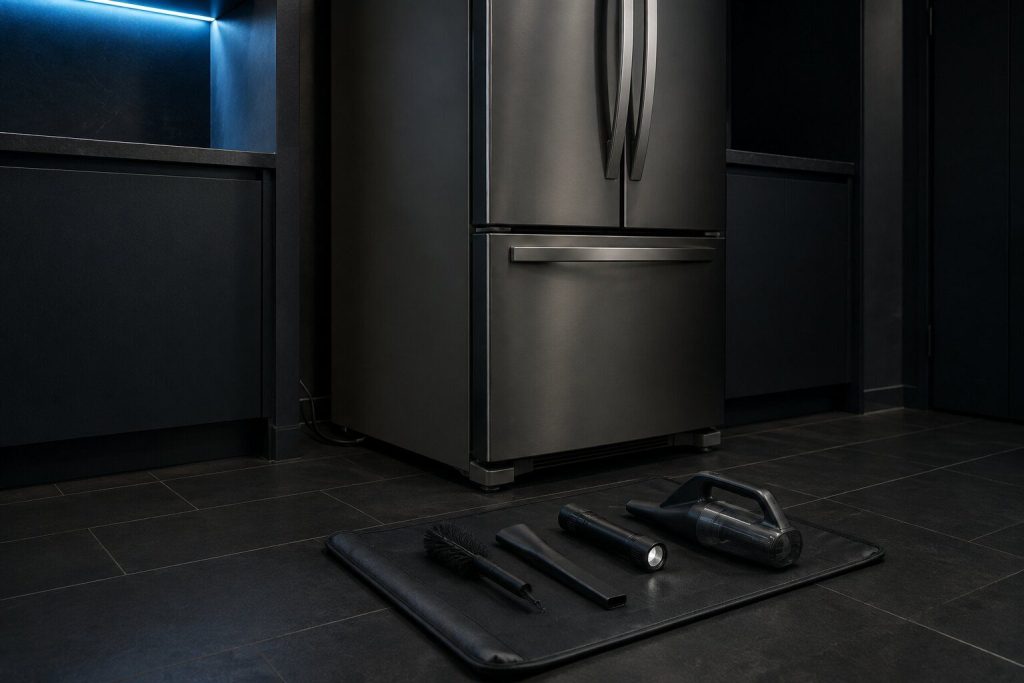
from $119 Appliance maintenance
The visit that stops the other visits, and on equipment bought to last it is the one that pays for itself twice over. The list is short and specific: the condenser at floor level in a humid kitchen, the dryer duct that gets longer every year in effect if not in fact, the seals this climate works harder than the manual assumed, and the drain that must not stand. None of the four announces itself, and all four are cheaper to keep than to repair.
- Condenser, seals, drains, vents and leveling, on every appliance in the run
- The intervals are set to this climate rather than to the manual's calendar
- You keep a written note of what is aging and roughly when it will matter
-
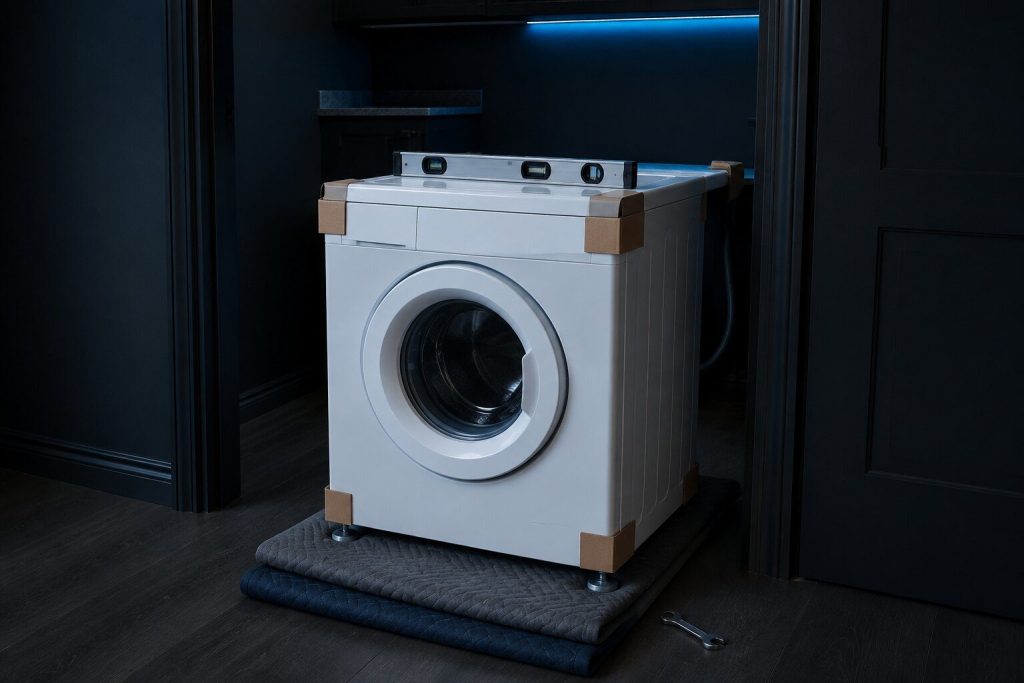
from $139 Appliance installation
Fitted against the maker's own figures rather than pushed into a hole and switched on. There is a published cutout, a required clearance, an anti-tip fixing and a water connection, and equipment installed to those figures gives years of quiet service. Installed without them, it generates precisely the calls the rest of this site describes: doors that will not seal, coils with nowhere to breathe, laundry that never comes out dry.
- Cutout, clearance and anti-tip against the maker's published figures
- The dryer duct is inspected and measured at installation, not after the first complaint
- Run under load before we leave, not plugged in and left
-
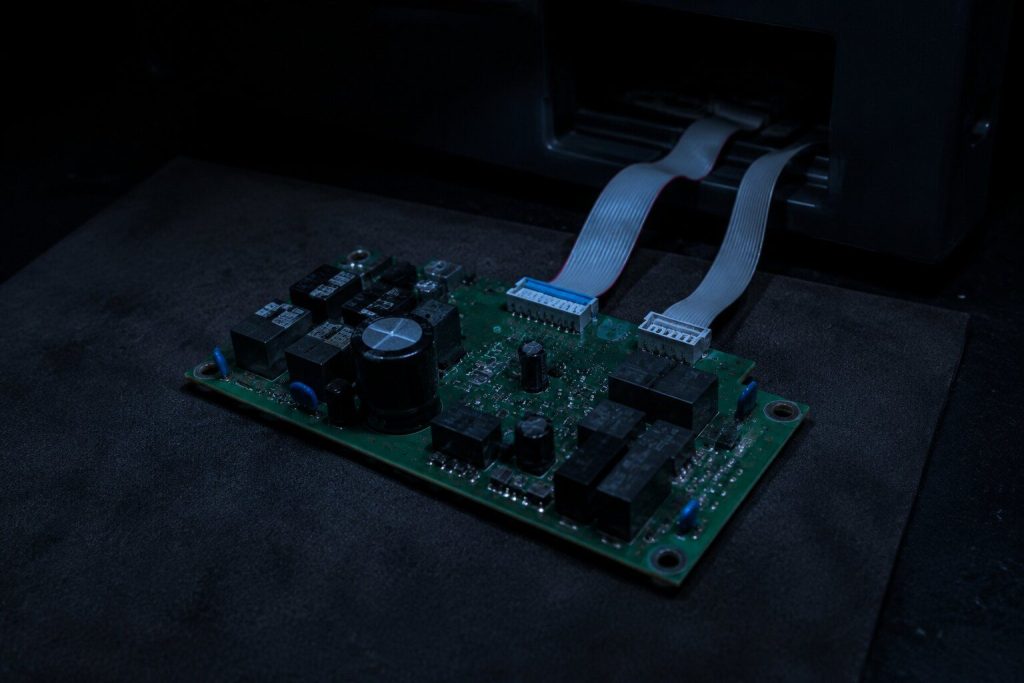
from $265 Appliance control board repair
Everybody reaches for this part first, and the manufacturer's own documentation asks that it be proved innocent before it comes out. One control architecture runs across this whole corporation, which is why a letter-and-number on a range looks so much like one on a washer — and why a board diagnosed by resemblance rather than by measurement gets replaced perfectly well and changes nothing. Boards seldom die of nothing, and whatever killed this one is still in the appliance when the new one goes in.
- Proved before it is condemned: supply, harness and the connections into it
- A browned connector or a pin backed out of its housing is cheap; a board is not
- Programmed to your model afterwards, or the appliance behaves oddly in ways nobody links back
-
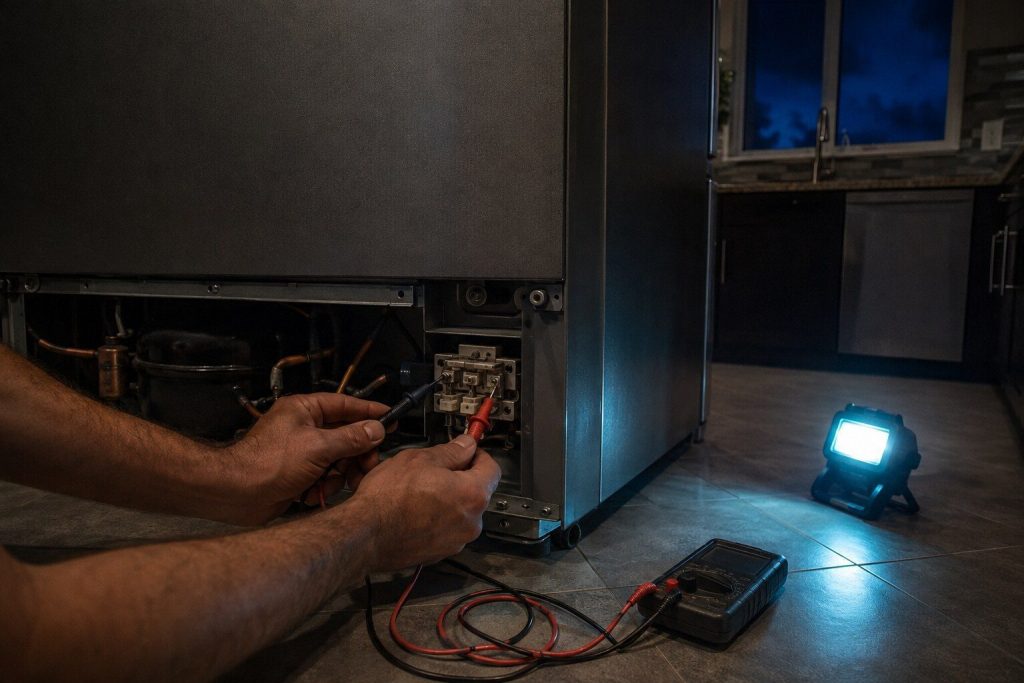
from $145 Refrigerator not cooling repair
A cabinet that runs and will not hold its number. On most makes the first move is to read the panel; here there is usually nothing on it, because this maker publishes twenty-six numbered conditions across five hundred refrigeration pages and none at all for a top-freezer cabinet. So this is an hour with instruments and a fixed order — the free causes, then the air, then the gauges — and it is why the first visit is longer here than on the cooking side of the same kitchen.
- Instruments rather than a code lookup: this half of the make explains very little
- The free causes come first, and they close more of these calls than any part
- Refrigerant work is quoted only after gauges, and never on a warm-side-only complaint
-
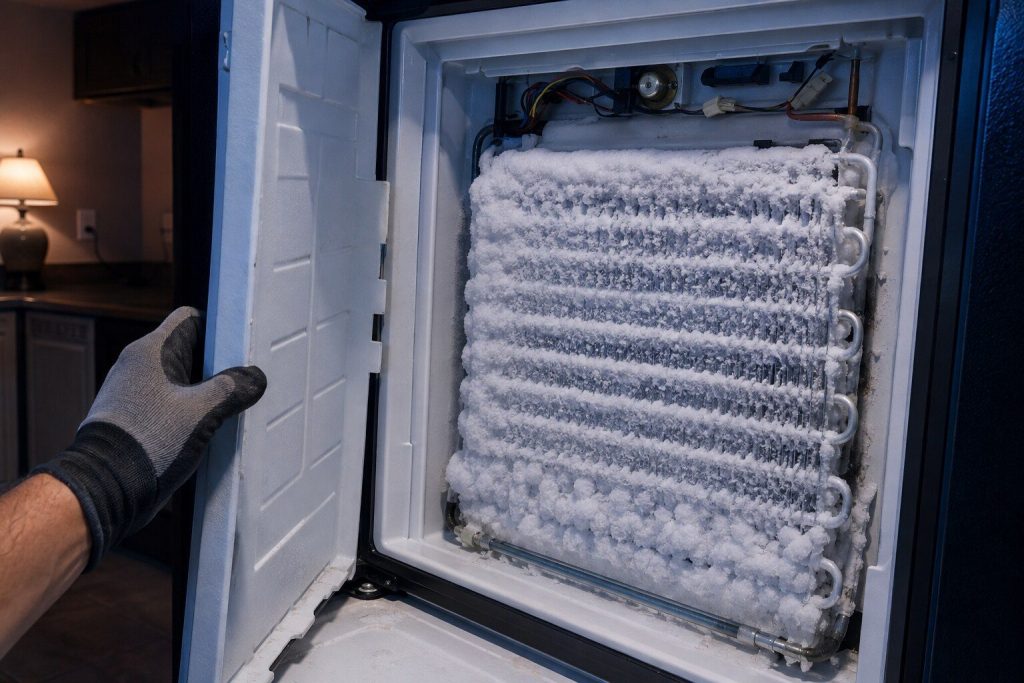
from $165 Defrost system repair
Ice on the evaporator behind the back wall rather than frost around the door, and a cabinet that gets worse over weeks instead of failing outright. The circuit is a heater, a terminator and the sensor that decides when to stop, and on this make none of the three announces itself — so the finding takes longer than the fixing and the price says so. What sends a defrost circuit here is usually humidity getting in somewhere it should not.
- Ice at the back is the defrost circuit; ice at the door is the seal
- Heater, terminator and sensor measured cold, not judged by how thick the ice looks
- The way the moisture is getting in is found too, or it comes back next season
-
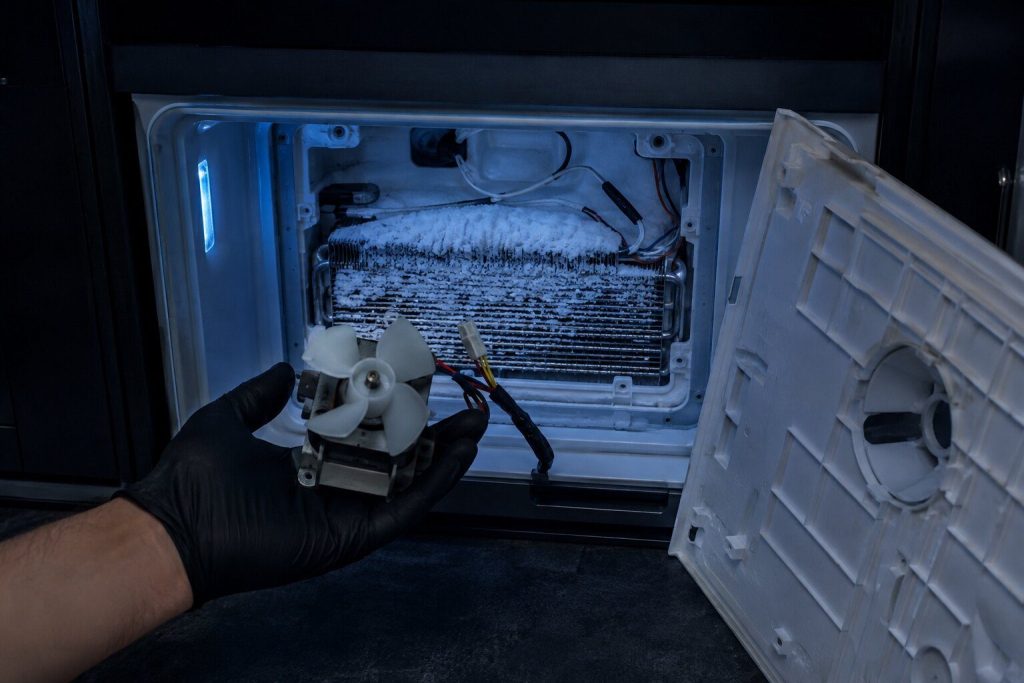
from $155 Evaporator fan repair
The reason a freezer holds perfectly while the food section goes warm. One compressor serves the whole cabinet, so cold is being made and simply is not arriving — and the part that moves it is behind the rear panel with the shelves out. It is a short repair once the panel is off and a longer diagnosis before that, because on this make nothing on the front of the appliance will point at it.
- The classic warm-fresh-food, cold-freezer complaint
- Behind the rear panel: the strip-down is the job, the part is not
- The ice that stopped the blade is checked for as well as the blade
-
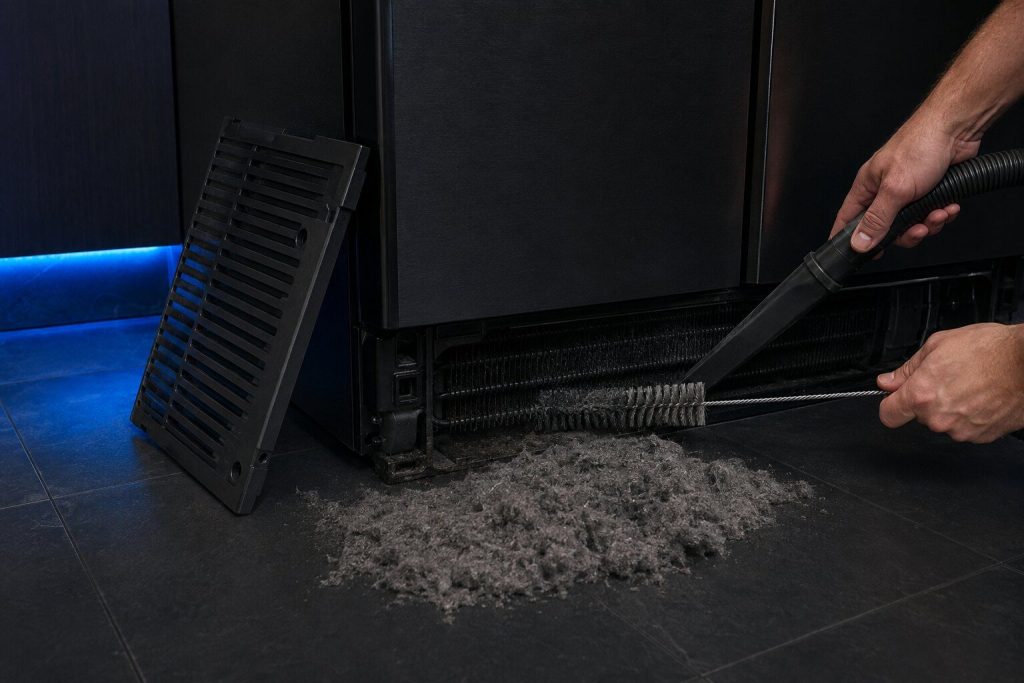
from $115 Condenser cleaning service
The maker's own first answer for a cabinet that is not cold enough, and in this city it is right often enough to do on every visit anyway. The coil sits behind a grille a few inches off the floor and collects what floors collect — dust, pet hair, and near the water a fine salt film that binds the rest into a blanket. Nothing on the appliance reports it. The compressor simply runs longer for less.
- The cheapest thing on this site and the cause of a real share of cold calls
- Cleaned the way the manual allows, without a chemical and without bending fins
- The clearance around the cabinet is measured too, not just the coil
-
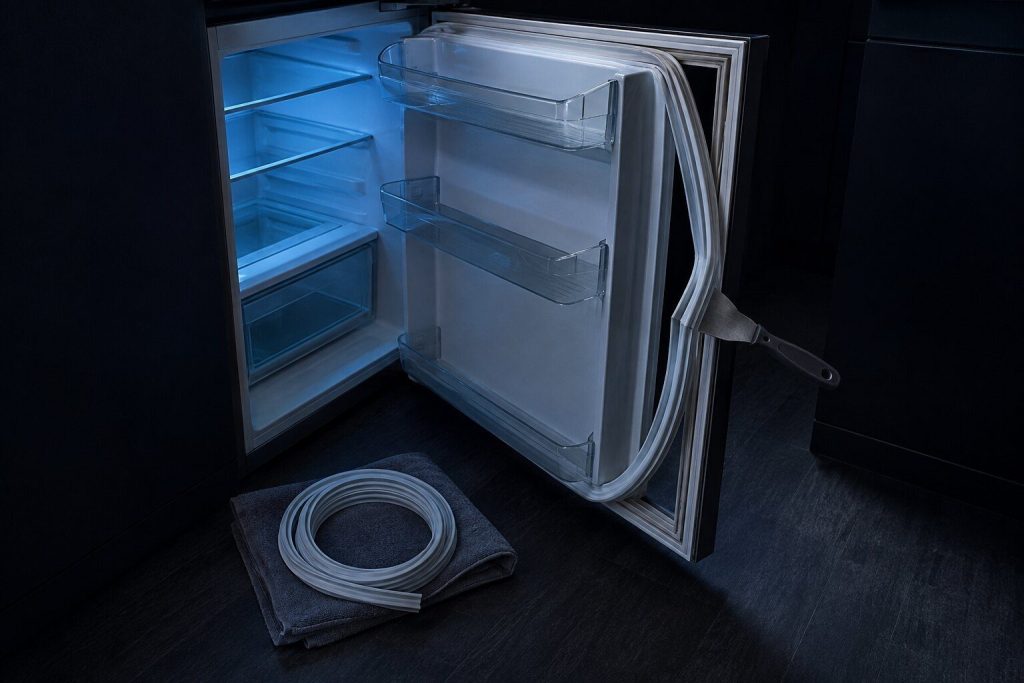
from $135 Refrigerator door seal replacement
Few parts this inexpensive cost you as much temperature, and in this humidity the bill arrives in days rather than months. A gasket that has taken a set still touches along most of its run, which is why the handle side always feels fine — the gap is at a hinge corner or low down where the door is heaviest. Fitted to a door that no longer closes square it fails again, so the door is set at the same visit.
- Found along the whole run rather than at the handle
- The door is squared at the same visit, or the new gasket fails the same way
- Frost and condensation are traced to the seal before anything else is suspected
-
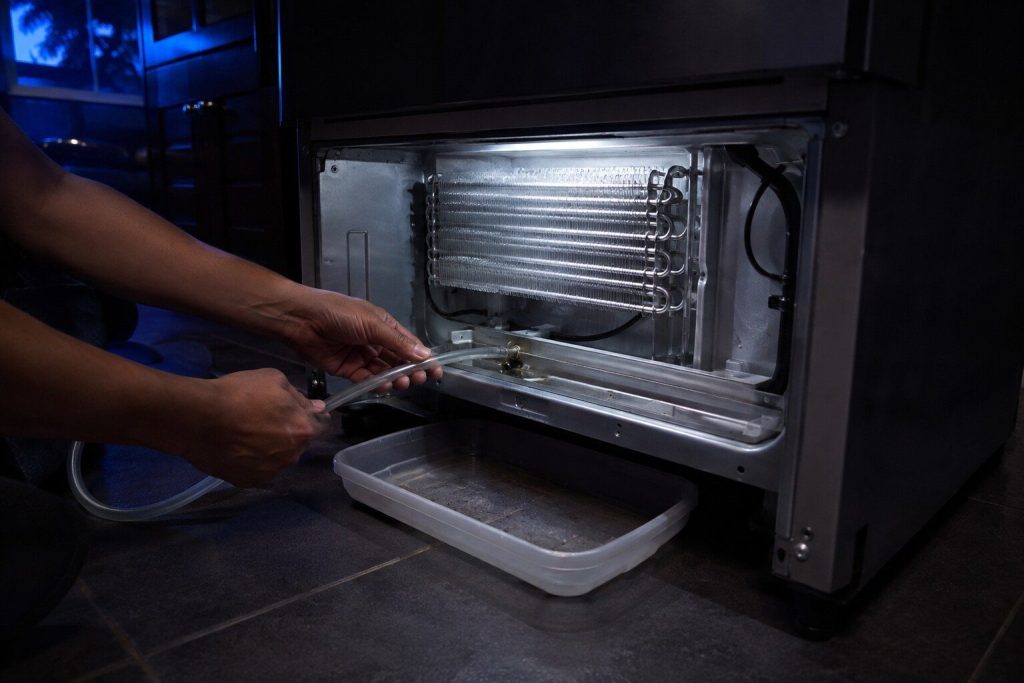
from $135 Refrigerator leak repair
Water inside the cabinet, under it, or on the floor beside it, and the three have different answers. Inside is nearly always the defrost drain backing up and refreezing; underneath is the drain pan or the tube that feeds it; beside it is the supply line, which is plumbing wearing an appliance complaint. In a kitchen with wood floors or a cabinet run either side, this is a today job rather than a weekend one.
- Inside, underneath and beside are three different repairs
- The drain is cleared and the reason it blocked is dealt with
- The cabinetry is checked before we leave, not after it swells
-
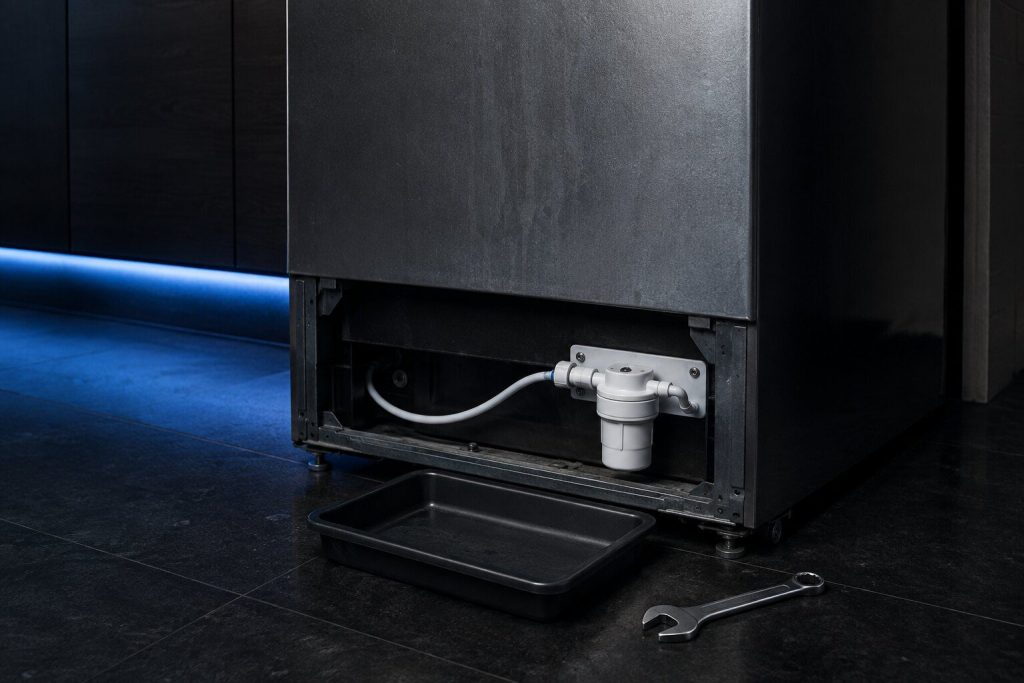
from $109 Water dispenser and filter service
No water, slow water, or water that tastes of something. Most of it is upstream of the appliance — the filter, the line and the valve behind the cabinet — and most of it is solved without a part. The one thing worth knowing on this make is that a filter kept past its date starves the ice maker before anybody notices the dispenser, so the two complaints arrive months apart and have one cause.
- Flow read at the appliance itself, never inferred from how the faucet feels
- How old the filter is counts here, whatever its label claims
- The same restriction usually explains the ice maker as well
-
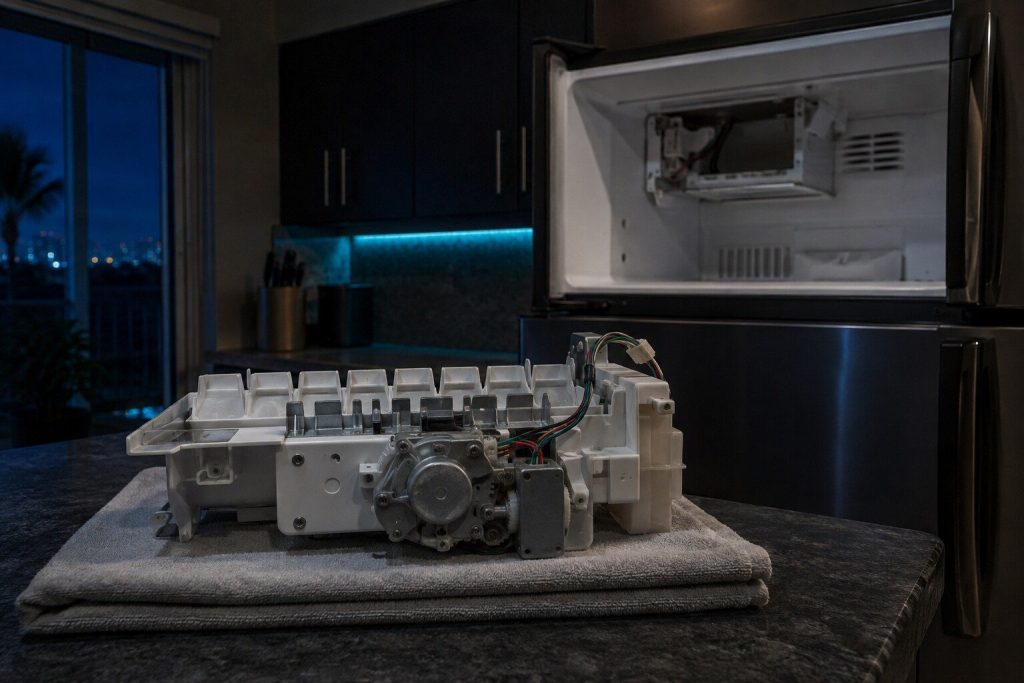
from $145 Ice maker repair
The module inside a refrigerator — a fill valve, a mold, a heater to let the cubes go, and whatever tells it the bin is full. This badge sells no ice machine of its own, so there is no second version of this job and no page here pretending otherwise. Nothing is published for ice on any cabinet, so the whole diagnosis is measurement, and most of it happens upstream of the module rather than in it.
- The refrigerator's module: there is no standalone ice machine under this badge
- No published codes for ice at all — the fill is measured, not inferred
- The arm or sensor that stops production is checked before the module is blamed
-

from $125 Ice maker water line and fill valve service
Everything between the shut-off and the mold, which is where most low-ice calls actually end. These modules mind flow rather than pressure, so a tired filter or a saddle valve left half open will starve one gradually enough that nothing ever appears broken — production just falls month by month. This is the least expensive ice job on the list, and the one people most often assume will be the dearest.
- Flow measured at the machine, not judged from the kitchen tap
- Filter age is a real variable here and it is treated as one
- The kink a reinstall leaves in the line is looked for every time
In more detail
About Maytag refrigerators
Where this make stops talking
Twenty-six numbered conditions across five hundred and nine refrigeration pages is not a hole in our research; it is a decision the manufacturer made. Anyone offering you a Maytag refrigerator code table has built it from a corporate platform document rather than from anything this badge publishes. What replaces it on a real visit is a sequence with instruments in it: both compartments against their set points, air moving at the vents, the evaporator behind the rear panel, whether the defrost cycle is running at all, the seals, and the sealed system last and only on evidence.
Three cabinets that fail differently
French door with the freezer beneath, side-by-side with the dispenser in a door, and the plain top-freezer are three machines rather than three trims. They put the evaporator in different places, move air between compartments differently, and — the part that decides most repairs in this climate — expose different amounts of gasket to a humid kitchen for different lengths of time. The top-freezer cabinet is the simplest and the most repairable of the three, which is part of why it is still on this maker's list after sister brands have let it go.
This article is based on:
- Official manufacturer documentation
- Internal repair procedures
- Technician repair history
- Company quality standards

Before you book
Questions about Maytag refrigerators
The lower half is cold and the food section is not.
Encouraging, oddly. One compressor serves the whole cabinet, so a freezer holding its number proves the cooling half is intact and moves the question to how air gets from one compartment to the other. Usually that is a damper, a fan, or an evaporator iced over because the defrost cycle has stopped running. None of those is refrigerant work, which is why nobody here quotes refrigerant work on this complaint until everything above it has been excluded on record.
The compressor never seems to stop.
Look at the grille at the bottom before anything else, every time, in this city. The coil behind it breathes what the floor holds, and near the water that includes a salt film that binds the dust into a blanket. Loaded, it forces long runs for little cooling, which is indistinguishable from a dying system until somebody cleans it. If the coil is clear and the cabinet still cannot settle, the seals and then the sensors are next.
Nothing shows on the display, so where do you even start?
With numbers we take ourselves, which is the truthful answer for this make's cold half. Twenty-six numbered conditions spread across five hundred pages means most cabinets have nothing to declare, so a first visit carries thermometers and a meter and takes longer by design. What helps most is history rather than a code: how many days it has been drifting, and what changed in the room or the household before it started.
Where we do it
Across Miami-Dade, Broward, and Palm Beach
Same terms everywhere we go: an on-site diagnostic first, the price agreed in writing, and the exact figure confirmed once we have seen the unit.
Neighborhoods people ask for by name