

MaytagRepair Miami

26 behaviors · 533 published conditions

Describe what it is doing. We will tell you what it is called.

Nobody calls to report a drain pump. They call because the tub is full of water at the end of a cycle, or the dryer needs two runs, or the lettuce has frozen. These pages start where you actually are, put the maker's own name on it where one exists, and are honest about the five where none does.

  • 26 behaviors written up
  • 11 reported as lights, not numbers
  • 1 with no published condition at all
  • from $89 diagnostic, credited to the repair

Start from what you can see

Twenty-six behaviors, in the words people actually use

Each page carries the free checks worth doing first, what it usually turns out to be, and how the answer changes depending on which version of the machine you have.

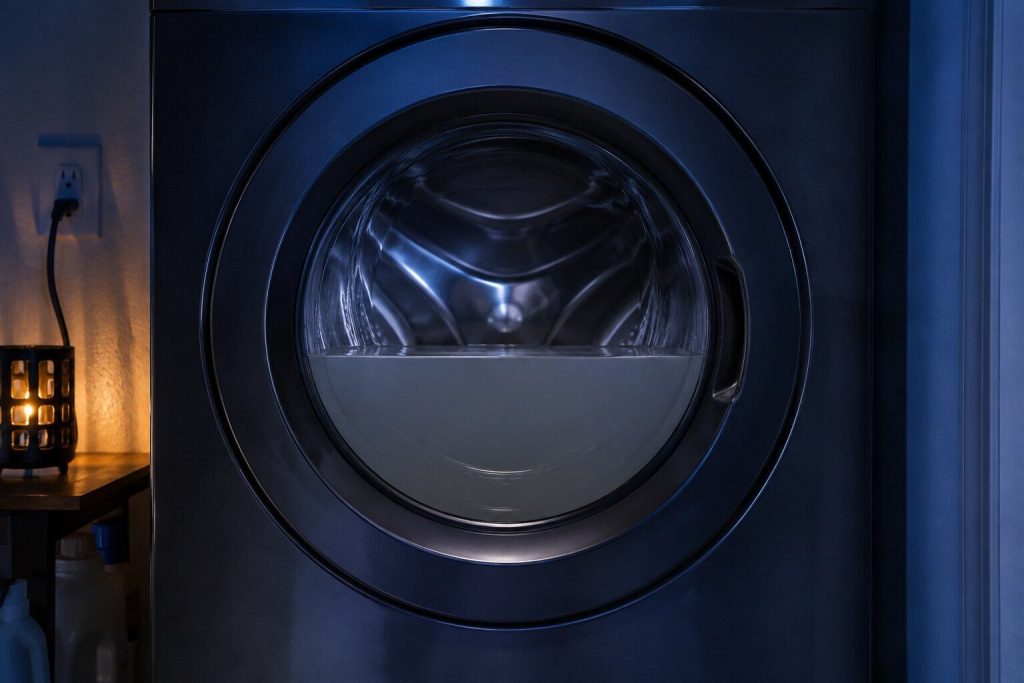
  • The round glass door of a washer half filled with still gray water that has stopped moving. Still is the word — the page is about water that did not leave on schedule rather than water leaving slowly.
    The cycle ended and the tub is still holding water

    Washer will not drain

    A Maytag washer counts the seconds it spends emptying, and when the water has not gone by the time the cycle expected it to, the machine stops and prints a name for it. That name is worth more to us than the puddle is. Get it written down before the power goes off at the breaker, because the display forgets and the standing water does not.

    • drn, F9E1 and LF are three labels for the same measurement — water that did not leave on schedule
    • A tub that is full at the end of a cycle is a pump or a hose question, and it stays that way until both are cleared
    • Front-load machines carry a filter behind the lower panel that most owners have never opened
    What it usually means
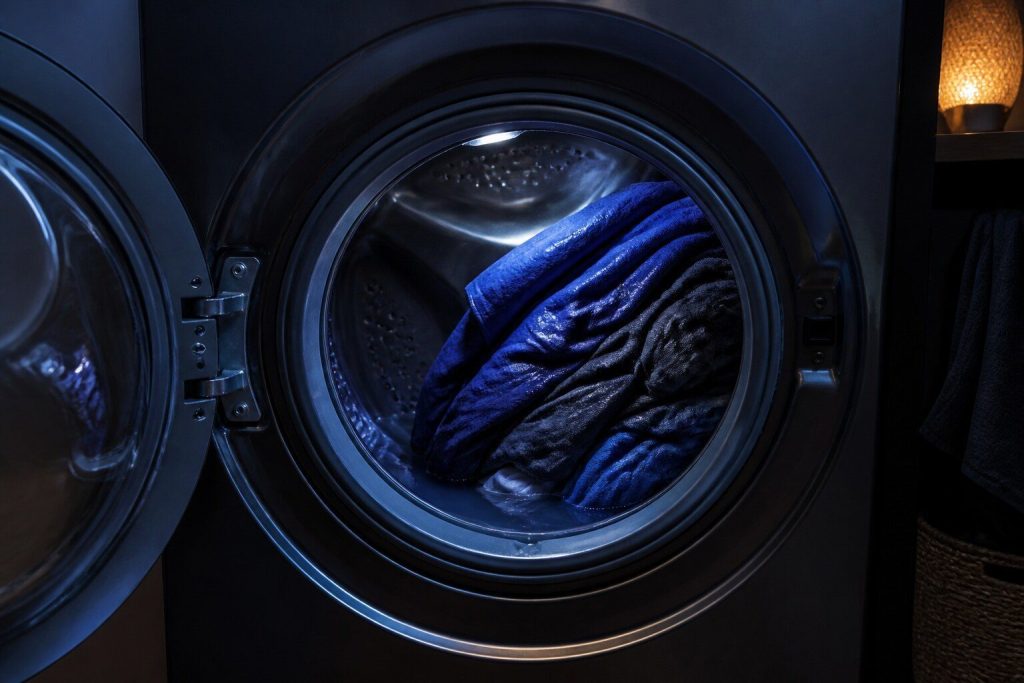
  • A drum standing open on a heavy load twisted to one side and pressed against the wall, water lying in the folds. A load gathered on one side is the commonest reason a spin is refused, and the frame is the cause and the symptom at once.
    The load comes out soaked and the drum never got up to speed

    Washer will not spin

    A load that finishes sopping wet has usually not failed to spin at all — it has tried, found something it did not like, and given up on purpose. Maytag machines refuse to spin for three different reasons, and they feel identical from outside the door.

    • The machine has to drain before it will spin, so a drain problem shows up first as a wet load
    • A lid or door that is not locked stops the spin without stopping the wash
    • UL and F5E2 both describe balance and lock rather than the motor
    What it usually means
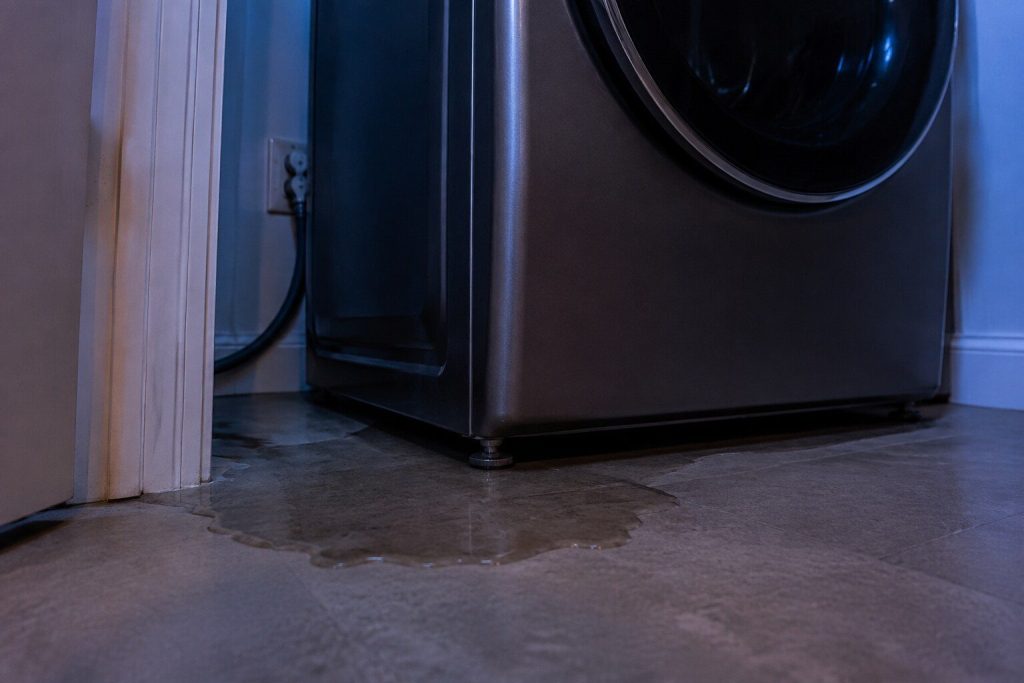
  • A dark wet patch spreading from beneath the front left corner of a washer with the leveling foot standing in it. Where the water ends up is not where it left, which is the sentence this page opens with.
    Water on the floor, and it is not obvious where it came from

    Washer leaking water

    Water under a washer travels before it stops, so where you find it is almost never where it left the machine. The useful question is not where the puddle is but when it appears — during the fill, during the wash, or only when the machine empties. Each answer points at a different third of the machine.

    • When it leaks matters more than where the water ends up
    • Overdosing is a real cause on these machines and shows up as Sud before it shows up on the floor
    • A leak on a tile floor in a second-floor laundry closet is worth stopping the same day
    What it usually means
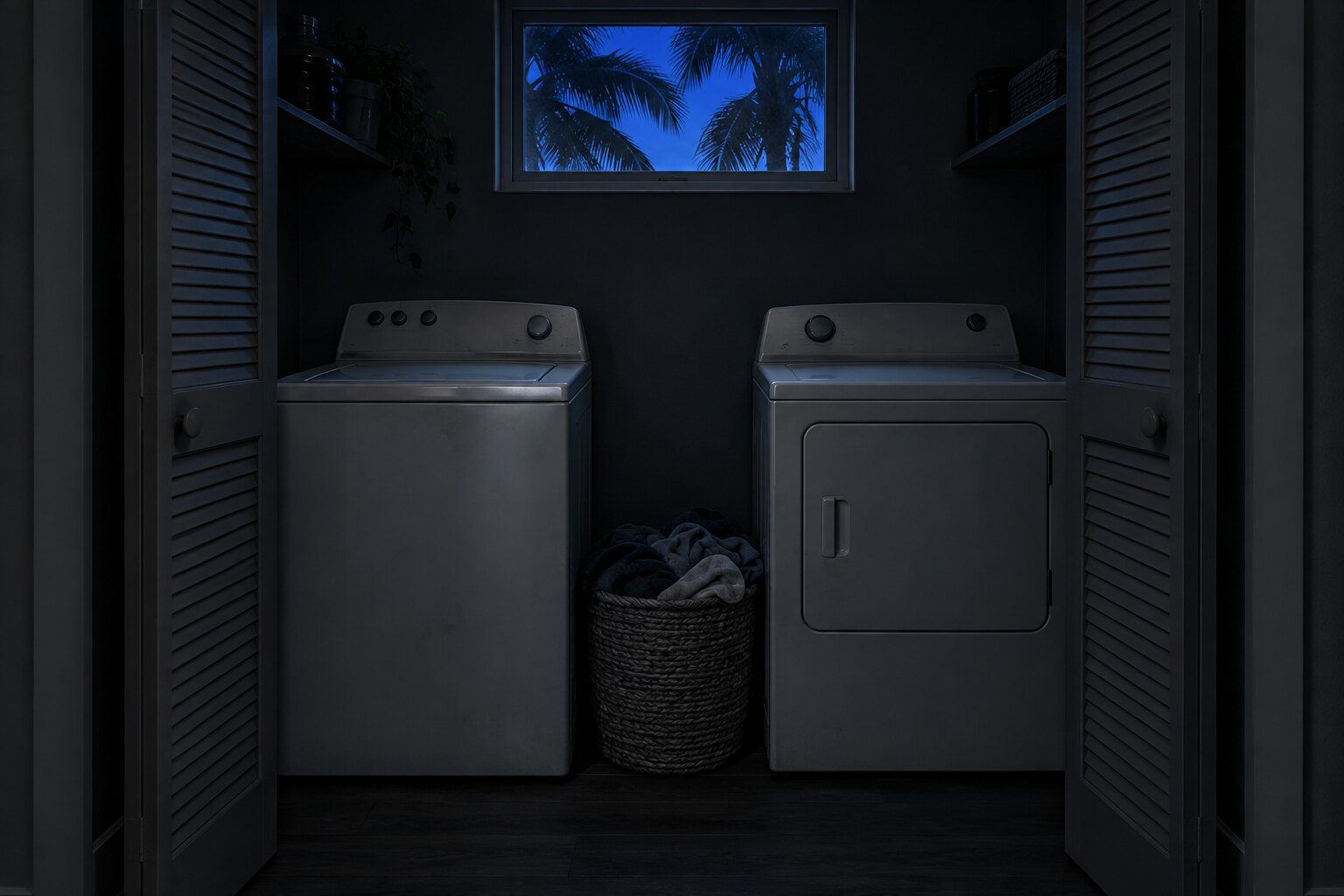
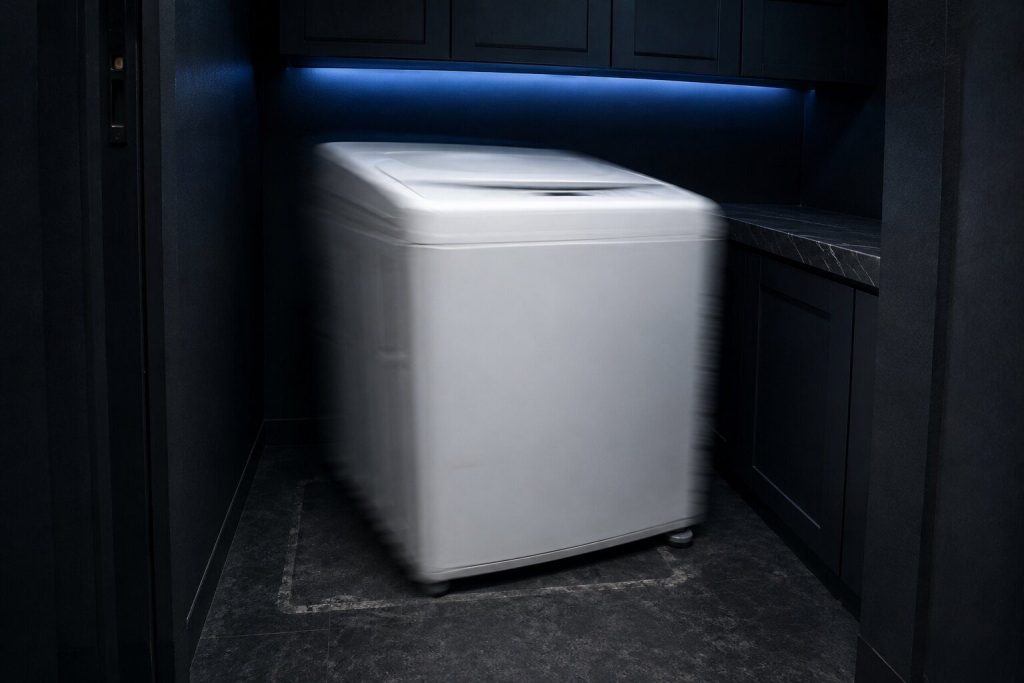
  • A white top-load washing machine part way through a spin in a dark laundry closet, shifted visibly forward and turned out of square, one front foot standing clear of the pale rectangle worn into the vinyl floor beneath it.
    It bangs on the spin and the machine has moved by the end of the load

    Washer shaking or moving across the floor

    A washer that walks is telling you the same thing whether it is six months old or fifteen years old — the basket is moving further than it should. What differs is why. On a new machine it is almost always installation, and on an old one it is almost always suspension. Very little else produces this.

    • A new machine that walks was leveled badly or still has its shipping bolts in
    • An old machine that walks has worn suspension, and it usually got louder first
    • UL is the machine's own word for a load it could not balance
    What it usually means
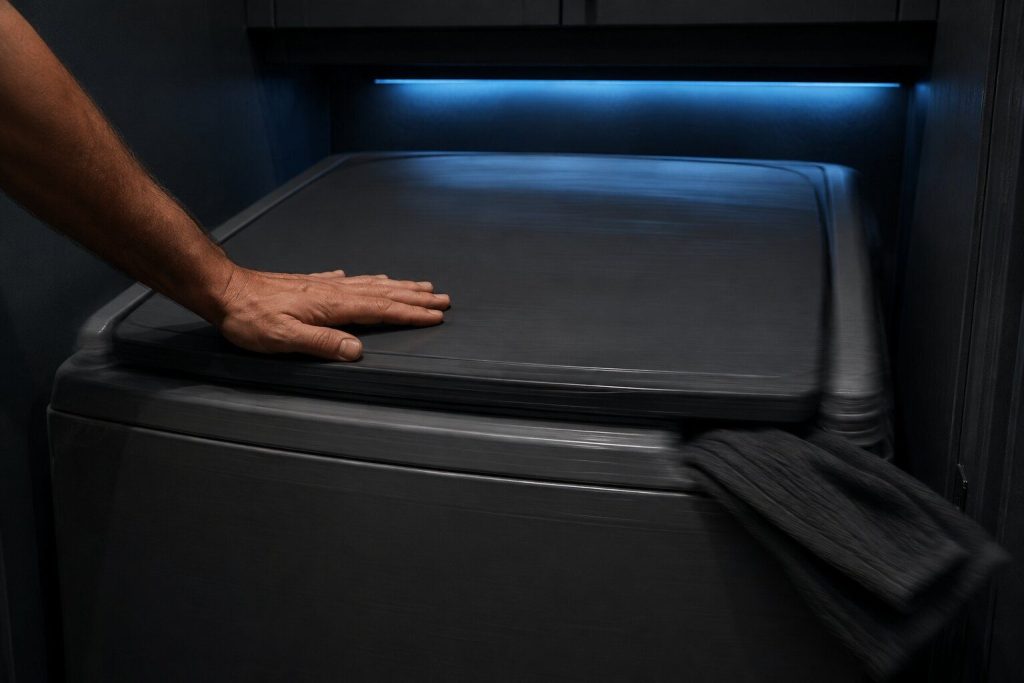
  • A hand laid flat on the top of a top-load washing machine at full spin in a dark laundry closet, the cabinet visibly blurred with vibration and the lid closed, a folded towel sliding off the corner of the machine.
    A grinding, roaring or rumbling that arrives with the spin and goes when it stops

    Washer loud on the spin

    Noise on the spin is the one complaint on this badge where the age of the machine changes the answer completely. These get kept a long time, and a bearing that has been talking quietly for a year is a different conversation from a machine that started grinding on Tuesday with a hairpin in the pump.

    • A noise that only exists at high speed is a bearing or a bracket, not a pump
    • A noise that exists during the drain as well is very often something small and loose
    • Bearing noise starts quiet and gets worse over months — the history is part of the diagnosis
    What it usually means
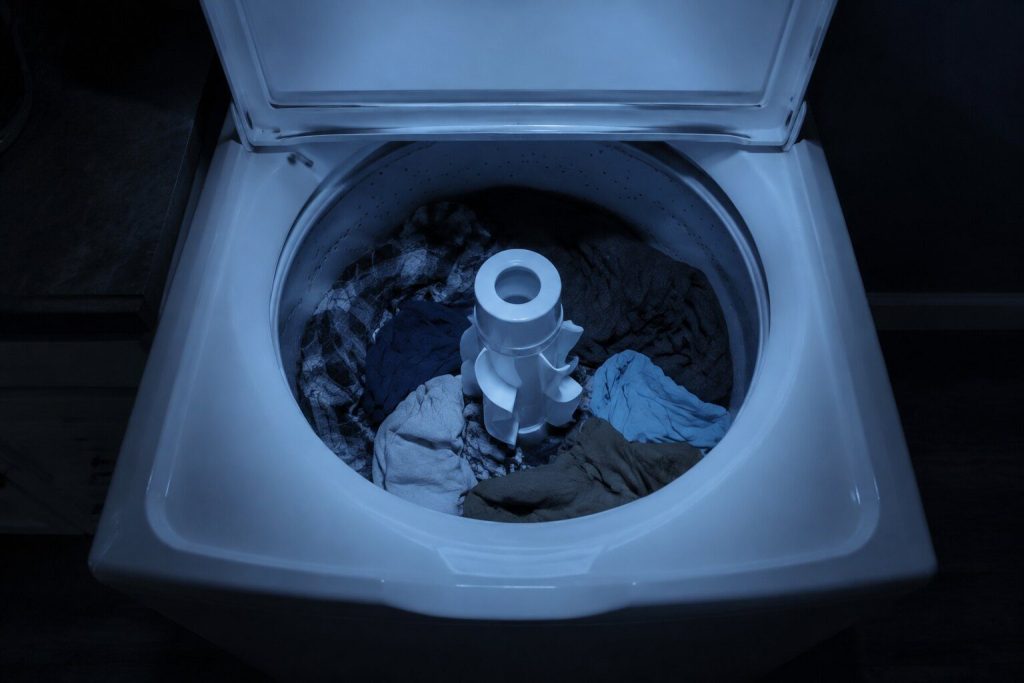
  • Looking down into the open tub of a white top-load washer at night: a load of laundry lying loose and completely dry around a tall finned center agitator post, not a drop of water anywhere in the basket.
    The cycle is selected and nothing happens, or the drum stays dry

    Washer will not start or will not fill

    Two complaints that arrive in the same phone call and are cleared in the same order: is the machine getting power, is it getting water, and is it being allowed to begin. A Maytag washer will not start a cycle it cannot complete, so a machine that sits there is often reporting something rather than broken.

    • LF is the machine saying the water took too long to arrive, rather than a verdict on the machine
    • A control that has locked itself out looks exactly like a dead machine
    • A lid or door that will not report closed stops the cycle before it starts
    What it usually means
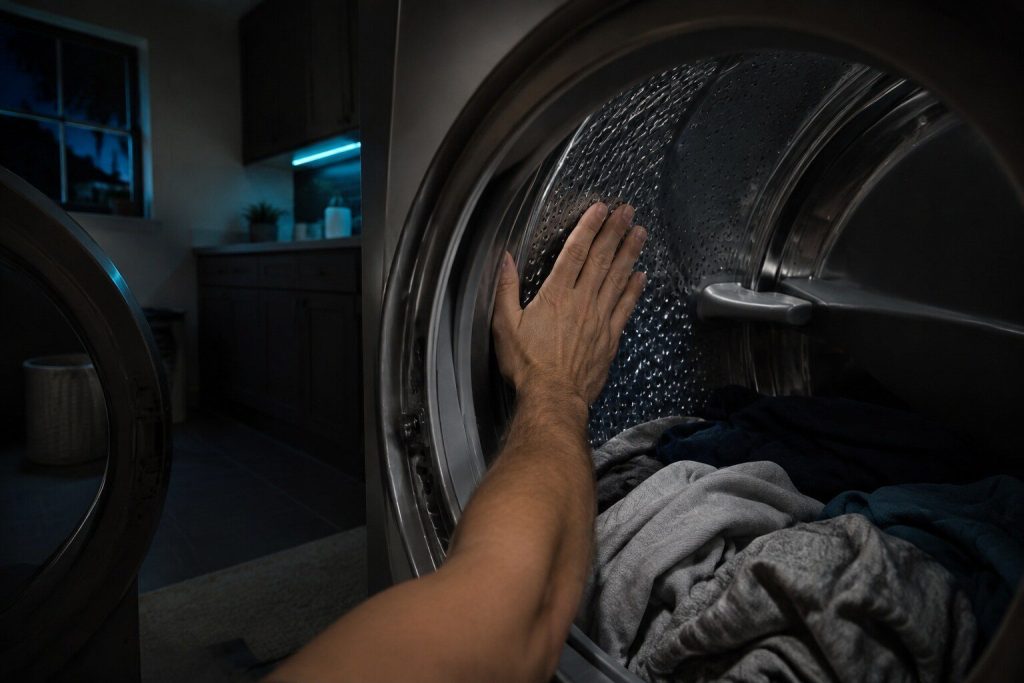
  • A hand laid flat against the inside wall of a dryer drum at the end of a cycle, the laundry around it plainly cold. The drum turned for the full cycle and made no heat, which is the distinction this page rests on.
    The drum turns for the full cycle and the clothes come out cold and damp

    Dryer runs but does not heat

    A dryer that tumbles without heating has one of two very different problems, and which one it is depends on whether it burns gas or draws current. On an electric machine the drum and the heat are on separate legs of the same circuit, which is why a machine can run perfectly and still produce no warmth at all.

    • An electric dryer that turns but never warms is very often half a breaker rather than a part
    • A gas dryer that tries and gives up is an ignition sequence you can hear from the laundry room
    • AF is a restricted vent, and a restricted vent looks exactly like a heating problem
    What it usually means
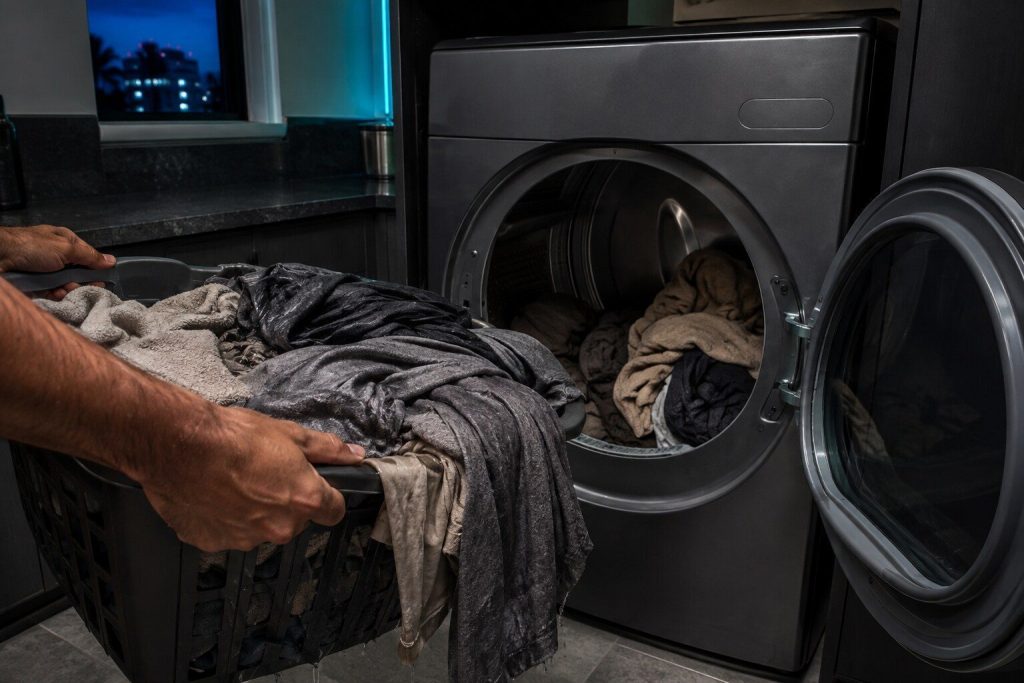
  • A basket lifted out of a dryer whose contents still hang heavy and damp with the drum behind half loaded. Everything came out warm and wet, which is the complaint in one frame rather than a duct nobody can see.
    Everything comes out damp and the load goes round again

    Dryer takes two or three cycles

    This is the complaint that costs the most money and gets reported the latest, because it creeps. A dryer that used to finish a load in fifty minutes and now takes two runs has generally lost airflow rather than heat, and it has been losing it for a year.

    • Almost always airflow — the duct, the screen, or the slot the screen sits in
    • A moisture sensor that has scaled over will end cycles early on an automatic setting
    • The running cost of this doubles quietly, which is why it is worth fixing rather than living with
    What it usually means
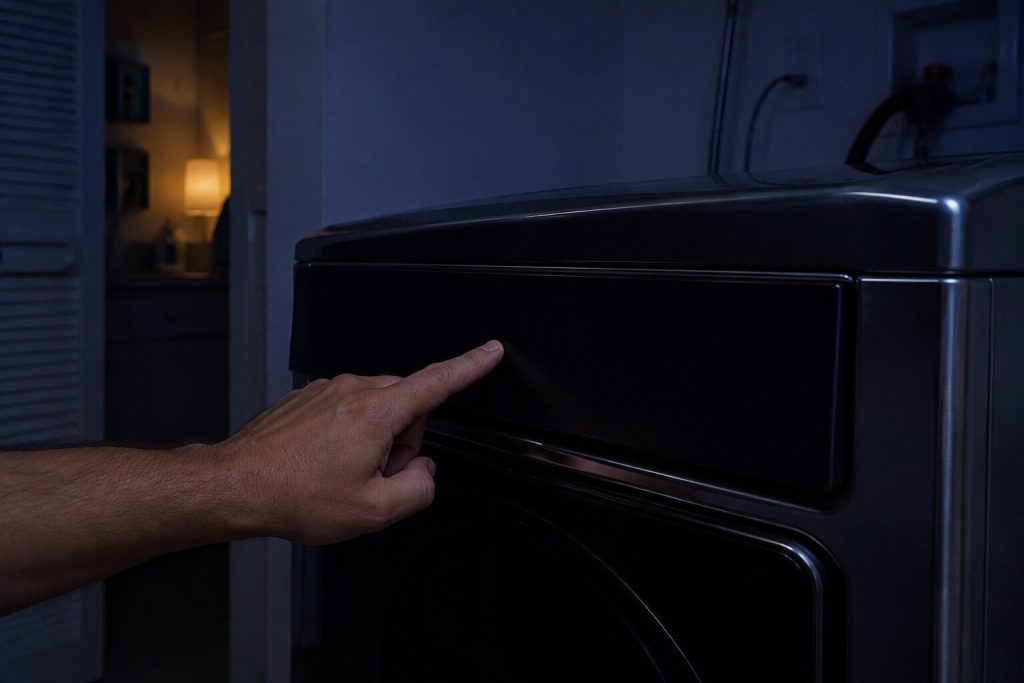
  • A finger pressed against the dark fascia of a dryer with nothing lit under it anywhere, the laundry closet in deep blue shadow
    The panel may light, the drum does not turn, and pressing start does nothing

    Dryer will not start

    A dryer that will not begin is either not being allowed to or not being powered, and the two look identical from the front. On this badge the first question is always whether the display is showing anything at all, because a dark panel and a lit one send us to opposite ends of the machine.

    • PF means the machine lost power mid-cycle and is waiting to be told what to do
    • A control lock stops everything and is easy to set by accident
    • A door that does not latch is the most common reason a dryer sits still
    What it usually means
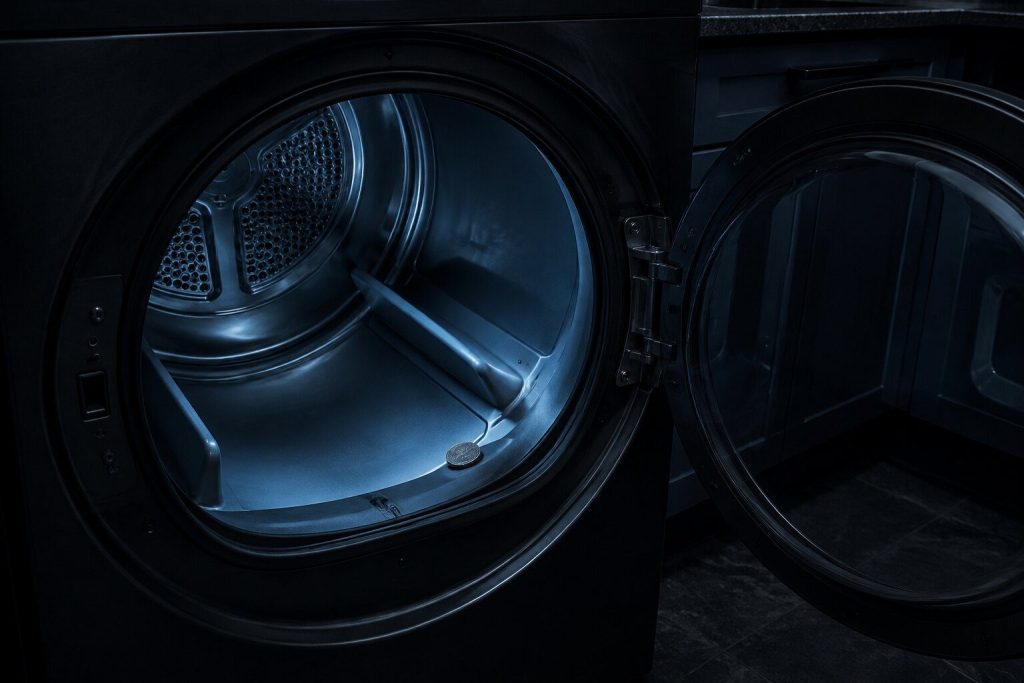
  • The open drum of a dryer in a dim laundry room with a single coin lying against one of the lifting vanes, the drum otherwise empty, the door swung wide and one cold light raking across the vanes.
    A rhythmic noise that keeps time with the drum

    Dryer thumping, squealing or grinding

    Almost every dryer noise comes from the four things the drum rests and rides on, and each of them has a distinct sound. A dryer is a simple machine, which means the noise really does name the part — the trick is describing it accurately.

    • A rhythmic thump that keeps pace with the drum is a roller or a flat spot
    • A squeal that rises with the drum is a bearing or the idler
    • A grinding scrape usually means something got past the drum seal
    What it usually means
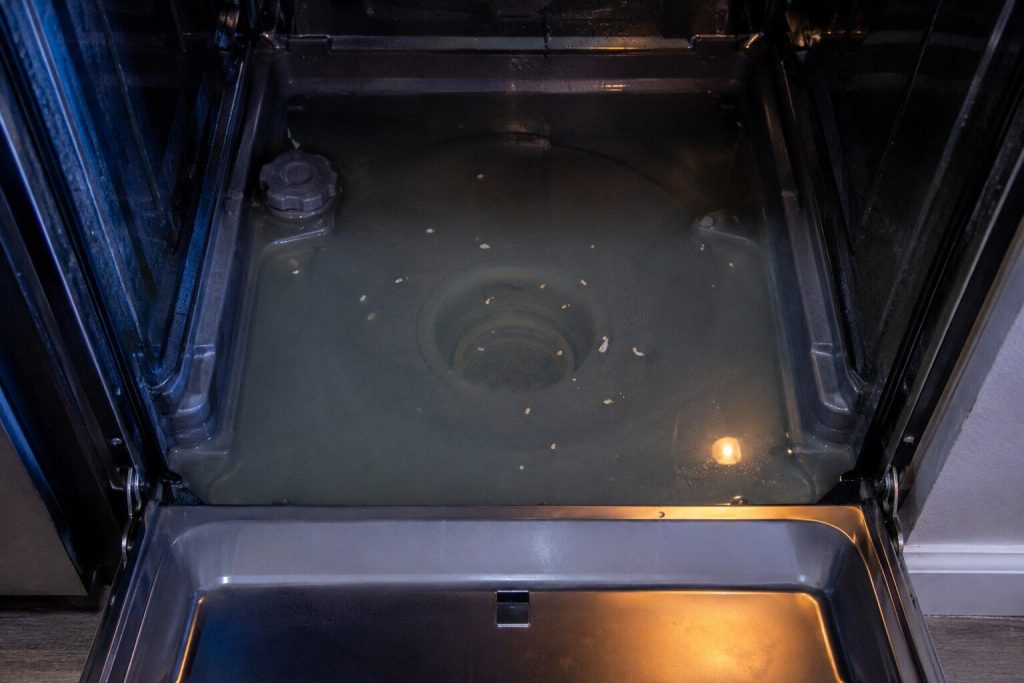
  • Two inches of gray water in the tub floor with the round filter well submerged and grains of food circling above it. The filter under the water is exactly where this page sends the reader first.
    Water standing in the bottom of the tub after the cycle

    Dishwasher will not drain

    An inch of water in the sump at the end of a cycle is normal on some machines and a problem on none of them. Standing water above the filter is the complaint, and on a Maytag dishwasher it is nearly always something between the tub and the sink drain rather than anything electrical.

    • The filter in the base is the first place to look and it is designed to be removed by hand
    • A new garbage disposal with its knockout plug still in place stops the dishwasher completely
    • This machine may report the condition as a flashing light rather than as a number
    What it usually means
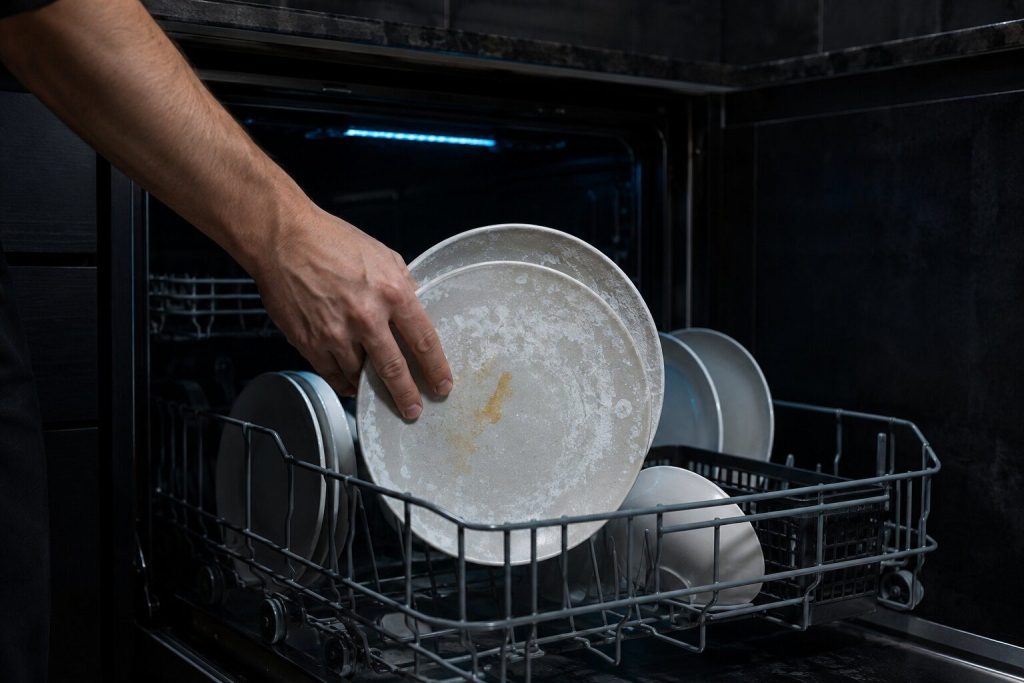
  • A hand lifting two plates from the lower rack of an open dishwasher in a near-black kitchen, both carrying a chalky white film and a smear of dried food, the rack behind them still loaded and the tub dark.
    Film, grit or food left on everything after a full cycle

    Dishes come out dirty or gritty

    Poor cleaning is rarely one thing that broke and usually three small things that added up. On a Maytag dishwasher the order is nearly always the same — water temperature, the spray arms, and the filter — and two of the three cost nothing to correct.

    • Hot water has to reach the machine before the cycle starts, not during it
    • A spray arm that cannot turn freely leaves a predictable pattern of dirty dishes
    • Grit on everything usually means the filter, not the pump
    What it usually means
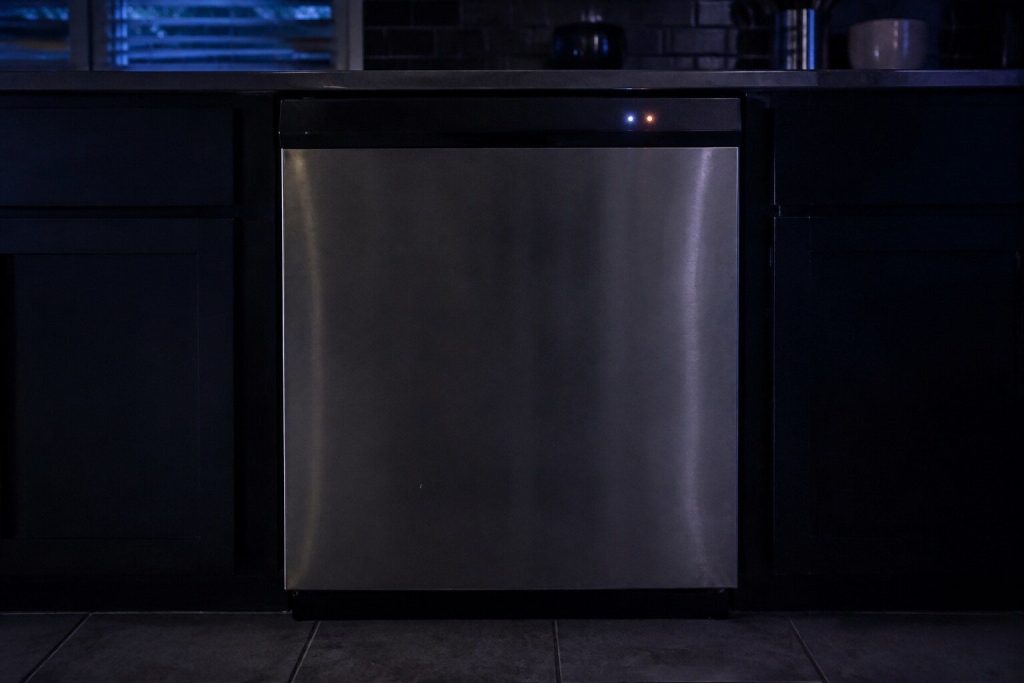
  • A dishwasher front in a dark kitchen with two small round indicator lamps lit on its top edge and everything else black
    A light repeating a pattern, or a panel that will not accept a cycle

    Dishwasher lights blinking and nothing happens

    This is the page that exists because of how this maker builds dishwashers. Where a range shows you a number, the dishwasher blinks — and the archive here carries a clean light, a control light, a sanitize light and a front status bar as reported conditions in their own right. A blinking light is a sentence, and it is worth reading before it gets cleared.

    • Count the flashes and count the pauses — the pattern is the message
    • Clearing the light by cutting power throws away the report and keeps the condition
    • A control lock will make a working machine look completely dead
    What it usually means
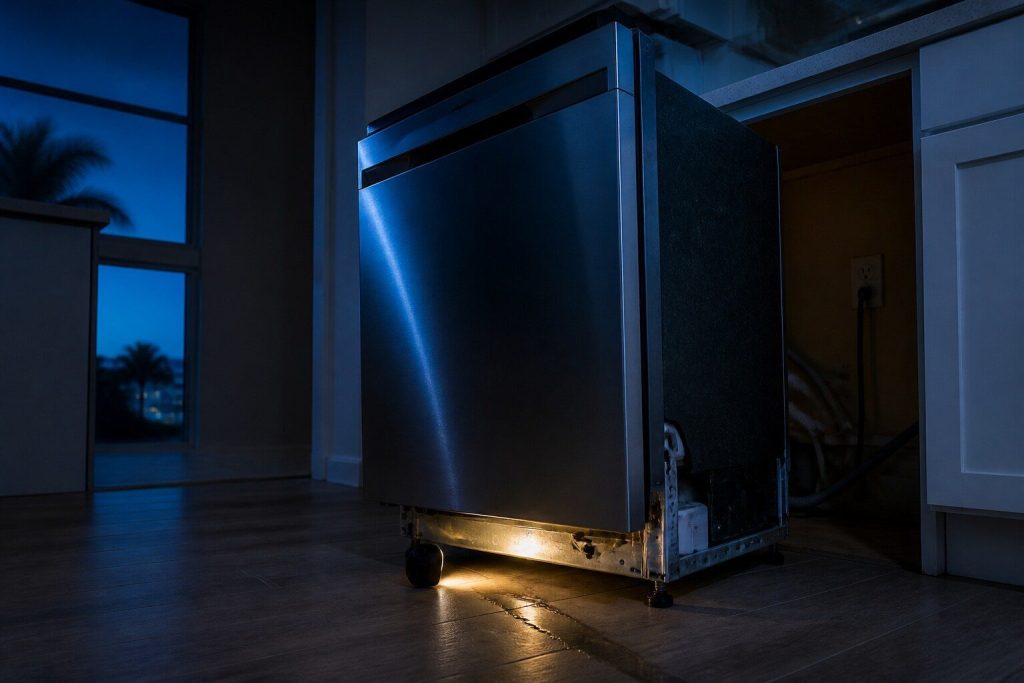
  • A dishwasher pulled out onto the kitchen floor with a work light on its side underneath showing a wet trail along the base frame. Water at the front that arrived from the back is the version of this page that needs the machine out.
    Water at the front of the machine or under the cabinet

    Dishwasher leaking onto the kitchen floor

    A dishwasher sits inside cabinetry with a wood floor or a finished ceiling somewhere below it, which makes this the one leak on this site we would rather see quickly. The good news is that the door seal and the detergent are the two commonest causes, and neither is a large repair.

    • Water at the front of the door is usually the seal or the dose, not the tub
    • Water appearing under the neighboring cabinet has been running along the floor for a while
    • Ordinary dish soap in the detergent cup produces a leak within one cycle
    What it usually means
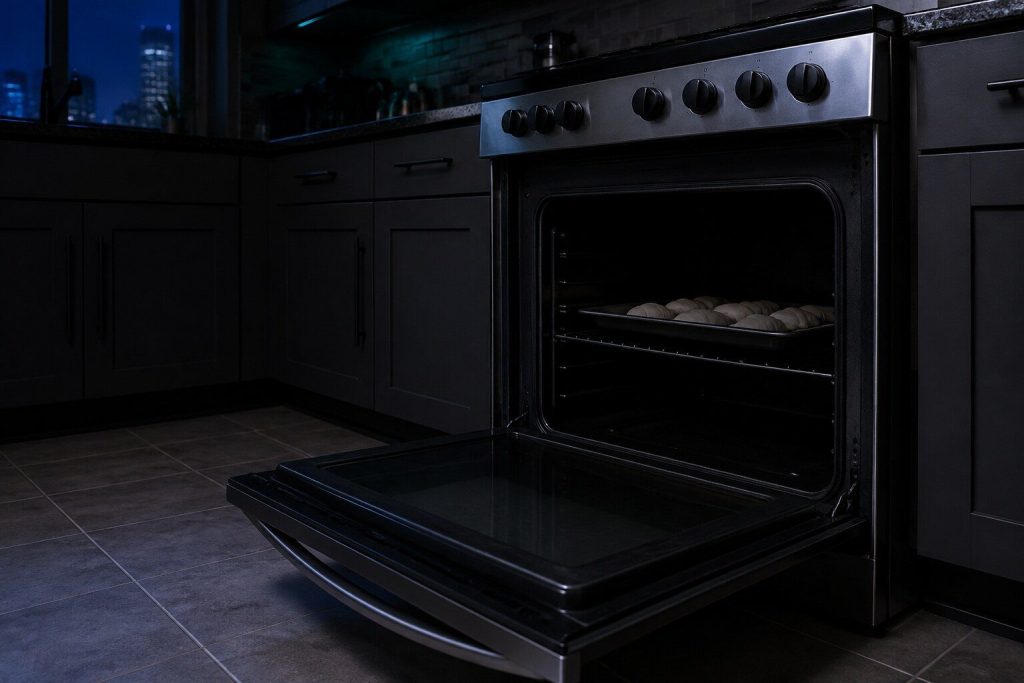
  • An oven standing open at night with a tray of raw dough on the middle rack, the cavity dark and unlit, no glow from either element. No glow is the diagnosis this page asks the reader to make.
    The oven takes the setting, and the cavity stays cold

    Oven will not heat

    An oven that accepts a temperature and never reaches it is usually reporting the problem somewhere, because this is the half of the house where this maker prints numbers. Look at the display before you look at anything else — an F code here is a specific, published condition and it saves most of the guessing.

    • A code on the display is worth writing down before the power is cut
    • Gas and electric ovens fail in completely different places
    • A demonstration mode left on will heat nothing at all and looks like a dead oven
    What it usually means
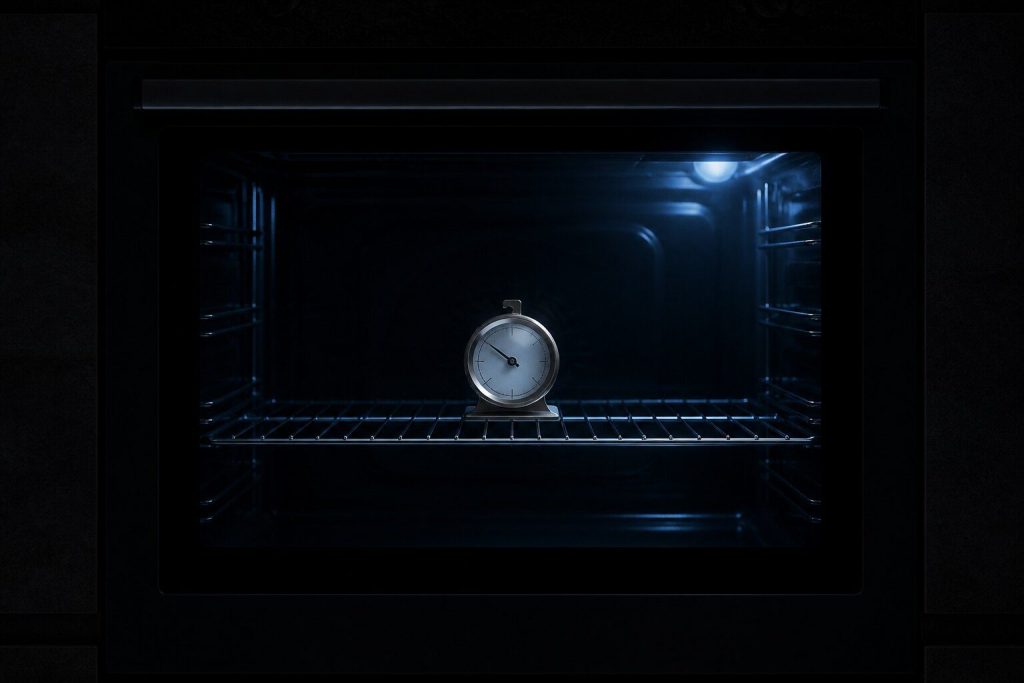
  • A dial oven thermometer standing alone in the middle of an otherwise empty oven rack, seen square on through the closed door glass with only the cavity lamp lit, the needle plainly short of the top of its arc.
    Everything is burning, or nothing browns and cakes come out flat

    Oven runs hot or cold

    An oven that heats but heats wrongly is the hardest complaint to describe and the easiest to measure. Before anything is called a repair, it is worth finding out whether the oven is actually wrong and by how much, because ovens drift over years and this one may only need telling.

    • Measure it before you judge it — an oven thermometer settles the argument in half an hour
    • These ovens have an owner-adjustable calibration and it is a menu item, not a repair
    • A large and steady error is a sensor; a wandering one is a control
    What it usually means
  • A locked oven door in a near-black kitchen, the fascia dark and the handle catching one cold light
    The clean cycle finished hours ago and the door is still shut

    Oven door locked after self-clean

    Self-clean puts the oven above eight hundred degrees and locks the door until it is safe. Most of the time the door is still locked because the oven is still hot, and the answer is patience. The rest of the time the cycle put something out of action on its way through, and that is the call we usually get.

    • The lock will not release until the cavity has genuinely cooled — that can be two hours or more
    • A self-clean cycle is the single hardest thing an oven ever does to itself
    • A door still locked the next morning is a repair, not a wait
    What it usually means
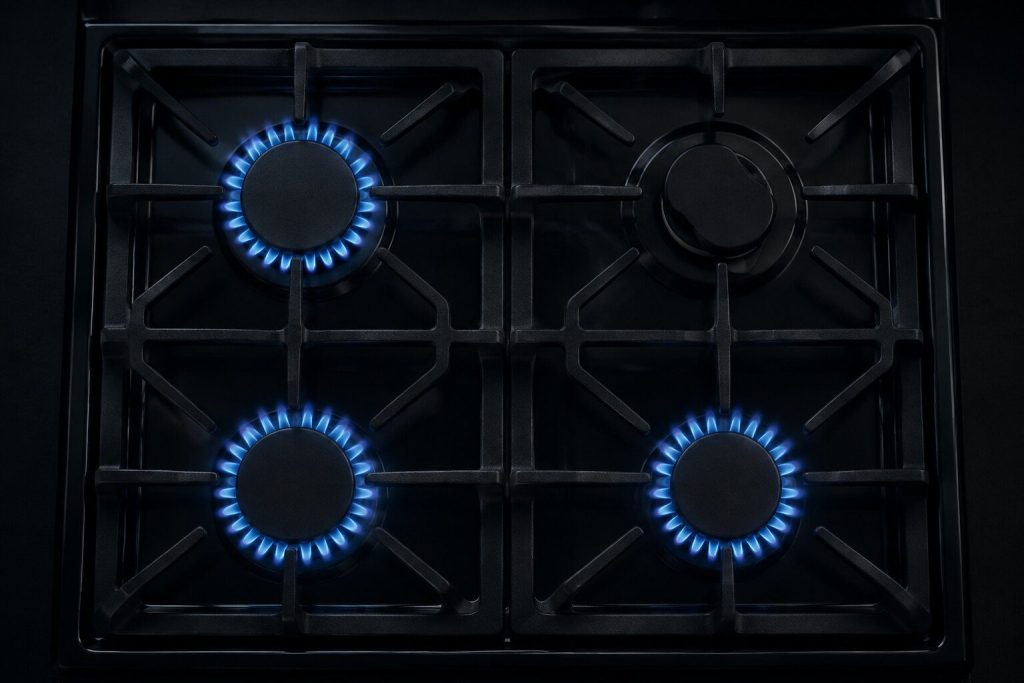
  • A freestanding gas range top seen from above at night: three sealed burners under cast grates carrying steady blue flame and the fourth dark, its burner cap sitting very slightly out of square on the ring beneath it.
    One burner clicks and never catches, or an element stays cold

    Range burner will not light

    This is the one repair on the whole site where the owner regularly fixes it before we arrive, and we would rather say so. A gas burner that clicks and will not light is usually a burner cap that is out of position or a port blocked by something that boiled over, and both are a kitchen-towel job rather than a service call.

    • A burner that clicks is getting spark — the gas or the port is the problem
    • One dead burner is that burner; every burner dead is supply or ignition shared
    • An electric element that stays cold is usually the element or its connection, not the control
    What it usually means
  • A hand pressed flat on the unlit touch area of a smooth black ceramic radiant cooktop in a near-black kitchen, nothing glowing anywhere on the surface and no indicator lit, an empty pan pushed to one side.
    The touch panel ignores every press, or a zone will not switch off

    Cooktop controls will not respond

    A glass cooktop has no knobs, which means everything you can see is a message from the control. A panel that has gone deaf is far more often locked, wet or too hot than it is broken, and all three of those clear themselves once you know what you are looking at.

    • A control lock disables the entire surface and is set by a wipe of a cloth
    • Water or a spill on the panel makes it ignore every touch until it dries
    • A zone that will not switch off should be killed at the breaker, not argued with
    What it usually means
  • A hand lifting a plain glass mug of milk out of a cavity with no steam and no haze coming off it, the lamp on behind. The water test this page asks for, photographed.
    The turntable spins, the light is on, and the food is cold

    Microwave runs but does not heat

    A microwave that runs without heating is the one appliance on this site where the honest advice is often not to repair it. The part that makes the heat sits behind a capacitor that holds a dangerous charge long after the plug comes out, and on a countertop machine the repair rarely makes sense against the price of a new one. Over-the-range units are a different conversation entirely.

    • Everything running normally except the heat is the classic picture and it is specific
    • Never open the case — the capacitor holds a charge with the machine unplugged
    • An over-the-range unit is built into cabinetry and is usually worth repairing
    What it usually means
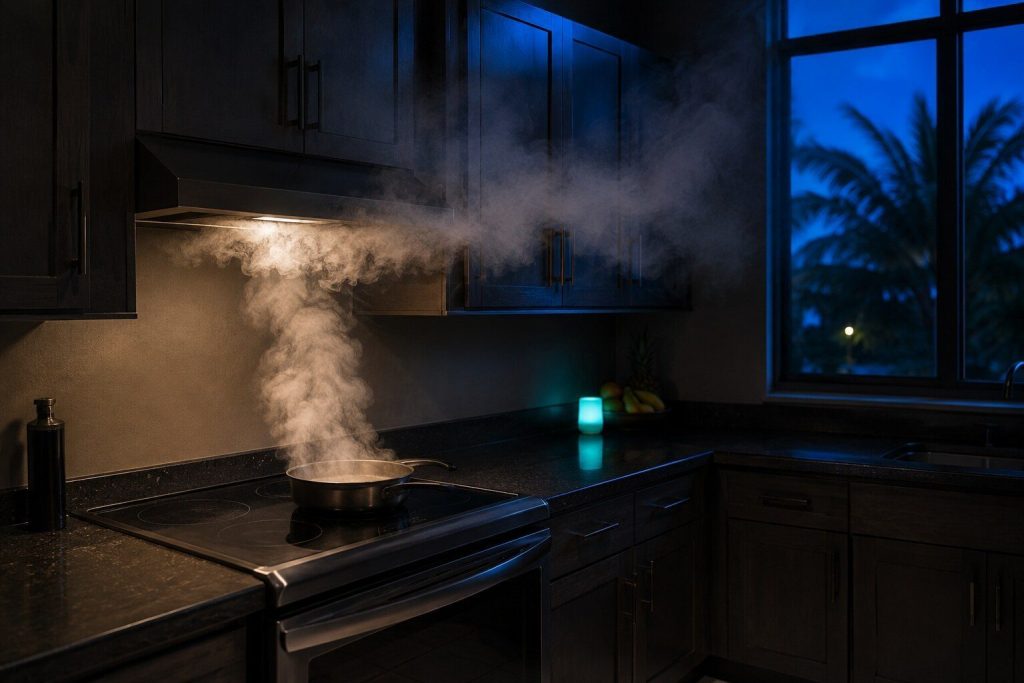
  • Steam from a pan rolling out sideways from under a wall-mounted hood and up across the cabinet fronts instead of being drawn in. The fan is running and the air is not leaving, which is the whole complaint.
    The fan runs and the kitchen still fills with smoke

    Range hood not pulling air

    A hood that runs and does not clear the air has either lost its path to the outside or never had one. The second is more common than people expect — a great many hoods in this region recirculate through a filter rather than venting outdoors, and a recirculating hood with a spent filter does almost nothing at all.

    • Find out first whether the hood vents outside or recirculates — the repairs are different
    • An F or a C on the display is a filter reminder on a timer, not a problem with the hood
    • A charcoal filter on a recirculating hood is a consumable, not a part
    What it usually means
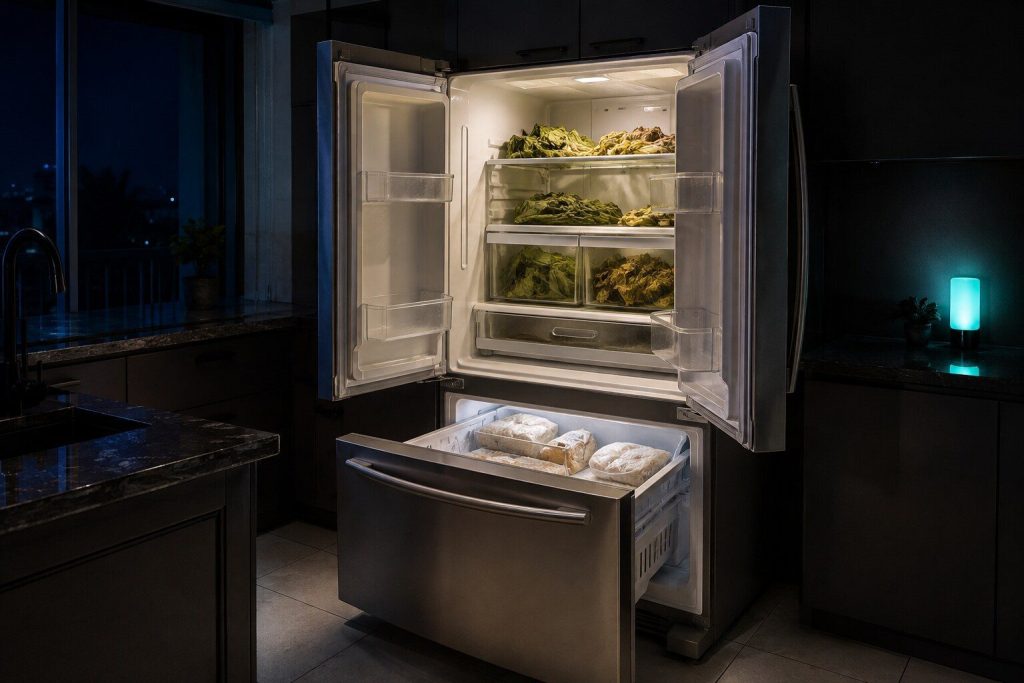
  • The upper compartment open on limp greens while the freezer drawer below is pulled out on hard frozen packets. The single most diagnostic sentence anybody says about a refrigerator, in one frame.
    The freezer is fine and the fresh food side is warm, or neither is cold

    Refrigerator not cooling

    The first thing worth knowing is that this appliance is not going to tell you much. Across five hundred refrigeration pages this maker publishes a handful of indicator conditions and no diagnostic codes worth the name — which means a warm refrigerator is diagnosed by what it does, not by what it says. That is the honest starting point and it changes what we ask you on the phone.

    • A cold freezer with a warm fresh food side is the classic defrost or airflow picture
    • Both compartments warm together is a different and more serious question
    • A cooling indicator switched off will warm the whole cabinet with nothing broken at all
    What it usually means
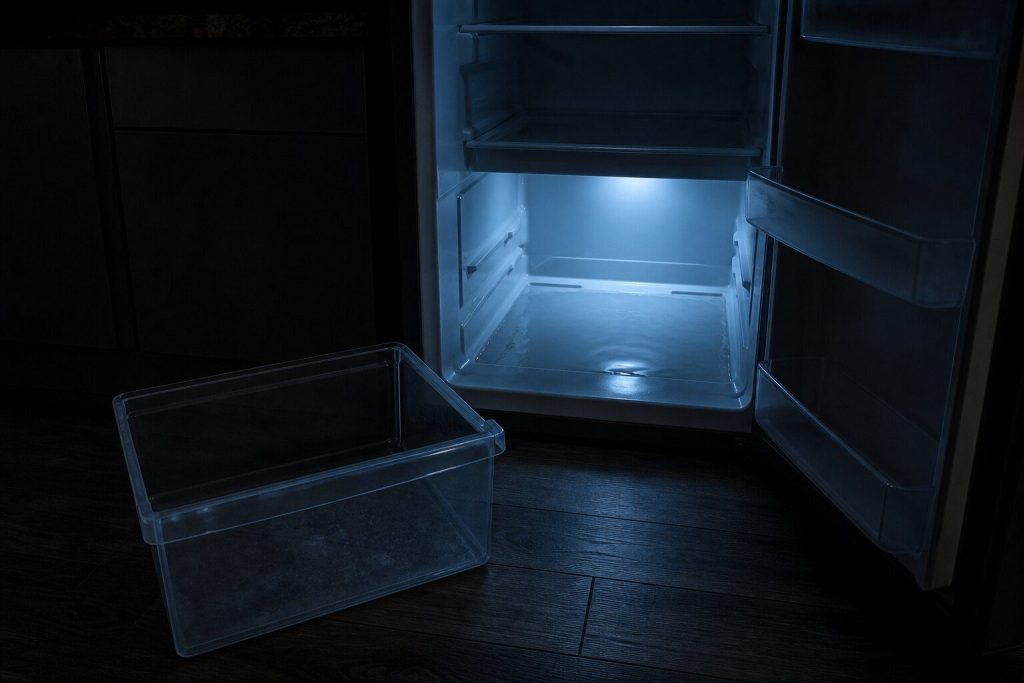
  • A crisper drawer lifted out and set on the floor beside a refrigerator, a shallow sheet of clear water lying in the empty well it came from, the compartment lamp the only light in a near-black kitchen.
    A pool under the crisper drawers, or water on the floor at the front

    Water inside or under the refrigerator

    Water inside a refrigerator is nearly always the drain that carries defrost water away, and it has a specific and unglamorous failure — a small tube freezes shut, the water backs up, and it reappears under the drawers. It is one of the more satisfying repairs on this site because the cause is so consistent.

    • Water under the crisper drawers is the defrost drain almost every time
    • Water on the floor at the front is usually the drain pan or the water line
    • This maker publishes an indicator for the water system but nothing for a drain
    What it usually means
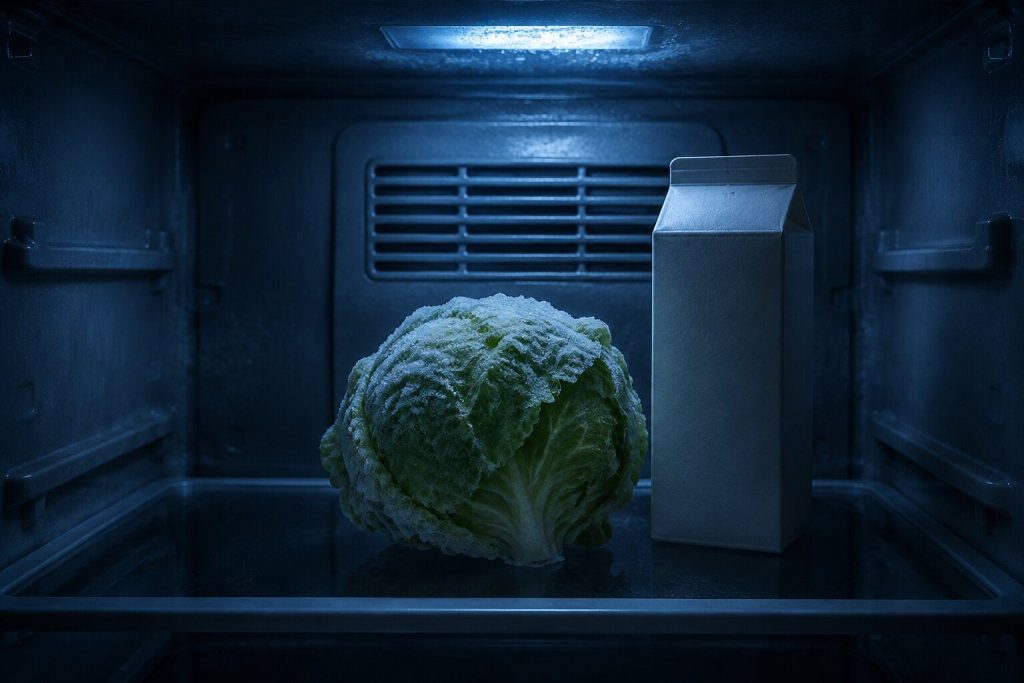
  • A head of lettuce and a carton standing on the middle glass shelf of a refrigerator's fresh food compartment at night, the leaves visibly stiff and glassed over with ice crystals, the vent grille in the back wall directly behind them.
    Lettuce turning to ice and milk with crystals in it

    Refrigerator freezing food

    Too cold is a real problem and it gets reported far less than too warm, usually after a month of throwing produce away. It is also one of the few refrigeration complaints with a genuinely good chance of being settled by a setting and a rearrangement rather than by a repair.

    • Food directly in front of a vent will freeze in a perfectly healthy refrigerator
    • A cabinet that is nearly empty runs colder and swings further
    • Consistent freezing everywhere on the shelf points at the control rather than at placement
    What it usually means
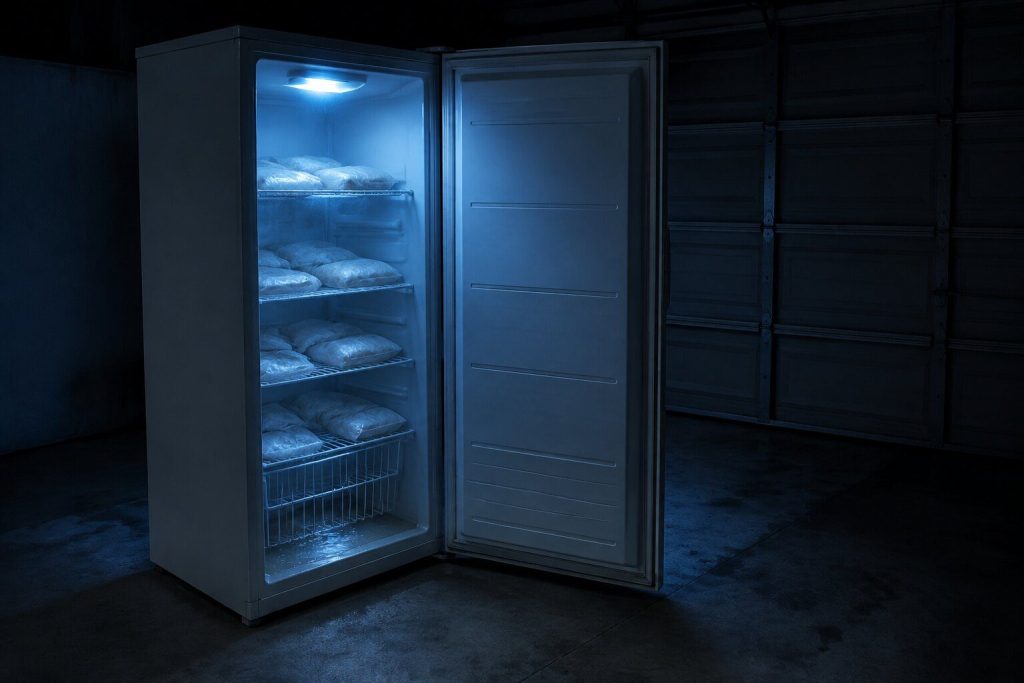
  • An upright freezer standing open in a dark garage, its wire shelves carrying slumped soft packets and a puddle of melt water lying in the bottom basket, a concrete floor and a closed garage door behind it.
    Ice cream soft, or a stand-alone freezer that has come up to temperature

    Freezer not freezing

    This maker publishes no numbered condition for any freezer at all — not one across the whole support library. That is not an omission on our part and it is worth stating plainly: a freezer that is not holding temperature will be diagnosed by measurement and by what you can see, and there is no code to look for.

    • Nothing on the display will name this — the cabinet does not report it
    • Frost on the back wall points at defrost; frost on the food points at the door
    • A chest freezer and an upright fail in different places
    What it usually means
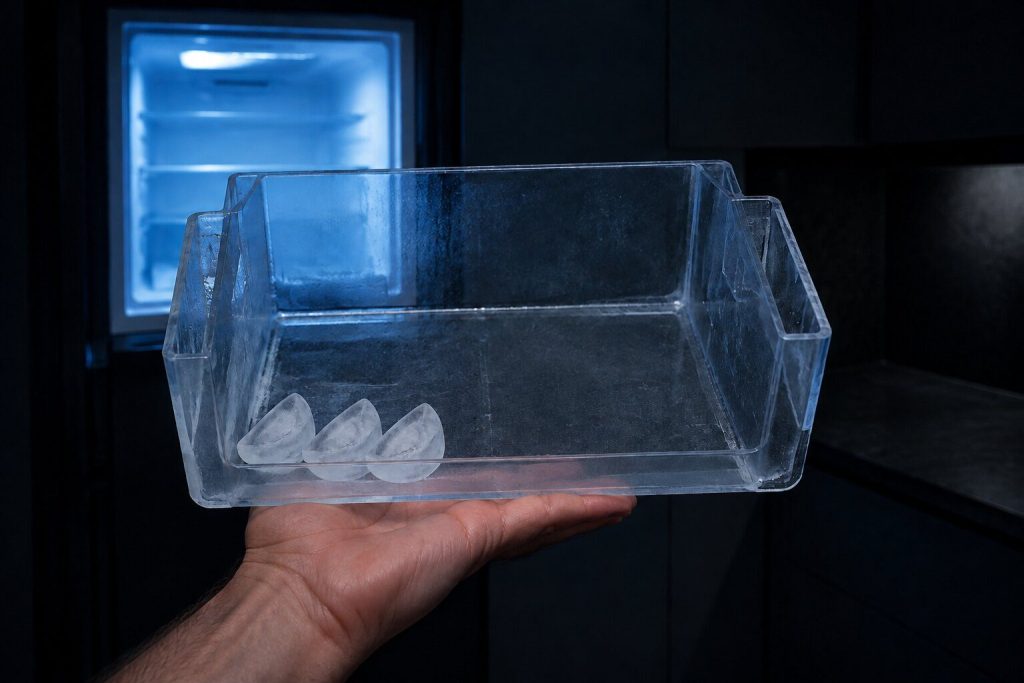
  • An ice storage bin lifted out of a freezer and held level in one hand in a dark kitchen, three loose crescent cubes lying in the bottom corner of an otherwise empty bin, the lit compartment it came from out of focus behind.
    An empty bin, small hollow cubes, or ice that has all stuck together

    Ice maker not making ice

    Ice makers produce more calls than any other single part of a refrigerator and almost none of them are documented — this maker publishes no numbered condition for one anywhere. What it does publish is an indicator for the water system, and beyond that the diagnosis is water, temperature and the mechanism, checked in that order.

    • Small or hollow cubes mean water arriving too slowly, not a broken ice maker
    • A freezer above five degrees will not make ice reliably no matter what else is right
    • The arm or the switch that says the bin is full stops production silently
    What it usually means

Why the laundry pages outnumber the rest

Six on the washer, four on the dryer, one on the hood

The weighting is measured rather than chosen. This maker publishes 105 numbered conditions for its washers and 48 for its dryers, against 41 for cooktops, 50 for microwaves and exactly two for a range hood. Where the maker documents most, owners ask most, and the pages follow that rather than spreading evenly for the sake of tidiness.

It also matches what gets called in. A washer bought twelve years ago and used four times a week has done tens of thousands of operations on its lid lock alone, and that is not an exotic complaint on this badge. It is the ordinary one.
Washer symptoms
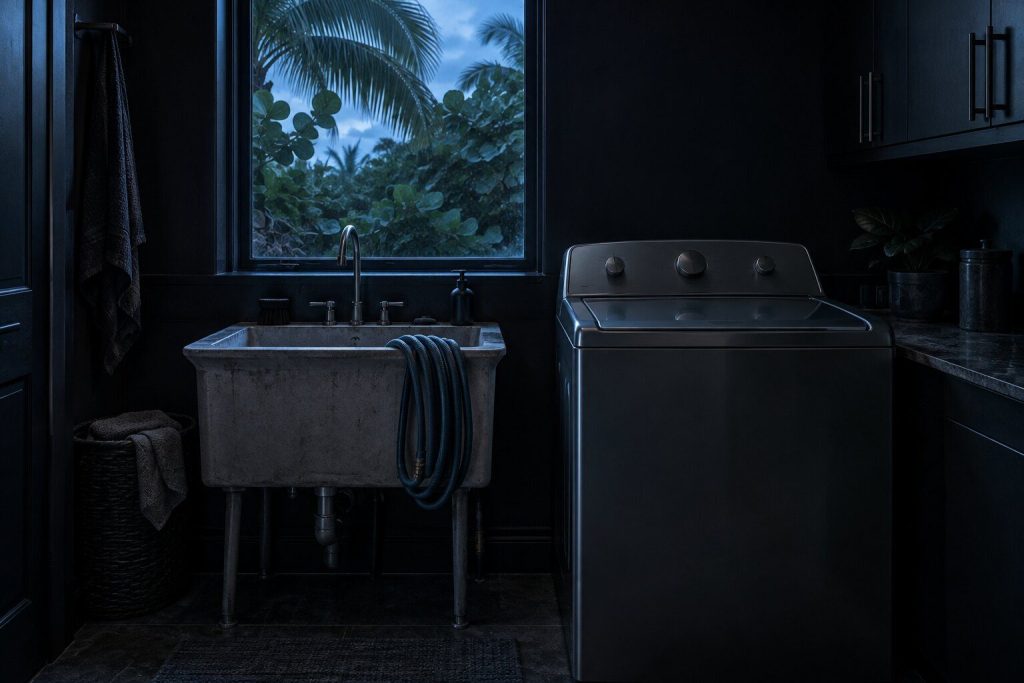
A deep utility sink beside a washing machine in a dim laundry room, a coiled hose over its rim, and above it one cold window looking out on palms and dense subtropical greenery at dusk

Where the maker is silent

Where there is no condition to read, the page says so

One of these pages links to nothing in the code archive, and that is deliberate rather than unfinished. This maker publishes no condition at all for a freezer that is not freezing or for an ice maker that has stopped — we counted across the whole library, and the number is zero.

What replaces it is a thermometer left overnight, a tissue held under a fan, and a slip of paper shut in a door seal. Those are not consolation prizes; on an appliance that reports nothing they are the actual diagnosis, and each of them costs you nothing and about ten minutes.

A freezer that is not freezing
Heavy condensation running down the inside of a dark kitchen window at night, the room behind it unlit and out of focus

Before you book

Three minutes that change the visit

If the machine prints something

  • Copy it exactly — a space or a dash between the characters identifies the control generation.
  • Photograph it rather than trusting your memory of it.
  • Do it before you cut power. The display forgets and the condition does not.
  • Say which appliance it is on: the same characters read differently on a washer and a range.

If it blinks, or says nothing

  • Count the flashes and the length of the pause, through two full repeats.
  • On a cold appliance, leave a thermometer in overnight and read it before the door opens.
  • Note whether the compressor is running constantly or not running at all — you can hear which.
  • Look for frost where there should be none. It is the clearest evidence a quiet cabinet gives.

Or start from the machine

By appliance instead

If you would rather begin from what it is than from what it is doing.

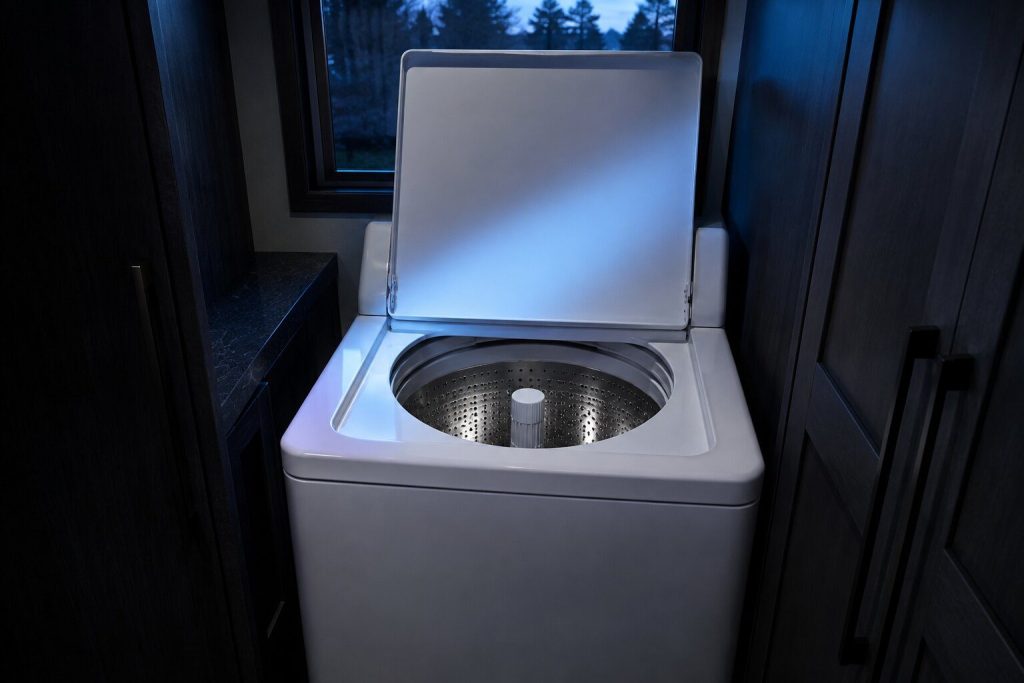
  • A white top-load washing machine standing in a narrow laundry closet at dusk with its lid raised, an empty stainless basket below and a tall finned center agitator post rising from the middle of it.
    Top load · front load · commercial-grade residential

    Washers

    This is the deepest branch of Maytag's own support base and the oldest thing the badge does — the company has been building washing machines since 1907. 479 pages, and 158 of them are code pages: 86 on the top-load machine, 62 on the front-load. That is more numbered diagnosis than the whole refrigeration half of the catalog gets, and it changes how a washer call starts. On most makes we ask what the machine is doing; here we ask what it is showing, because it will usually be showing something. The top-loader is the one Maytag is bought for and the one that outlives its kitchen — which is also why so many of the machines we open here are older than the room around them.

    • Top-load, front-load and commercial-grade residential machines
    • 86 code pages on top load, 62 on front load — the make's most documented appliance
    • Older machines are normal here: the badge is bought to be kept
    Washer repair
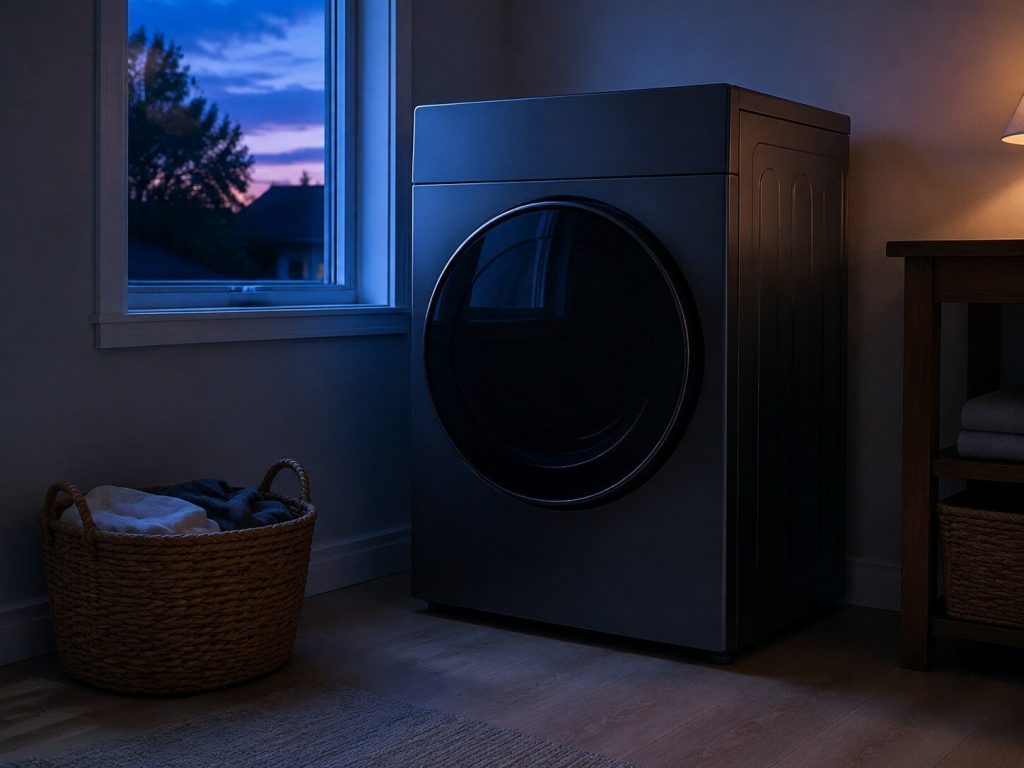
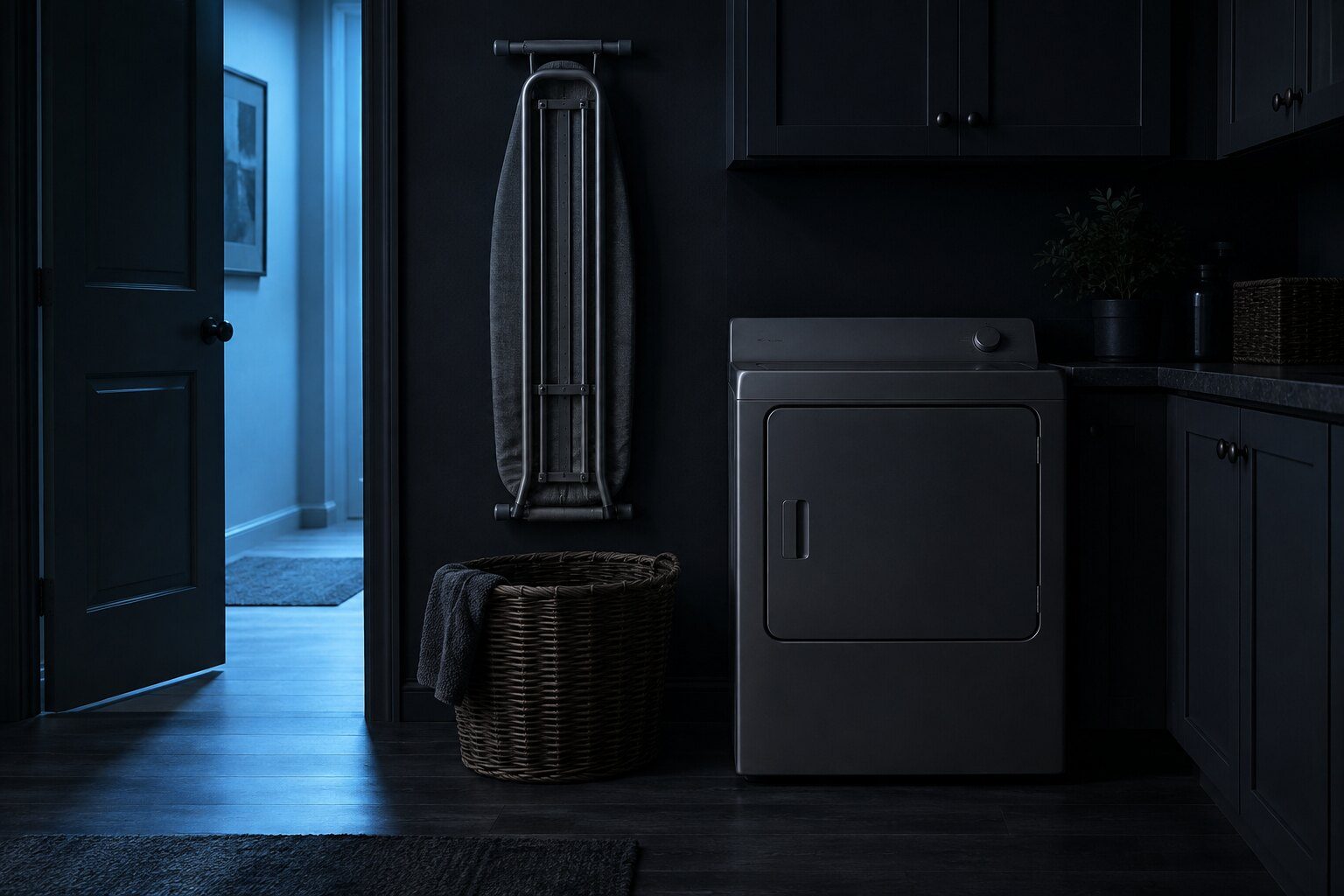
  • A front-load dryer beside a small laundry-room window at dusk, blue light across its flat front
    Electric and gas · vented · commercial-grade residential

    Dryers

    189 pages and 56 of them numbered, plus a commercial branch of 73 pages with 39 more. Every dryer under this badge is a vented machine — there is no heat-pump model and no compact one, which is a real difference from the sister brands in the same corporation and it decides the whole diagnosis. A vented dryer lives or dies by the duct behind it, and in South Florida that duct is more often long and horizontal than short and vertical, and it carries air that arrived with plenty of moisture of its own. So a dryer here gets slower every season until somebody finally counts the cycles, and the machine at that point is usually fine.

    • Vented electric and gas dryers, and the commercial-grade residential machines
    • 56 code pages, and 39 more on the commercial dryer
    • No heat-pump and no compact model — the duct is the diagnosis
    Dryer repair
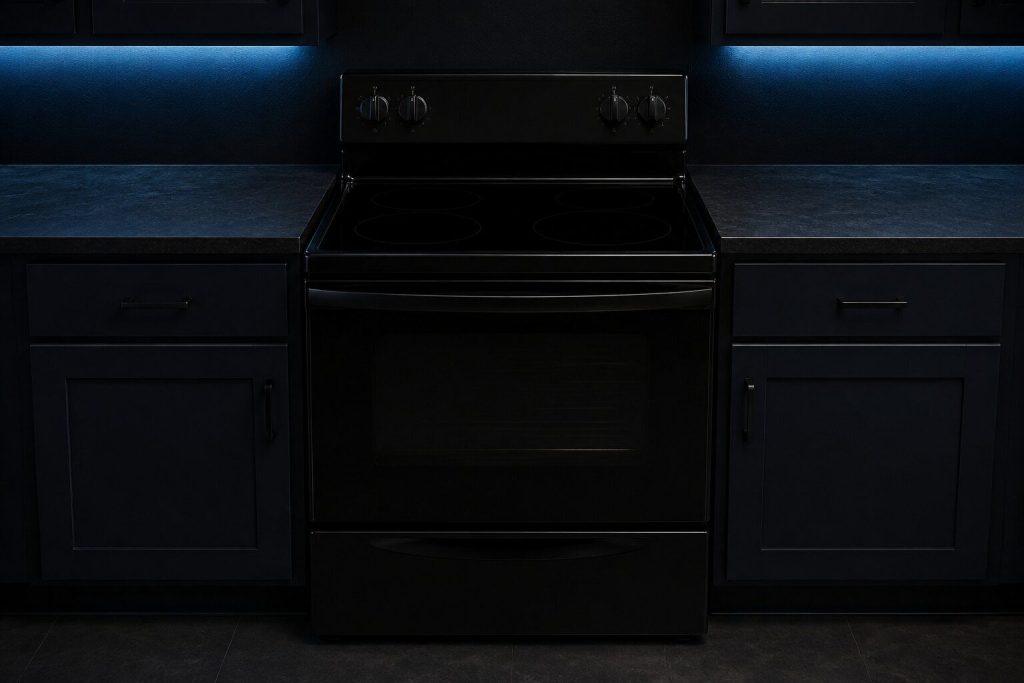
  • A freestanding electric range standing between two runs of dark base cabinets in a near-black kitchen at night, its smooth black ceramic top empty and unlit, the oven door closed, a plain back console with unreadable knobs.
    Freestanding, slide-in and drop-in · gas or electric

    Ranges

    355 pages, 170 of them numbered — the second most documented appliance this make builds, and the one most likely to tell you what is wrong before anybody arrives. A range is also the appliance where the two halves of a Maytag kitchen meet: the oven cavity below, which this make documents heavily, and the surface on top, which it documents unevenly. An electric surface has 83 code pages behind it. A gas surface has none at all, on this make, in this base — so a gas range call is a longer conversation on the phone by necessity rather than by preference.

    • Freestanding and slide-in ranges, gas and electric
    • 170 code pages — the oven half of the machine is heavily documented
    • Gas surfaces publish no codes at all: what the burner does is the whole diagnosis
    Range repair
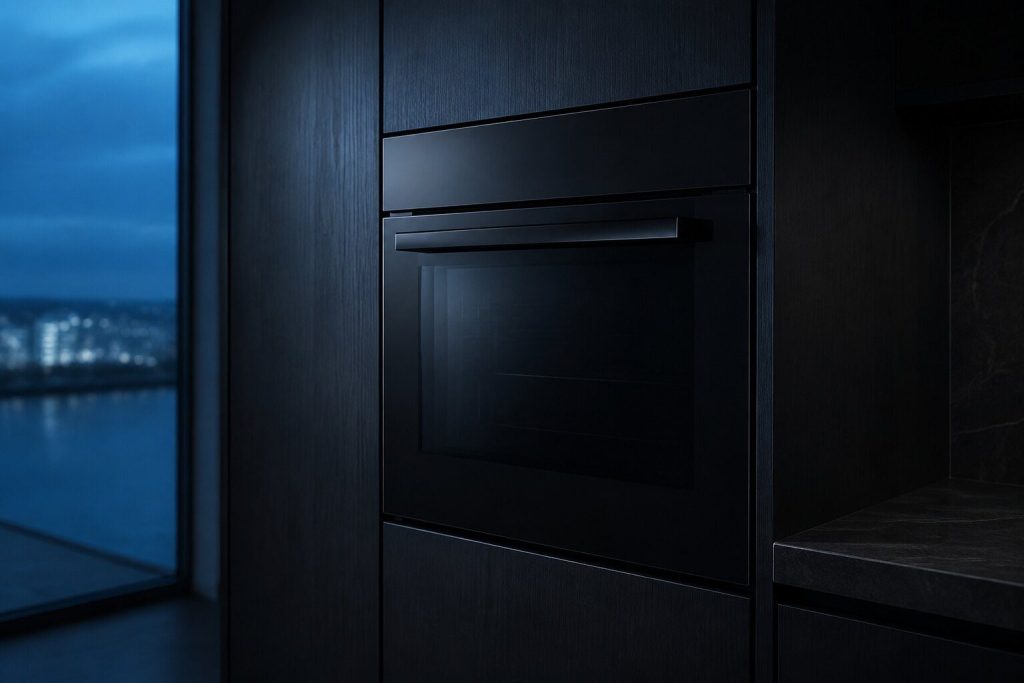
  • A single built-in wall oven set at chest height into a tall column of near-black cabinetry, door closed, plain handle, the glass dark and the fascia unreadable.
    Single and double wall ovens · built into the cabinetry

    Wall ovens

    175 code pages out of 293 — proportionally the most documented appliance in this catalog, and the one where the display is most likely to have already done the diagnosis. A wall oven is also the appliance where getting to the part costs more than the part: it is built into a tall housing, it is heavy, and on a double oven it is heavier still. So the visit is planned differently. We want the code and the model before the van is loaded, because a wall oven pulled out twice is a wall oven pulled out once too often.

    • Single and double wall ovens, built into a run of cabinetry
    • 175 code pages of 293 — the most numbered appliance this make publishes
    • Access is the expensive half: the code decides what comes on the first visit
    Wall oven repair
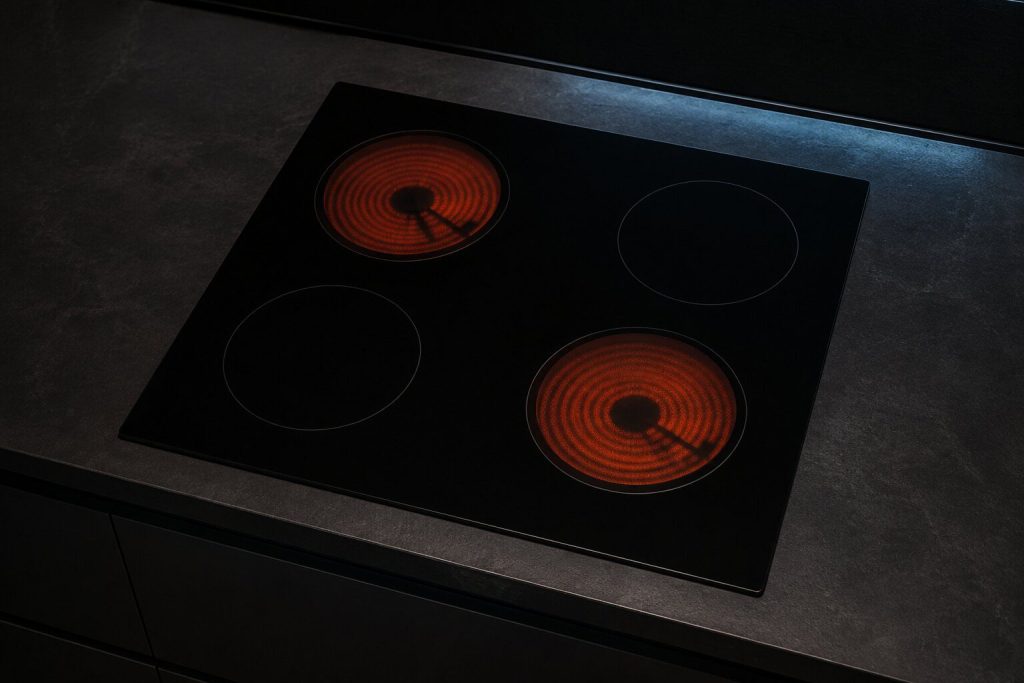
  • A smooth black ceramic cooktop set into a dark stone counter, photographed from above and slightly to the side in a near-black kitchen, two radiant coil zones glowing dull orange beneath the glass and the other two dark.
    Electric radiant and gas · no induction in this catalog

    Cooktops

    211 pages, and the split inside them is the story: 83 code pages on the electric surface and zero on the gas one. There is no induction cooktop under this badge at all — that is a sister brand's product, not this one's — so a Maytag surface is radiant electric or it is gas, and which it is decides whether the appliance can tell you anything. The electric top talks. The gas top does not, and never has, so the diagnosis is what the burner does and how it does it.

    • Radiant electric and gas surfaces — no induction in this catalog
    • 83 code pages on electric, none at all on gas
    • A cracked glass surface is the one thing here we ask you to stop using immediately
    Cooktop repair
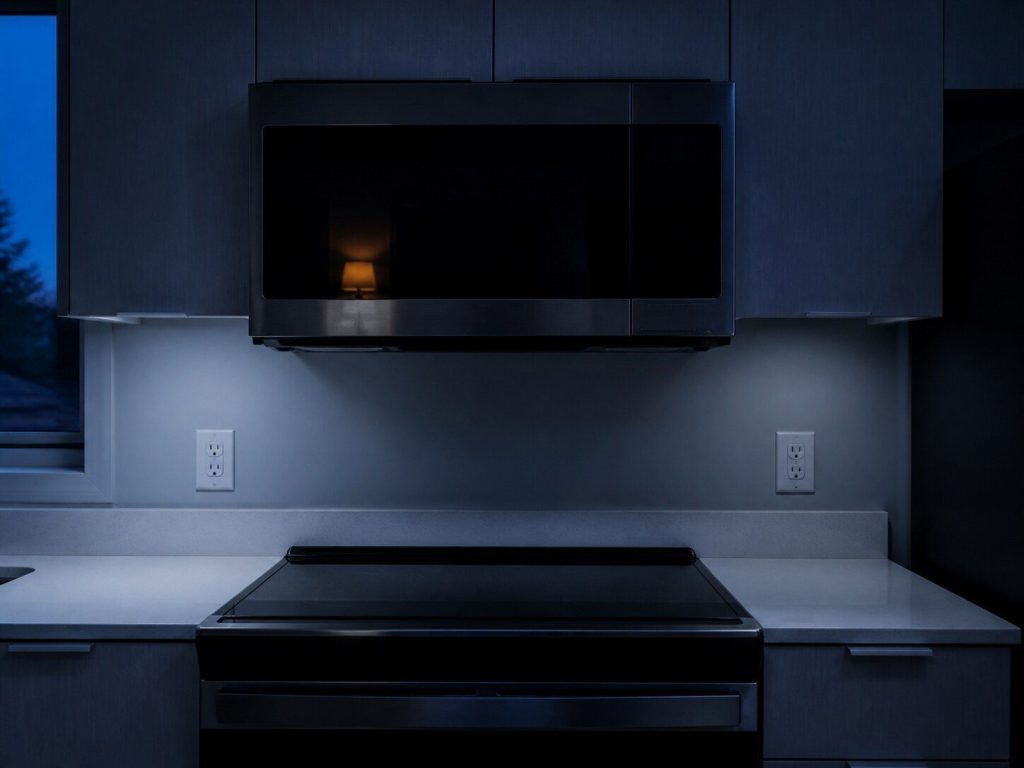
  • An over-the-range microwave mounted above a cooktop in a dark kitchen at night
    Over-the-range and countertop · no built-in in this catalog

    Microwaves

    235 pages and 76 code pages, and they are not spread evenly: 67 of them belong to the over-the-range machine and 9 to the countertop one. That matches what these appliances actually are. An over-the-range microwave is also the kitchen's hood — it carries a fan, a damper, a light and a duct — so it fails in ways a countertop machine cannot, and this make documents it accordingly. There is no built-in microwave in this catalog: that branch belongs to a sister brand, and on that sister's own base every page of it now answers 404.

    • Over-the-range machines, which are also the hood, and countertop machines
    • 67 code pages on over-the-range, 9 on countertop
    • No built-in microwave under this badge
    Microwave repair
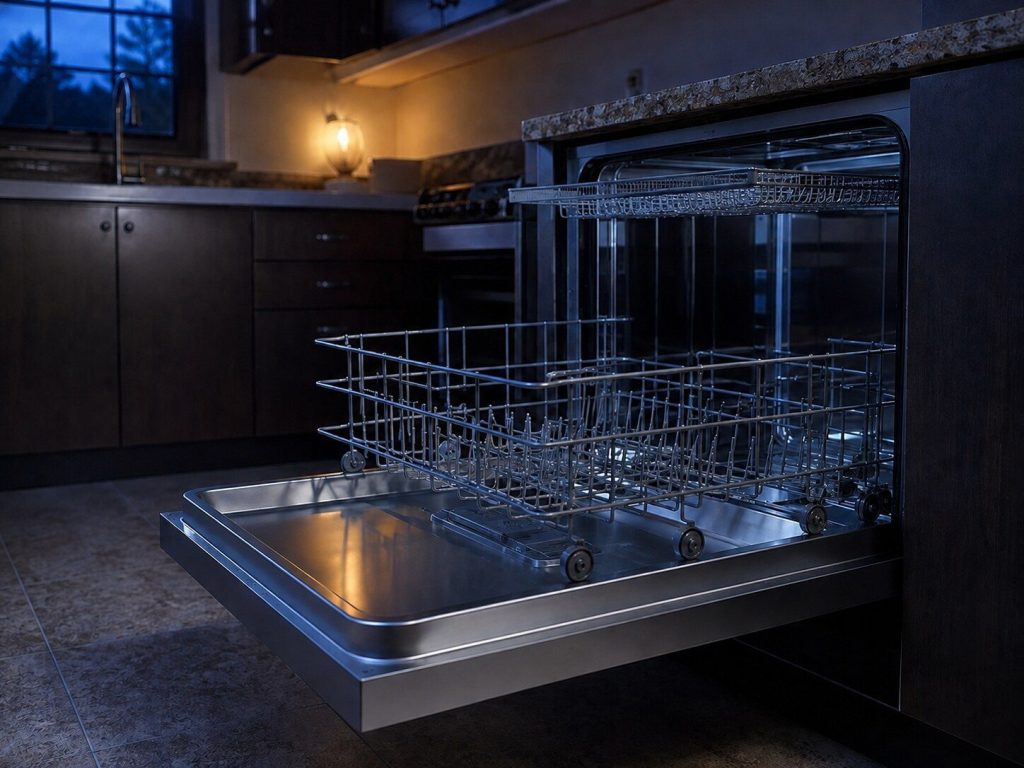
  • A dishwasher door open to horizontal in a dark kitchen with the lower rack halfway out, a plain stainless front in a dark cabinet run
    Front control and top control · stainless and plastic tubs

    Dishwashers

    296 pages with 42 numbered conditions, and a code branch of its own — 38 of those 42 sit under a single heading the make calls Error Code or Flashing Lights. That last phrase is the useful part: on a machine with no digital display the diagnosis is a pattern of blinking lights, and the pattern is the whole message. It disappears the moment the power is cut, which is why we ask what the lights were doing before anybody reached for the breaker.

    • Front-control and top-control machines, stainless and plastic tubs
    • 42 code pages, 38 of them under one Error Code or Flashing Lights heading
    • On a machine with no display, the blinking pattern IS the code
    Dishwasher repair
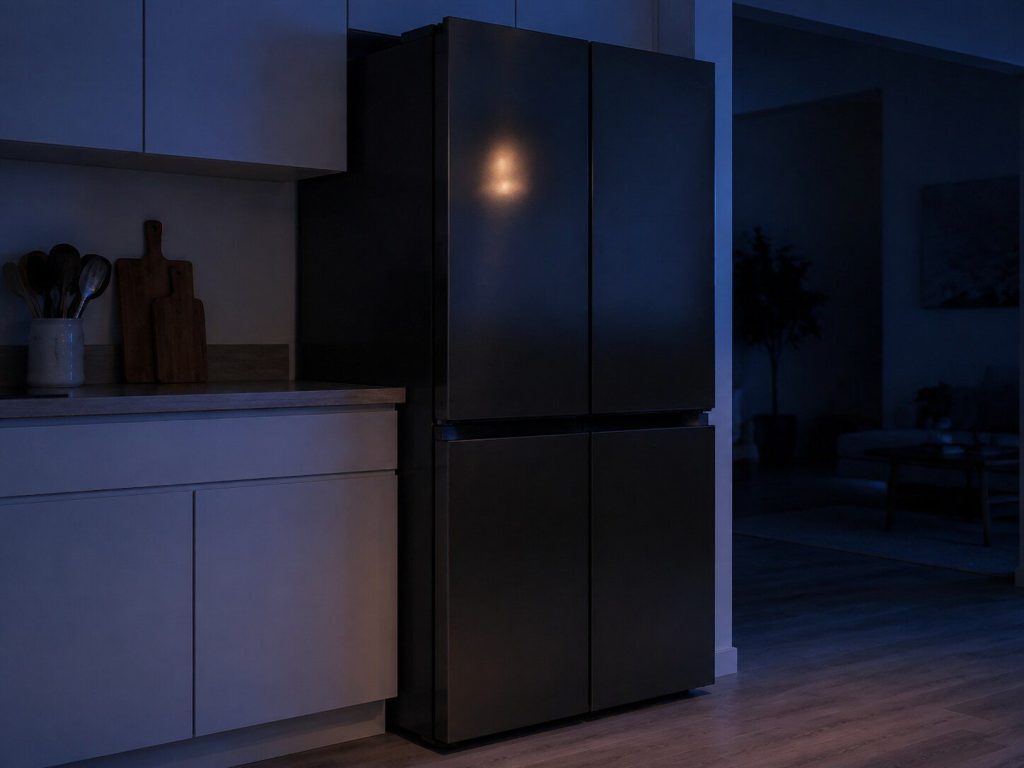
  • A tall four-door French door refrigerator standing flush at the end of a run of slab-front cabinets in an evening kitchen
    French door · side-by-side · top freezer

    Refrigerators

    Five hundred and nine pages in the maker's own base, and twenty-six of them numbered. Hold those two figures next to the seventy-five percent of wall-oven pages that carry a code and you have the whole character of this make in one comparison. Cold is where it stops explaining itself: seventeen numbered pages behind the French door cabinet, nine behind side-by-side, and on the top-freezer cabinet — eighty-four pages of guidance — not one. A visit here is therefore an hour with instruments rather than ten minutes with a panel, and that is worth knowing before you book. There is no quad-door cabinet and no all-refrigerator under this badge; both belong to a sister brand.

    • French door, side-by-side and top-freezer cabinets
    • Seventeen numbered pages on French door, nine on side-by-side, none on top freezer
    • Instruments rather than a panel: this half of the catalog explains very little
    Refrigerator repair
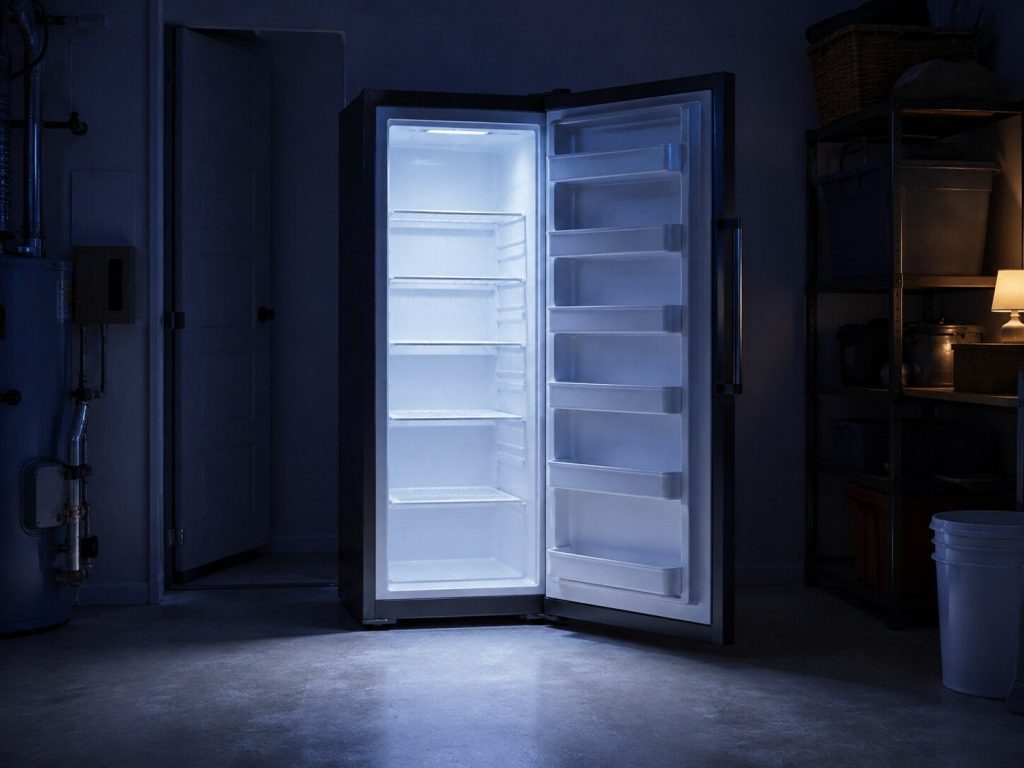
  • A tall single-door upright freezer standing against a utility-room wall with its door open on empty shelves
    Upright · chest · convertible chest

    Freezers

    184 pages in the maker's base and **not one numbered code** — upright, chest and convertible chest alike. A freezer under this badge is a deliberately simple machine and it is diagnosed the way simple machines are: by temperature, by airflow, by the seal, and by where it stands. That last one matters more here than anywhere. Most of the freezers we open in South Florida are in a garage or a utility room that reaches a hundred degrees by afternoon, and an ordinary cabinet asked to hold zero in that ambient is working far outside what its specification assumed. Garage-ready is a specification with a number behind it, not a slogan.

    • Upright, chest and convertible chest freezers
    • No published codes at all — 184 pages of plain guidance
    • Where it stands is half the diagnosis: a hot garage is a different machine
    Freezer repair
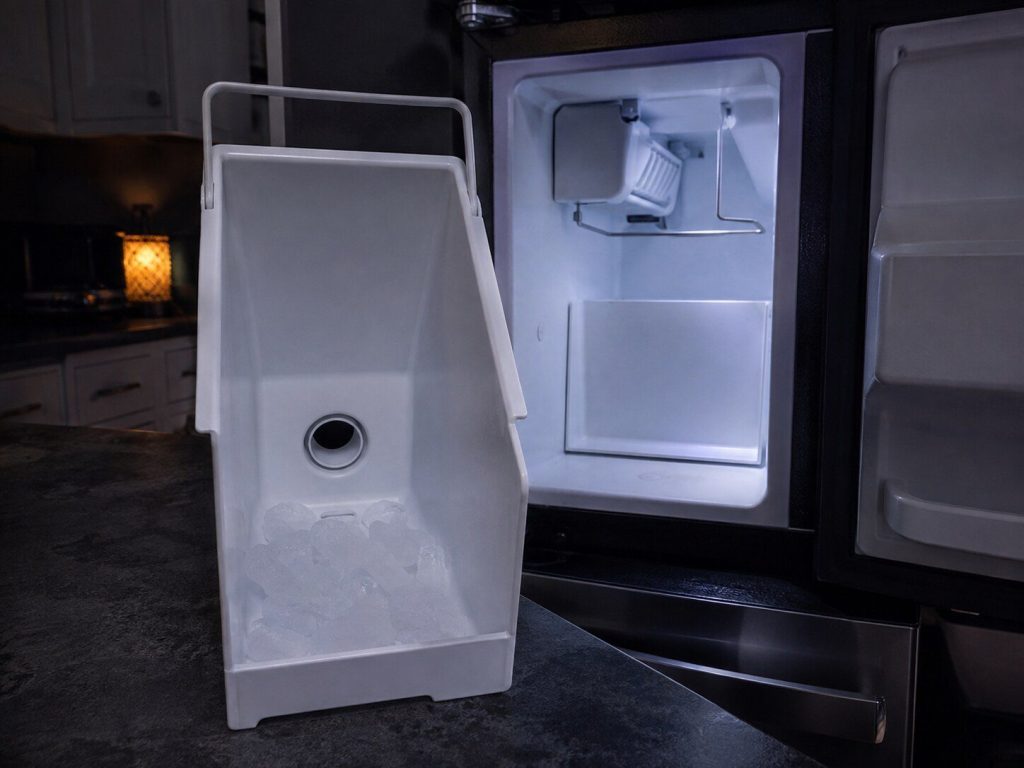
  • The ice storage bin lifted out of a refrigerator with the empty ice compartment behind it
    The ice maker inside the refrigerator — in the door or in the freezer

    Ice makers

    Maytag builds no ice machine of its own, and this page is honest about that instead of describing a sister brand's product. Every one of the 120 ice pages in the maker's base is filed under a refrigerator, beneath headings it calls Ice and Water Concerns and Ice Production, and not one of them carries a number. So there is nothing here to read off a panel. What there is, in a city that gets through ice the way this one does, is a module that spends August at the edge of what it was specified to do — and a short list of reasons it falls off that edge, most of which are about the supply rather than the module.

    • The refrigerator's own ice maker, in the door or in the freezer compartment
    • No ice machine under this badge, and no published codes for ice at all
    • The usual answer is upstream of the module: filter, line, valve, pressure
    Ice maker repair
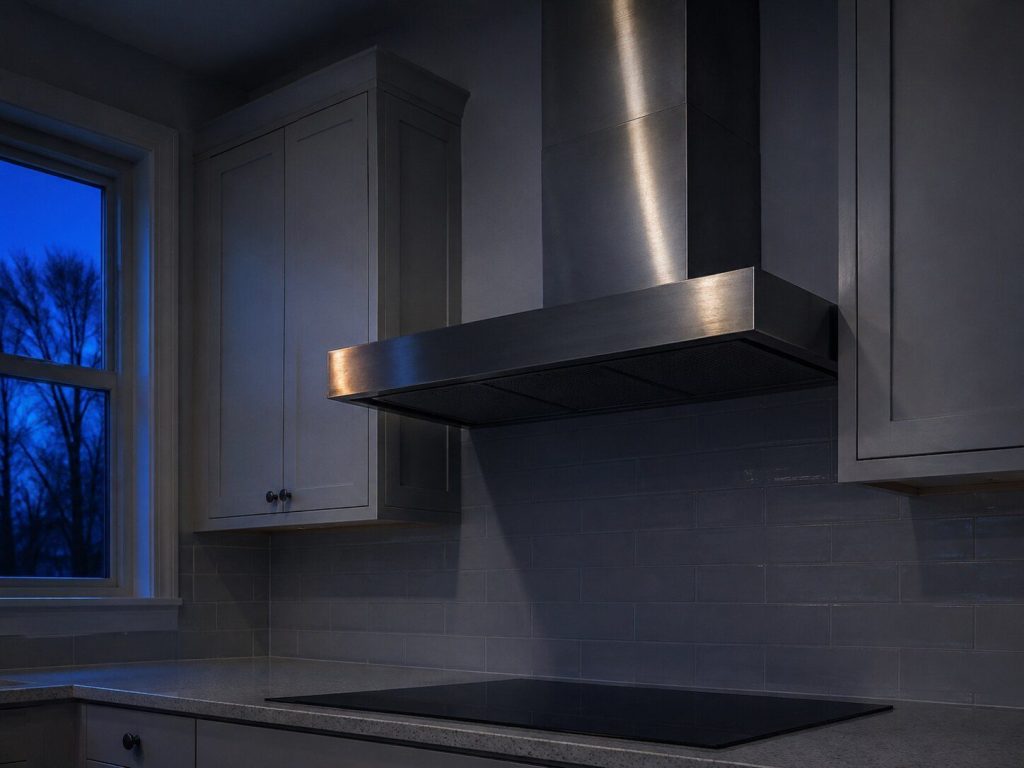
  • A wall-mounted stainless chimney hood above an empty cooktop, seen from below along its underside and flue
    Under-cabinet and wall-mount · ducted or recirculating

    Range hoods

    The smallest branch in this catalog — 43 pages and three numbered conditions — and the appliance most likely to be the microwave above the range rather than a hood at all. On this make the over-the-range microwave carries the ventilation for most kitchens, so a hood call here begins by establishing which appliance is actually over the cooktop. Where there is a dedicated hood, the failures are ordinary and mostly mechanical: the fan motor, the switch, the light, the damper and the duct behind it.

    • Wall-mount and under-cabinet hoods, ducted and recirculating
    • 43 pages and three published conditions — the least documented appliance here
    • On most Maytag kitchens the over-the-range microwave IS the hood
    Range hood repair

Worth saying

Several of these end with us telling you not to book

A burner that will not light is usually a cap sitting a fraction out of place and a blocked port, and the honest answer is a paper clip and ten minutes rather than a visit. A cooktop that has gone deaf is usually locked. A dishwasher leaking on its first cycle after somebody used hand soap is not broken. We would rather write that down than take money for showing you a padlock symbol, and the pages say so where it applies.

Before you book

The questions these pages get asked

My problem is not on this list.

Call anyway and describe it. Twenty-six pages is what we have written up, not what we take on, and a behavior that is not here is a gap in our writing rather than in our work.

Two things are wrong at once.

Say both when you book. A washer that leaks and will not spin is not two visits, but it is a different set of parts on the van than either one alone, and knowing that in advance is what makes it one visit.

The machine cleared its own message. Have I lost anything?

Some of it. A condition that appeared once and never came back may have been a single event — a power interruption in a storm, most often. If the behavior is still there we work from what the machine does rather than from what it said.

How much of this can I check myself?

More than most people expect, and every page starts with the free checks rather than burying them. None of them requires a tool beyond a flashlight, a thermometer and a paper towel, and none of them involves opening anything with power in it.

In more detail

Why these pages are written from the outside in

You have the appliance and we do not

Every one of these pages is arranged so that the things you can check for nothing come before the things we would charge to check. That is not generosity; it is the order that produces the shortest visit. An owner who has already established that the vent hood outside is barely moving air has removed the entire heating half of a dryer diagnosis before anybody set out.

And what the machine is called matters

The second half of each page is the translation — what you would say, and what this maker calls it. Those are frequently not the same words, and knowing both is what lets you search the archive on this site or read the maker’s own material without guessing. Where the maker offers no word at all, the page says that in the first paragraph rather than at the bottom.

Describe it in one sentence.

What it does, when it does it, and what the display shows. That is usually enough for us to name the likely part before anybody sets off.

This article is based on:

  • Official manufacturer documentation
  • Internal repair procedures
  • Technician repair history
  • Company quality standards
Call (305) 853-8839