Appliance
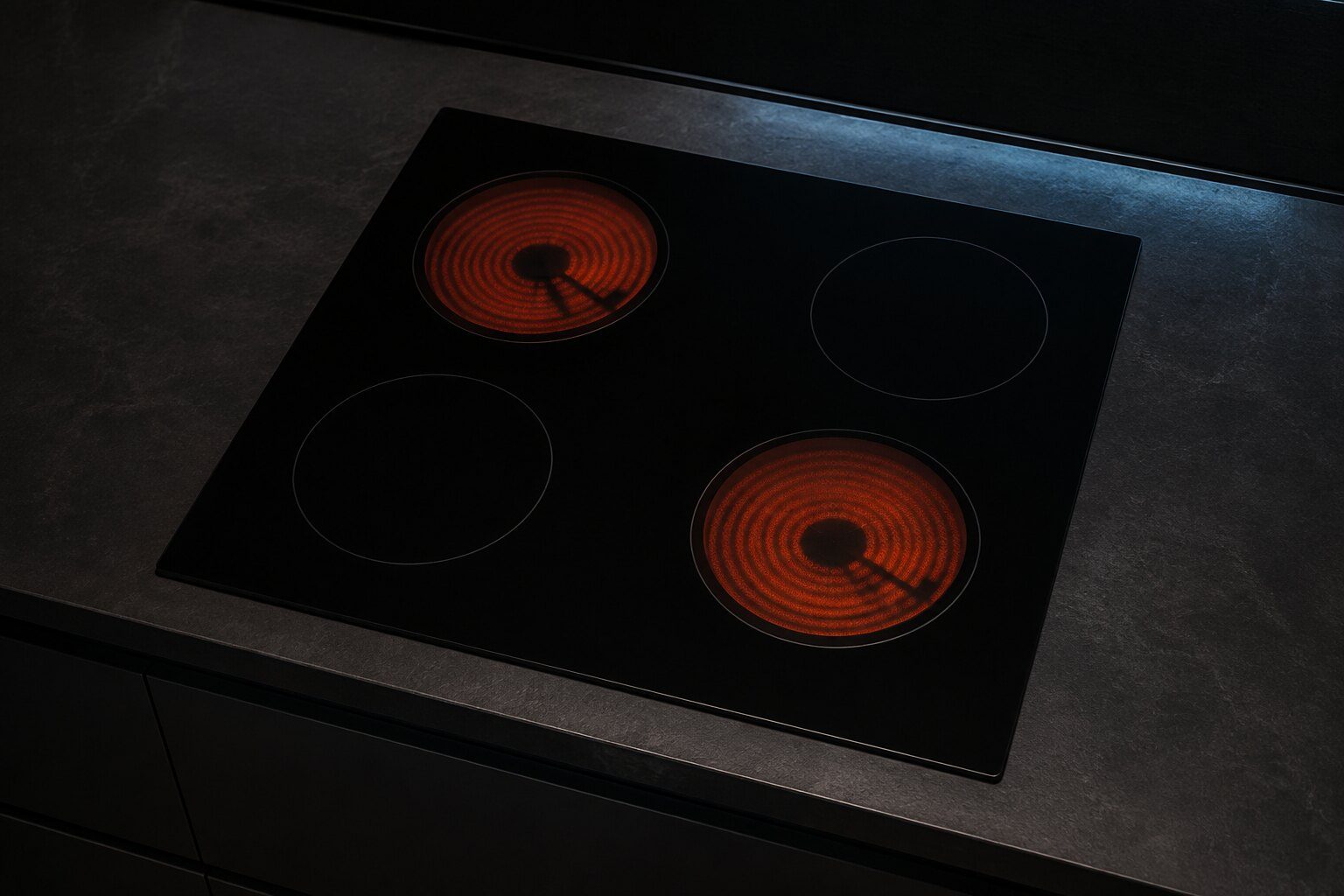
Maytag cooktops
211 pages, and the split inside them is the story: 83 code pages on the electric surface and zero on the gas one. There is no induction cooktop under this badge at all — that is a sister brand's product, not this one's — so a Maytag surface is radiant electric or it is gas, and which it is decides whether the appliance can tell you anything. The electric top talks. The gas top does not, and never has, so the diagnosis is what the burner does and how it does it.
- 2 symptoms we are called out to
- From $89 diagnostic, credited to the repair
- 59 cities and neighborhoods covered
- OEM parts available on order
The short version
What this equipment is, for a repair
Configurations
Electric radiant and gas · no induction in this catalog
Access
Planned before the visit, not discovered on arrival
Parts
OEM, available on order
Diagnostic
From $89, credited to the repair
What goes wrong with it
Symptoms we are called out to on Maytag cooktops
Each one covers the likely causes in the order they are worth checking, and what to do in five minutes before booking anything.
-
One burner clicks and never catches, or an element stays cold Range burner will not light
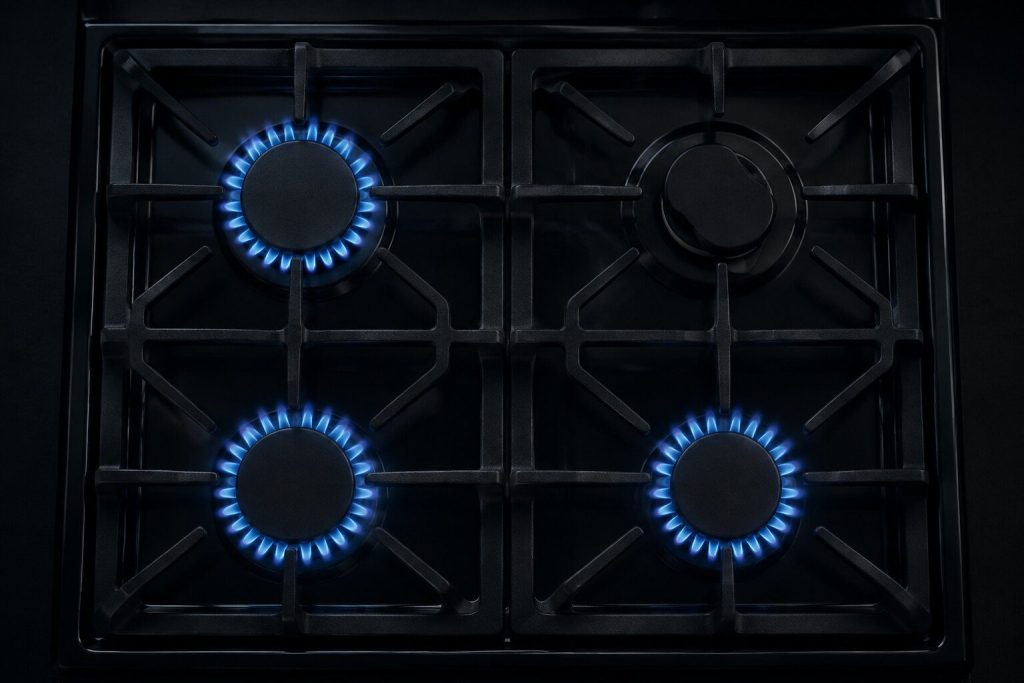
This is the one repair on the whole site where the owner regularly fixes it before we arrive, and we would rather say so. A gas burner that clicks and will not light is usually a burner cap that is out of position or a port blocked by something that boiled over, and both are a kitchen-towel job rather than a service call.
- A burner that clicks is getting spark — the gas or the port is the problem
- One dead burner is that burner; every burner dead is supply or ignition shared
- An electric element that stays cold is usually the element or its connection, not the control
-

The touch panel ignores every press, or a zone will not switch off Cooktop controls will not respond
A glass cooktop has no knobs, which means everything you can see is a message from the control. A panel that has gone deaf is far more often locked, wet or too hot than it is broken, and all three of those clear themselves once you know what you are looking at.
- A control lock disables the entire surface and is set by a wipe of a cloth
- Water or a spill on the panel makes it ignore every touch until it dries
- A zone that will not switch off should be killed at the breaker, not argued with
What we do on it
Repairs we carry out on Maytag cooktops
Starting figures for this equipment in South Florida. The exact cost is confirmed after an on-site diagnostic — and this is not the whole list of what can go wrong, so call if your problem is not here.
-
from $89 Diagnostic visit
We find out what is wrong before anybody quotes a part, and on this make that means two different visits depending on which half of the kitchen we are in. A washer or an oven will usually be showing something, and the first ten minutes are spent reading it. A refrigerator or a freezer will be showing nothing at all, because this maker publishes almost no codes for cold, and those minutes go on thermometers instead. The fee comes off the bill when you go ahead with the work.
- Read first where the machine talks, measure first where it does not
- Age is established early: these machines are routinely older than the kitchen
- Credited toward the repair
-
from $119 Appliance maintenance
The visit that stops the other visits, and on equipment bought to last it is the one that pays for itself twice over. The list is short and specific: the condenser at floor level in a humid kitchen, the dryer duct that gets longer every year in effect if not in fact, the seals this climate works harder than the manual assumed, and the drain that must not stand. None of the four announces itself, and all four are cheaper to keep than to repair.
- Condenser, seals, drains, vents and leveling, on every appliance in the run
- The intervals are set to this climate rather than to the manual's calendar
- You keep a written note of what is aging and roughly when it will matter
-
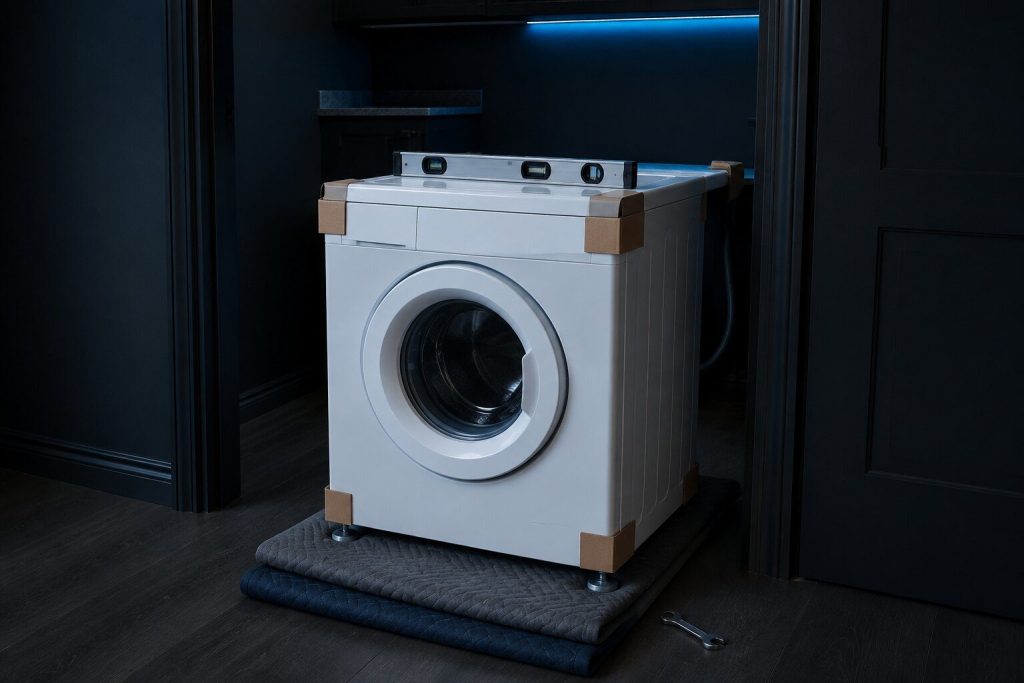
from $139 Appliance installation
Fitted against the maker's own figures rather than pushed into a hole and switched on. There is a published cutout, a required clearance, an anti-tip fixing and a water connection, and equipment installed to those figures gives years of quiet service. Installed without them, it generates precisely the calls the rest of this site describes: doors that will not seal, coils with nowhere to breathe, laundry that never comes out dry.
- Cutout, clearance and anti-tip against the maker's published figures
- The dryer duct is inspected and measured at installation, not after the first complaint
- Run under load before we leave, not plugged in and left
-
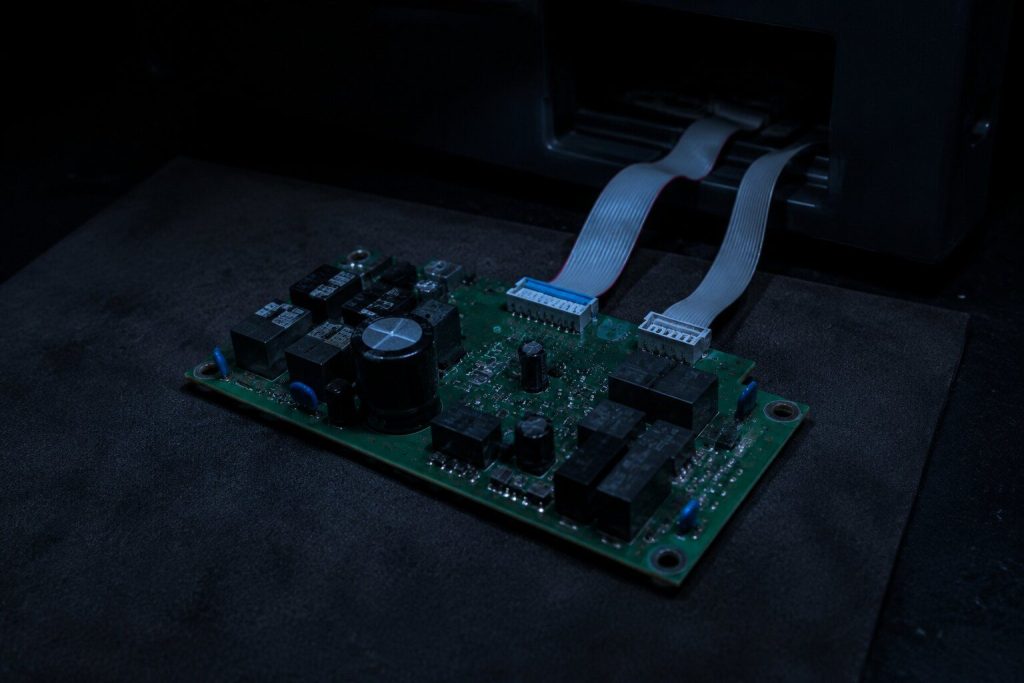
from $265 Appliance control board repair
Everybody reaches for this part first, and the manufacturer's own documentation asks that it be proved innocent before it comes out. One control architecture runs across this whole corporation, which is why a letter-and-number on a range looks so much like one on a washer — and why a board diagnosed by resemblance rather than by measurement gets replaced perfectly well and changes nothing. Boards seldom die of nothing, and whatever killed this one is still in the appliance when the new one goes in.
- Proved before it is condemned: supply, harness and the connections into it
- A browned connector or a pin backed out of its housing is cheap; a board is not
- Programmed to your model afterwards, or the appliance behaves oddly in ways nobody links back
-
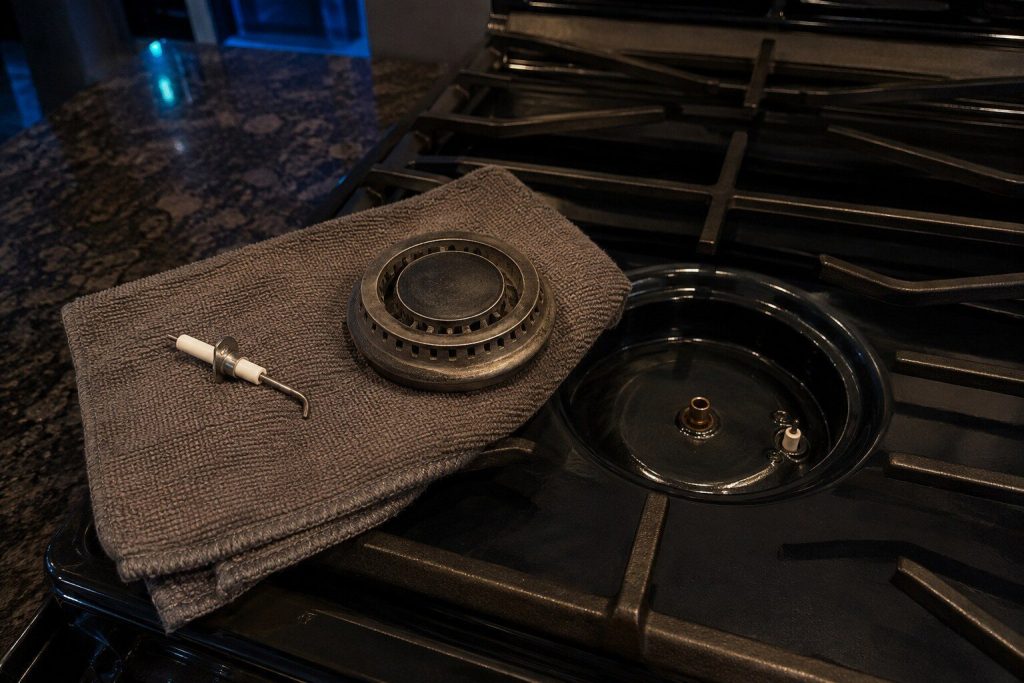
from $165 Gas burner and igniter repair
This maker publishes no numbered codes for gas surfaces at all — not one, on any cabinet — so the whole diagnosis is what the burner does. Whether it clicks, whether it lights and dies a few seconds later, whether it burns yellow, and whether it is one burner or all of them. Those four answers name the part between them, which is why a gas call here is a longer conversation on the phone than an electric one.
- No published codes on gas: behavior is the entire diagnosis
- A cap set back a fraction after a clean is free to correct and very common
- Lighting and then dying is flame sensing, not ignition
-
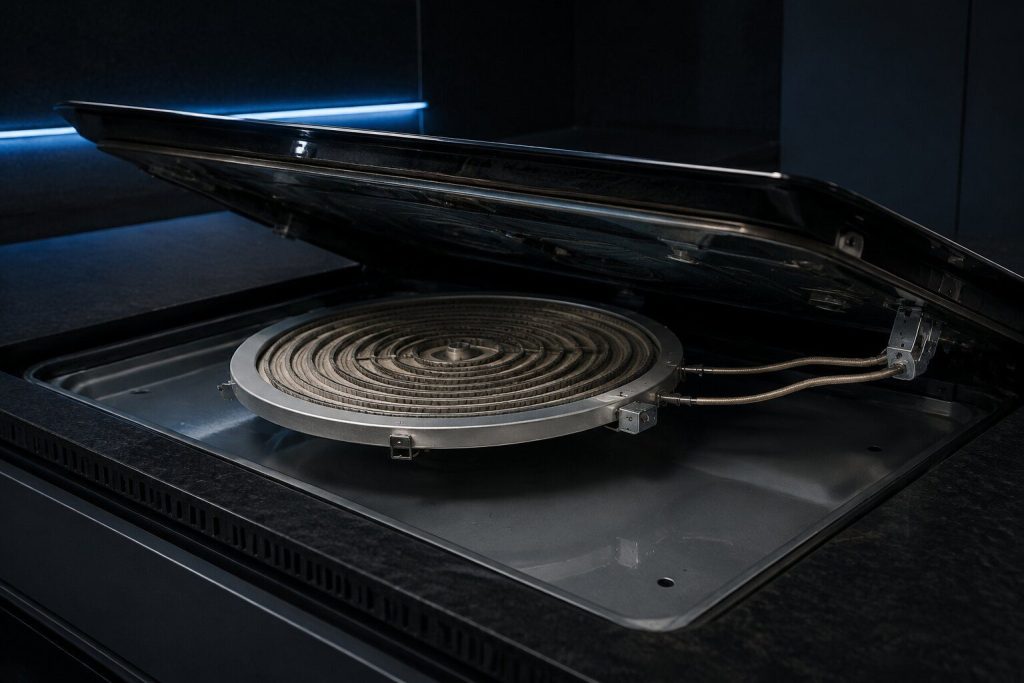
from $175 Electric cooktop element repair
The half of the cooking line that does report numbers — eighty-three numbered pages across a hundred and fourteen — so an electric surface will usually say something before anybody lifts the glass. Most of what it says points at an element, a switch or the control underneath, and the awkward part is not the diagnosis but the top: the glass comes up, and it goes back onto seals and clamps that must not be over-tightened.
- 83 numbered pages behind this surface — it usually reports something
- The glass comes up and goes back on seals that are not over-tightened
- A zone switching itself off is usually the protection working, not a part
-
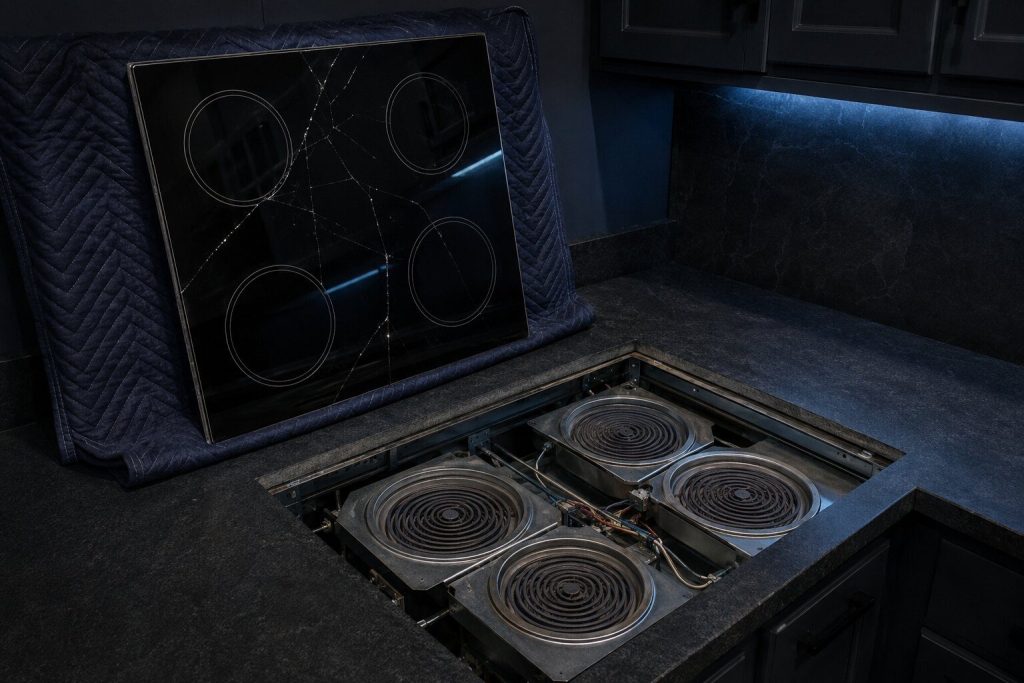
from $265 Cooktop glass replacement
The one repair on this site where we ask you to stop using the appliance now. That sheet of glass is what keeps a spill off the electronics beneath it, and a crack that reaches an edge is an open path from the hob to the live half of the machine. Thermal shock causes most of them; a top clamped a fraction too tight at installation causes the rest, and a new panel fitted into the same over-tight opening is a repair with a date on it.
- Stop using it today: a crack to the edge is a path for liquid into the electronics
- Thermal shock and over-tight clamping cause most of them
- The fitting is corrected with the glass, or the new panel goes the same way
In more detail
About Maytag cooktops
Two surfaces, and only one of them talks
Maytag documents its electric cooktops in detail — 83 numbered conditions across 114 pages — and publishes nothing numbered for gas at all. The consequence is practical: on an electric top the first question is what the display shows, and on a gas top there is no display to show anything, so the whole diagnosis is the burner's behaviour. Does it click and not catch, light and die, burn yellow, or do nothing? Each of those is a different part, and none of them is a code.
What is not in this catalog
There is no induction cooktop under this badge. Whirlpool Corp sells induction — 64 pages of it in a sister brand's base — and Maytag does not, which means a site claiming induction expertise here would be claiming it about somebody else's appliance. If your hob is induction and wears this badge, tell us the model number, because it is worth establishing what is actually in the counter before a visit is booked.
This article is based on:
- Official manufacturer documentation
- Internal repair procedures
- Technician repair history
- Company quality standards

Before you book
Questions about Maytag cooktops
The glass top is cracked. Can I use the other zones?
No, and this is the one page on this site that asks you to stop today. That sheet of glass is what keeps a spill off the electronics underneath it, and a crack reaching an edge is an open path from the hob to the live half of the appliance. Thermal shock does most of these — a very hot pan onto a cold surface, or cold liquid onto a hot zone — and so does a top clamped a fraction too tight when it was fitted, which puts the glass under load before anybody cooks on it.
A zone switches itself off part-way through cooking.
Usually the overheating protection doing exactly what it exists for, and on the electric surface the control will normally say so. What causes it is nearly always underneath rather than on top: a shallow island cabinet with a full drawer immediately below the hob is the local pattern here, and it starves the cooling path the specification assumed. When the top has cooled completely and the zone still will not come back, that stops being the protection and becomes a visit.
Nothing responds to the touch controls.
Switch it off at the wall, wipe the surface dry and leave it fifteen minutes. A sensor top reads a wet patch or a pan lid as a finger held down and locks out, and that version is free. The control lock is the other free version — it is engaged by holding a pad, it is easy to hit while cleaning, and it survives a trip to the breaker, which is why people conclude the top has died.
Where we do it
Across Miami-Dade, Broward, and Palm Beach
Same terms everywhere we go: an on-site diagnostic first, the price agreed in writing, and the exact figure confirmed once we have seen the unit.
Neighborhoods people ask for by name