MaytagRepair Miami

Miami-Dade · Broward · Palm Beach

Maytag repair in Miami, on machines that were bought to be kept, and usually still can be.

Washing machines since 1907, and a promise that the repairman has nothing to do. Most of the equipment we open under this badge is older than the kitchen around it, and a good deal of it is worth another decade — which is a different conversation from the one most repair sites want to have. It is also a make that speaks unevenly: at the oven and in the laundry room it will normally name the circuit itself, and at the refrigerator it says almost nothing at all. Those are two different visits, and this page explains both.

  • 11 appliance types we cover on this make
  • 46 jobs with a published figure
  • 533 code pages read from the maker's own base
  • from $89 diagnostic, credited to the repair

Start from the appliance

What we repair

11 appliance types, and every card says what the work on that one really is — the freezer page included, where this maker publishes not one numbered condition across 184 pages and the card says so rather than implying a code list nobody has.

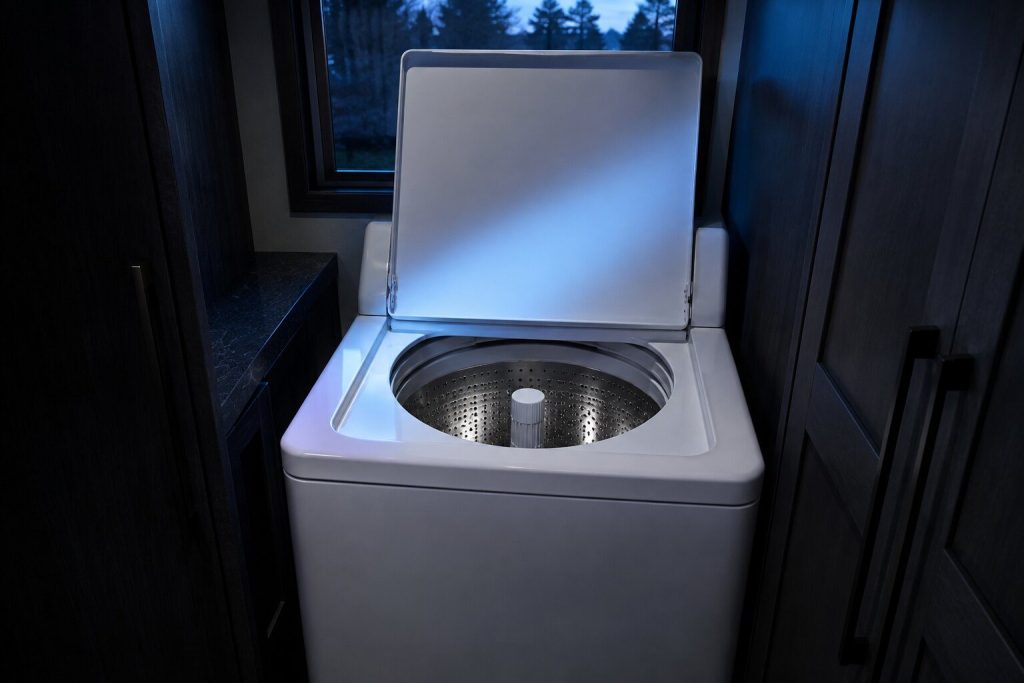
  • A white top-load washing machine standing in a narrow laundry closet at dusk with its lid raised, an empty stainless basket below and a tall finned center agitator post rising from the middle of it.
    Top load · front load · commercial-grade residential

    Washers

    This is the deepest branch of Maytag's own support base and the oldest thing the badge does — the company has been building washing machines since 1907. 479 pages, and 158 of them are code pages: 86 on the top-load machine, 62 on the front-load. That is more numbered diagnosis than the whole refrigeration half of the catalog gets, and it changes how a washer call starts. On most makes we ask what the machine is doing; here we ask what it is showing, because it will usually be showing something. The top-loader is the one Maytag is bought for and the one that outlives its kitchen — which is also why so many of the machines we open here are older than the room around them.

    • Top-load, front-load and commercial-grade residential machines
    • 86 code pages on top load, 62 on front load — the make's most documented appliance
    • Older machines are normal here: the badge is bought to be kept
    Washer repair
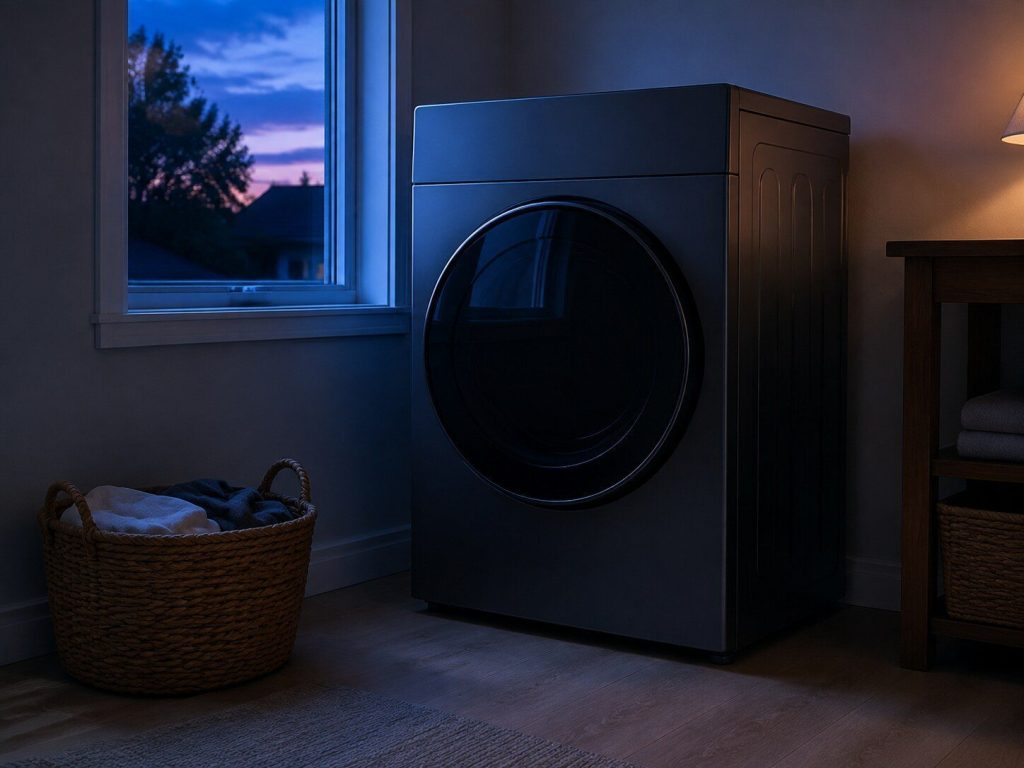
  • A front-load dryer beside a small laundry-room window at dusk, blue light across its flat front
    Electric and gas · vented · commercial-grade residential

    Dryers

    189 pages and 56 of them numbered, plus a commercial branch of 73 pages with 39 more. Every dryer under this badge is a vented machine — there is no heat-pump model and no compact one, which is a real difference from the sister brands in the same corporation and it decides the whole diagnosis. A vented dryer lives or dies by the duct behind it, and in South Florida that duct is more often long and horizontal than short and vertical, and it carries air that arrived with plenty of moisture of its own. So a dryer here gets slower every season until somebody finally counts the cycles, and the machine at that point is usually fine.

    • Vented electric and gas dryers, and the commercial-grade residential machines
    • 56 code pages, and 39 more on the commercial dryer
    • No heat-pump and no compact model — the duct is the diagnosis
    Dryer repair
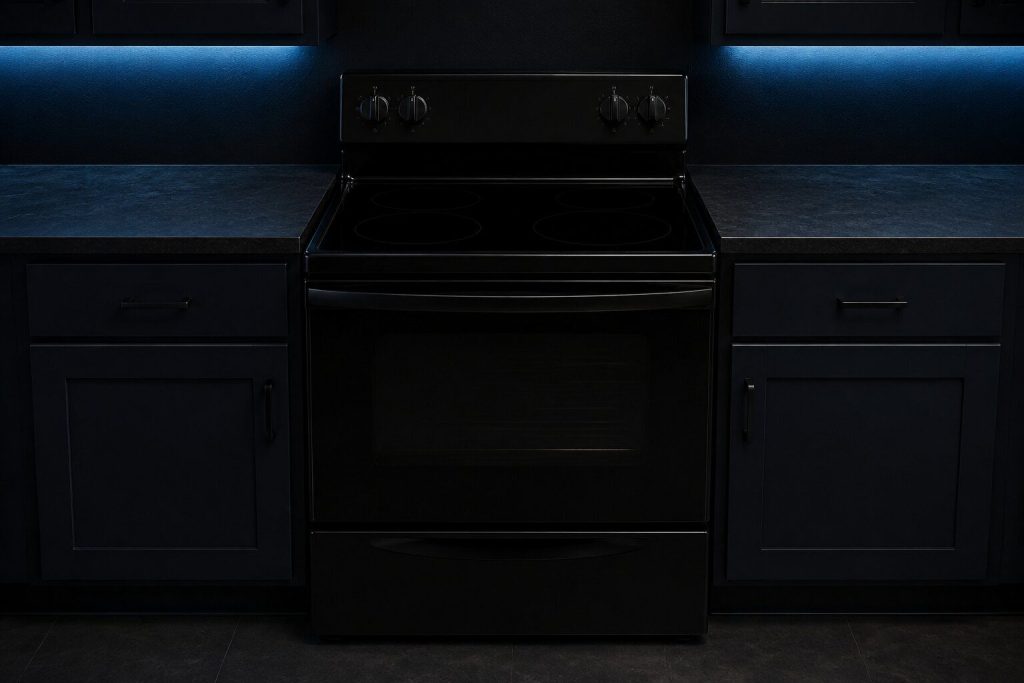
  • A freestanding electric range standing between two runs of dark base cabinets in a near-black kitchen at night, its smooth black ceramic top empty and unlit, the oven door closed, a plain back console with unreadable knobs.
    Freestanding, slide-in and drop-in · gas or electric

    Ranges

    355 pages, 170 of them numbered — the second most documented appliance this make builds, and the one most likely to tell you what is wrong before anybody arrives. A range is also the appliance where the two halves of a Maytag kitchen meet: the oven cavity below, which this make documents heavily, and the surface on top, which it documents unevenly. An electric surface has 83 code pages behind it. A gas surface has none at all, on this make, in this base — so a gas range call is a longer conversation on the phone by necessity rather than by preference.

    • Freestanding and slide-in ranges, gas and electric
    • 170 code pages — the oven half of the machine is heavily documented
    • Gas surfaces publish no codes at all: what the burner does is the whole diagnosis
    Range repair
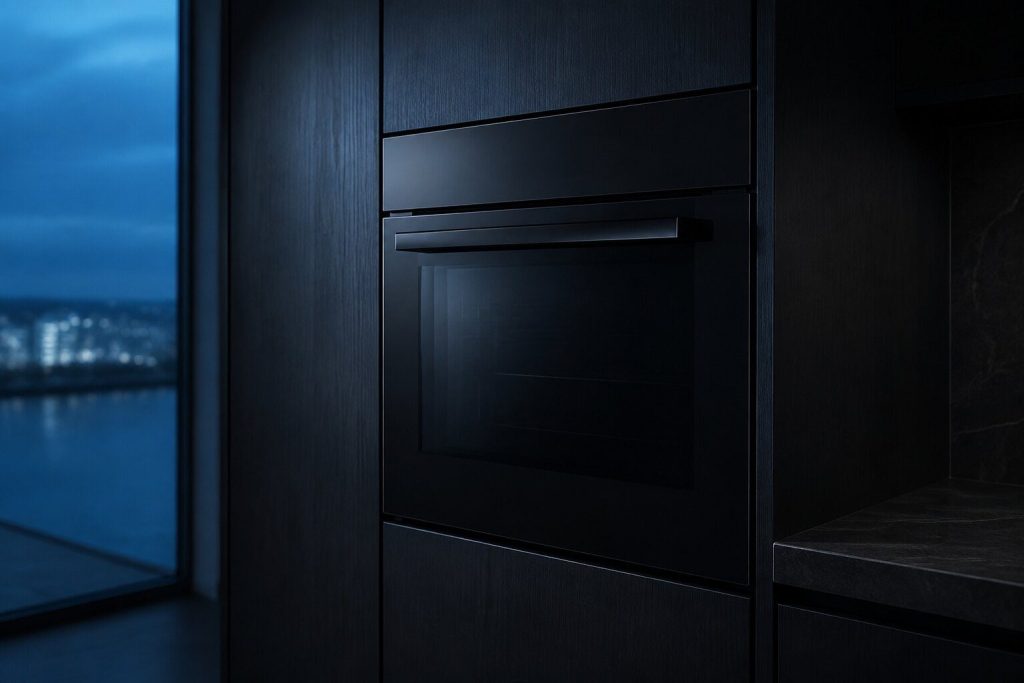
  • A single built-in wall oven set at chest height into a tall column of near-black cabinetry, door closed, plain handle, the glass dark and the fascia unreadable.
    Single and double wall ovens · built into the cabinetry

    Wall ovens

    175 code pages out of 293 — proportionally the most documented appliance in this catalog, and the one where the display is most likely to have already done the diagnosis. A wall oven is also the appliance where getting to the part costs more than the part: it is built into a tall housing, it is heavy, and on a double oven it is heavier still. So the visit is planned differently. We want the code and the model before the van is loaded, because a wall oven pulled out twice is a wall oven pulled out once too often.

    • Single and double wall ovens, built into a run of cabinetry
    • 175 code pages of 293 — the most numbered appliance this make publishes
    • Access is the expensive half: the code decides what comes on the first visit
    Wall oven repair
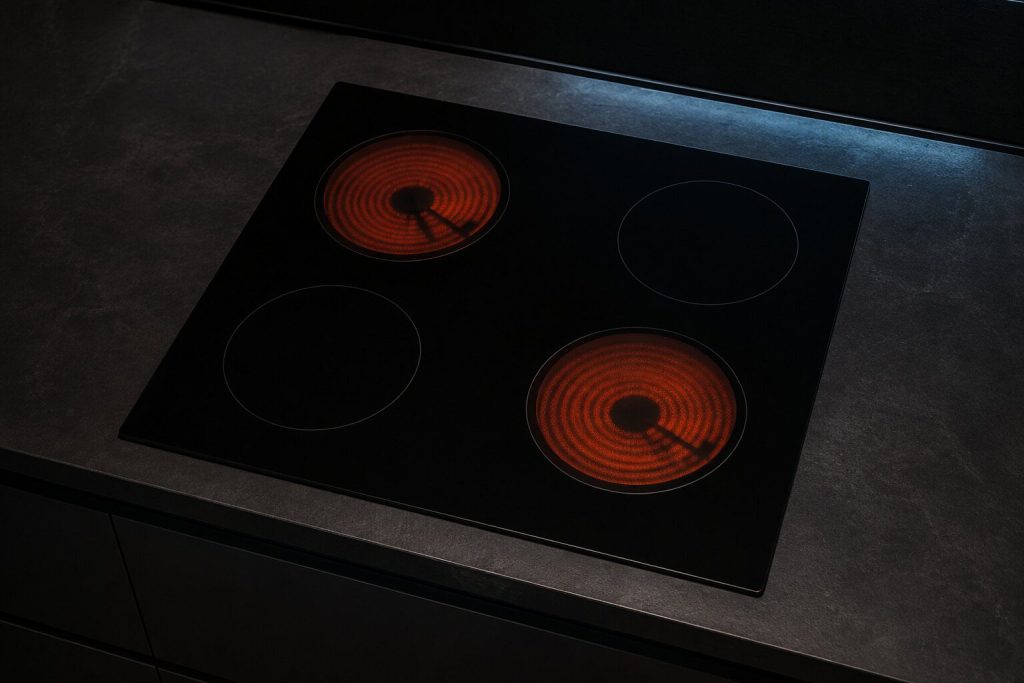
  • A smooth black ceramic cooktop set into a dark stone counter, photographed from above and slightly to the side in a near-black kitchen, two radiant coil zones glowing dull orange beneath the glass and the other two dark.
    Electric radiant and gas · no induction in this catalog

    Cooktops

    211 pages, and the split inside them is the story: 83 code pages on the electric surface and zero on the gas one. There is no induction cooktop under this badge at all — that is a sister brand's product, not this one's — so a Maytag surface is radiant electric or it is gas, and which it is decides whether the appliance can tell you anything. The electric top talks. The gas top does not, and never has, so the diagnosis is what the burner does and how it does it.

    • Radiant electric and gas surfaces — no induction in this catalog
    • 83 code pages on electric, none at all on gas
    • A cracked glass surface is the one thing here we ask you to stop using immediately
    Cooktop repair
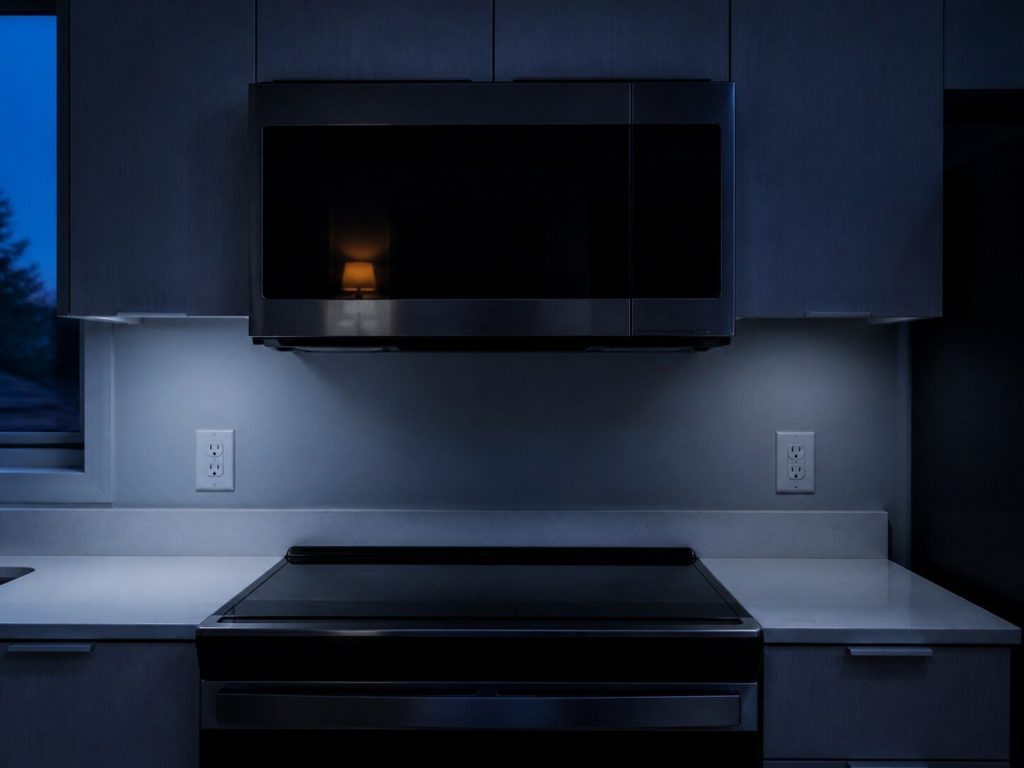
  • An over-the-range microwave mounted above a cooktop in a dark kitchen at night
    Over-the-range and countertop · no built-in in this catalog

    Microwaves

    235 pages and 76 code pages, and they are not spread evenly: 67 of them belong to the over-the-range machine and 9 to the countertop one. That matches what these appliances actually are. An over-the-range microwave is also the kitchen's hood — it carries a fan, a damper, a light and a duct — so it fails in ways a countertop machine cannot, and this make documents it accordingly. There is no built-in microwave in this catalog: that branch belongs to a sister brand, and on that sister's own base every page of it now answers 404.

    • Over-the-range machines, which are also the hood, and countertop machines
    • 67 code pages on over-the-range, 9 on countertop
    • No built-in microwave under this badge
    Microwave repair
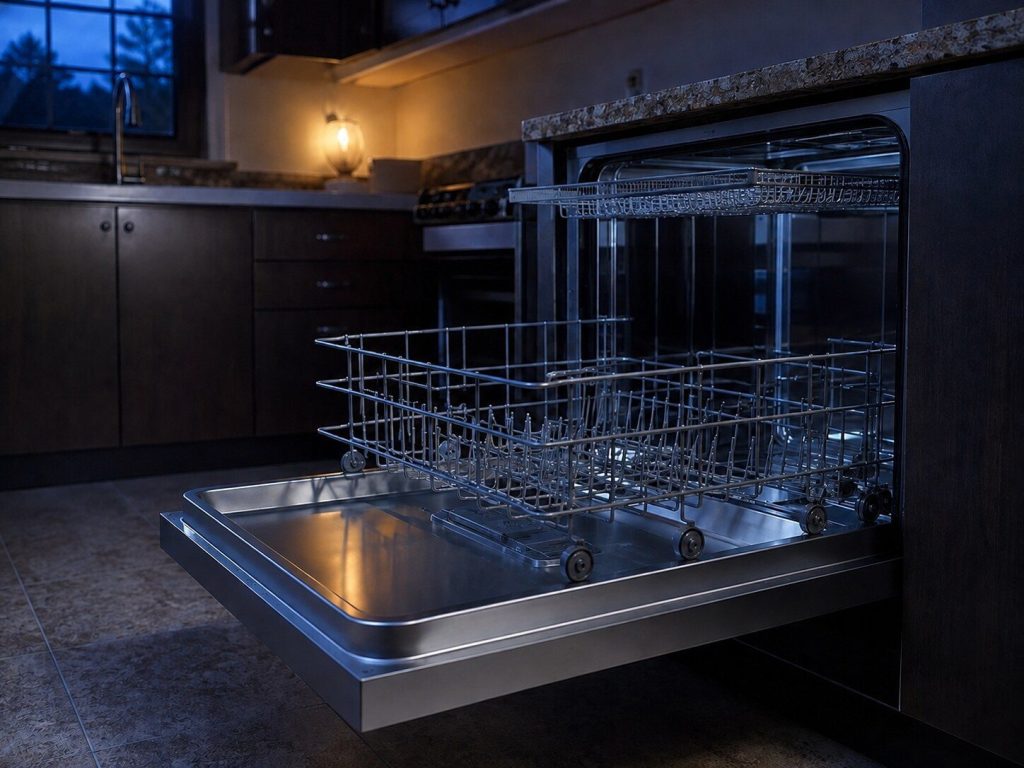
  • A dishwasher door open to horizontal in a dark kitchen with the lower rack halfway out, a plain stainless front in a dark cabinet run
    Front control and top control · stainless and plastic tubs

    Dishwashers

    296 pages with 42 numbered conditions, and a code branch of its own — 38 of those 42 sit under a single heading the make calls Error Code or Flashing Lights. That last phrase is the useful part: on a machine with no digital display the diagnosis is a pattern of blinking lights, and the pattern is the whole message. It disappears the moment the power is cut, which is why we ask what the lights were doing before anybody reached for the breaker.

    • Front-control and top-control machines, stainless and plastic tubs
    • 42 code pages, 38 of them under one Error Code or Flashing Lights heading
    • On a machine with no display, the blinking pattern IS the code
    Dishwasher repair
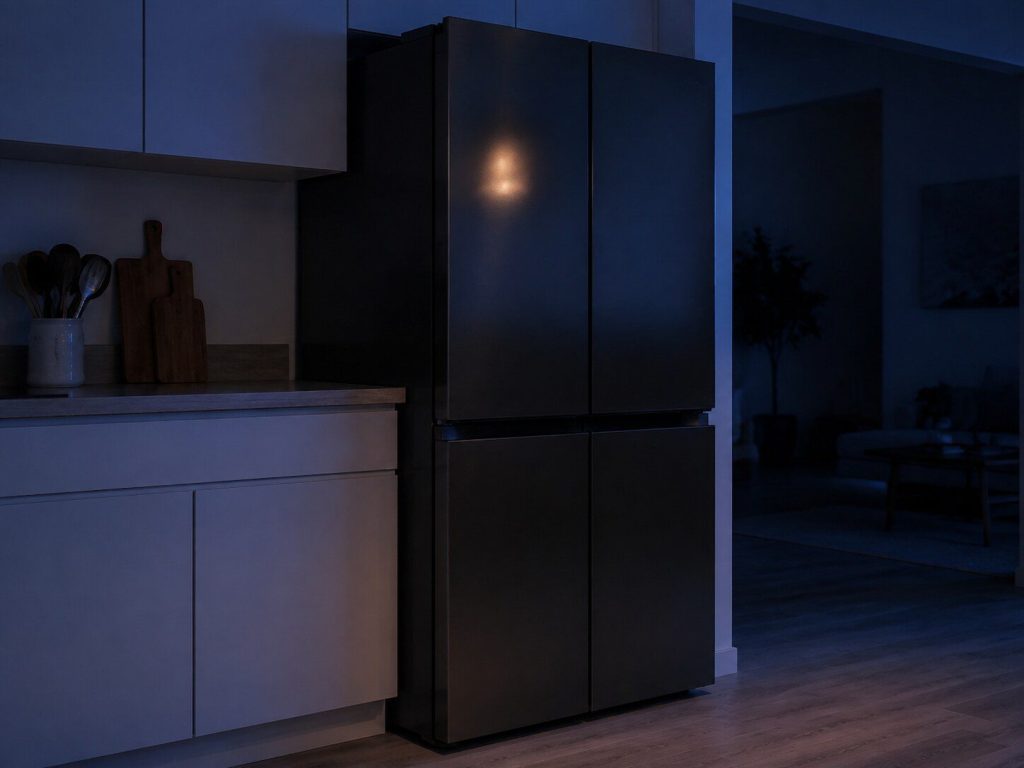
  • A tall four-door French door refrigerator standing flush at the end of a run of slab-front cabinets in an evening kitchen
    French door · side-by-side · top freezer

    Refrigerators

    Five hundred and nine pages in the maker's own base, and twenty-six of them numbered. Hold those two figures next to the seventy-five percent of wall-oven pages that carry a code and you have the whole character of this make in one comparison. Cold is where it stops explaining itself: seventeen numbered pages behind the French door cabinet, nine behind side-by-side, and on the top-freezer cabinet — eighty-four pages of guidance — not one. A visit here is therefore an hour with instruments rather than ten minutes with a panel, and that is worth knowing before you book. There is no quad-door cabinet and no all-refrigerator under this badge; both belong to a sister brand.

    • French door, side-by-side and top-freezer cabinets
    • Seventeen numbered pages on French door, nine on side-by-side, none on top freezer
    • Instruments rather than a panel: this half of the catalog explains very little
    Refrigerator repair

South Florida

The climate is part of the diagnosis.

  • A vented dryer against a Florida duct Every dryer this badge sells pushes its moisture outdoors, and a run in a house here is usually long and flat where elsewhere it would be short and upright. The air inside it arrived wet. Each season the cycle lengthens, until somebody counts.
  • The second refrigerator in the garage It sits where the afternoon passes a hundred degrees, expected to keep the same temperature as the cabinet indoors. Ordinary refrigeration is not rated for that ambient: it runs without pause and never quite arrives.
  • A laundry closet that never dries out Warm, shut and damp between loads is what a South Florida laundry cupboard is. Door seals stay wet, residue builds where nothing rinses it, and the smell that follows gets blamed on the machine rather than the room.
  • Salt on parts built to an ordinary price Within a few blocks of the water it settles on coils, fixings and burner hardware. Corrosion looks no different here than anywhere; the arithmetic afterwards does, because the component and the machine are closer in worth.
  • Storm season, and what the machine does next An interruption seldom breaks anything by itself. The call comes about what happens after the power returns: a clock asking for the time, a cycle refusing to resume until it is cleared. Many of those need no part at all.

When the machine does say something

533 code pages, and how to read one properly

Read page by page out of this maker's own US support base and arranged the way that base arranges it — one entry per code per appliance, because the same characters are not the same repair in two different rooms. Nothing here is invented, and where the maker prints a number with no mechanism behind it, the page says exactly that instead of offering a plausible guess.

One code, printed in two halves, in one room

Give the panel ten seconds before reaching for a pen or the breaker. It is the least expensive diagnostic step in existence and the one skipped most often.

Three ways this make reports a problem

  • A pair that alternates in one place — F1 then E1, F3 then E2, F8 then E1.
  • A few fixed letters that do not alternate — Sud, LF, UL and dET on a washer, AF, LOC and PF on a dryer.
  • No number whatever, and a blink pattern or a lit word instead — which is how the dishwasher and the refrigerator report almost everything.

Five we are called about most, and what each is actually saying

Sud More foam than the drum can spin against. The washer answers by adding water and lengthening the rinse on its own, which from the laundry room looks like a cycle that will never finish.
F8E1 No water arriving at the washer at all. Follow the supply first — tap, hose, inlet screen — and in an older laundry closet the tap is frequently the oldest thing in the room.
LF A fill that ran long on a washer — the machine waited, did not get what it asked for, and stopped rather than carrying on with too little water.
LOC The control lock is engaged and the machine is declining everything. It is a deliberate feature, it is easy to hit while cleaning a panel, and it survives a trip to the breaker.
PF A power failure interrupted the cycle. In this county that is a summer afternoon rather than a defect, and the machine will clear it and carry on.

Each has its own page for each appliance it appears on, because on this platform identical characters genuinely mean different things in different rooms. Put both halves into the index and it will take you to the right one.

Photograph both halves before the power goes off. A reset wipes the display and leaves the condition, and on this make that display is the single most useful thing a first visit can begin from.

All 533 code pages

Nothing is listed for any freezer, for a top-freezer refrigerator or for a gas cooktop, because this maker publishes nothing for them — not one numbered condition across 184 freezer pages. On those the symptom pages carry the whole diagnosis, written as measurement rather than as translation.

How a visit goes

Measured, priced, then agreed — in that order

  1. 01

    You give us the machine and both halves of what it says

    The model from the rating plate, the appliance it belongs to, and the code exactly as printed — the letter and the number after it. On a refrigerator, a freezer or a dishwasher there may be no number at all, and then what matters is which lights are lit or how they blink, and what a thermometer reads in each compartment.

  2. 02

    The two halves of the house get different visits

    At the oven, the cooktop, the washer or the dryer we begin from what the appliance has already declared and confirm it with a meter. On the cold side there is nothing to begin from — twenty-six numbered conditions across five hundred pages — so the whole hour is instruments: both compartment temperatures, air at the vents, resistance across a sensor, current at the compressor. Either way the report is numbers, so a second opinion has something to argue with.

  3. 03

    The figure comes before anything is opened

    Parts, availability and labor, in writing. Nothing is ordered or fitted until you have said yes, and the diagnostic comes off the bill when you do. A second problem found while the machine is apart is quoted rather than quietly carried out.

  4. 04

    And on this badge the answer is more often yes

    This make is bought to be kept, and the machines we open are routinely older than the room around them and still sound. So the point where a repair stops making sense arrives later here than on most badges — a fifteen-year-old washer usually earns a pump, a lock or a suspension. Where it genuinely does not, you are told with the arithmetic rather than after the work.

What it costs

Every figure is a floor, and every floor has a page

46 jobs with a published starting figure and a page behind each saying what moves it. Two things hold these numbers down on this badge and both are worth knowing: the parts channel is as wide as any make in this county, so an ordinary repair is one visit; and the machines last long enough that the repair is usually worth doing rather than being weighed against a new appliance every time.

Diagnostic visit

from $89

One visit, one written answer, and the fee comes off the work. What it buys depends on the room: in the laundry it starts from what the machine has already reported; at the refrigerator it is measurement from the opening minute.

Washer excess suds service

from $99

The lowest figure here and frequently no repair whatever. Sud means the drum has more foam than it can spin against, and the cause is nearly always how much detergent is going in rather than anything in the machine.

Dryer vent cleaning

from $129

The most complaints settled for the least money, and the safety item on this list. Every dryer this badge sells is vented, so the run is the appliance's real constraint: the whole length, the outside flap, and a reading before and after.

Refrigerator not cooling

from $145

The visit where this make hands a technician nothing to read, so it is instruments from start to finish. One free check comes first: a cabinet can be lit, responsive and deliberately not cooling, with the cooling-off indicator showing.

Washer suspension and bearing repair

from $285

The row this badge needs and its sister sites rarely quote, because these machines are kept long enough to reach it. A rumble that rises with the spin is years of unbalanced spinning arriving at the bearing, and caught early it is a repair in the middle of a life.

Washer motor and drive repair

from $265

Where the repair-or-replace question becomes real, and where you get the figure and the reasoning instead of a sales line. On a cabinet that is otherwise sound it earns its keep; on one already facing a bearing it does not.

Every figure here is a starting point and a researched market band for South Florida, never a quote and never an invoice. The exact cost is confirmed after an on-site diagnostic and agreed with you in writing before anything is opened.

Every figure and what moves it

Where we work

Miami-Dade, Broward and Palm Beach, end to end

59 cities and neighborhoods, each with a page saying what we actually see there. Tell us where you are when you book and we will come back with the earliest slot we can genuinely keep.

Coverage is Miami-Dade, Broward and Palm Beach counties — the pages below are the places people search for by name, not the edge of where we drive.

The appliance, the model number, and both halves of the code.

A photograph of the panel is ideal and two are better, because the display alternates between the halves and one half narrows a problem to a family rather than a part. On a refrigerator, a freezer or a dishwasher there may be no number at all — then tell us which lights are on, or how they blink. You get the scope and the figure in writing before anything is opened.

This article is based on:

  • Official manufacturer documentation
  • Internal repair procedures
  • Technician repair history
  • Company quality standards

Before you call

The questions we are asked most

Is it worth repairing, or should I just buy a new one?

The question this badge gets more than any other, and it deserves arithmetic rather than a slogan. Three things decide it, and the year on the plate is not one of them. What the part is: a pump, a lid lock, a valve, an element, an igniter or a sensor is a stocked commodity here and quick to fit, while a bearing set or a sealed system is neither. Whether the appliance is built in: a wall oven or an over-the-range microwave carries an installation cost you would pay again on a replacement, so those nearly always earn the repair. And what else on the machine is already worn. Because this make is bought to be kept, the answer here is yes more often than on any other badge we work on — and where it is no, you get the numbers rather than a shrug.

I wrote down F7 and nothing else. Is that enough?

A start, and worth going back for the rest. The panel alternates between the two halves of one code, so what you are holding is half an address — enough to name a family, and on this platform one family can take in a sensor, the wiring to it and the board reading it. Give the display ten seconds, photograph it on each half, and say which appliance it is: F2E1 sits on a washer, a dryer and a microwave in our archive and means something different on each.

My refrigerator is running and it is not cold. What code should I look for?

Probably none at all, and saying so is the honest answer rather than a shrug. Across five hundred and nine refrigeration pages this maker publishes twenty-six numbered conditions, and for a top-freezer cabinet it publishes none. What these cabinets use instead are lit words and indicators — cooling off, air filter, the water light, a door alarm — so tell us which of those are showing. Then the one free check: a cabinet can be lit, responsive and deliberately not cooling, with the cooling-off indicator on. After that it is measurement, so leave a thermometer in a glass of water in each compartment overnight and give us both numbers.

The panel lights up and every button is ignored.

Rule out the control lock first, because it costs nothing and it is the commonest false alarm on this equipment. It is a deliberate feature, engaged by holding a pad, and a sleeve wiping a panel is how it usually gets switched on. It also survives a trip to the breaker, which is precisely why people conclude the appliance has died. A machine that answers every keypress and simply never heats is a different story and worth mentioning on the phone. We have driven out to houses where one of those two was the entire visit.

My dryer takes two cycles to dry one load.

In a South Florida laundry closet that is the duct far more often than the machine, and it is the least expensive thing on this site to put right. Every dryer this badge sells is vented, so the run behind it is the appliance's real limit: usually long, often flexible, frequently crushed where the machine was pushed back, with an outside flap that corrodes half open and packs with lint. This maker publishes AF on some models for exactly that, and plenty of machines simply take longer and say nothing. It is the safety item on this list too, which is why airflow is measured before and after rather than described as looking better.

Are you connected to Maytag?

No. We are an independent repair company working in Miami, not affiliated with, authorized by or endorsed by any manufacturer, and we warrant our own workmanship rather than anybody else's. What we do have is 533 code and signal pages, every one read out of this maker's own US support base and quoting it where it is quoted, and 26 symptom pages — the freezer among them, where the maker publishes nothing numbered at all and the page says so.

Call (305) 853-8839