Troubleshooting
The Reset Button on a Maytag Ice Maker, and Why It Is Rarely the Answer
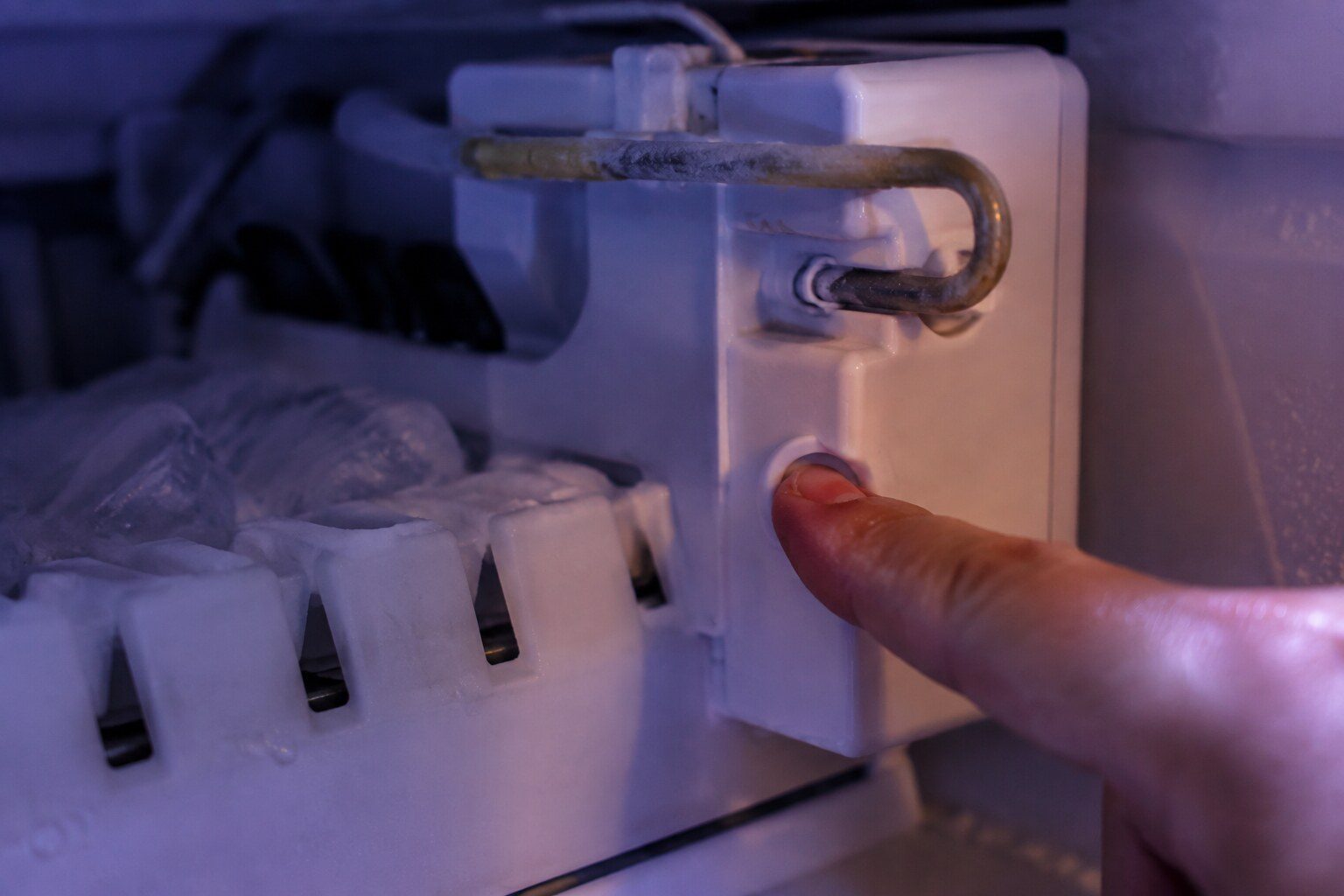
Most Maytag ice makers do not have a reset button in the sense people mean. What they have is a shut-off arm or an on-off switch, and on some modules a small test point that starts a cycle. Cycling any of those is worth doing, but understand what it proves rather than what it fixes: a module that runs through a cycle when told to is mechanically and electrically fine, which moves the whole question to water and temperature. That is the useful result. A module that will not cycle at all has narrowed things down honestly and is a stocked part. Either way the button is a test, and the two things it points at afterward — water arriving, and a freezer genuinely at zero — are what actually make ice.
The full guide
Where is the reset button on my maytag ice maker is a question people arrive at after looking for a code and finding nothing, which is exactly right — there is nothing to find.
Where is the reset button on my Maytag ice maker? Why there is nothing to look up
This maker publishes no numbered condition and no indicator for any ice maker, anywhere in its support base. We counted across the whole library and the number is zero.
So an owner standing in front of a bin that has been empty for three days has no code, no light and no message. What they have is a small plastic module with a wire arm sticking out of it, and the natural next thought is that there must be a reset somewhere.
What is actually there
On most of these it is not a reset button. It is one of two things.
A shut-off arm. A wire arm that rides on top of the ice in the bin. When the bin is full, the ice lifts the arm and production stops. Lift the arm by hand and you have switched the ice maker off; lower it and you have switched it on. It is a mechanical sensor, and it is knocked into the off position while somebody loads the freezer with remarkable regularity.
An on-off switch. Some modules have a small slide or rocker switch instead. Same job, less likely to be moved by accident.
Some modules also carry a small test point that starts a cycle deliberately. That is closer to what people mean by a reset, and it is the one worth understanding.
What cycling it actually proves
This is the part worth carrying away.
If the module runs through a cycle when you tell it to — the arm sweeps, the mold turns, the machine goes through the motions — then the module is mechanically and electrically fine. That is not a fix. It is an elimination, and it is a large one.
Because if the module is fine and there is still no ice, only two things are left: the water is not arriving, or the freezer is not cold enough. Both are checkable and neither requires a part.
If the module will not cycle at all, it has told you the opposite just as clearly, and it is a stocked component with a straightforward replacement.
Water, which is the usual answer
The water reaches the ice maker through four things in a line: the house shut-off, the plastic line behind the cabinet, the inlet valve at the back, and the fill tube that carries it the last few inches.
The fill tube is the one that freezes, and it accounts for more of these than the other three together. The shut-off is the one that gets left half open after plumbing work. The filter, if the refrigerator has one, restricts flow steadily once it is past its interval and produces small, hollow, cloudy cubes before it produces none.
Try the water dispenser at the door if there is one. A strong stream tells you everything as far as the valve is fine, in ten seconds and for nothing.
Temperature, which is the other one
An ice maker in a compartment above about five degrees will make small, cloudy or hollow cubes, or fail to complete a cycle at all, no matter how good the water is.
So leave a thermometer in the freezer overnight and read it before the door opens in the morning. Zero degrees is the target. If ice cream is soft, fix that first — the ice usually follows on its own, and fitting a module to a warm freezer produces exactly the same ice.
What not to do with the module
Two things. Do not force the arm past its stops, and do not turn the gears by hand to make it cycle.
Both of those are plastic, both are inside the part you are trying to avoid buying, and a gear tooth broken while somebody was helping it along turns a water problem into a module replacement. It is one of the few genuinely self-inflicted repairs on this site.
If the module will not move under its own power, that is the finding. Write it down and stop there.
Give it a day before you judge
An ice maker runs a cycle roughly every hour and a half to two hours once conditions are right. A bin filling from empty is most of a day's work.
That matters because the commonest sequence we hear is: reset it, wait two hours, conclude it did not work, call. Frequently the reset did work and nobody waited. Give it twenty-four hours and count what is in the bin rather than watching for the first cube.
If it turns out to be a repair
What this leads to, and what it costs
Every job on this site is priced the same way: an on-site diagnostic first, the figure agreed in writing before anybody starts.
-
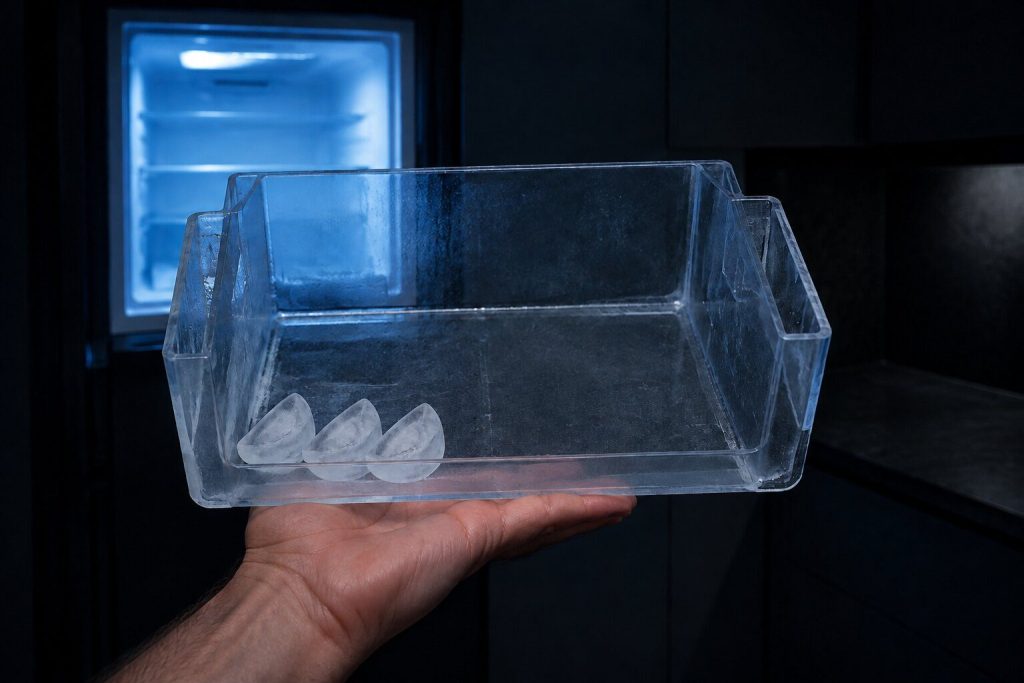
An empty bin, small hollow cubes, or ice that has all stuck together Ice maker not making ice
Ice makers produce more calls than any other single part of a refrigerator and almost none of them are documented — this maker publishes no numbered condition for one anywhere. What it does publish is an indicator for the water system, and beyond that the diagnosis is water, temperature and the mechanism, checked in that order.
- Small or hollow cubes mean water arriving too slowly, not a broken ice maker
- A freezer above five degrees will not make ice reliably no matter what else is right
- The arm or the switch that says the bin is full stops production silently
-
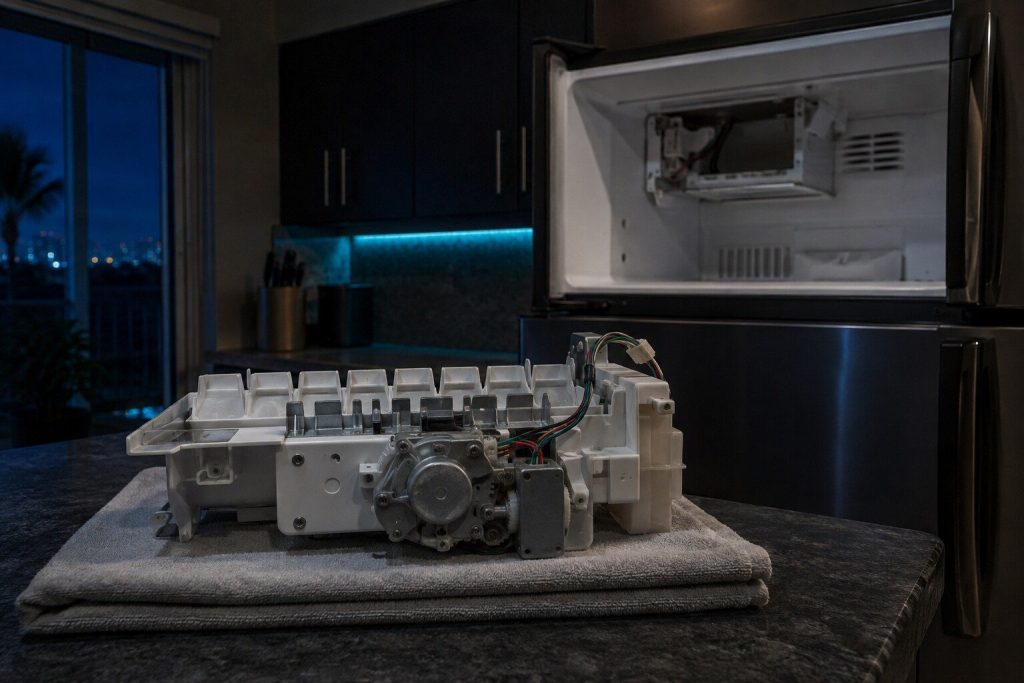
from $145 Ice maker repair
The module inside a refrigerator — a fill valve, a mold, a heater to let the cubes go, and whatever tells it the bin is full. This badge sells no ice machine of its own, so there is no second version of this job and no page here pretending otherwise. Nothing is published for ice on any cabinet, so the whole diagnosis is measurement, and most of it happens upstream of the module rather than in it.
- The refrigerator's module: there is no standalone ice machine under this badge
- No published codes for ice at all — the fill is measured, not inferred
- The arm or sensor that stops production is checked before the module is blamed
-
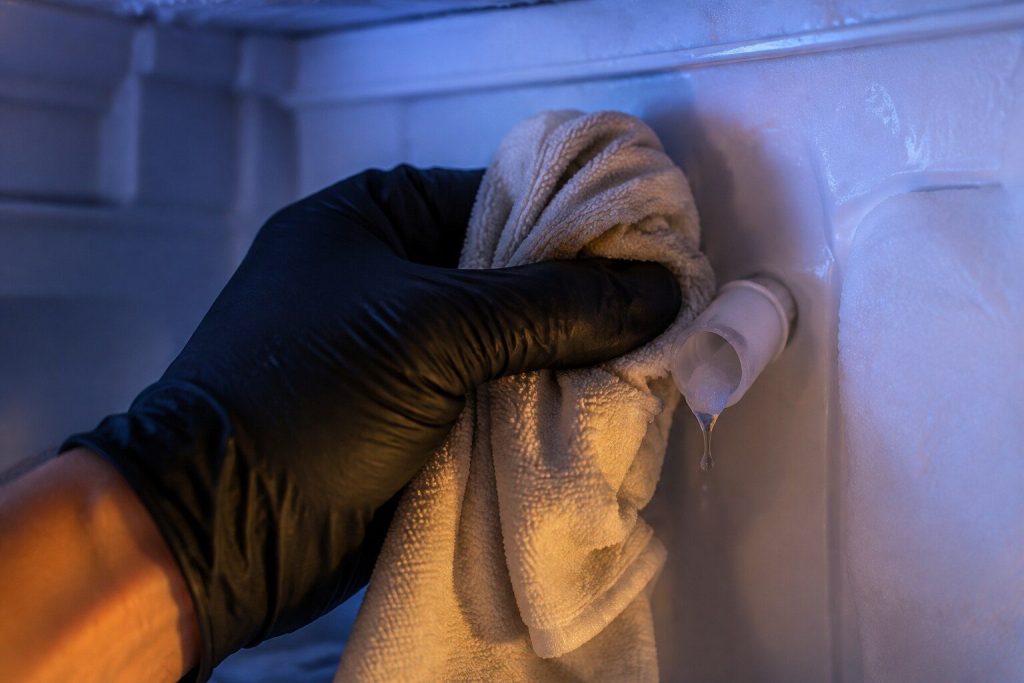
from $125 Ice maker water line and fill valve service
Everything between the shut-off and the mold, which is where most low-ice calls actually end. These modules mind flow rather than pressure, so a tired filter or a saddle valve left half open will starve one gradually enough that nothing ever appears broken — production just falls month by month. This is the least expensive ice job on the list, and the one people most often assume will be the dearest.
- Flow measured at the machine, not judged from the kitchen tap
- Filter age is a real variable here and it is treated as one
- The kink a reinstall leaves in the line is looked for every time
-
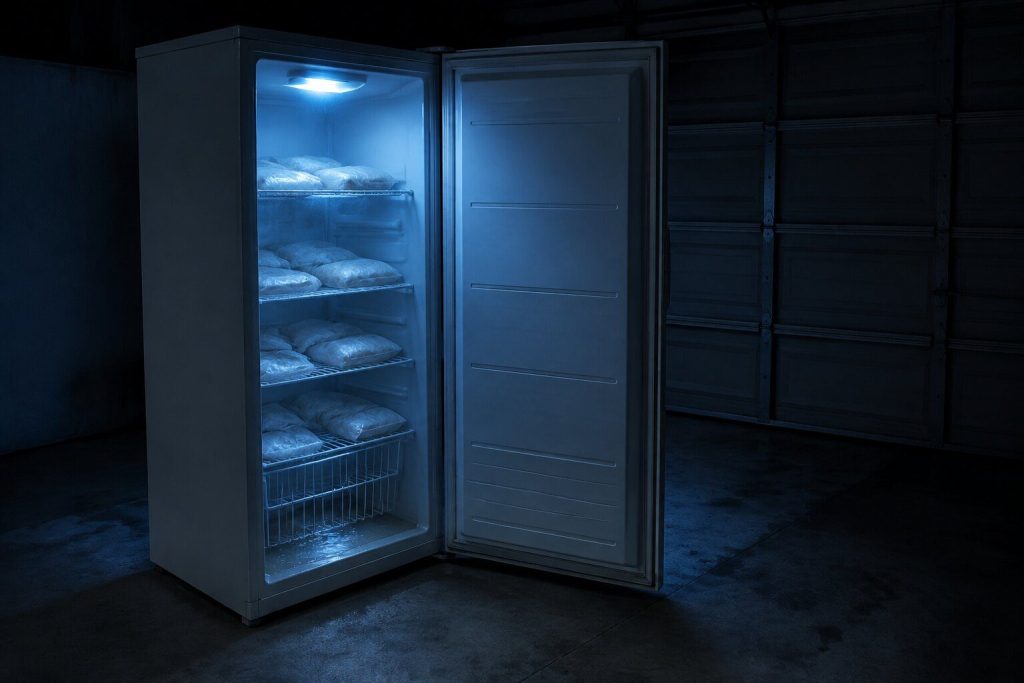
Ice cream soft, or a stand-alone freezer that has come up to temperature Freezer not freezing
This maker publishes no numbered condition for any freezer at all — not one across the whole support library. That is not an omission on our part and it is worth stating plainly: a freezer that is not holding temperature will be diagnosed by measurement and by what you can see, and there is no code to look for.
- Nothing on the display will name this — the cabinet does not report it
- Frost on the back wall points at defrost; frost on the food points at the door
- A chest freezer and an upright fail in different places

Questions people ask about this
Where is the reset button on my maytag ice maker if there is only an arm?
Then the arm is it, functionally. Lift it and lower it deliberately, and make sure it is in the down or on position — knocked up while loading the freezer, it stops production completely with no indication that anything is wrong.
It cycles but no water comes in.
That is the most useful possible result. The module is fine and the water is not arriving, so the shut-off, the line, the filter, the valve and the fill tube are the whole remaining list.
How long after a reset should I wait?
A cycle every hour and a half to two hours once the freezer is properly cold, so give it a day before judging. A bin filling from empty takes most of one.
Is there a code I can look up?
No, and that is worth saying plainly. This maker publishes no numbered or lit condition for any ice maker anywhere in its support base. Everything here is measurement.
Can a reset break anything?
No. The worst outcome is that nothing happens, which is itself an answer. What is not worth doing is forcing the arm or the gears by hand, because those are plastic and they are the part.
Troubleshooting
More guides like this one
-
Resetting a Maytag Washer After a Power Cut, and What a Reset Proves
The button sequence is the least useful part. What matters is that a reset is a test, and most people run it without knowing they are running one.
Read more -
Resetting a Maytag Oven Control Panel, and the Three Locks Behind It
A panel that has gone deaf is locked, hot, or genuinely stopped. Two of the three cost nothing, and the order they are checked in decides whether anybody has to visit.
Read more -
A Maytag Dryer That Will Not Start: Gas and Electric Part Company Immediately
Two questions decide almost everything: does the panel light, and which fuel is it. The answers send you to opposite ends of the machine.
Read more
Tell us the model number and what it is doing.
This article is based on:
- Official manufacturer documentation
- Internal repair procedures
- Technician repair history
- Company quality standards