Safety & Risks
A Maytag Dishwasher That Smells, and the Three Places It Comes From
Three places, and they are addressed in this order. The filter in the floor of the tub, which twists out by hand and holds the food that everything else depends on. The fold of the door seal, which sits above the water line so no cycle ever reaches it, and which holds a little water after every load. And the drain hose under the sink, which should rise into a high loop before it drops — a hose lying flat lets the sink drain back into the machine, and that is a permanent source no amount of cleaning will fix. If the smell returns within a day or two of a thorough clean, stop cleaning and look at the drain, because a machine that is not emptying properly cannot be kept fresh.
The full guide
Why does my maytag dishwasher smell is on the safety list rather than the maintenance list, and the reason is that the conditions producing the smell are the same conditions that grow things in a kitchen nobody can see into.
Why does my Maytag dishwasher smell? What a smell actually needs
Three things: standing water, warmth, and something organic to feed on.
A dishwasher in a South Florida kitchen supplies all three without anybody trying. There is a small amount of water left in the sump by design, so the seals do not dry out. The kitchen is warm. And the machine's entire job is to collect food residue.
That is not a defect and it does not mean the appliance is dirty. It means the appliance is an enclosed damp box, and enclosed damp boxes need attention on a schedule rather than when something goes wrong.
The filter, which is first because it holds the food
It twists out by hand — a quarter turn counter-clockwise, then straight up — and there is usually a flat plate underneath it that lifts out as well.
Rinse both under a hot tap with a soft brush. Then look into the empty sump with a light, because glass chips, produce stickers and small bones collect there below where the filter can catch them.
This is the single most productive thing on the page, because it removes the food that everything else depends on. It is also the item people are most surprised to learn exists.
The door seal fold, which no cycle can reach
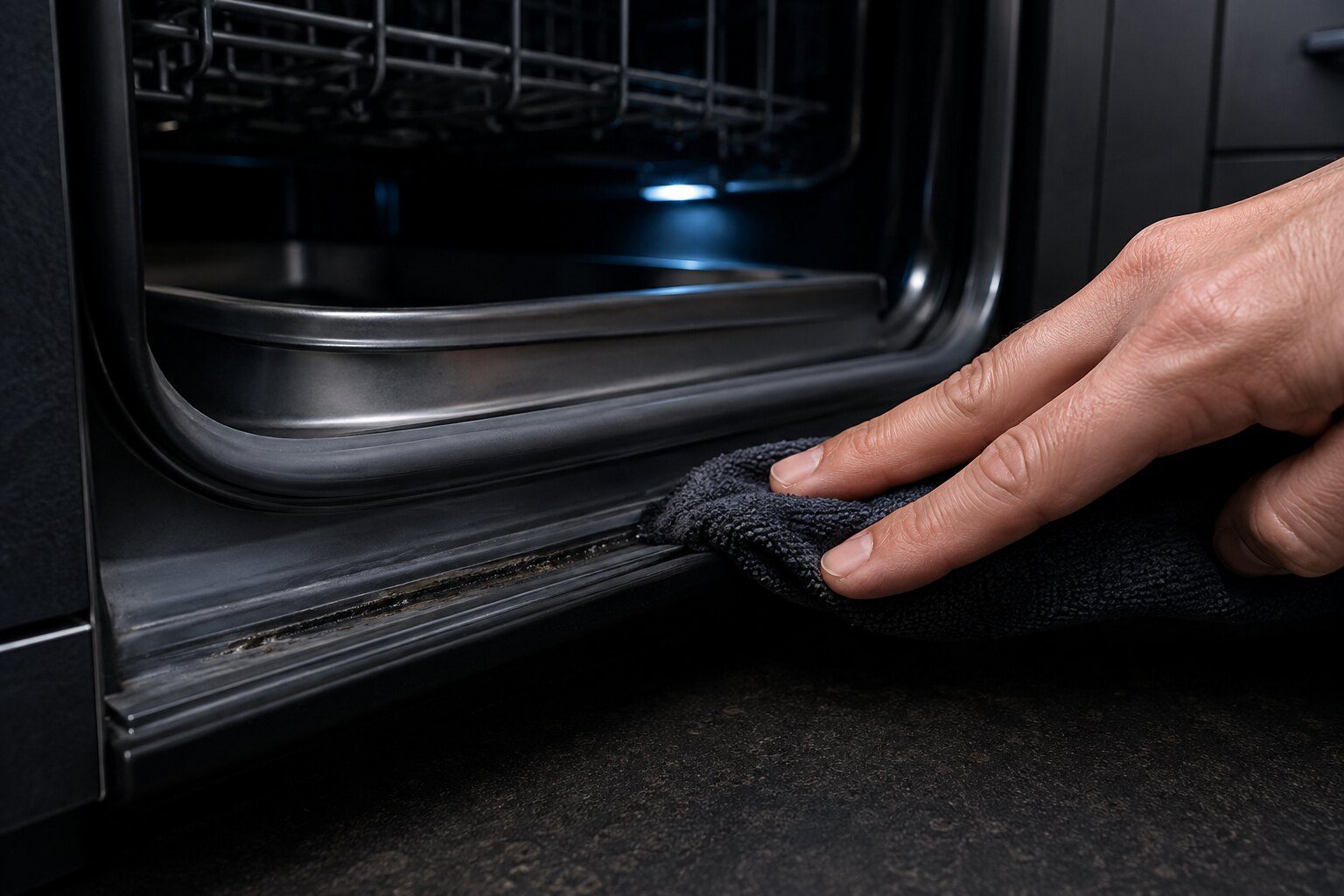
The rubber seal around the door has a fold in it, and that fold sits above the water line during the wash. Nothing the machine does ever touches it.
It holds a little water after every load, along with hair, lint and residue. On a machine that has been running for years without anybody wiping it, that fold is where a smell lives permanently, and it is why people can run six cleaning cycles and change nothing.
A cloth, a couple of minutes, and getting into the fold at the bottom edge where the water collects. It is not a pleasant job the first time and it does more than any product.
The drain, which is outside the machine
Under the sink, the dishwasher's drain hose should rise into a high loop before it drops to the waste.
A hose that has slipped and now lies flat lets water from the sink flow back into the machine. That is a permanent source of exactly what this page is about, and no amount of cleaning inside the dishwasher will touch it.
While you are there, run the disposal for thirty seconds before the next cycle. A shared waste with a loaded disposal pushes water back toward the dishwasher rather than away from it.
If the smell is more like a drain than like food, start here rather than at the filter.
When the smell is telling you about a repair
This is the part worth acting on.
A machine that will not stay fresh after all three places have been dealt with is usually a machine that is not emptying properly. Water sitting in the pump, the filter housing or the hose between cycles is a standing reservoir, and cleaning the parts you can see does nothing about it.
The tell is a smell that returns within a day or two of a thorough clean, often with a load that comes out slightly wetter than it should, or standing water above the filter when the door is opened.
At that point it has stopped being a maintenance question. The drain is worth looking at, and it is one of the more straightforward repairs on this appliance.
Why this is on the safety list
It is a fair question, because a smell is not dangerous the way a gas leak is.
It is here because the three conditions that produce it — standing water, warmth and food residue in an enclosed space — are the same conditions that grow mold in the parts of a kitchen nobody can see into. A dishwasher that has been sitting damp for years with a blocked drain is not just unpleasant; it is a small permanently wet environment inside a cabinet run.
The machine itself runs hot enough to handle what its water reaches. The concern is the fold, the hose and the sump, which the water does not reach, and the answer to all three is mechanical rather than chemical.
That is why this page ends with a habit rather than a product.
The habit that prevents most of it
Leave the door ajar between cycles.
A closed dishwasher in a warm kitchen stays damp indefinitely. An open one dries in a few hours, and most of what this page describes never gets established.
It costs nothing, it is the only item here that requires no effort at all, and in this climate it is worth more than everything else on the list put together.
If it turns out to be a repair
What this leads to, and what it costs
Every job on this site is priced the same way: an on-site diagnostic first, the figure agreed in writing before anybody starts.
-
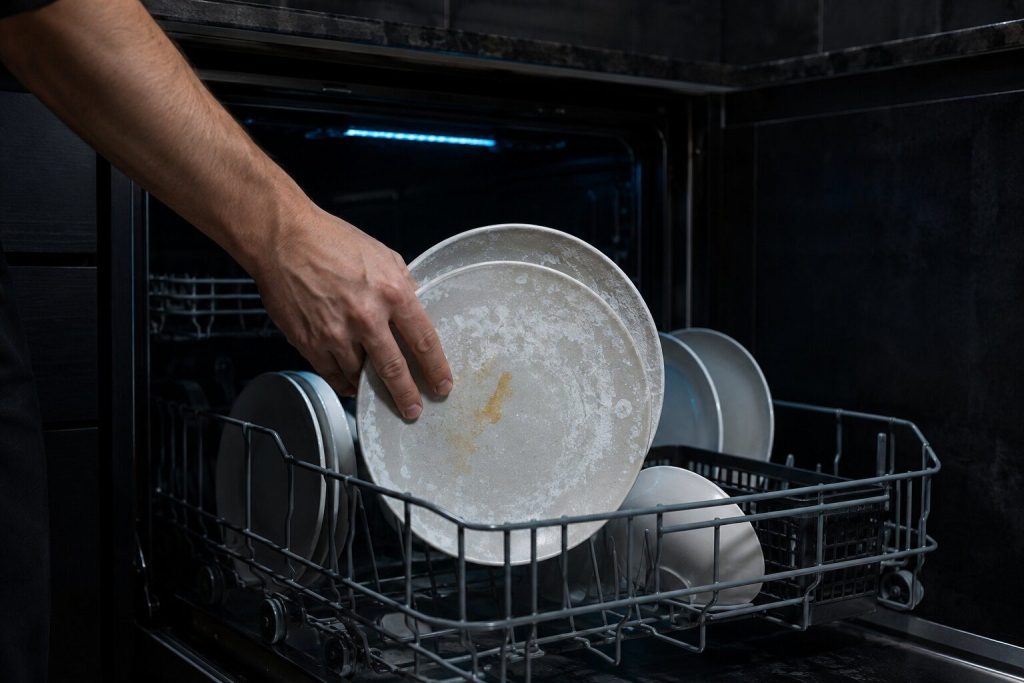
Film, grit or food left on everything after a full cycle Dishes come out dirty or gritty
Poor cleaning is rarely one thing that broke and usually three small things that added up. On a Maytag dishwasher the order is nearly always the same — water temperature, the spray arms, and the filter — and two of the three cost nothing to correct.
- Hot water has to reach the machine before the cycle starts, not during it
- A spray arm that cannot turn freely leaves a predictable pattern of dirty dishes
- Grit on everything usually means the filter, not the pump
-
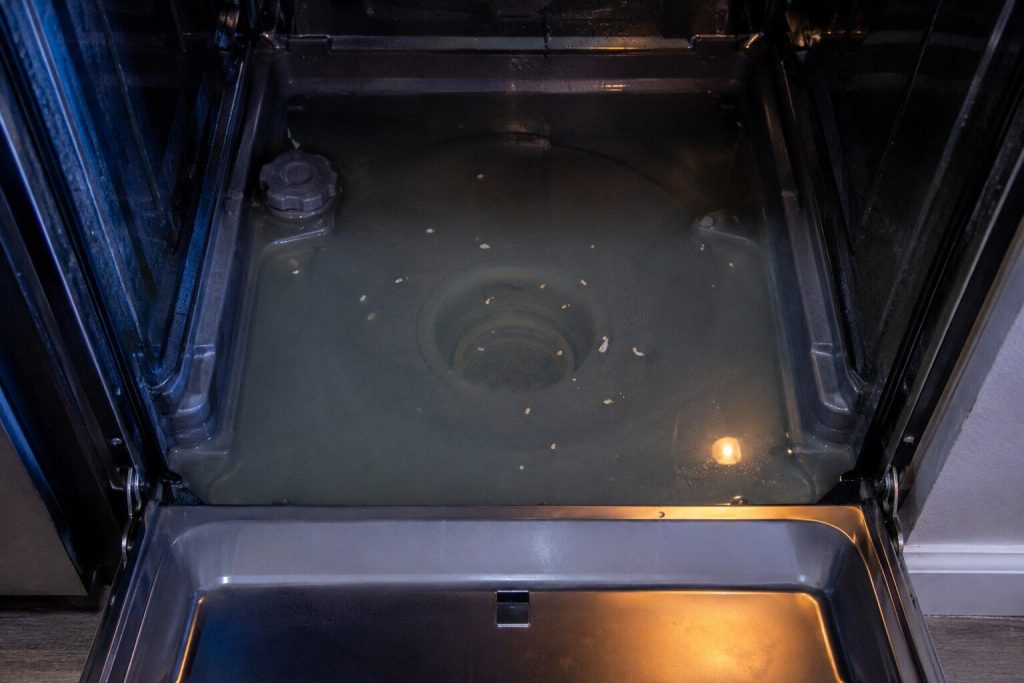
Water standing in the bottom of the tub after the cycle Dishwasher will not drain
An inch of water in the sump at the end of a cycle is normal on some machines and a problem on none of them. Standing water above the filter is the complaint, and on a Maytag dishwasher it is nearly always something between the tub and the sink drain rather than anything electrical.
- The filter in the base is the first place to look and it is designed to be removed by hand
- A new garbage disposal with its knockout plug still in place stops the dishwasher completely
- This machine may report the condition as a flashing light rather than as a number
-
from $119 Appliance maintenance
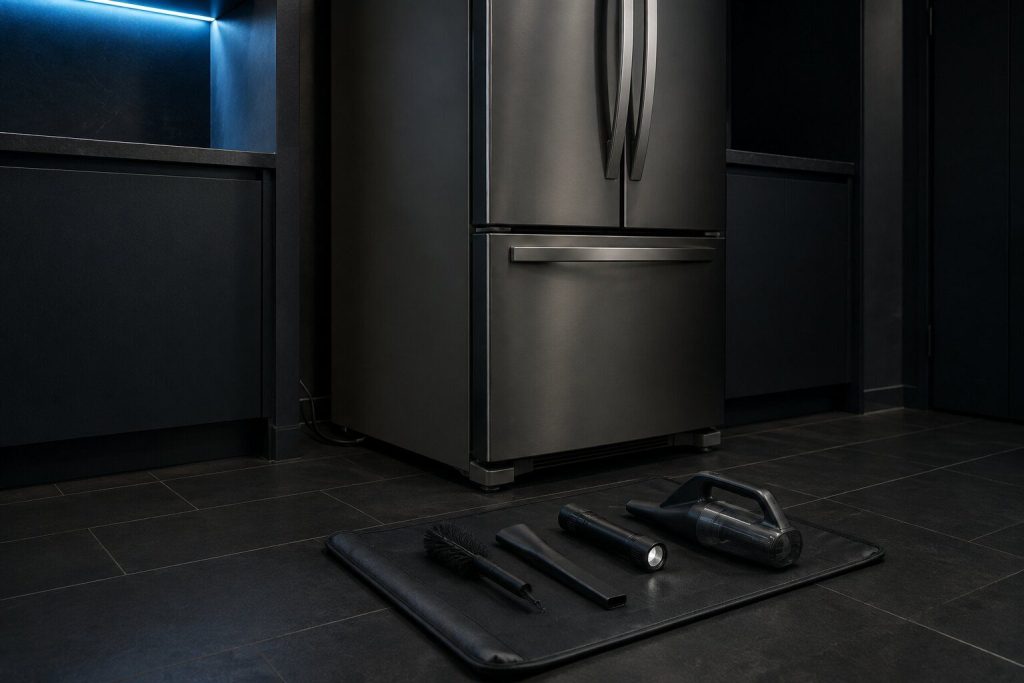
The visit that stops the other visits, and on equipment bought to last it is the one that pays for itself twice over. The list is short and specific: the condenser at floor level in a humid kitchen, the dryer duct that gets longer every year in effect if not in fact, the seals this climate works harder than the manual assumed, and the drain that must not stand. None of the four announces itself, and all four are cheaper to keep than to repair.
- Condenser, seals, drains, vents and leveling, on every appliance in the run
- The intervals are set to this climate rather than to the manual's calendar
- You keep a written note of what is aging and roughly when it will matter
-
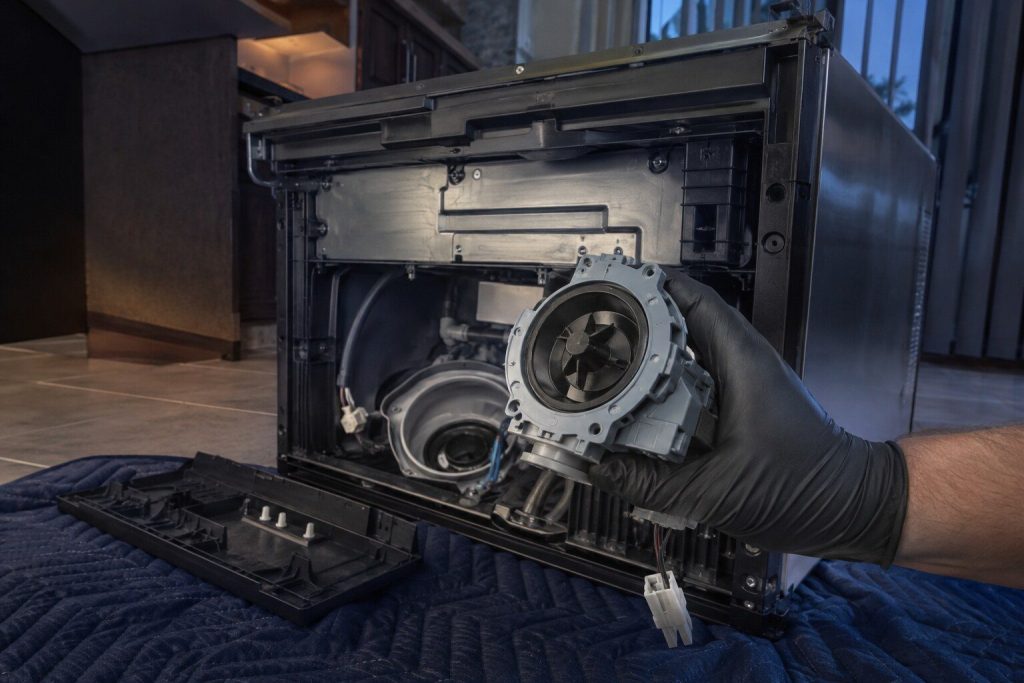
from $135 Dishwasher drain and pump repair
Water standing in the bottom of the tub at the end of a cycle, and more often than not the cause is outside the appliance. This maker groups almost all its dishwasher diagnosis under a single heading covering codes and blink patterns together, so on a machine without a display the lights are the message — and cutting the power to reset it clears the evidence along with the symptom.
- Filters and hose before the pump, and they end most of these
- On a machine with no display, the blink pattern is the code
- The high loop lost on a reinstall is the commonest installation cause
Questions people ask about this
Why does my maytag dishwasher smell even after a cleaning cycle?
Because a cycle cannot reach the two places that matter most. The fold of the door seal sits above the water line and the drain hose is outside the machine entirely. Both need a hand, and neither takes more than a few minutes.
Is it a health risk?
The organisms involved are the ordinary ones that grow in any warm damp enclosed space, and the machine runs hot enough to deal with what it reaches. The concern is what it does not reach, and the answer to that is mechanical rather than chemical.
Does vinegar work?
For a light film, reasonably. For an established biofilm in a seal it does not, and it is worth knowing that before somebody runs vinegar through an empty machine six times and concludes the appliance is finished.
The smell is worse in summer.
Expected. Warmth accelerates everything involved, and a kitchen at eighty degrees with a closed dishwasher in it is a different environment from the same machine in January. The three places are the same; the interval needs to be shorter.
It smells of sewage rather than food.
That is a different finding and it points at the drain rather than at the machine — usually the hose loop, sometimes the air gap at the sink. Say which smell it is when you book, because it changes where we start.
Tell us the model number and what it is doing.
This article is based on:
- Official manufacturer documentation
- Internal repair procedures
- Technician repair history
- Company quality standards