Maintenance & Prevention
The Maytag Defrost Drain, and Why Water Appears Under the Crispers
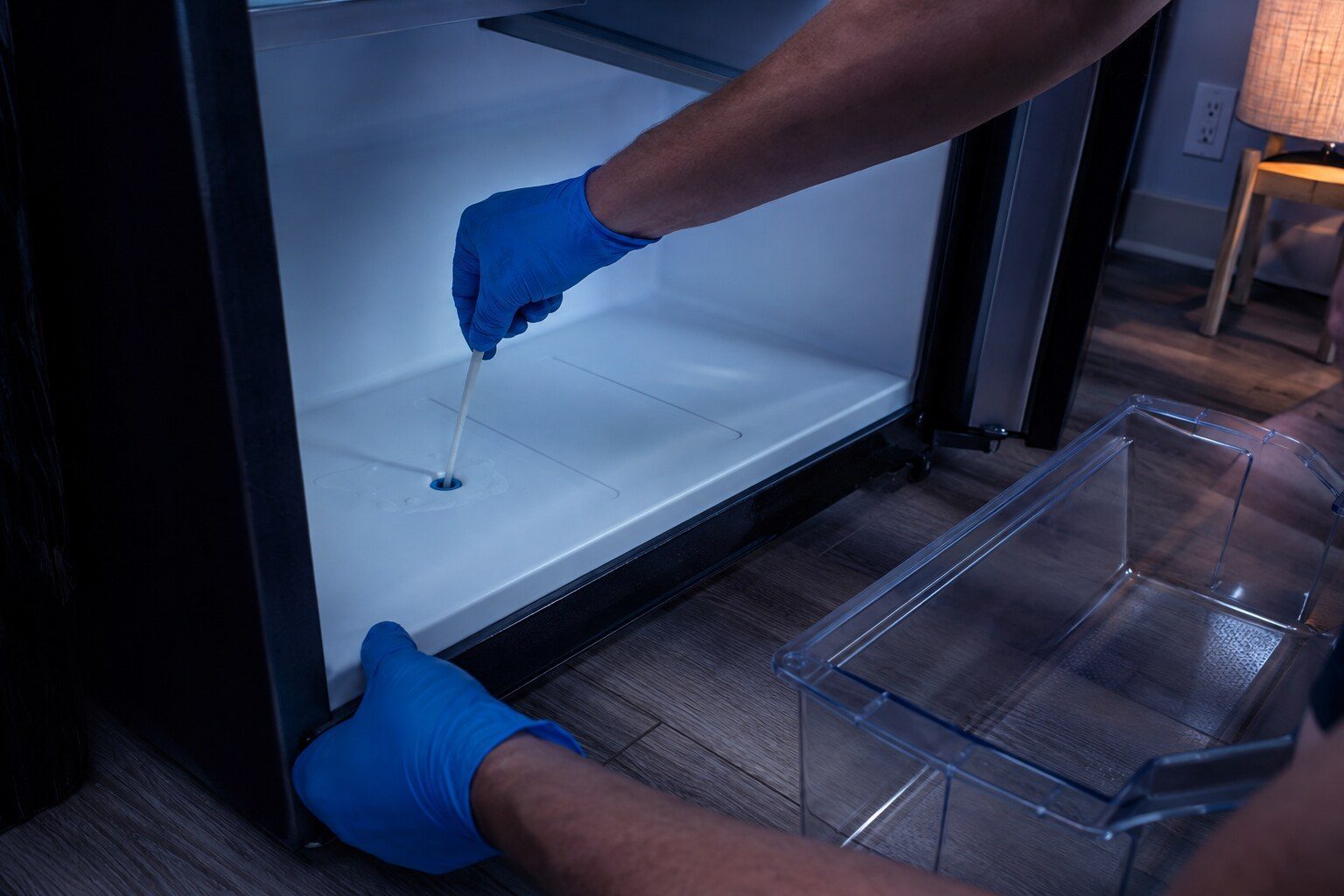
Empty the freezer compartment and find the drain hole, which sits at the lowest point of the coil area — at the back floor of a top-freezer cabinet, behind the drawer on a bottom-freezer, and low on the back wall of the freezer half of a side-by-side. Clear the ice at the outlet with warm water poured slowly rather than with anything rigid, and keep going until water runs freely and reaches the pan underneath. Then dry the area and watch it for a week. Clearing the tube is the easy half; the useful half is finding out why it iced, because a drain that froze once will freeze again within weeks if the reason has not changed. The usual reasons are a defrost cycle that is no longer running properly and a door seal admitting warm damp air.
The full guide
How to clean defrost drain on maytag refrigerator is a question people arrive at after finding a pool under the crisper drawers and working out, correctly, that it did not come from a bottle.
How to clean defrost drain on Maytag refrigerator: what the drain is for
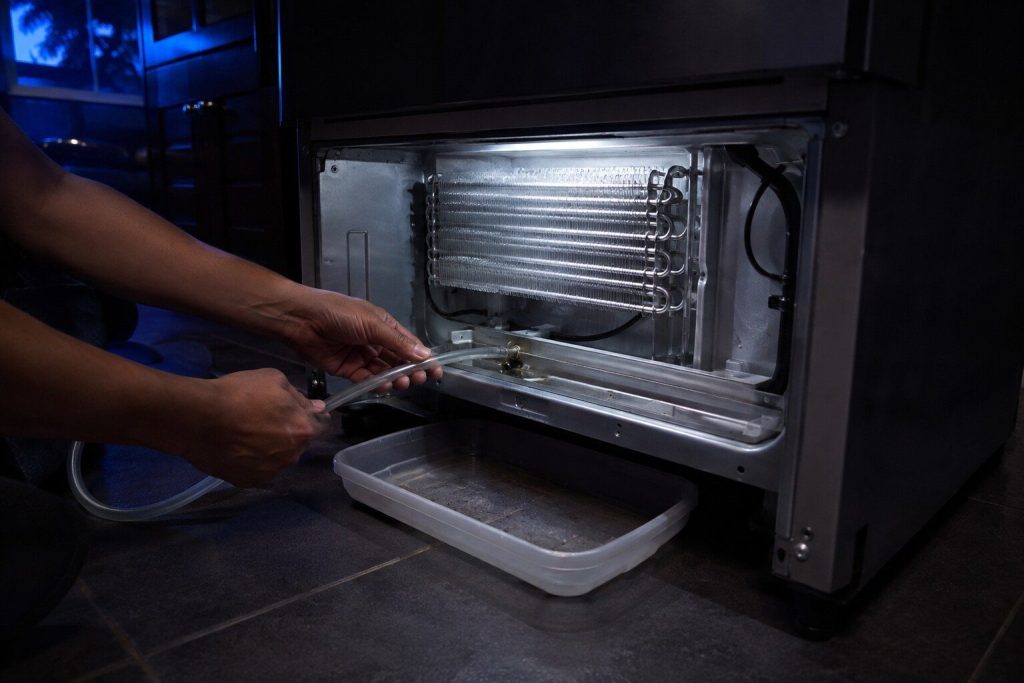
The coil that makes all the cold in the cabinet accumulates frost as it runs. That is normal and unavoidable. Every few hours the appliance warms the coil briefly, the frost melts, and the water runs down a small tube to a pan underneath the cabinet, where the heat of the compressor evaporates it.
That whole cycle is invisible and it happens several times a day.
The tube is the weak point. It is narrow, it runs from the coldest part of the appliance, and the water going down it is barely above freezing. Once a small amount of ice forms at its outlet, the next melt backs up behind it and freezes further along. Within a few cycles it is solid.
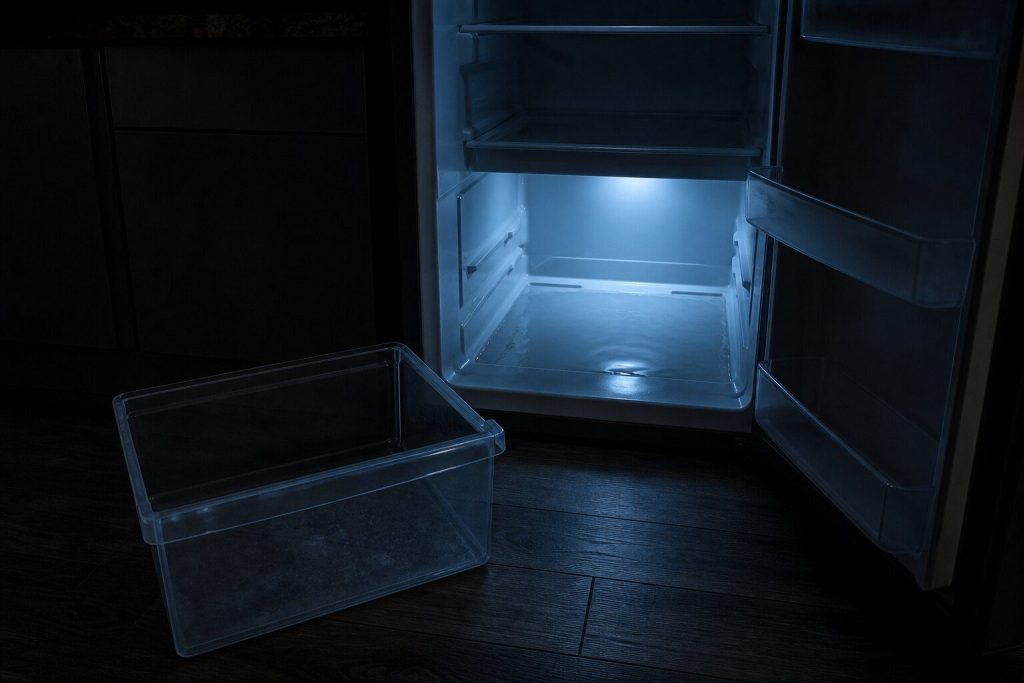
The water then does what water does. It fills the channel, spills over, and runs forward under the fresh food compartment — which is why it appears under the crisper drawers rather than anywhere near where it came from.
Where the drain is on your cabinet
Top-freezer. The simplest. The drain hole is at the back of the freezer floor, usually visible once the shelf and the contents are out.
Bottom-freezer or French door. The tube runs down behind the freezer drawer, and the drawer has to come out. The ice usually forms at the very bottom, which is also the hardest place to reach and the reason this is the layout we get called to most.
Side-by-side. Low on the back wall of the freezer half, behind the panel that covers the coil.
In all three cases the compartment has to be empty, so have a cooler ready before you start. This is an hour rather than five minutes.
Clearing it without doing damage
Warm water, poured slowly, and nothing else.
Not hot — you are working next to plastic and a coil. Not fast, because the point is to melt the plug rather than to push it further along. And nothing rigid: the tube is thin plastic running past refrigerant tubing, and a wire that goes off course turns a drain problem into a sealed-system repair, which is the single most expensive thing that can happen to a refrigerator.
Keep going until water takes freely. Then pull the cabinet forward and check that it is actually arriving in the pan underneath. A tube cleared at the top and still blocked lower down looks exactly like success from inside the freezer.
The half that matters
Clearing the ice is the easy part. The useful question is why it froze.
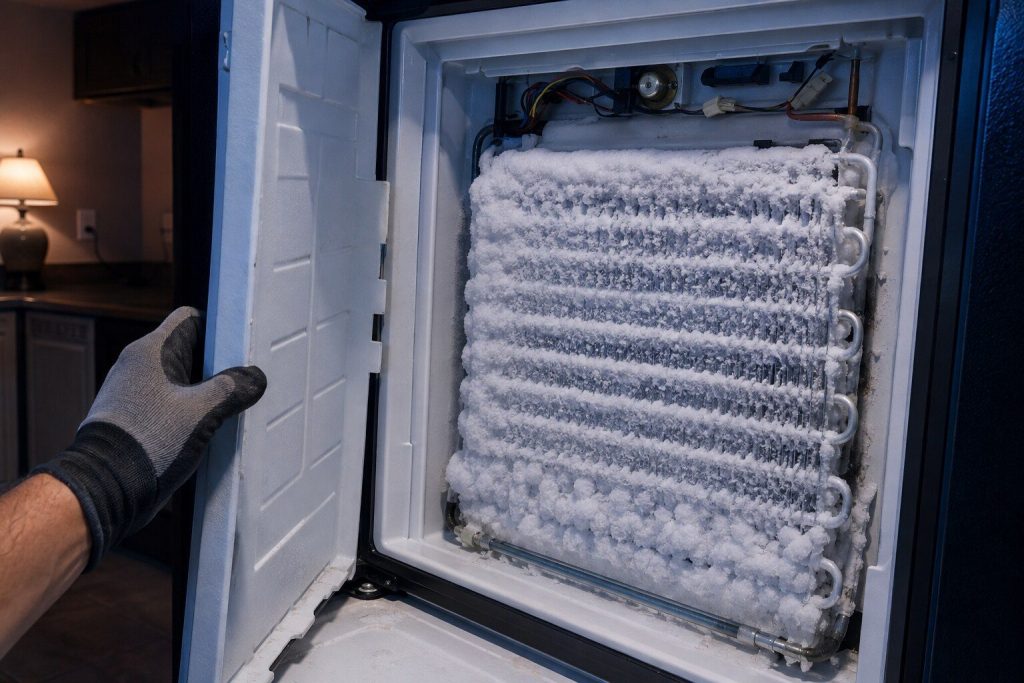
The defrost cycle is not running properly. If the coil is not being cleared on schedule, far more water arrives at the drain in one go than the tube was designed to take, and it ices. The tell is a sheet of frost across the back panel of the freezer and a drain that blocks again within weeks.
Warm air is getting in. A door seal that no longer seals, or a drawer held a fraction open by a package, admits humid room air continuously. All of that moisture condenses inside, and all of it eventually has to go down the same small tube. The tell is frost on the food and the shelves rather than on the back panel.
Do the paper test on the door while the compartment is empty — a slip shut in the seal should hold firmly at every point. It takes two minutes and you will not have a better opportunity.
Why this is more common here
The design assumes a certain amount of water. Every door opening in a South Florida kitchen in August admits air carrying several times the moisture of the same air in a dry winter, and every bit of that ends up as condensation on the coldest surface available.
So the drain here carries more than it was ever asked to, gaskets matter more than they do elsewhere, and a seal that would comfortably last a decade somewhere else is worth checking at seven or eight years.
When to have it done rather than do it
Two situations. On a bottom-freezer cabinet the working position is on the floor with the drawer out, which is genuinely awkward, and it is the layout where people give up halfway.
And if it has blocked twice, stop clearing it. The second block is the appliance telling you the cause is upstream, and another hour with a cooler buys another few weeks. That is a defrost repair, it is a defined job with stocked parts, and it is a better use of the afternoon.
If it turns out to be a repair
What this leads to, and what it costs
Every job on this site is priced the same way: an on-site diagnostic first, the figure agreed in writing before anybody starts.
-
A pool under the crisper drawers, or water on the floor at the front Water inside or under the refrigerator
Water inside a refrigerator is nearly always the drain that carries defrost water away, and it has a specific and unglamorous failure — a small tube freezes shut, the water backs up, and it reappears under the drawers. It is one of the more satisfying repairs on this site because the cause is so consistent.
- Water under the crisper drawers is the defrost drain almost every time
- Water on the floor at the front is usually the drain pan or the water line
- This maker publishes an indicator for the water system but nothing for a drain
-
from $165 Defrost system repair
Ice on the evaporator behind the back wall rather than frost around the door, and a cabinet that gets worse over weeks instead of failing outright. The circuit is a heater, a terminator and the sensor that decides when to stop, and on this make none of the three announces itself — so the finding takes longer than the fixing and the price says so. What sends a defrost circuit here is usually humidity getting in somewhere it should not.
- Ice at the back is the defrost circuit; ice at the door is the seal
- Heater, terminator and sensor measured cold, not judged by how thick the ice looks
- The way the moisture is getting in is found too, or it comes back next season
-
from $135 Refrigerator leak repair
Water inside the cabinet, under it, or on the floor beside it, and the three have different answers. Inside is nearly always the defrost drain backing up and refreezing; underneath is the drain pan or the tube that feeds it; beside it is the supply line, which is plumbing wearing an appliance complaint. In a kitchen with wood floors or a cabinet run either side, this is a today job rather than a weekend one.
- Inside, underneath and beside are three different repairs
- The drain is cleared and the reason it blocked is dealt with
- The cabinetry is checked before we leave, not after it swells
-
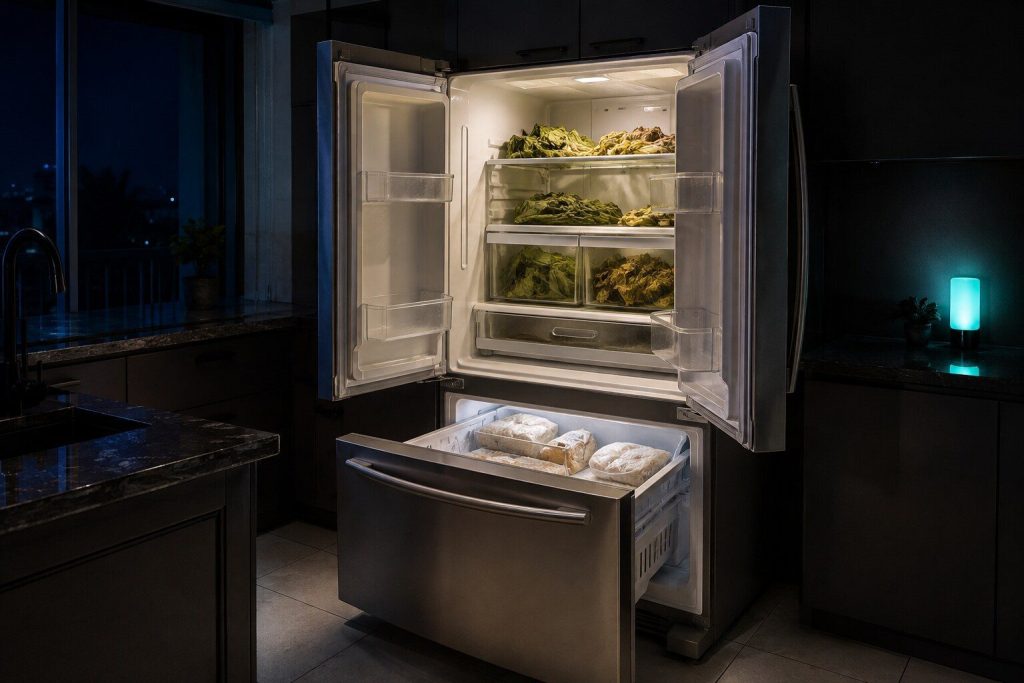
The freezer is fine and the fresh food side is warm, or neither is cold Refrigerator not cooling
The first thing worth knowing is that this appliance is not going to tell you much. Across five hundred refrigeration pages this maker publishes a handful of indicator conditions and no diagnostic codes worth the name — which means a warm refrigerator is diagnosed by what it does, not by what it says. That is the honest starting point and it changes what we ask you on the phone.
- A cold freezer with a warm fresh food side is the classic defrost or airflow picture
- Both compartments warm together is a different and more serious question
- A cooling indicator switched off will warm the whole cabinet with nothing broken at all

Questions people ask about this
How to clean defrost drain on maytag refrigerator without emptying the freezer?
You generally cannot reach it with the compartment loaded, and on a bottom-freezer cabinet the drawer has to come out anyway. It is an hour with a cooler standing by rather than a five-minute job, which is worth knowing before you start.
Can I use a wire down the tube?
Nothing rigid. The tube is thin plastic running past a coil, and a wire that goes off course is a sealed-system repair rather than a drain one. Warm water poured slowly does the job and cannot do that damage.
It came back after a month.
Then the tube was not the problem, it was the symptom. Something is putting more water down it than it can carry, or the defrost cycle is no longer clearing the coil properly, and that is a defined repair rather than another hour with a cooler.
There is water on the kitchen floor too.
That is usually the pan underneath overflowing, or the water supply line rather than the drain. Say which when you book — they are different repairs and they need different things on the van.
Does this happen more here?
Yes, measurably. Every door opening admits air carrying far more moisture than the design assumed, and all of that water eventually has to go down the same small tube.
Maintenance & Prevention
More guides like this one
-
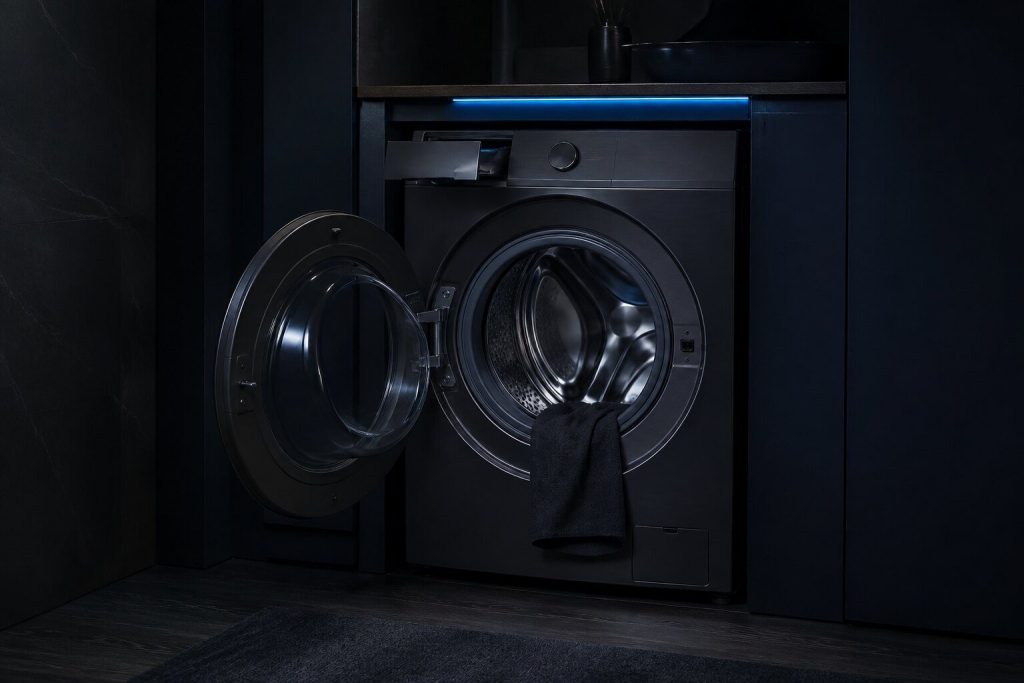
How Often a Maytag Washer Needs Cleaning in a Humid Climate
The interval on the box was written for a machine in a dry laundry room. A warm closet with a rubber seal and standing water is a different appliance.
Read more -
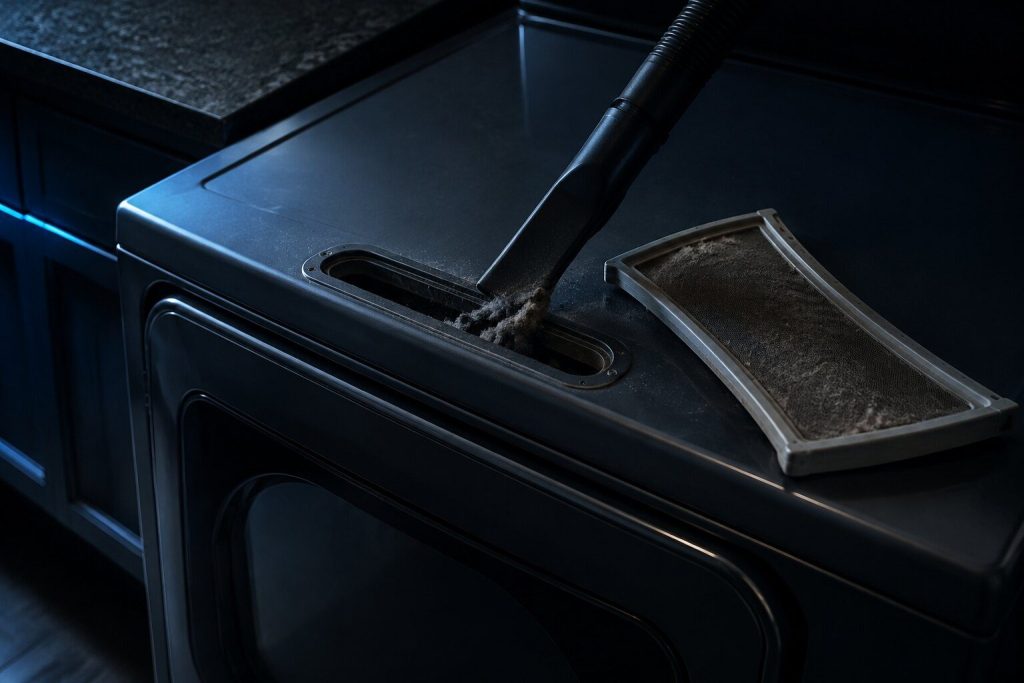
Cleaning a Maytag Dryer Vent, and Why the Screen Is Not the Duct
Four places restrict a dryer and only one of them is the screen everybody cleans. They block in a predictable order, and in this climate faster than the interval most people carry.
Read more -
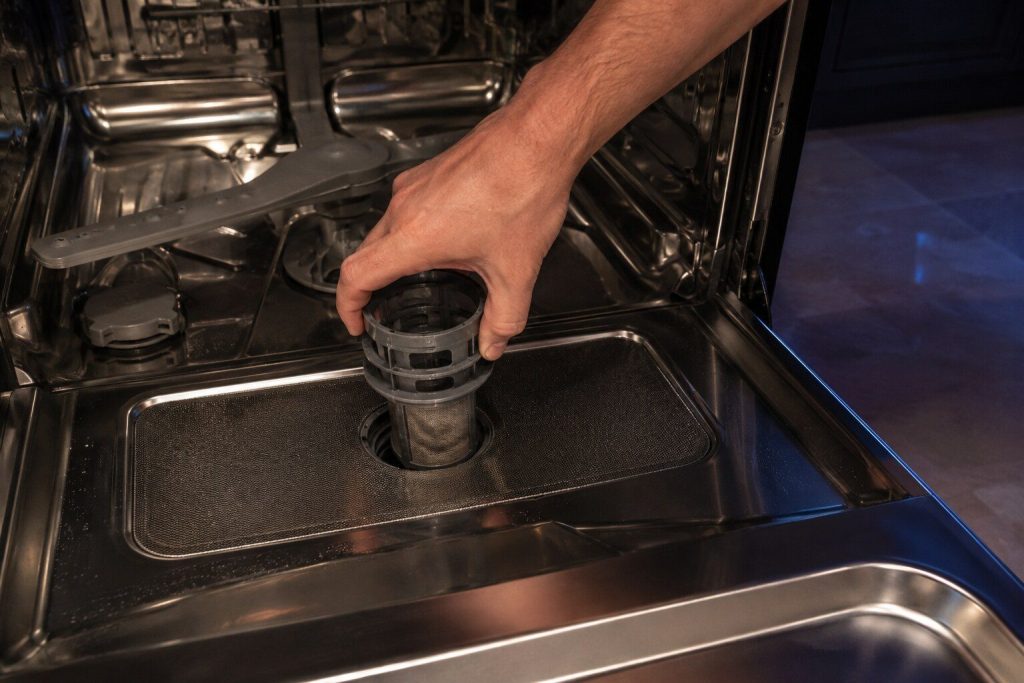
The Maytag Dishwasher Filter Nobody Knows They Have
It twists out by hand, it is meant to be cleaned, and doing it every couple of months prevents most of the drain calls we take on this badge.
Read more
Tell us the model number and what it is doing.
This article is based on:
- Official manufacturer documentation
- Internal repair procedures
- Technician repair history
- Company quality standards