Common Problems
A Grinding Maytag Dishwasher: Glass, the Pump, or Nothing at All
Time it against the cycle. A grind lasting a few seconds when the machine starts to empty is almost always something hard that got past the filter and reached the drain pump, and it is a free removal if it is caught before it scores anything. A grind that runs through the whole wash belongs to the wash motor, which is a real repair. A grind that arrived alongside poor cleaning is neither of those: it is a spray arm hitting something in the rack, and moving one dish fixes it. Everything else people call grinding turns out to be one of these three heard at a different moment, so noting when it happens is worth more than describing what it sounds like.
The full guide
Why is my maytag dishwasher making a grinding noise is a question with three answers that cost wildly different amounts, and the thing that separates them is not what the noise sounds like. It is when it happens.
Why is my Maytag dishwasher making a grinding noise? Three noises, three moments
A dishwasher does two mechanical things: it pushes water around the tub, and it pushes water out to the drain. Those use different pumps, they run at different points in the cycle, and a noise belongs to one or the other.
At the drain, for a few seconds. The drain pump runs in short bursts, hardest at the end. A grind confined to those bursts is something hard sitting against the impeller — glass, a fruit sticker, a small bone, occasionally a bottle cap. This is the cheapest version and it is often free.
Through the whole wash. The wash pump runs continuously while the machine is washing. A grind that lasts as long as the wash does belongs to it, and that is a genuine repair rather than a removal.
Whenever the arms are turning, with dirty dishes to go with it. That is not a pump at all. It is a spray arm striking something in the rack, and the proof is that the load also comes out badly cleaned, because an arm that cannot turn is not spraying where it should.
The filter, and the space underneath it
Start here regardless, because it is free and it takes ten minutes.
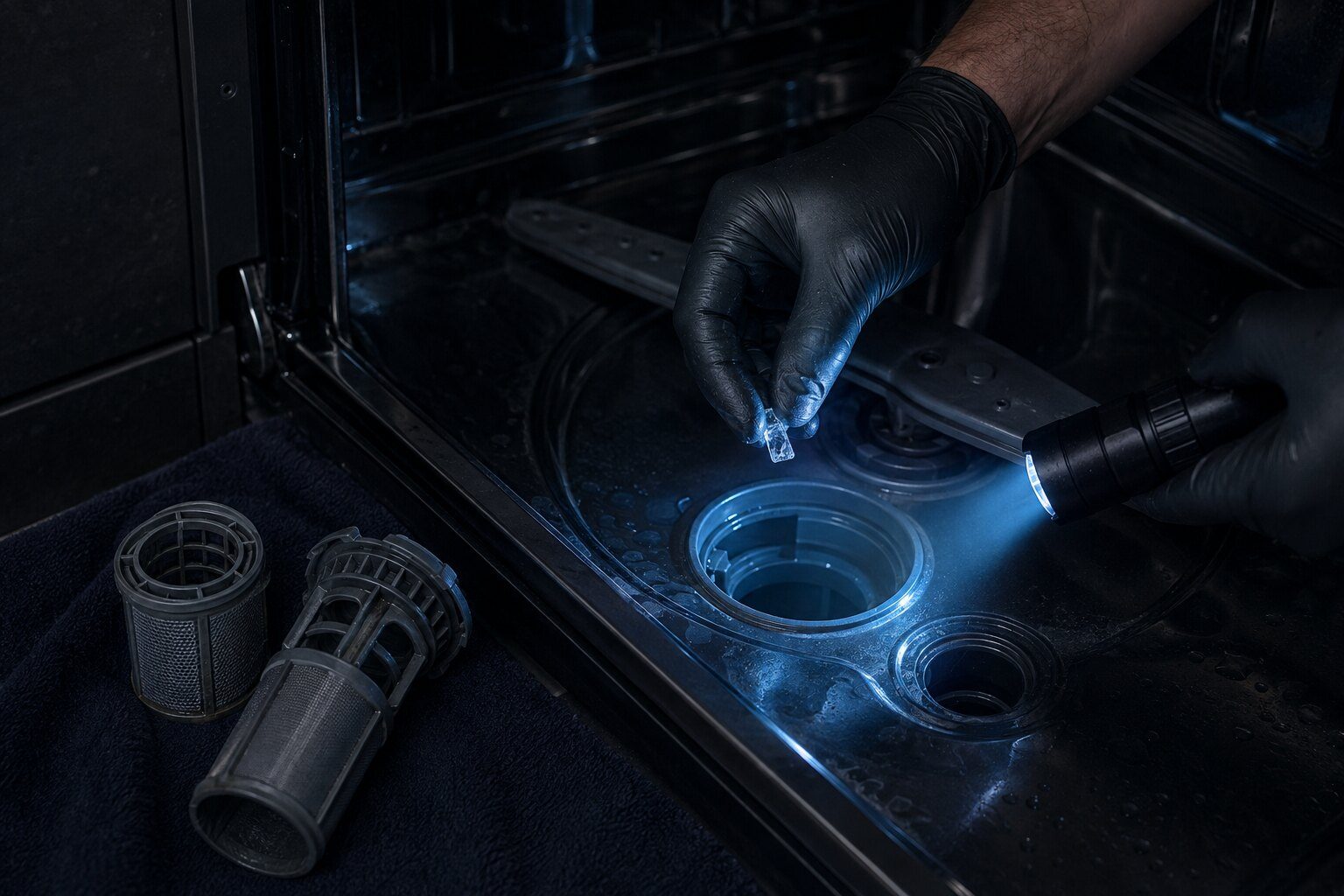
The filter twists out by hand — no tools, and it is designed to be removed. Rinse it under a hot tap and look at what comes off it. Then, and this is the part people skip, look into the sump underneath with a light.
The filter catches what it can. What gets past it lands in the sump, and the sump is what feeds the drain pump. Glass chips in particular are small enough to pass and hard enough to do damage, and they sit there quietly until the pump picks one up.
Most of the cheap version of this complaint is resolved in that ten minutes.
Why glass makes it worth doing soon
A dishwasher that grinds at the drain and still empties normally is not an emergency. It is, though, on a clock.
Glass against a plastic impeller and housing does what you would expect over a few weeks of daily cycles: it wears the surfaces, and once the clearances have gone the pump stops moving water properly whether the glass is still there or not. At that point a removal has become a part.
So the honest advice is not to panic, and not to leave it a month either. Take the filter out this week.
When it is the wash motor
A grind through the whole wash, with the dishes coming out reasonably clean, is the version that needs somebody. The motor is doing its job and complaining, usually because a bearing has worn or because something small is caught where the impeller runs.
This is a real repair and it is worth a straight conversation about the machine's age. On a dishwasher of six or seven years it is generally worth doing; on one of twelve it deserves the same arithmetic we would apply to a washer bearing, and we will say so rather than quote it and leave you to work it out.
The one that is not the machine
A kitchen sink and a dishwasher very often share a waste pipe, and a disposal with something still in it makes a noise at exactly the moment the dishwasher empties into the same line.
Run the disposal for thirty seconds before the next cycle. If the noise goes, it was never the dishwasher, and you have saved yourself a call.
Where the objects come from
Almost everything we take out of a Maytag dishwasher pump arrives the same way. A wine glass chips against a plate on the way into the rack and nobody sees the fragment. A produce sticker floats off a pepper and slides through the mesh. A chicken bone that looked small enough gets scraped in with the rest.
None of that is carelessness, and scraping rather than rinsing is genuinely the right way to load these machines — they expect some soil to work against and a completely pre-rinsed load can wash worse. What they do not expect is glass, labels and lemon seeds, and those three account for most of what we retrieve.
The practical version of that is a habit rather than a rule: look at the sump every couple of months while the filter is out, and check the rack after anything breaks in the kitchen.
What to tell us when you book
When in the cycle it happens, whether the machine still empties, whether the dishes are coming out clean, and what came off the filter when you rinsed it. Those four between them name which of the three this is, and that decides whether we arrive with a pump or with a flashlight.
If it turns out to be a repair
What this leads to, and what it costs
Every job on this site is priced the same way: an on-site diagnostic first, the figure agreed in writing before anybody starts.
-
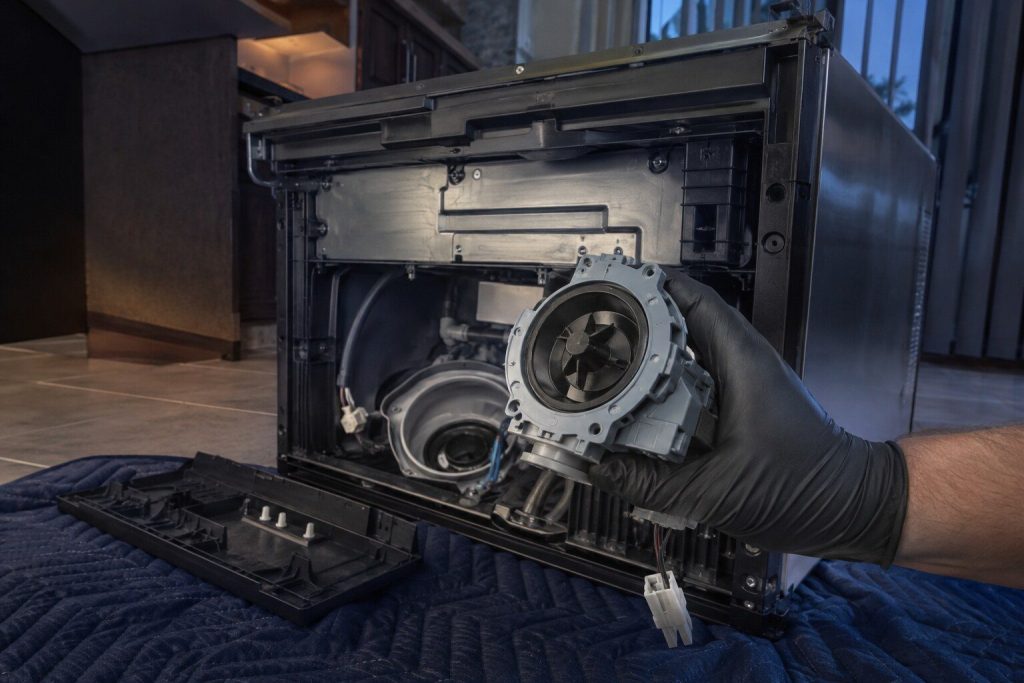
from $135 Dishwasher drain and pump repair
Water standing in the bottom of the tub at the end of a cycle, and more often than not the cause is outside the appliance. This maker groups almost all its dishwasher diagnosis under a single heading covering codes and blink patterns together, so on a machine without a display the lights are the message — and cutting the power to reset it clears the evidence along with the symptom.
- Filters and hose before the pump, and they end most of these
- On a machine with no display, the blink pattern is the code
- The high loop lost on a reinstall is the commonest installation cause
-
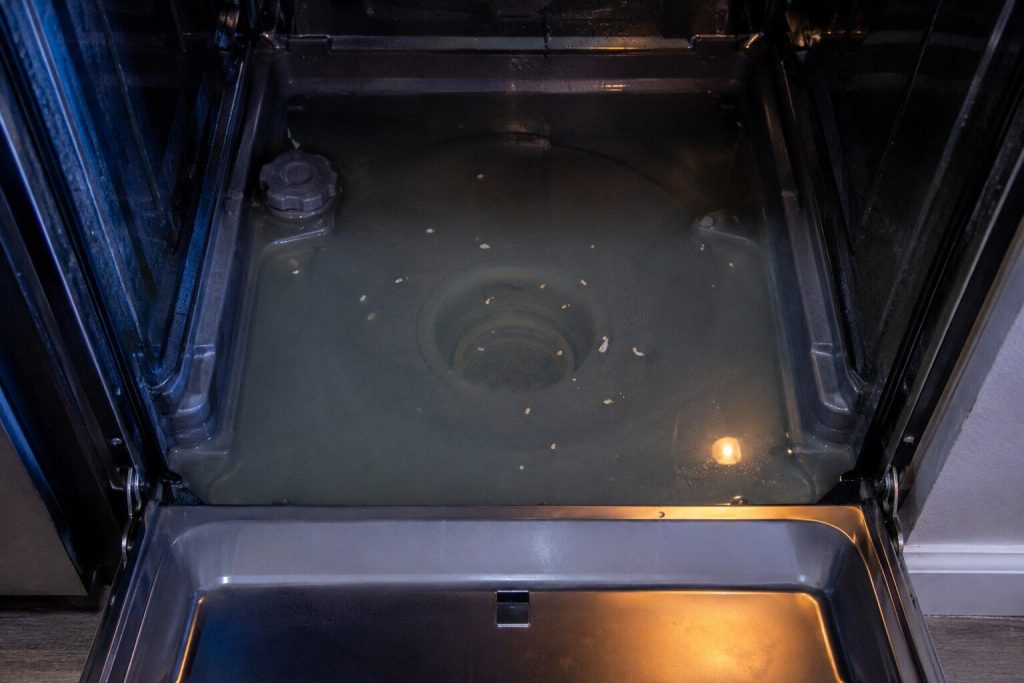
Water standing in the bottom of the tub after the cycle Dishwasher will not drain
An inch of water in the sump at the end of a cycle is normal on some machines and a problem on none of them. Standing water above the filter is the complaint, and on a Maytag dishwasher it is nearly always something between the tub and the sink drain rather than anything electrical.
- The filter in the base is the first place to look and it is designed to be removed by hand
- A new garbage disposal with its knockout plug still in place stops the dishwasher completely
- This machine may report the condition as a flashing light rather than as a number
-
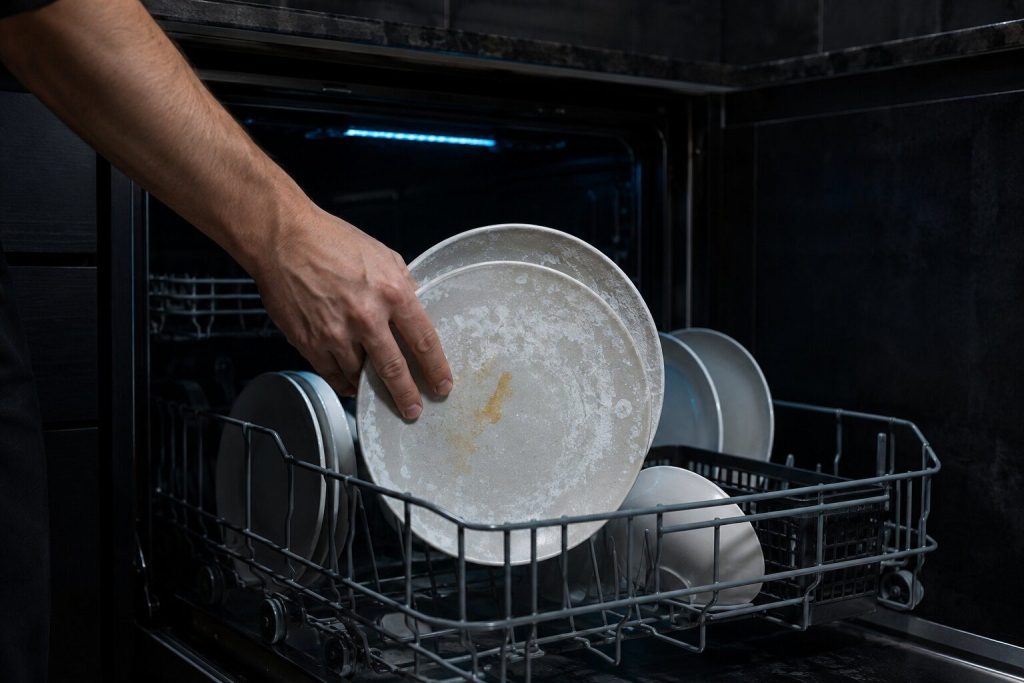
Film, grit or food left on everything after a full cycle Dishes come out dirty or gritty
Poor cleaning is rarely one thing that broke and usually three small things that added up. On a Maytag dishwasher the order is nearly always the same — water temperature, the spray arms, and the filter — and two of the three cost nothing to correct.
- Hot water has to reach the machine before the cycle starts, not during it
- A spray arm that cannot turn freely leaves a predictable pattern of dirty dishes
- Grit on everything usually means the filter, not the pump
-

from $119 Appliance maintenance
The visit that stops the other visits, and on equipment bought to last it is the one that pays for itself twice over. The list is short and specific: the condenser at floor level in a humid kitchen, the dryer duct that gets longer every year in effect if not in fact, the seals this climate works harder than the manual assumed, and the drain that must not stand. None of the four announces itself, and all four are cheaper to keep than to repair.
- Condenser, seals, drains, vents and leveling, on every appliance in the run
- The intervals are set to this climate rather than to the manual's calendar
- You keep a written note of what is aging and roughly when it will matter

Questions people ask about this
Why is my maytag dishwasher making a grinding noise only at the end?
The end of the cycle is when the drain pump runs hardest, so that timing points almost exactly at something solid sitting against the impeller. Take the filter out and look underneath it before you book anybody.
Can I keep using it?
For a load or two, but not indefinitely. Glass chips against a pump impeller wear the housing over weeks, and that turns a free removal into a part.
It grinds and does not drain.
Then the two are the same problem and it is the pump. Say both when you book, because a machine that grinds and empties is a different visit from one that grinds and does not.
I cleaned the filter and it still grinds.
Look under the filter as well as at it. Glass and stickers collect in the sump below, where the filter cannot catch them, and that is the space that actually feeds the pump.
It sounds like it is coming from the sink.
Run the disposal before the next cycle. A shared waste with something in the disposal makes a noise the dishwasher gets blamed for, and it is worth eliminating for free.
Common Problems
More guides like this one
-

A Maytag Washer That Sits on Sensing Is Measuring, Not Waiting
Sensing is the machine weighing the load before it decides anything. A machine that will not leave it is reporting one of three things, and each has a different first check.
Read more -
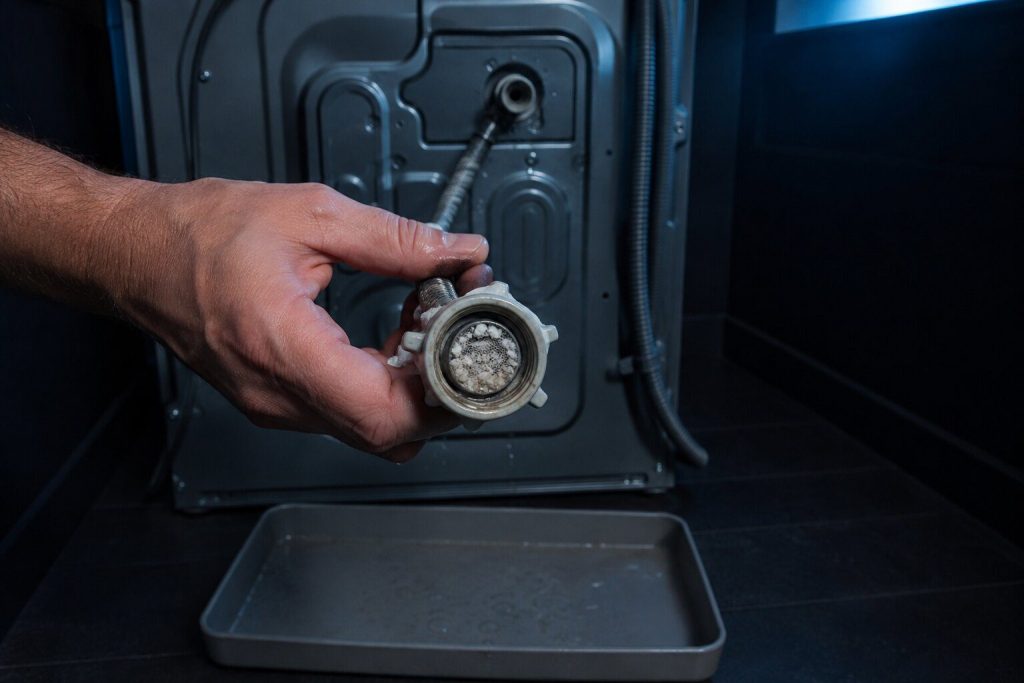
What Stops a Maytag Washer Filling, in the Order It Costs
Follow the water from the wall to the tub, the way a technician does. Four of the five things in that path cost nothing to check, and one of them is the answer surprisingly often.
Read more -
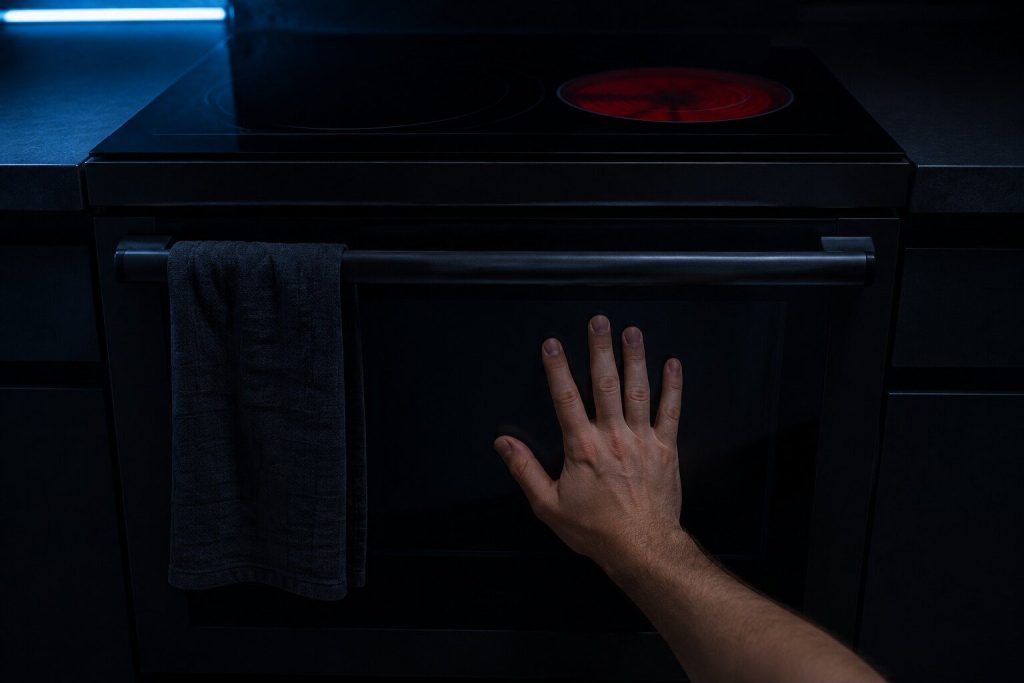
A Maytag Oven That Shuts Itself Off Is Protecting Something
Three completely different things stop an oven mid-bake, and which one it is depends on how long it ran, whether it came back, and whether anything appeared on the display.
Read more
Tell us the model number and what it is doing.
This article is based on:
- Official manufacturer documentation
- Internal repair procedures
- Technician repair history
- Company quality standards