Common Problems
A Maytag Oven That Shuts Itself Off Is Protecting Something
An oven that stops on its own has decided it should, and there are three reasons. The first is a timer: most of these shut the oven down after twelve hours of continuous baking, which almost nobody meets except at a holiday. The second is heat where it should not be — a cooling path blocked by a full drawer underneath, a cabinet built tighter than the specification assumed, or dust where the appliance breathes — and the oven cuts out to protect its own control. The third is the temperature sensor reading out of range, which usually leaves a code on the display. Three questions separate them: how long had it been running, did it come back after cooling, and was there anything on the display before it was cleared.
The full guide
Why does my maytag oven keep shutting off is a question about protection rather than failure. Nothing has broken and let go — something has been measured, judged unacceptable, and acted on. The job is working out what was measured.
Why does my Maytag oven keep shutting off? Three answers, and one number separates them
How long the oven had been running before it stopped is the most useful thing you know.
Twelve hours. Most of these shut down after a set period of continuous baking. It is deliberate, it is a safety feature, and the only households that ever meet it are the ones doing a holiday roast or a long overnight braise. Nothing is wrong.
One to three hours. That is the shape of a thermal protection. The appliance has been building heat somewhere it should not, and the control has cut the element rather than sit in it.
Minutes. Too fast for heat to have accumulated, which points at the temperature sensor reading out of range, or at the control. This one usually leaves something on the display.
Where the heat goes, and what stops it
An oven is a hot box with a control panel bolted to it, and the whole design depends on a path that carries heat away from the electronics rather than through them.
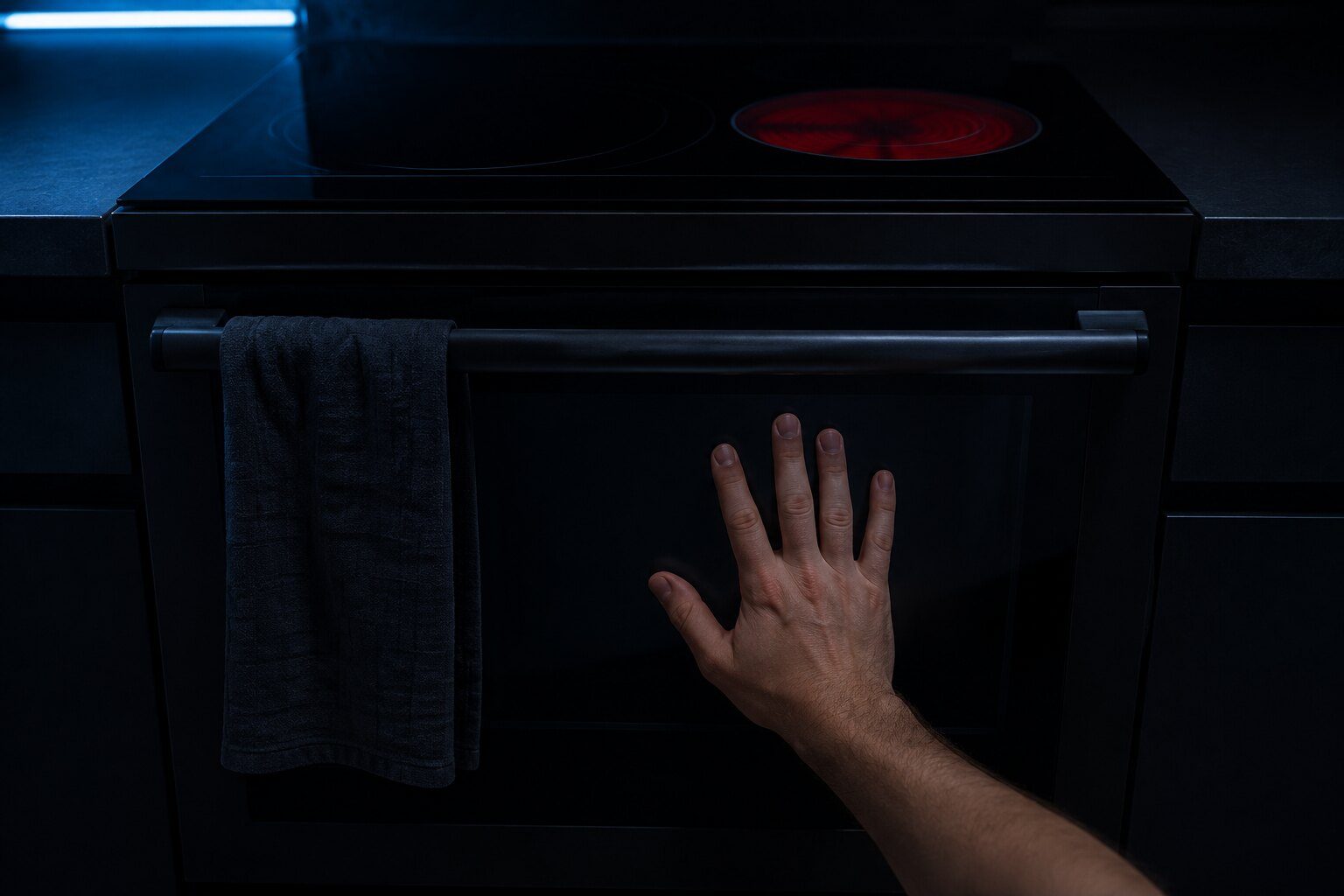
On a range, part of that path runs under the oven cavity, and the storage drawer sits in it. A drawer packed solid with sheet pans and cast iron changes the airflow, and on a long bake it is enough to trip the protection. Emptying it is free and it is worth doing before anything else.
On a wall oven the equivalent is the cabinet. These are specified with a clearance around and above them, and a joiner fitting one into an existing opening does not always know that. An oven that has shut down since it was moved or since a kitchen was refitted is worth measuring rather than diagnosing.
The third version is simply age: dust and cooking grease where the appliance breathes, slowly closing the gap over ten years.
The sensor, and why it usually announces itself
The temperature sensor is a small probe reaching into the cavity, and the control trusts it completely. If it starts reporting a value outside the range the control considers possible, the oven stops — because an oven that cannot tell how hot it is has no business making heat.
This version tends to arrive with a code on the display, and cooking is the half of this maker's range where codes are published in detail. That makes it the shortest diagnosis on the page, provided the code is written down before the breaker is touched.
It is also a small, stocked part and a short repair, which is worth knowing because "the oven shuts itself off" sounds considerably more expensive than it usually is.
The two questions we will ask you
Did it come back after it cooled, and was there anything on the display.
An oven that works normally again an hour later has told you it was heat. An oven that stays dead, or that stops again within minutes of restarting, has told you it was not. Those two outcomes send us to opposite ends of the appliance and neither requires anybody to open anything to establish.
The display question matters just as much. On the cooking side this maker publishes a condition for nearly everything, and our archive carries them. A code and a model number together usually let us name the likely part before anybody sets off.
After a self-clean cycle, treat it differently
If the oven started doing this shortly after a clean cycle, say so when you book, because the clean cycle is the most demanding hour an oven ever has. Eight hundred degrees for several hours is hard on the sensor, hard on the latch and hard on the control sitting above the door.
A meaningful share of the oven repairs we see follow a clean cycle rather than ordinary cooking. That is not an argument against ever using it. It is an argument for expecting the connection when something appears a week later, rather than treating the two as unrelated.
When to stop investigating
Two situations are worth booking rather than pursuing. An oven that stops within minutes every time, particularly with a code, has narrowed itself to a sensor or a control and there is nothing further an owner can safely check. And an oven that shuts down with the drawer empty, the cabinet clear and nothing on the display has exhausted the free explanations.
Everything else on this page costs nothing and takes an evening, which is a fair trade for finding out that the answer was a drawer full of baking sheets.
If it turns out to be a repair
What this leads to, and what it costs
Every job on this site is priced the same way: an on-site diagnostic first, the figure agreed in writing before anybody starts.
-
Oven will not heat
An oven that accepts a temperature and never reaches it is usually reporting the problem somewhere, because this is the half of the house where this maker prints numbers. Look at the display before you look at anything else — an F code here is a specific, published condition and it saves most of the guessing.
- A code on the display is worth writing down before the power is cut
- Gas and electric ovens fail in completely different places
- A demonstration mode left on will heat nothing at all and looks like a dead oven
-
Oven error code F3 E0
Maytag oven error code F3 E0: A resistor whose value moves with temperature, read by the control and converted into degrees. Which machines can raise it, what the maker publishes about it, and what to do next.
What this one means -
Oven error code CALL SERVICE
Maytag oven error code CALL SERVICE: Maytag publishes this code with the subsystem it belongs to and its own reset procedure, and it does not publish a mechanism behind it. Which machines can raise it, what the maker publishes about it, and what to do next.
What this one means -
Oven temperature sensor service
The cheapest of the oven rows and the correct answer to an oven that is out by a consistent amount. A sensor drifts rather than fails — it reads a little low for a year and then a lot — so the complaint arrives as baking that has gone wrong rather than as an appliance that has stopped. It is measured against the maker's own resistance figure rather than replaced on suspicion.
- The right answer when the oven is wrong by the same amount every time
- Measured against the maker's own figure rather than swapped on suspicion
- The connection behind the cavity is checked as carefully as the part
Questions people ask about this
Why does my maytag oven keep shutting off at Thanksgiving specifically?
Because that is very likely the only day it runs for twelve hours. Most of these shut down after a set period of continuous baking, by design and for safety, and it is not a repair.
It comes back after an hour.
That is a thermal protection doing exactly what it exists to do, and it means something is stopping the appliance losing heat. A drawer packed full underneath, or a cabinet with no ventilation gap, are the two we find most.
There was a code but I cleared it.
Then we work from behavior instead, which is slower but perfectly possible. If it appears again, photograph it before touching the breaker — the code is the shortest route to the part.
The cooktop above still works.
Useful, and it tells us the appliance has power and the surface controls are alive. On a range that separates the oven side from everything else in one observation.
Is it dangerous to keep using?
An oven cutting out to protect itself is behaving correctly, so it is not dangerous in the way it feels. It is telling you something is wrong around it, though, and running it repeatedly into that protection is hard on the control.
Common Problems
More guides like this one
-
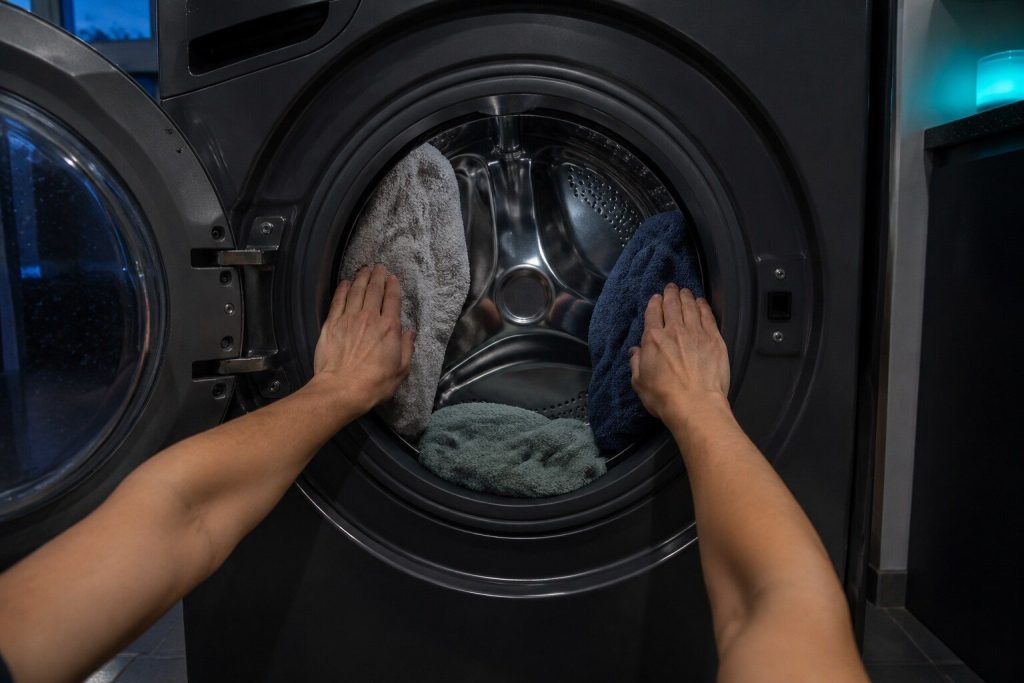
A Maytag Washer That Sits on Sensing Is Measuring, Not Waiting
Sensing is the machine weighing the load before it decides anything. A machine that will not leave it is reporting one of three things, and each has a different first check.
Read more -
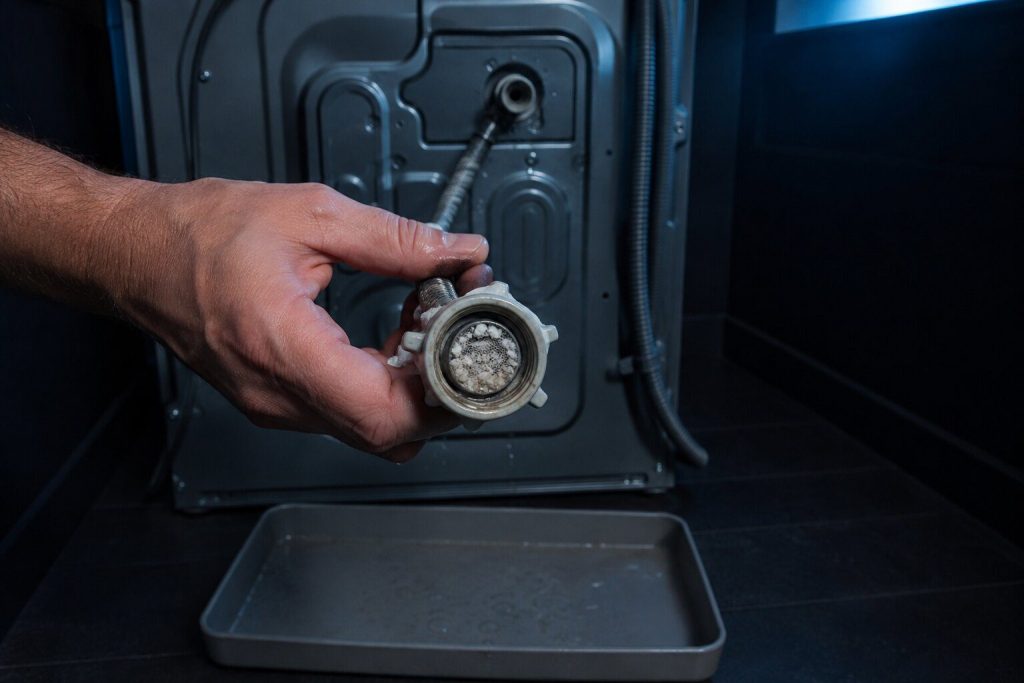
What Stops a Maytag Washer Filling, in the Order It Costs
Follow the water from the wall to the tub, the way a technician does. Four of the five things in that path cost nothing to check, and one of them is the answer surprisingly often.
Read more -
A Maytag Oven Slow to Preheat Is Heating the Room, Not the Food
Preheat is air first and the walls second, and most ovens chime when the air is right. So a slow preheat and a preheat that lies feel identical and are not.
Read more
Tell us the model number and what it is doing.
This article is based on:
- Official manufacturer documentation
- Internal repair procedures
- Technician repair history
- Company quality standards