Common Problems
A Maytag Ice Maker Not Filling: Follow the Water, Not the Mechanism
Water reaches the ice maker through four things in a line and there is no fifth. The house shut-off, which is the first thing to check after any plumbing work. The line itself, which is soft plastic and crushes against a wall when the cabinet is pushed back. The inlet valve at the back of the refrigerator, which either opens or does not. And the fill tube, which carries water the last few inches into the mold and is the one that freezes. A fill tube blocked with ice is not a part and it is not a repair — it is a thaw. What matters is finding why it froze, because a tube that iced once and was cleared will ice again within weeks if the reason is still there.
The full guide
Why is my maytag refrigerator ice maker not filling with water is a question with no published answer anywhere, and that is worth saying at the top. This maker documents no condition for any ice maker — we counted across the whole support library, and the number is zero. So everything below is measurement rather than translation.
Why is my Maytag refrigerator ice maker not filling with water? One path, four things on it
Unlike almost everything else in a refrigerator, the water supply is a straight line with nothing clever in it.
The house shut-off. Usually a small valve under the sink or on a cold line in a nearby wall, and very often a saddle fitting clamped onto a pipe. It gets closed for plumbing work and reopened by feel, and a quarter turn short is enough.
The line. Soft plastic tubing running behind the cabinet. When a refrigerator is pushed back after cleaning, the line goes with it, and it crushes flat against the wall or against its own coil.
The inlet valve. An electrically operated gate at the back of the appliance. It opens for a fixed number of seconds each cycle. It either does that or it does not.
The fill tube. The last few inches, carrying water into the mold. This is the one that freezes, and it accounts for more of these calls than the other three together.
Why the fill tube freezes, and why it comes back
The tube ends inside a compartment held below freezing, and the water arriving in it is barely above freezing already. Under normal conditions the fill happens quickly, the water lands in the mold, and the tube is empty again before anything can happen to it.
Anything that slows the fill leaves water sitting in the tube. Once a small amount freezes at the outlet, the next fill meets an obstruction, backs up, and freezes further along. Within a few cycles it is solid.
So the ice is a symptom, and the thing worth finding is what slowed the fill. A partly closed shut-off. A filter past its interval. A valve that is opening weakly. Or a freezer running colder than it should because a door seal is letting warm damp air in and the cabinet is overcompensating.
Clearing the ice without finding that is why people have this repair twice.
The dispenser is a free diagnostic
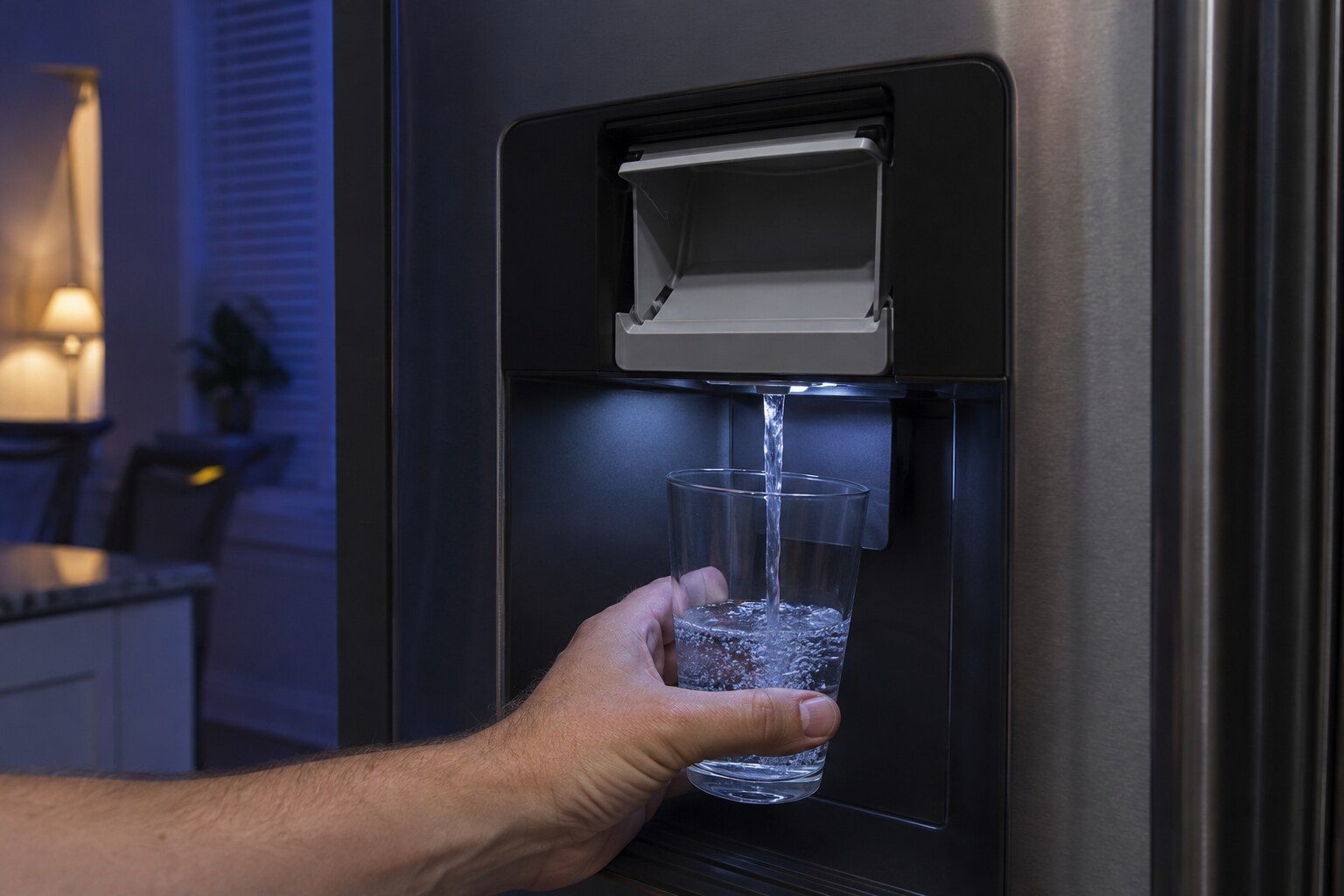
If the refrigerator also dispenses water at the door, use it. On most of these the dispenser and the ice maker share the line as far as the valve.
A dispenser that runs strongly tells you the shut-off, the line and the filter are all fine, and moves the whole question to the valve's ice side or to the fill tube. A dispenser that trickles tells you the opposite, and you have eliminated the ice maker entirely without touching it.
That takes ten seconds and it is the single most useful thing on this page.
The filter, and the water here
The water in this region carries enough mineral that filters load faster than the interval printed on the box. An ice maker is the first thing in the cabinet to notice, because it depends on a timed fill rather than on however long somebody holds a glass under the dispenser.
The progression is recognizable once you know it: cubes that get smaller, then cubes that are hollow or cloudy, then a fill tube that freezes, then nothing. A refrigerator that made beautiful ice for four years and now makes small cloudy cubes has very often just told you the filter is overdue.
Replacing it is something you can do today, and it is worth doing before anybody is booked.
What we actually do on the visit
The line is followed from the shut-off to the appliance and the pressure is checked at the valve rather than assumed. The fill tube is inspected and, if it is iced, cleared properly rather than by pouring water at it. The valve is tested for whether it opens and for how much it passes when it does.
And the freezer temperature is measured, because an ice maker in a compartment above five degrees will produce small, poor ice or none at all whatever the water is doing, and fixing the water on that cabinet fixes nothing.
When the ice maker itself is the answer
It happens, and it is diagnosed last rather than first. A module that will not cycle at all, with good water pressure at the valve and a clear fill tube and a properly cold freezer, has narrowed itself down honestly.
That is a stocked part on this badge and a straightforward replacement. What we will not do is fit one to a refrigerator whose filter is two years overdue, because the new module will make exactly the same ice.
If it turns out to be a repair
What this leads to, and what it costs
Every job on this site is priced the same way: an on-site diagnostic first, the figure agreed in writing before anybody starts.
-
Ice maker not making ice
Ice makers produce more calls than any other single part of a refrigerator and almost none of them are documented — this maker publishes no numbered condition for one anywhere. What it does publish is an indicator for the water system, and beyond that the diagnosis is water, temperature and the mechanism, checked in that order.
- Small or hollow cubes mean water arriving too slowly, not a broken ice maker
- A freezer above five degrees will not make ice reliably no matter what else is right
- The arm or the switch that says the bin is full stops production silently
-
Ice maker water line and fill valve service
Everything between the shut-off and the mold, which is where most low-ice calls actually end. These modules mind flow rather than pressure, so a tired filter or a saddle valve left half open will starve one gradually enough that nothing ever appears broken — production just falls month by month. This is the least expensive ice job on the list, and the one people most often assume will be the dearest.
- Flow measured at the machine, not judged from the kitchen tap
- Filter age is a real variable here and it is treated as one
- The kink a reinstall leaves in the line is looked for every time
-
Ice maker repair
The module inside a refrigerator — a fill valve, a mold, a heater to let the cubes go, and whatever tells it the bin is full. This badge sells no ice machine of its own, so there is no second version of this job and no page here pretending otherwise. Nothing is published for ice on any cabinet, so the whole diagnosis is measurement, and most of it happens upstream of the module rather than in it.
- The refrigerator's module: there is no standalone ice machine under this badge
- No published codes for ice at all — the fill is measured, not inferred
- The arm or sensor that stops production is checked before the module is blamed
-
Refrigerator error code H2O LIGHT
Maytag refrigerator error code H2O LIGHT: Maytag publishes this code with the subsystem it belongs to and its own reset procedure, and it does not publish a mechanism behind it. Which machines can raise it, what the maker publishes about it, and what to do next.
What this one means
Questions people ask about this
Why is my maytag refrigerator ice maker not filling with water after we turned the water off?
Check the shut-off was fully reopened rather than partly. A valve left a quarter turn short passes enough for a tap and not enough for an ice maker, which fills in short timed bursts and needs pressure rather than volume.
The water dispenser works fine.
That is genuinely useful and it narrows things considerably. The dispenser and the ice maker usually share the line as far as the valve, so a working dispenser means everything up to that point is fine and the fill tube or the ice maker side of the valve is where to look.
Can I pour warm water down the fill tube?
People do, and it often works. The risk is that a tube cleared with water alone freezes again in a fortnight, because nothing about the reason has changed. Worth doing, and worth telling us it worked.
How long should it take to make ice?
A cycle every hour and a half to two hours once the freezer is properly cold, so a full bin from empty takes the better part of a day. A new or recently defrosted refrigerator that has made no ice in three hours is not necessarily a problem yet.
Does the water filter matter?
More than most people expect. A filter well past its interval restricts flow steadily, and an ice maker is the first thing in the cabinet to notice — small, cloudy or hollow cubes before it stops altogether.
Common Problems
More guides like this one
-
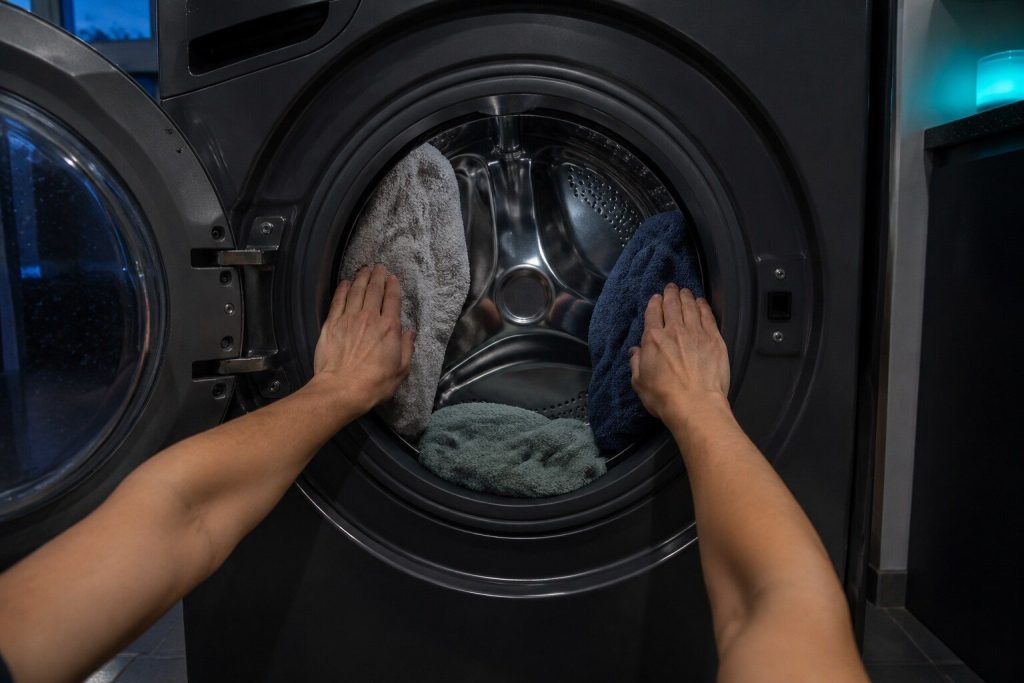
A Maytag Washer That Sits on Sensing Is Measuring, Not Waiting
Sensing is the machine weighing the load before it decides anything. A machine that will not leave it is reporting one of three things, and each has a different first check.
Read more -
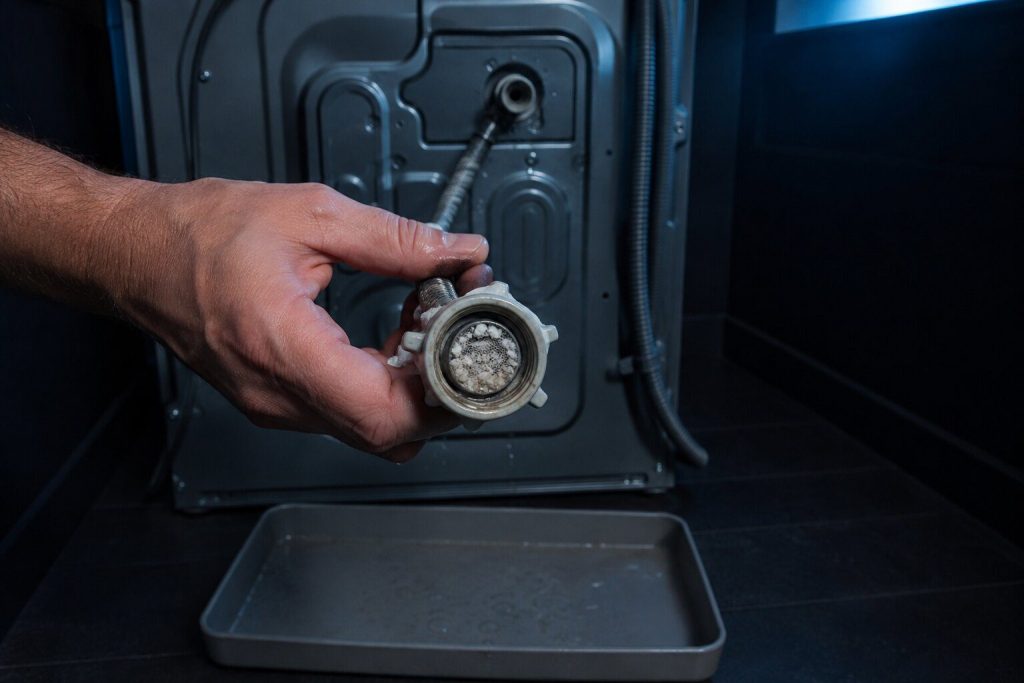
What Stops a Maytag Washer Filling, in the Order It Costs
Follow the water from the wall to the tub, the way a technician does. Four of the five things in that path cost nothing to check, and one of them is the answer surprisingly often.
Read more -
A Maytag Oven That Shuts Itself Off Is Protecting Something
Three completely different things stop an oven mid-bake, and which one it is depends on how long it ran, whether it came back, and whether anything appeared on the display.
Read more
Tell us the model number and what it is doing.
This article is based on:
- Official manufacturer documentation
- Internal repair procedures
- Technician repair history
- Company quality standards