Common Problems
A New Maytag Dryer That Dries Slowly Is Telling You About the Duct
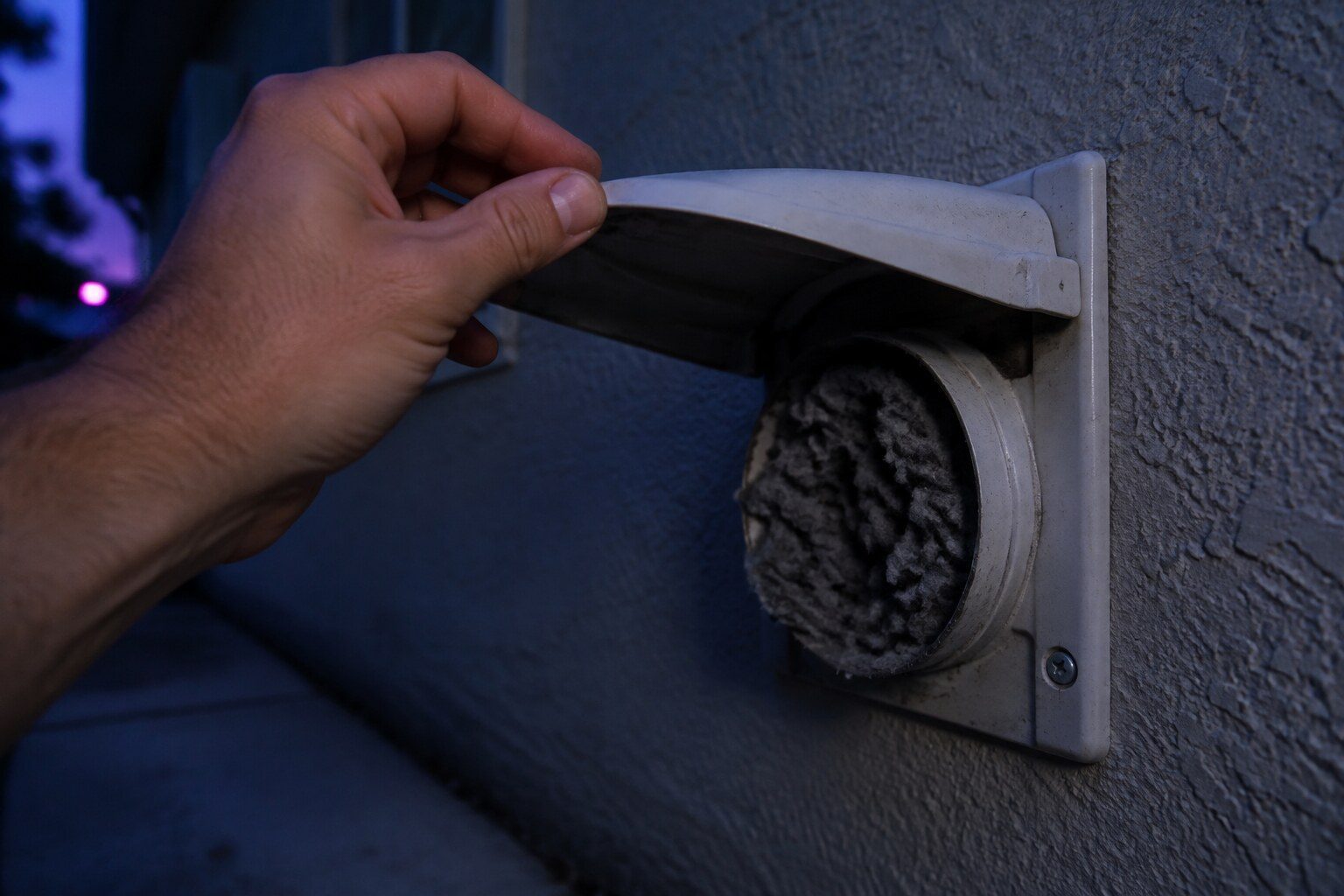
Because it inherited the old machine's duct, and the old machine had years to get used to it. A duct fills with lint gradually, and the dryer that lived with it slowed down so slowly that everybody adjusted their expectations without noticing. The new machine arrives with the manufacturer's airflow assumption and meets that same restriction on its first load. Nothing on the new dryer is wrong. Go outside while it runs and hold a hand in front of the wall flap: strong warm air means the run is clear and the problem is elsewhere, and weak air or a flap that barely moves is the whole answer. Check the flexible length behind the machine as well, because a new dryer pushed back into the same space often crushes its own duct against the wall in a way the old one did not.
The full guide
Why does my new maytag dryer take so long to dry clothes is one of the more satisfying questions on this site, because the answer is almost never the dryer and it is almost always something the owner can confirm in five minutes.
Why does my new Maytag dryer take so long to dry clothes? A new machine is a clean measurement
Everything that normally makes a dryer slow takes time to happen. Elements weaken. Rollers wear. Lint accumulates in the screen housing over years. A machine that has been in the house three weeks has had none of that.
So when a new dryer is slow, the interesting thing is what it did not bring with it: the duct. That was already there, it was already whatever condition it is in, and the old machine had spent years getting worse alongside it while everybody adjusted.
This is the part people find hard to believe, and it is worth stating plainly. Most households do not notice a dryer slowing down. They notice a dryer that was replaced and is now, apparently, worse than the one it replaced. In fact both machines were meeting the same restriction and only one of them arrived without a history.
The test that settles it
Start a load, then walk outside and find the flap on the wall.
It should be pushed firmly open, and there should be enough warm air behind it to feel clearly on the back of your hand from a foot away. That is what a healthy run does.
A flap that barely trembles, or one that is painted shut, screened over by somebody keeping insects out, or occupied by a nest, is the whole answer. There is nothing wrong with the machine and no part will improve it.
The one thing the new machine really can cause
A replacement cabinet is often a different depth from the one it replaced, and it goes back into the same space. If it is deeper, it pushes the flexible duct against the wall and crushes it flat.
The elbow immediately behind a dryer is the sharpest bend in the whole run and it is where lint is wettest and stickiest, so it is already the most restricted part. Flattening it as well takes a marginal run and closes it.
Pull the machine forward and look. If the duct is folded or squashed, replacing that flexible section with rigid metal and one fewer bend is worth more than anything anybody can do inside the cabinet.
Why South Florida makes this worse
Two things. The first is the ducting itself: a great many laundry closets here are interior, so the duct leaves the machine, turns, runs horizontally through a soffit, and turns again to reach an outside wall. Every bend costs the fan as much as several feet of straight run, and a route like that works when it is perfectly clean and stops working the moment it is not.
The second is the air the machine is breathing. A dryer draws from the room it stands in, and in a closed closet in August that air already carries most of the water it can hold. Air that arrives half loaded picks up less from the clothes, so the same machine with the same duct genuinely takes longer in summer. Leaving the closet door open through the cycle costs nothing and makes a measurable difference.
What a duct cleaning actually involves
It is not a vacuum pushed at the back of the machine. The run is cleared from both ends with a rotating brush on a flexible rod, the screen housing is emptied with a crevice tool, the flap outside is freed and checked for movement, and the machine is run afterward so the airflow can be felt rather than assumed.
That last step is the part worth insisting on. A duct that has been cleaned and not tested is a duct somebody hopes is clear. Standing outside with a hand in front of the flap after the work is the same test you did before it, and it either shows a difference or it does not.
If it does not, the honest answer is that the route is the problem rather than the debris in it, and that is a conversation about rigid duct and one fewer bend rather than about the appliance.
When it is not the duct after all
Two things look like this. A machine that stops early on an automatic cycle with damp clothes is reading the load as dry, and on a new dryer that is usually a setting rather than a sensor. And a machine that tumbles with no heat at all is a different complaint entirely, which on an electric machine three weeks old is very often half a breaker rather than anything in the cabinet.
Both are worth eliminating before anybody is called, and both take about ten minutes.
If it turns out to be a repair
What this leads to, and what it costs
Every job on this site is priced the same way: an on-site diagnostic first, the figure agreed in writing before anybody starts.
-
Dryer takes two or three cycles
This is the complaint that costs the most money and gets reported the latest, because it creeps. A dryer that used to finish a load in fifty minutes and now takes two runs has generally lost airflow rather than heat, and it has been losing it for a year.
- Almost always airflow — the duct, the screen, or the slot the screen sits in
- A moisture sensor that has scaled over will end cycles early on an automatic setting
- The running cost of this doubles quietly, which is why it is worth fixing rather than living with
-
Dryer vent cleaning
The whole run rather than the first three feet, and measured before and after so the visit has a number behind it. In this region the runs are long and horizontal more often than short and vertical, and they carry humid air, so lint packs rather than blowing through. It is the cheapest thing that keeps a vented dryer working and the one nobody schedules until the machine has already been called broken.
- The whole run, and a reading before and after
- Long flat runs in this region pack rather than clear themselves
- The outside flap is checked, and it is blocked more often than the pipe
-
Dryer error code AF
Maytag dryer error code AF: Every dryer this badge sells is vented, so the run behind the machine is the appliance's real constraint and this code is usually about the house rather than the hardware. Which machines can raise it, what the maker publishes about it, and what to do next.
What this one means -
Appliance installation
Fitted against the maker's own figures rather than pushed into a hole and switched on. There is a published cutout, a required clearance, an anti-tip fixing and a water connection, and equipment installed to those figures gives years of quiet service. Installed without them, it generates precisely the calls the rest of this site describes: doors that will not seal, coils with nowhere to breathe, laundry that never comes out dry.
- Cutout, clearance and anti-tip against the maker's published figures
- The dryer duct is inspected and measured at installation, not after the first complaint
- Run under load before we leave, not plugged in and left
Questions people ask about this
Why does my new maytag dryer take so long to dry clothes when the old one was fine?
The old one very likely was not fine — it declined so gradually that the household adjusted. A new machine has no history with your duct and simply reports what is there, which is why a replacement so often exposes a duct problem rather than causing one.
Should I return it?
Check the duct first. We see machines returned as defective that were reporting a blocked run accurately, and the second machine does exactly the same thing in the same closet.
The installer said it was fine.
A delivery crew connects the machine; almost none of them measure airflow, and none of them go outside to look at the flap. That is not a criticism, it is simply not part of the job.
It is a heat pump or ventless model.
Then the duct is not the answer and the condenser and its filter are. Those machines dry more slowly by design as well, which is worth knowing before it is called a problem.
Could it be the outlet?
On an electric dryer, half a double breaker gives you a drum that turns and no heat at all rather than slow drying. Slow with warm clothes is air; cold clothes are a different page.
Common Problems
More guides like this one
-
A Maytag Washer That Sits on Sensing Is Measuring, Not Waiting
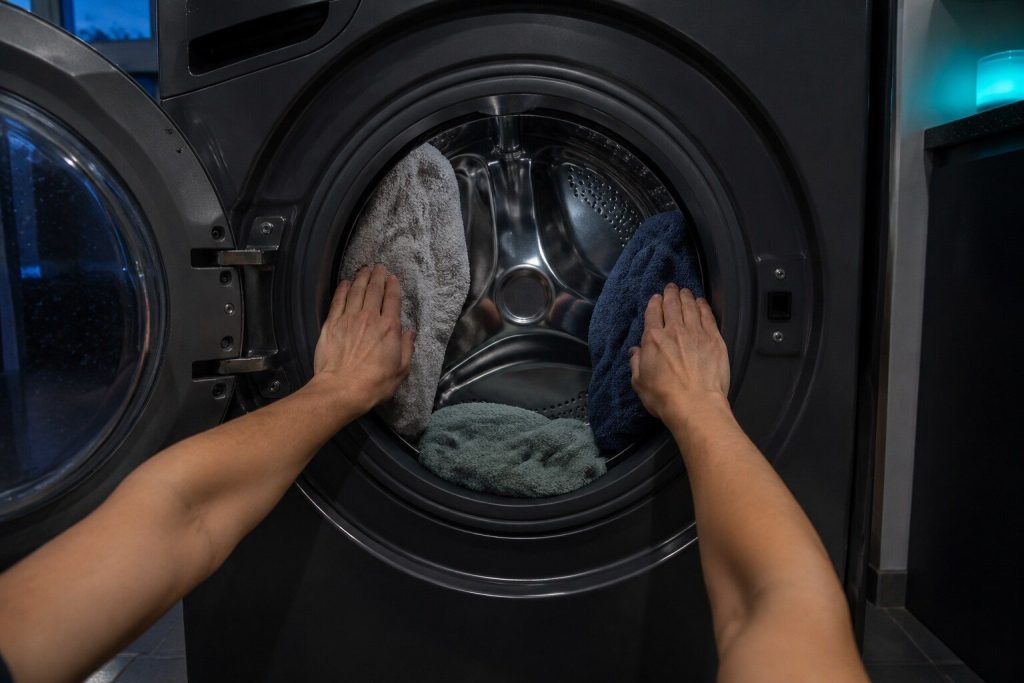
Sensing is the machine weighing the load before it decides anything. A machine that will not leave it is reporting one of three things, and each has a different first check.
Read more -
What Stops a Maytag Washer Filling, in the Order It Costs
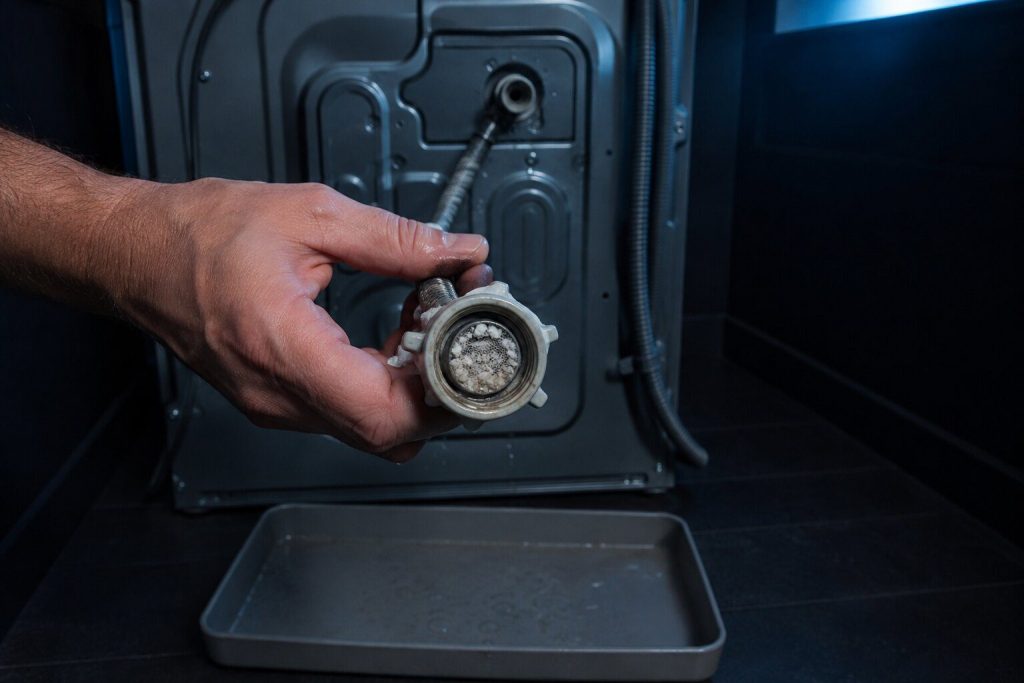
Follow the water from the wall to the tub, the way a technician does. Four of the five things in that path cost nothing to check, and one of them is the answer surprisingly often.
Read more -
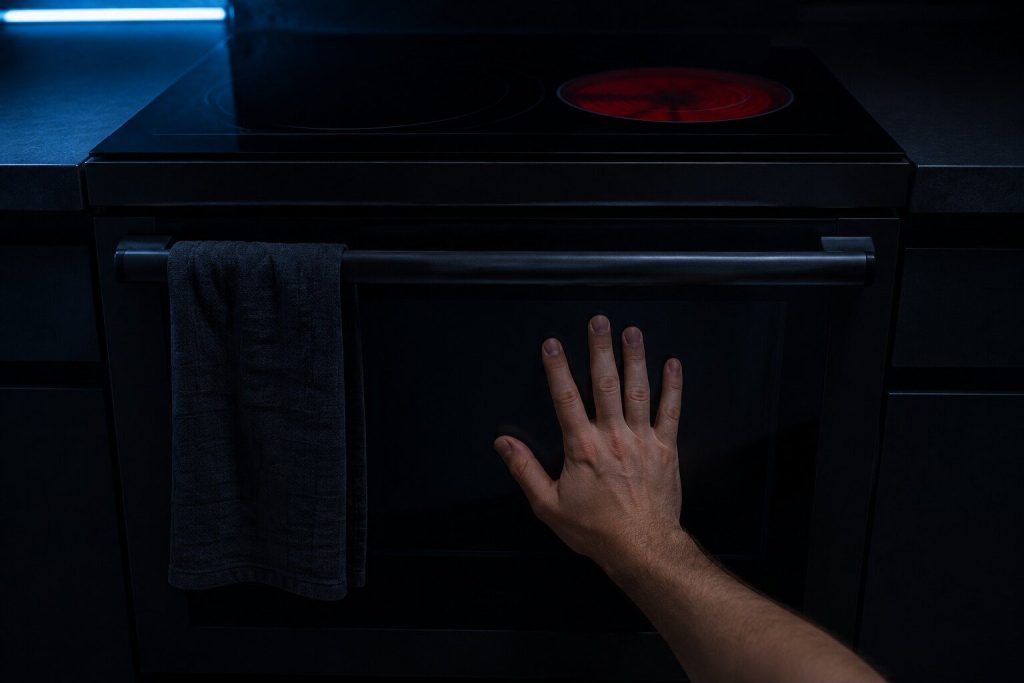
A Maytag Oven That Shuts Itself Off Is Protecting Something
Three completely different things stop an oven mid-bake, and which one it is depends on how long it ran, whether it came back, and whether anything appeared on the display.
Read more
Tell us the model number and what it is doing.
This article is based on:
- Official manufacturer documentation
- Internal repair procedures
- Technician repair history
- Company quality standards