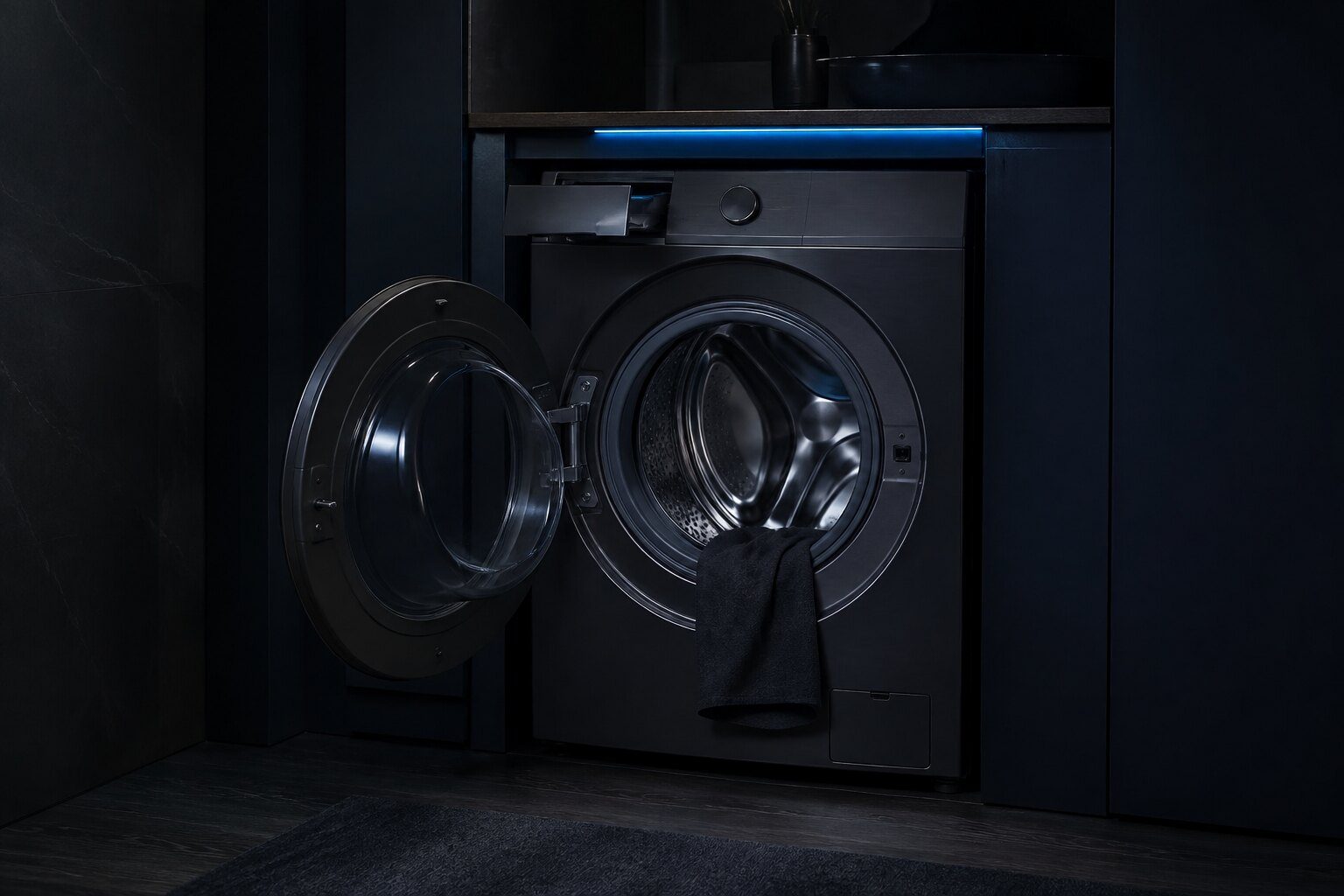
Maintenance & Prevention
How Often a Maytag Washer Needs Cleaning in a Humid Climate
Run the machine's own cleaning cycle monthly rather than quarterly, and treat three other things as part of the same routine. Wipe the door seal dry after the last load of the day, particularly the lower fold on a front-load machine, because that fold holds water and it is where the smell starts. Pull the detergent dispenser out and rinse it, because softener residue sets solid in there. And leave the door ajar between loads, which is the single most effective thing on this list and costs nothing. The interval printed on the box assumes a laundry room that dries out between loads. A warm South Florida closet behind a louvered door does not, and a machine in one grows a smell in about a week.
The full guide
How often should i clean my maytag washer has a printed answer and a real one, and the gap between them is entirely about where the machine lives.
How often should I clean my Maytag washer? The interval on the box, and why it is optimistic here
Manufacturers write a cleaning interval for a machine in a laundry room that dries out between loads. Quarterly is a reasonable figure for that.
A great many machines in this region are not in a laundry room. They are in a closet behind a louvered door, in a hallway, in a garage, or in a stacked pair wedged into a space that was designed for a coat rack. Those spaces stay warm and they stay damp, and a machine in one never fully dries.
Monthly is the honest interval here. It is not the manufacturer being wrong; it is the manufacturer describing a different environment.
The cleaning cycle is the smallest part of it
Run it, with the machine empty and whatever cleaner the manual specifies. It works, and it works on the tub, the drum and everything the water reaches.
What it cannot reach is the two places the problem actually lives.
The door seal. On a front-load machine the rubber boot has a fold that sits above the water line, and it holds a little water after every load. It also collects hair, lint and the occasional coin. That fold is the single most common source of a smelly washer, and no cycle will ever clean it because the water does not go there.
The dispenser drawer. Fabric softener sets into a residue that no amount of rinsing from inside the machine will shift. Pull the drawer out — most come out with a firm tug or a small release catch — and wash it under a warm tap with a brush.
Both take a couple of minutes and both do more than the cycle does.
The habit that beats all of it
Leave the door ajar between loads.
That is the whole thing, and it costs nothing. A closed drum in a warm closet stays damp indefinitely and every other item on this page is dealing with the consequences of that. An open one dries in a few hours and most of the problem never starts.
The same applies to laundry left in the drum. In August, overnight is long enough for a load to sour and for the machine to take the blame.
When the smell is telling you about the drain
This is the part worth knowing, because it is where a maintenance question becomes a repair question.
A machine that will not stay fresh however carefully it is cleaned is frequently a machine that is not emptying properly. Water sitting in the pump, the filter or the hose between loads is a permanent source, and cleaning the parts you can see does nothing about it.
The tell is a smell that returns within a day or two of a cleaning cycle, and often a load that comes out slightly wetter than it should. If that is the pattern, the drain is worth checking before another six cleaning cycles are spent on it.
The front filter, on the machines that have one
Front-load machines carry a drain filter behind a small panel at the bottom of the door opening, and the manual expects the owner to open it.
Almost nobody does. Ten years of hair, lint and coins collect there, and it is both a drain problem waiting to happen and a standing reservoir of exactly the kind of water this page is about.
Towels down first, a shallow pan underneath, and be ready for more water than the size of the door suggests. Twice a year is plenty.
Suds, which are a maintenance problem wearing a repair costume
Overdosing is the other half of this page and it is more common than anybody admits, because these machines use markedly less water than the ones people grew up with and the dose on the bottle is generous.
Excess foam does three things. It leaves residue that feeds exactly what the cleaning cycle is trying to remove. It stops the drain pump moving water, which the machine reports as Sud before you ever see it. And it eventually comes over the top of the tub, which arrives as a leak complaint.
Halving the dose for a month is free, and on a machine that has been overdosed for years it does more for the smell than any cleaning product. If the machine has been reporting Sud, that is not a suggestion, it is the machine already telling you.
What a year of this looks like
Twelve cleaning cycles, twelve minutes of wiping a seal, twelve dispenser rinses, two filter cleanings, and a door left open.
Against that: the two commonest maintenance-adjacent calls we take on this badge are a washer that smells and a washer that drains slowly, and they are frequently the same machine. Neither needs a part when it is caught this way, which is the argument for the calendar rather than the phone.
If it turns out to be a repair
What this leads to, and what it costs
Every job on this site is priced the same way: an on-site diagnostic first, the figure agreed in writing before anybody starts.
-
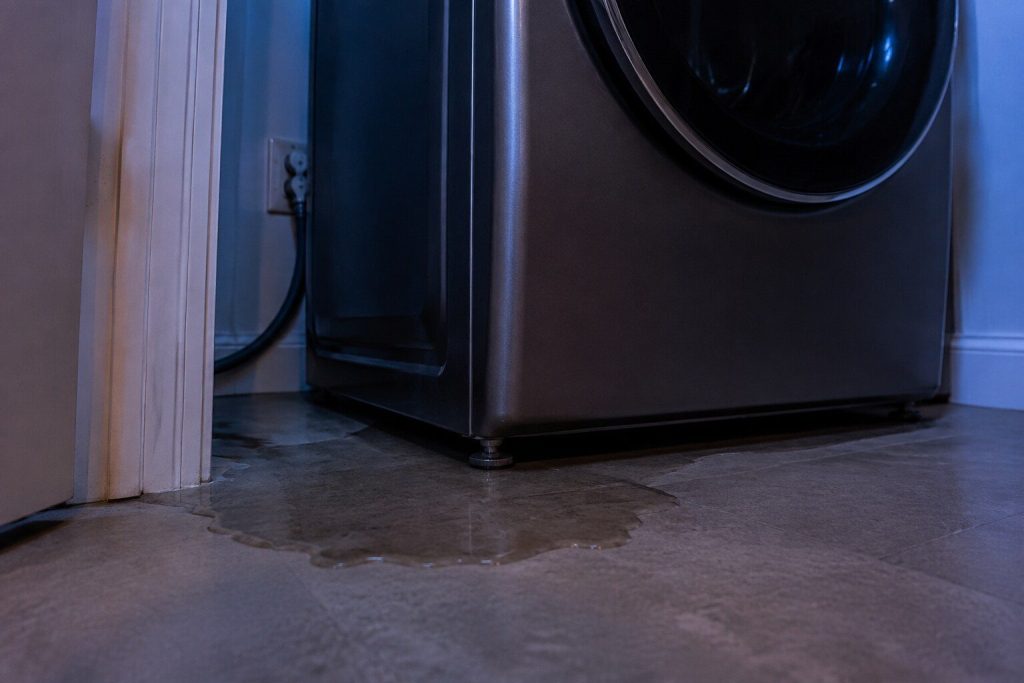
Water on the floor, and it is not obvious where it came from Washer leaking water
Water under a washer travels before it stops, so where you find it is almost never where it left the machine. The useful question is not where the puddle is but when it appears — during the fill, during the wash, or only when the machine empties. Each answer points at a different third of the machine.
- When it leaks matters more than where the water ends up
- Overdosing is a real cause on these machines and shows up as Sud before it shows up on the floor
- A leak on a tile floor in a second-floor laundry closet is worth stopping the same day
-
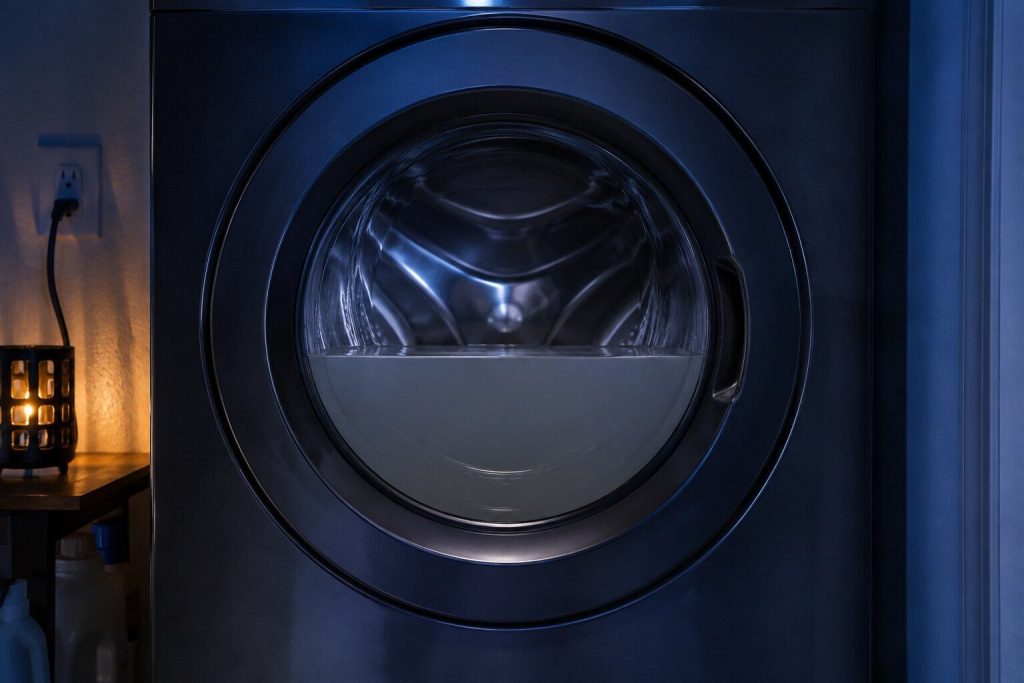
The cycle ended and the tub is still holding water Washer will not drain
A Maytag washer counts the seconds it spends emptying, and when the water has not gone by the time the cycle expected it to, the machine stops and prints a name for it. That name is worth more to us than the puddle is. Get it written down before the power goes off at the breaker, because the display forgets and the standing water does not.
- drn, F9E1 and LF are three labels for the same measurement — water that did not leave on schedule
- A tub that is full at the end of a cycle is a pump or a hose question, and it stays that way until both are cleared
- Front-load machines carry a filter behind the lower panel that most owners have never opened
-
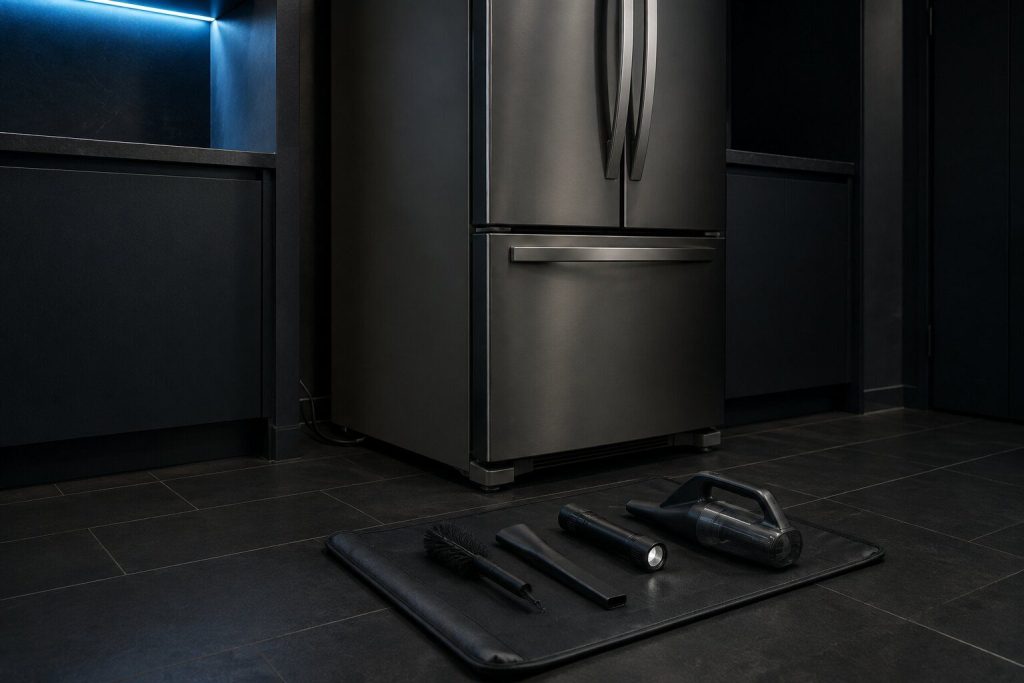
from $119 Appliance maintenance
The visit that stops the other visits, and on equipment bought to last it is the one that pays for itself twice over. The list is short and specific: the condenser at floor level in a humid kitchen, the dryer duct that gets longer every year in effect if not in fact, the seals this climate works harder than the manual assumed, and the drain that must not stand. None of the four announces itself, and all four are cheaper to keep than to repair.
- Condenser, seals, drains, vents and leveling, on every appliance in the run
- The intervals are set to this climate rather than to the manual's calendar
- You keep a written note of what is aging and roughly when it will matter
-
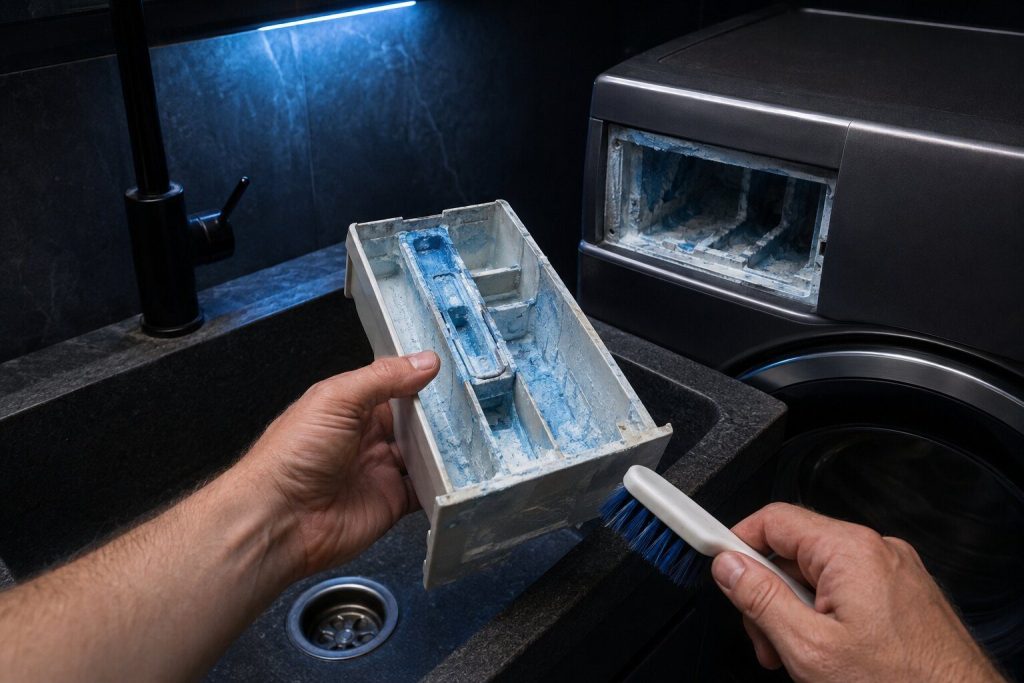
from $99 Washer excess suds service
The cheapest row on this site, and the one most often solved by explanation rather than by parts. A modern machine uses far less water than the one it replaced, so the detergent dose somebody learned twenty years ago is now several times too much — and this water carries enough mineral to change how it behaves. Suds cushion the load, confuse the level sensing, and produce a machine that runs long, rinses badly and smells.
- Usually dose and water rather than any part of the machine
- Suds confuse the level sensing, so this arrives as a cycle-length complaint
- A maintenance cycle and a dose change, and it is measured afterwards

Questions people ask about this
How often should i clean my maytag washer if it already smells?
Start with two cleaning cycles back to back, then wipe the seal and the dispenser by hand, because a cycle cannot reach either. If the smell survives that, the drain is worth looking at — a machine holding water between loads will not stay fresh however often it is cleaned.
Does the cleaning cycle actually do anything?
It does, on the tub and the parts the water reaches. What it cannot do is clean a rubber fold above the water line or a dispenser drawer, and those are exactly where the problem usually is.
Is vinegar as good as the tablets?
For a light film, it is reasonable. For an established biofilm in a door seal it is not, and it is worth knowing that before somebody runs vinegar through the machine six times and concludes the appliance is finished.
Does leaving the door open really matter?
It is the most effective thing on this page and it costs nothing. A closed drum in a warm closet stays damp indefinitely; an open one dries in a few hours. Every other item on this list is dealing with the consequences of the door being shut.
Top-load machines too?
Less urgently, because there is no door boot to hold water and the lid is usually left up anyway. The dispenser and the monthly cycle still apply, and so does not leaving wet laundry in the drum overnight.
Maintenance & Prevention
More guides like this one
-
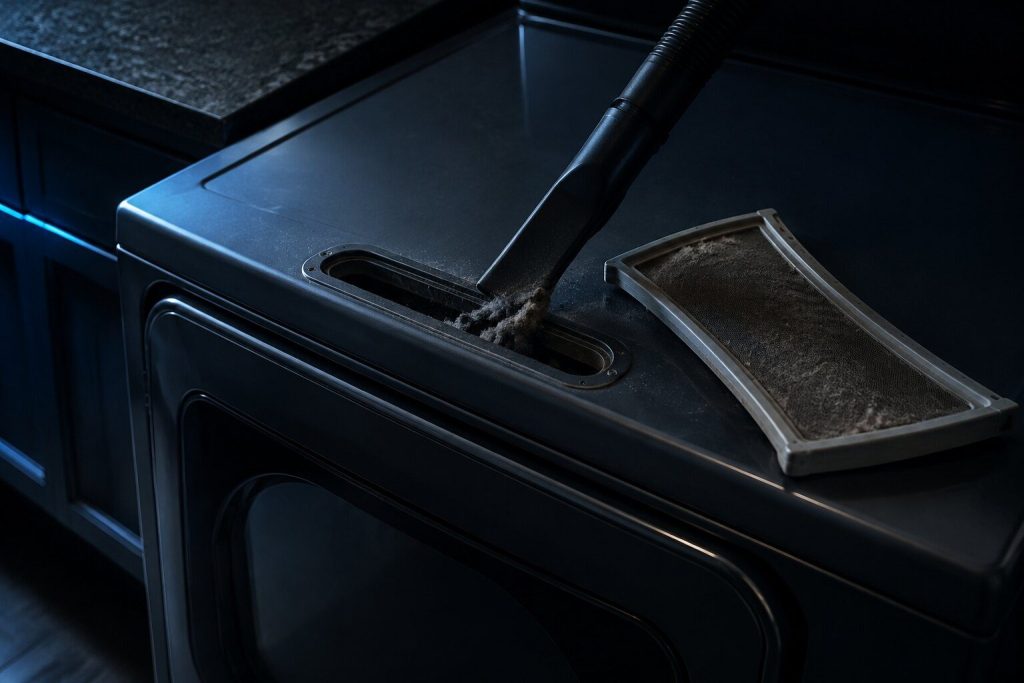
Cleaning a Maytag Dryer Vent, and Why the Screen Is Not the Duct
Four places restrict a dryer and only one of them is the screen everybody cleans. They block in a predictable order, and in this climate faster than the interval most people carry.
Read more -
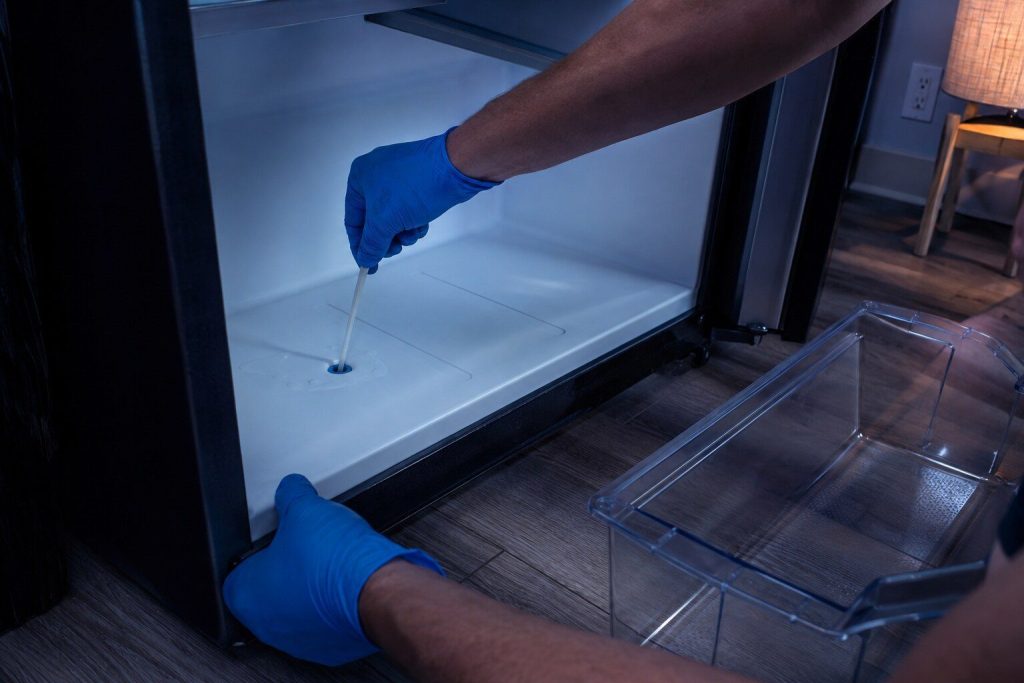
The Maytag Defrost Drain, and Why Water Appears Under the Crispers
A small tube carries meltwater out of the coldest part of the cabinet. When it ices at the outlet the water comes forward instead, and clearing it is not the hard part.
Read more -
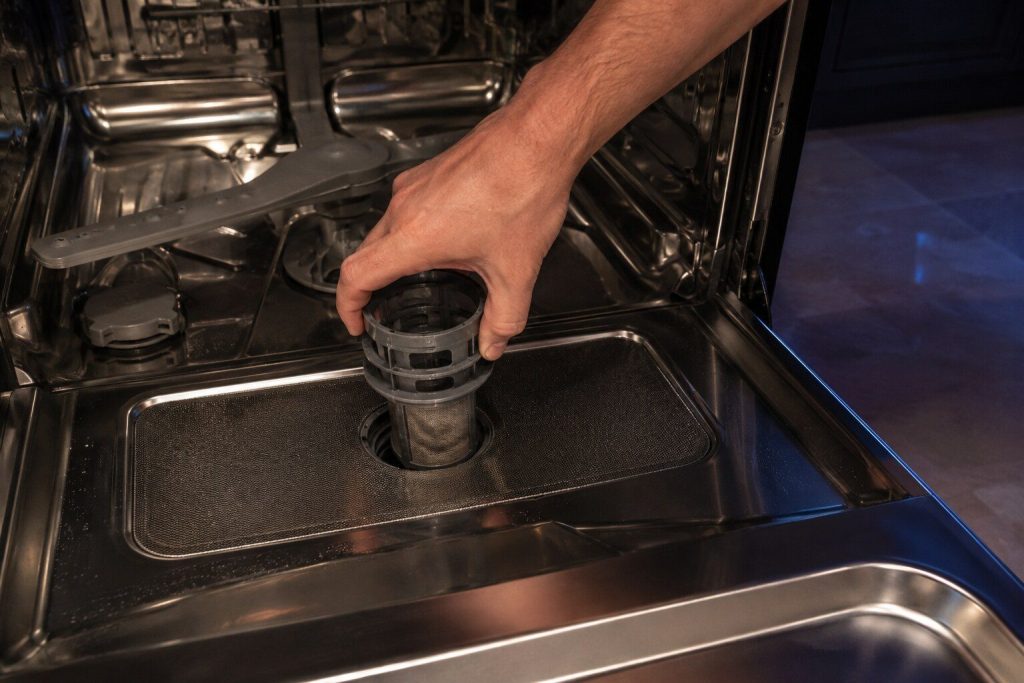
The Maytag Dishwasher Filter Nobody Knows They Have
It twists out by hand, it is meant to be cleaned, and doing it every couple of months prevents most of the drain calls we take on this badge.
Read more
Tell us the model number and what it is doing.
This article is based on:
- Official manufacturer documentation
- Internal repair procedures
- Technician repair history
- Company quality standards