
Common Problems
A Maytag Washer That Sits on Sensing Is Measuring, Not Waiting
Sensing is not a pause before the wash starts. The machine locks the lid, adds a small amount of water, moves the load a few times and reads how hard it is to move. From that it decides how much water the load needs and how long to run. A washer that stays on sensing for more than about ten minutes has not finished that measurement, and there are only three reasons it cannot: it never got the lid or door locked, it never got the water it asked for, or it cannot move what is in the drum well enough to read it. Look at the lid first, because that is the one that costs nothing. Then listen for water arriving in the first two minutes. Then open it and look at what is inside, because a single bath mat or one heavy comforter gives the machine nothing to read and it will keep trying rather than guess.
The full guide
Nobody calls to report a load-sensing routine. They call because the machine has been making a small noise for a quarter of an hour and the display has not changed, and what to do when maytag washer is stuck on sensing turns out to depend entirely on what the machine was trying to find out.
What to do when Maytag washer is stuck on sensing? What the machine is actually doing
Older washers filled to a mark and washed for a set time. These do not. The machine locks the lid, admits a small amount of water, moves the basket in short bursts, and measures how much effort each burst took. Heavy, dense loads resist more. From that resistance it works out roughly what is in there, and from that it chooses a water level and a cycle length.
That is why the routine exists and why it is worth understanding rather than waiting out: it is the machine gathering the two facts it needs before it can do anything at all. Until it has them, there is no cycle to run.
It also explains the behavior that confuses people most. A machine that adds a little water, stops, moves the drum, stops, and adds a little more is not faltering. That is exactly the sequence, and on a heavy cycle it can genuinely run several minutes.
The three things that stop it, in the order they cost
The lid or the door did not lock. The measurement involves moving the basket, so the machine will not start it with the lid reporting open. A lid that looks shut and is not, a striker knocked sideways by a laundry basket, or a switch worn out by ten thousand closings all produce a machine that sits there quietly and does nothing visible. Listen for the click. No click, no sensing.
The water did not arrive. Sensing needs a small fill before it can read anything. If a tap is half closed after plumbing work, or the screens behind the inlet hoses have scaled over, the water arrives too slowly and the machine waits for a level it never reaches. In this region the screens are the likelier of the two, because the water carries enough mineral to close them gradually over years.
The load cannot be read. One comforter, one bath mat, or a single pair of jeans gives the basket nothing balanced to move. The machine tries, gets a reading it does not trust, adds water, and tries again. This is the most common of the three by some distance, and it is entirely free to correct.
The ten minutes that name it
Open the lid and look at what is inside. If it is one heavy item on its own, spread it around the drum and add two towels for company, then close the lid and listen for the lock. That alone settles a large share of these.
If the load is reasonable, put your hand on the machine and listen through the first two minutes with the room quiet. Water arriving is unmistakable. Silence means the fill is the problem and the tap, the hose and the screen are where to start.
If neither of those explains it, run the machine empty on a drain and spin. An empty drum removes the load entirely. A machine that completes an empty cycle and cannot complete a sensing one has a load problem you have not found yet. A machine that stalls empty as well has told you it is the lock or the fill, and that is a specific enough answer to book on.
Why this badge in particular
These machines are kept a long time, and the parts that stall a sensing routine are the parts that wear with use rather than with age. A lid lock on a twelve-year-old washer has operated tens of thousands of times. An inlet screen has passed every gallon that ever entered the machine.
That is not a complaint about the make. It is the reason the free checks are worth doing first here: on a badge this common the failed part is usually cheap, stocked and quick, and the thing that stops the cycle is more often a habit than a component.
When to stop looking and call
Two signals are worth acting on rather than investigating. A machine that stalls on sensing with an empty drum and an audible lock has eliminated everything an owner can reach. And a machine that shows a report on the display while it sits there has named the problem for you, in which case copy the characters down exactly — including any space between them — before you cut the power, because the display forgets and the condition does not.
Neither of those is urgent in the sense of needing somebody tonight. Both are specific enough that we can usually say what to bring before anybody sets off, which is the difference between one visit and two.
If it turns out to be a repair
What this leads to, and what it costs
Every job on this site is priced the same way: an on-site diagnostic first, the figure agreed in writing before anybody starts.
-
Washer will not start or will not fill
Two complaints that arrive in the same phone call and are cleared in the same order: is the machine getting power, is it getting water, and is it being allowed to begin. A Maytag washer will not start a cycle it cannot complete, so a machine that sits there is often reporting something rather than broken.
- LF is the machine saying the water took too long to arrive, rather than a verdict on the machine
- A control that has locked itself out looks exactly like a dead machine
- A lid or door that will not report closed stops the cycle before it starts
-
Washer will not spin
A load that finishes sopping wet has usually not failed to spin at all — it has tried, found something it did not like, and given up on purpose. Maytag machines refuse to spin for three different reasons, and they feel identical from outside the door.
- The machine has to drain before it will spin, so a drain problem shows up first as a wet load
- A lid or door that is not locked stops the spin without stopping the wash
- UL and F5E2 both describe balance and lock rather than the motor
-
Washer error code LF
Maytag washer error code LF: Filling is timed rather than measured on most of this equipment, so the machine judges the water by the clock. Which machines can raise it, what the maker publishes about it, and what to do next.
What this one means -
Washer water inlet valve repair
A machine that fills slowly, fills on one temperature only, or will not fill at all. Most of it is upstream — screens, hoses and shut-offs that have not been turned since the machine was installed — and the valve itself is a modest part. In an older laundry closet the shut-offs are frequently the oldest thing in the room and worth replacing while the machine is out.
- Screens and shut-offs first: they are older than the machine in most closets
- Filling on one temperature only points at one half of the valve
- Measured under pressure, because a valve can pass at rest and stall under load

Questions people ask about this
What to do when maytag washer is stuck on sensing and the drum is empty?
That takes the load out of the argument entirely, which is the most useful thing you can establish. An empty machine that still will not leave sensing is a lock or a fill problem, and both of those are ordinary repairs with stocked parts.
How long should sensing take?
Two to ten minutes depending on the cycle, and the heavy-duty settings sit at the long end. Past about fifteen minutes with nothing else happening, something has stopped it rather than slowed it.
It sensed fine last week.
Then start with what changed. A load of bedding, a tap that was touched during plumbing work, or a lid striker knocked out of line by a laundry basket are the three that account for most of the sudden ones.
Can I skip sensing?
Some cycles use a fixed water level and will bypass most of it, and running one is a fair diagnostic — a machine that completes a fixed-fill cycle and cannot complete a sensing one has told us the measurement is the problem, not the wash.
Does the machine break if I leave it sensing?
No. It will keep re-trying and eventually stop, and nothing is damaged by that. What it does mean is that a load has been sitting wet in a warm closet, which in this climate is worth taking out the same day.
Common Problems
More guides like this one
-
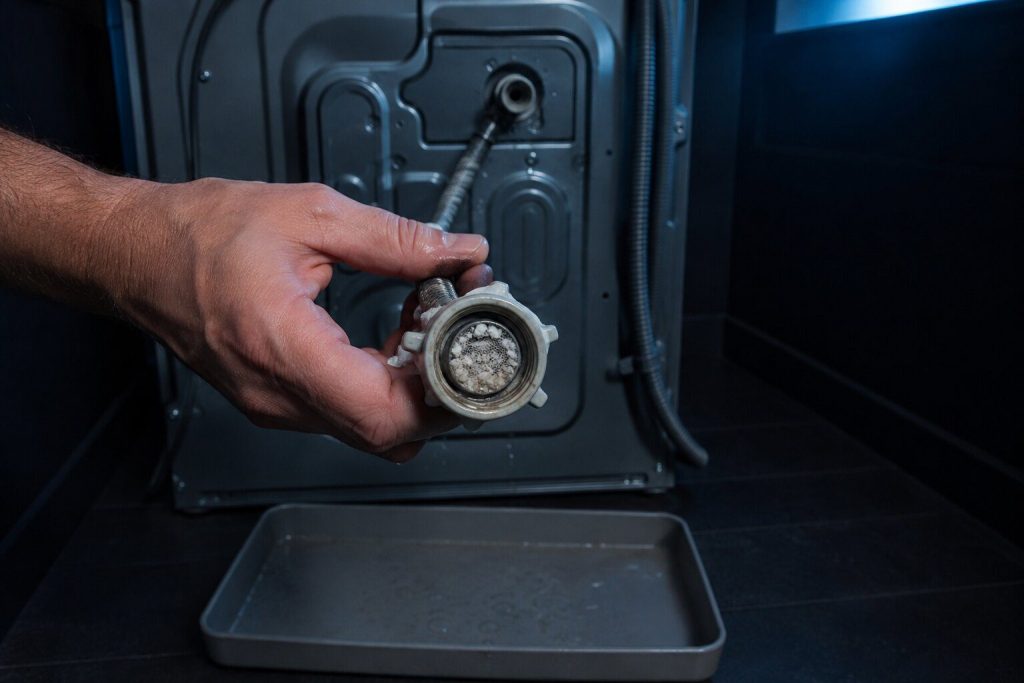
What Stops a Maytag Washer Filling, in the Order It Costs
Follow the water from the wall to the tub, the way a technician does. Four of the five things in that path cost nothing to check, and one of them is the answer surprisingly often.
Read more -
A Maytag Oven That Shuts Itself Off Is Protecting Something
Three completely different things stop an oven mid-bake, and which one it is depends on how long it ran, whether it came back, and whether anything appeared on the display.
Read more -

A Maytag Oven Slow to Preheat Is Heating the Room, Not the Food
Preheat is air first and the walls second, and most ovens chime when the air is right. So a slow preheat and a preheat that lies feel identical and are not.
Read more
Tell us the model number and what it is doing.
This article is based on:
- Official manufacturer documentation
- Internal repair procedures
- Technician repair history
- Company quality standards