MaytagRepair Miami

533 conditions · 11 appliances

What the machine is telling you, in the words it did not use.

Type the characters on the display, or find the light that is blinking. Both are in here. Filter by appliance first, because on this platform the appliance is half the answer — the same characters mean one thing on a washer and something else entirely on a wall oven.

  • 533 conditions in the archive
  • 11 of them lights rather than numbers
  • 11 appliances covered
  • 0 invented to fill a gap

All of them

The full index

Filter by appliance before you type. A washer, a dryer and a wall oven on this platform share a code vocabulary without sharing meanings, and choosing the appliance first turns a list of near-misses into one page.

Everything here was read from this maker's own published support, harvested under the crawl delay it asks for, and the harvest is in this repository. What is the maker's is quoted as the maker's and marked: the code strings themselves, which appliance shows each one, and the sentence the maker publishes about it. What is ours is the reading around that sentence, the order of the checks, and the judgment about what it usually turns out to be in a South Florida house. Where the maker publishes a condition and no mechanism behind it, the page says so instead of inventing one.

Two alphabets

Numbers on one side of the house, lights on the other

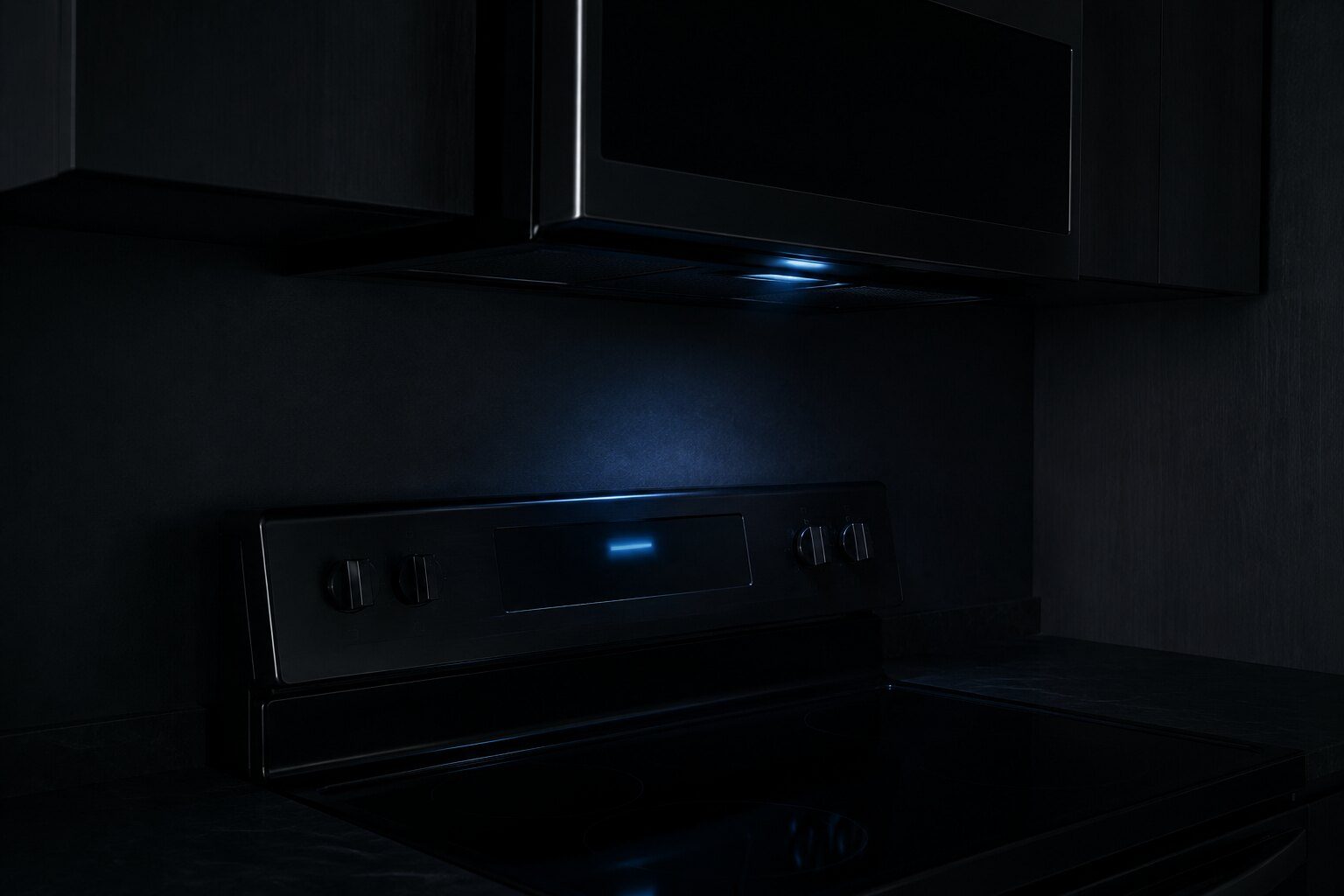
Most of this archive is numbered — 137 conditions on wall ovens, 129 on ranges, 105 on washers, 50 on microwaves, 48 on dryers, 41 on cooktops. But the dishwasher and the refrigerator largely do not use numbers at all. They flash a clean light, hold a control light, light the word H2O, or run a pattern across a row of status lights.

Those are kept in the archive as themselves. A blinking clean light is not translated into a number it never had, and it is not left out because it does not look like the others. It is an entry, and it is searchable in the same box.
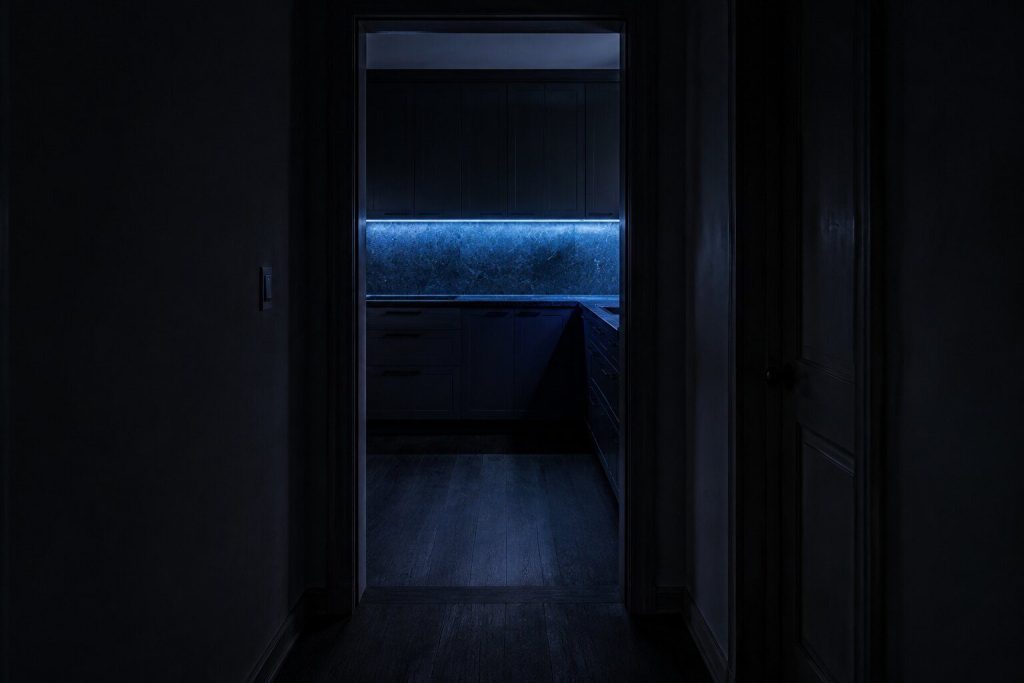
A blinking dishwasher
A dark hallway looking through a doorway into a kitchen lit only by one under-cabinet strip of ice-blue light, nobody in either room

And a silence

Nothing at all for a freezer or an ice maker

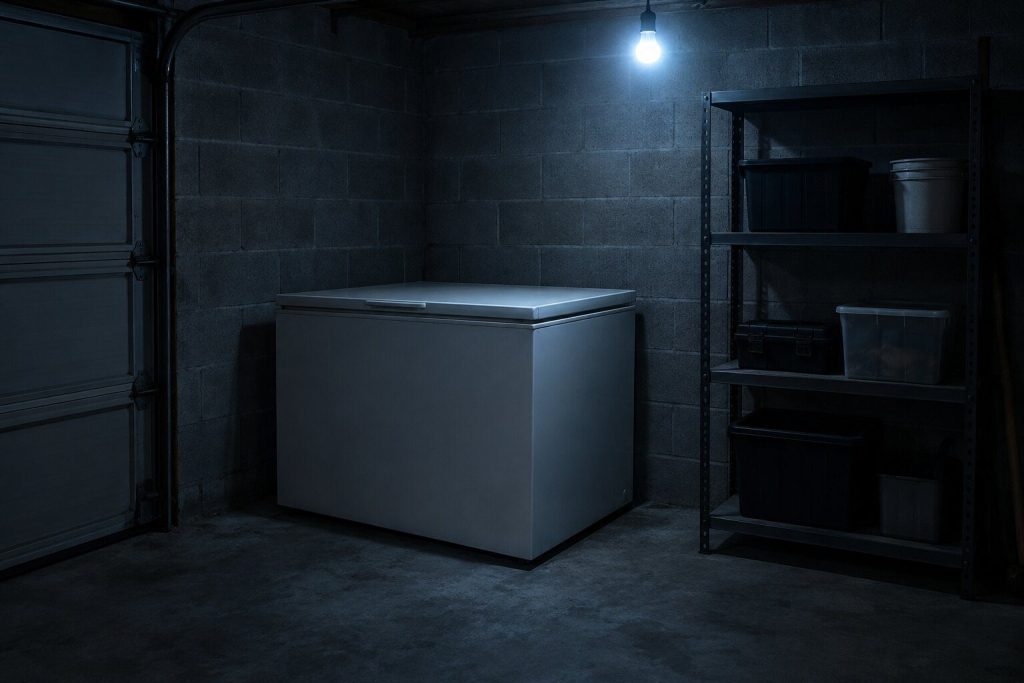
Across 509 refrigeration pages this maker publishes twenty-six lit or numbered conditions, and none of them belongs to a freezer, an ice maker or a top-freezer cabinet. We counted rather than assumed, and the count is zero.

So there are no pages here for them. Borrowing a refrigerator’s condition and printing it under a freezer would make this archive look complete and would send somebody down the wrong path in their own kitchen. The symptom pages carry those appliances instead, written around what can be measured rather than what could be read.

Symptoms instead
The corner of a garage at night with a chest freezer and a shelving rack against a bare block wall, a concrete floor and one bare bulb throwing cold light

Before you search

How to read a display accurately

Getting the characters right

  • Watch for several seconds. A display that alternates between two halves is showing you one condition, not two.
  • Note the spacing. F1 E1 and F1E1 are written differently by different control generations of the same appliance.
  • Photograph it. Nobody remembers the order of two halves an hour later.
  • Write it down before you cut power — the reset clears the display and leaves the condition.

If it is a light rather than a number

  • Which light: clean, control, sanitize, or a bar of status lights across the front edge.
  • How many flashes, and how long the pause between repeats.
  • Watch two full repeats before deciding what the pattern is.
  • A steady light and a flashing light are different reports from the same lamp.

Or start from what you can see

By behavior instead

If the machine shows nothing, or you would rather begin from what it is doing.

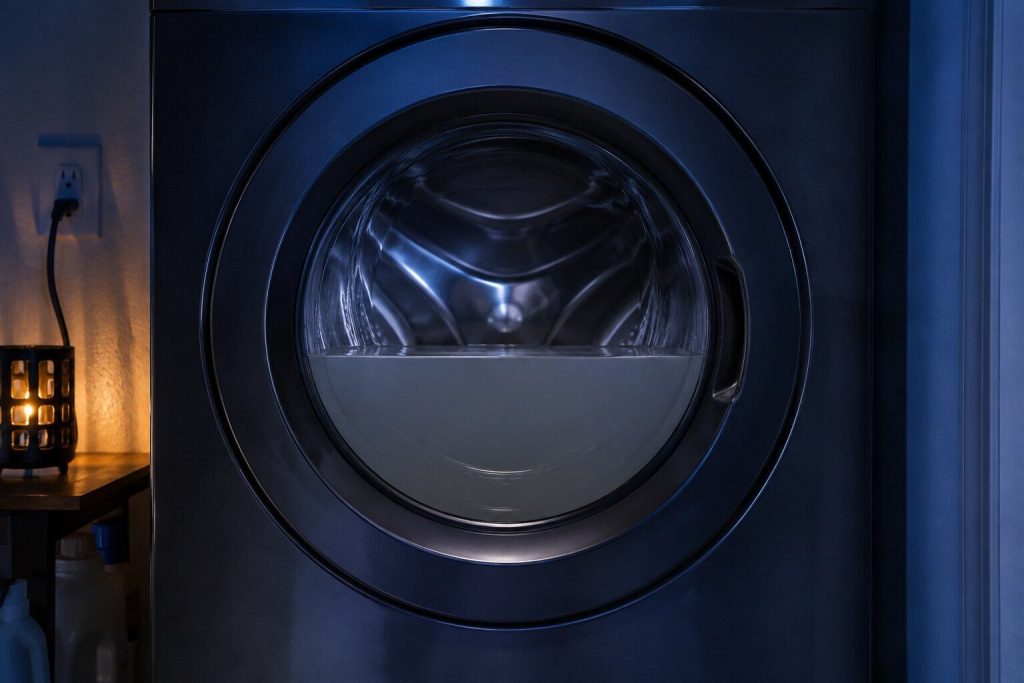
  • The round glass door of a washer half filled with still gray water that has stopped moving. Still is the word — the page is about water that did not leave on schedule rather than water leaving slowly.
    The cycle ended and the tub is still holding water

    Washer will not drain

    A Maytag washer counts the seconds it spends emptying, and when the water has not gone by the time the cycle expected it to, the machine stops and prints a name for it. That name is worth more to us than the puddle is. Get it written down before the power goes off at the breaker, because the display forgets and the standing water does not.

    • drn, F9E1 and LF are three labels for the same measurement — water that did not leave on schedule
    • A tub that is full at the end of a cycle is a pump or a hose question, and it stays that way until both are cleared
    • Front-load machines carry a filter behind the lower panel that most owners have never opened
    What it usually means
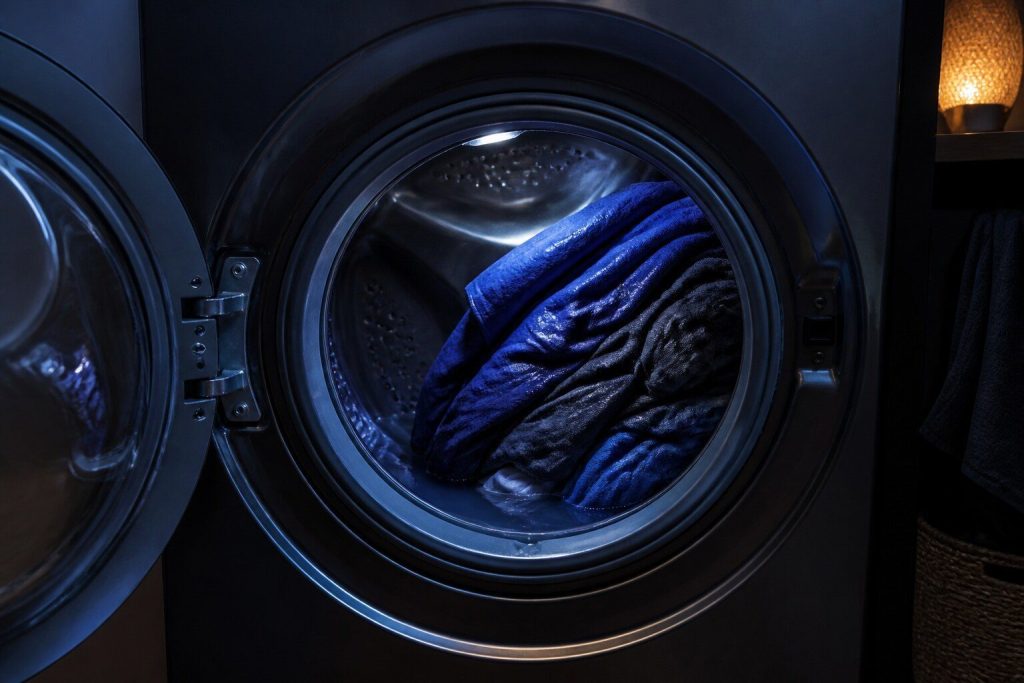
  • A drum standing open on a heavy load twisted to one side and pressed against the wall, water lying in the folds. A load gathered on one side is the commonest reason a spin is refused, and the frame is the cause and the symptom at once.
    The load comes out soaked and the drum never got up to speed

    Washer will not spin

    A load that finishes sopping wet has usually not failed to spin at all — it has tried, found something it did not like, and given up on purpose. Maytag machines refuse to spin for three different reasons, and they feel identical from outside the door.

    • The machine has to drain before it will spin, so a drain problem shows up first as a wet load
    • A lid or door that is not locked stops the spin without stopping the wash
    • UL and F5E2 both describe balance and lock rather than the motor
    What it usually means
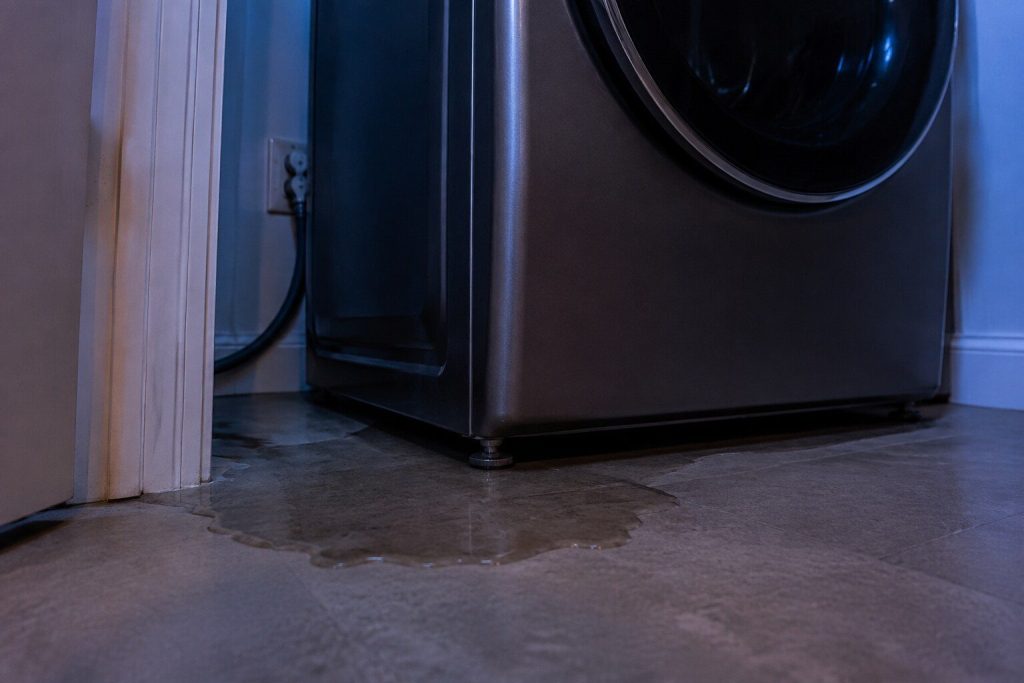
  • A dark wet patch spreading from beneath the front left corner of a washer with the leveling foot standing in it. Where the water ends up is not where it left, which is the sentence this page opens with.
    Water on the floor, and it is not obvious where it came from

    Washer leaking water

    Water under a washer travels before it stops, so where you find it is almost never where it left the machine. The useful question is not where the puddle is but when it appears — during the fill, during the wash, or only when the machine empties. Each answer points at a different third of the machine.

    • When it leaks matters more than where the water ends up
    • Overdosing is a real cause on these machines and shows up as Sud before it shows up on the floor
    • A leak on a tile floor in a second-floor laundry closet is worth stopping the same day
    What it usually means
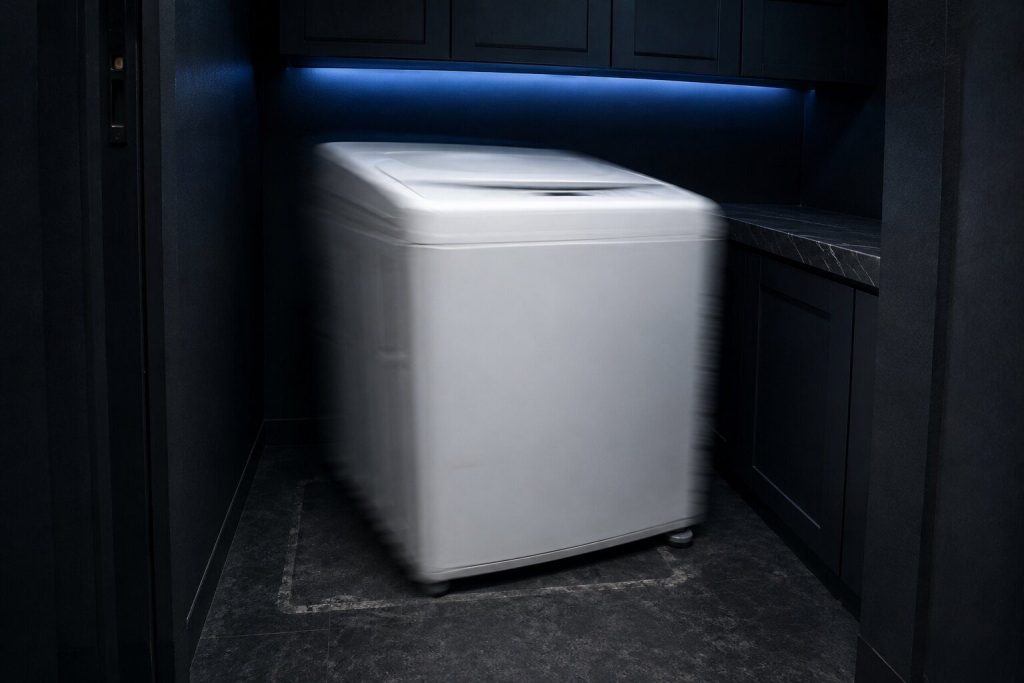
  • A white top-load washing machine part way through a spin in a dark laundry closet, shifted visibly forward and turned out of square, one front foot standing clear of the pale rectangle worn into the vinyl floor beneath it.
    It bangs on the spin and the machine has moved by the end of the load

    Washer shaking or moving across the floor

    A washer that walks is telling you the same thing whether it is six months old or fifteen years old — the basket is moving further than it should. What differs is why. On a new machine it is almost always installation, and on an old one it is almost always suspension. Very little else produces this.

    • A new machine that walks was leveled badly or still has its shipping bolts in
    • An old machine that walks has worn suspension, and it usually got louder first
    • UL is the machine's own word for a load it could not balance
    What it usually means
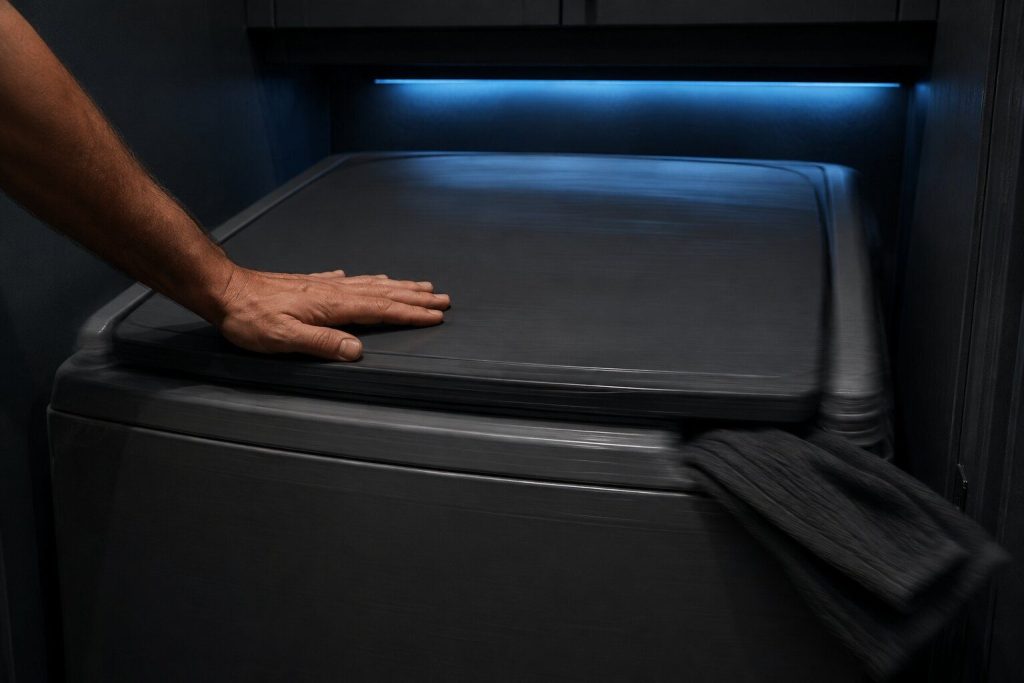
  • A hand laid flat on the top of a top-load washing machine at full spin in a dark laundry closet, the cabinet visibly blurred with vibration and the lid closed, a folded towel sliding off the corner of the machine.
    A grinding, roaring or rumbling that arrives with the spin and goes when it stops

    Washer loud on the spin

    Noise on the spin is the one complaint on this badge where the age of the machine changes the answer completely. These get kept a long time, and a bearing that has been talking quietly for a year is a different conversation from a machine that started grinding on Tuesday with a hairpin in the pump.

    • A noise that only exists at high speed is a bearing or a bracket, not a pump
    • A noise that exists during the drain as well is very often something small and loose
    • Bearing noise starts quiet and gets worse over months — the history is part of the diagnosis
    What it usually means
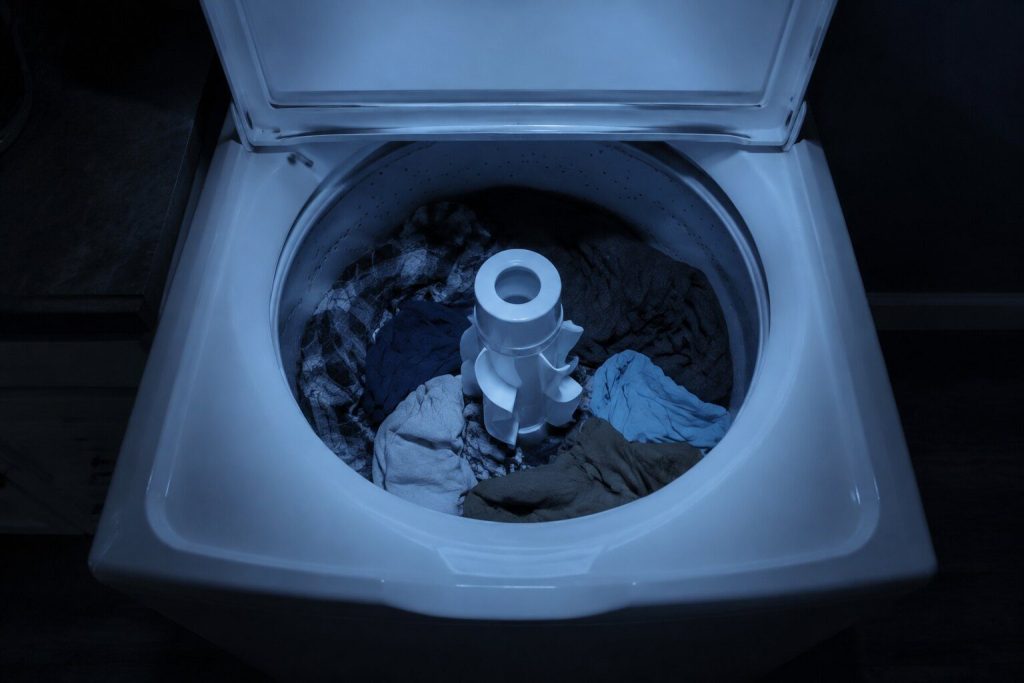
  • Looking down into the open tub of a white top-load washer at night: a load of laundry lying loose and completely dry around a tall finned center agitator post, not a drop of water anywhere in the basket.
    The cycle is selected and nothing happens, or the drum stays dry

    Washer will not start or will not fill

    Two complaints that arrive in the same phone call and are cleared in the same order: is the machine getting power, is it getting water, and is it being allowed to begin. A Maytag washer will not start a cycle it cannot complete, so a machine that sits there is often reporting something rather than broken.

    • LF is the machine saying the water took too long to arrive, rather than a verdict on the machine
    • A control that has locked itself out looks exactly like a dead machine
    • A lid or door that will not report closed stops the cycle before it starts
    What it usually means
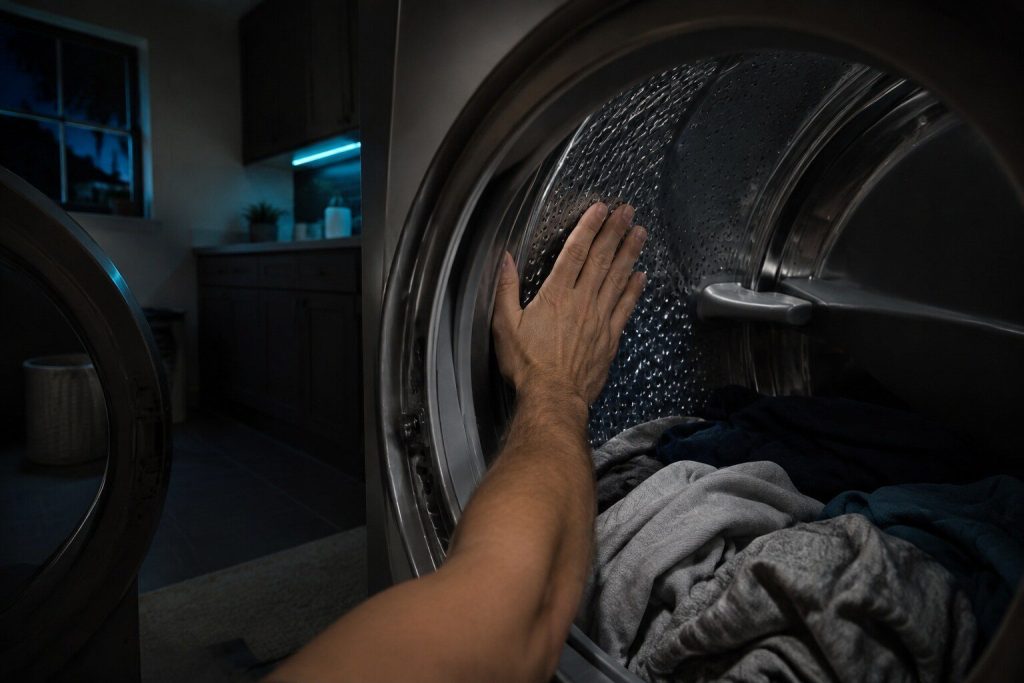
  • A hand laid flat against the inside wall of a dryer drum at the end of a cycle, the laundry around it plainly cold. The drum turned for the full cycle and made no heat, which is the distinction this page rests on.
    The drum turns for the full cycle and the clothes come out cold and damp

    Dryer runs but does not heat

    A dryer that tumbles without heating has one of two very different problems, and which one it is depends on whether it burns gas or draws current. On an electric machine the drum and the heat are on separate legs of the same circuit, which is why a machine can run perfectly and still produce no warmth at all.

    • An electric dryer that turns but never warms is very often half a breaker rather than a part
    • A gas dryer that tries and gives up is an ignition sequence you can hear from the laundry room
    • AF is a restricted vent, and a restricted vent looks exactly like a heating problem
    What it usually means
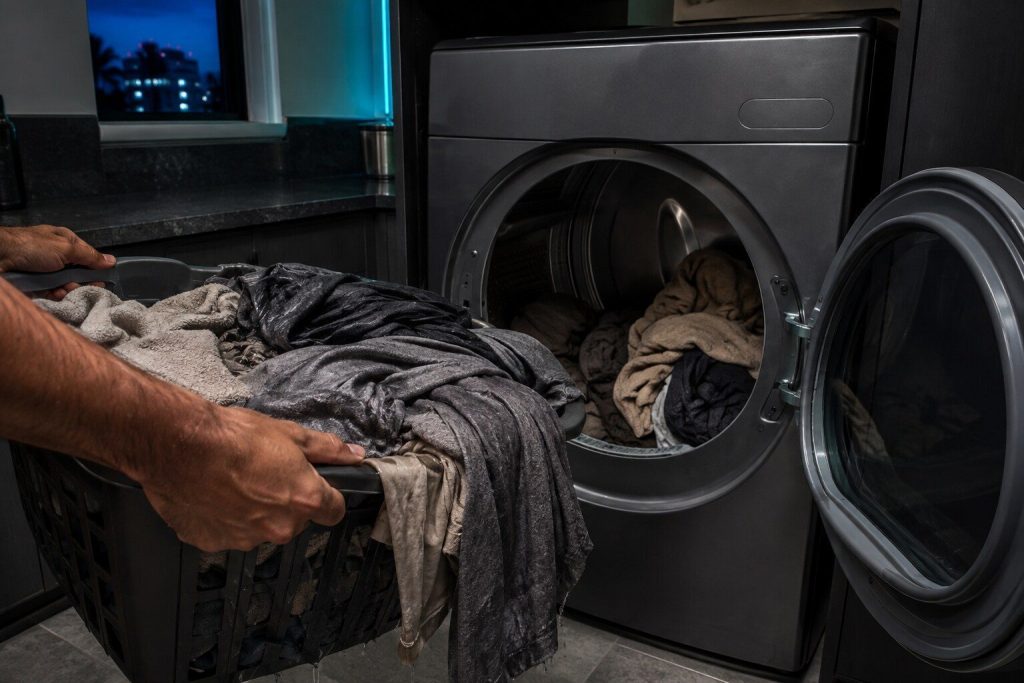
  • A basket lifted out of a dryer whose contents still hang heavy and damp with the drum behind half loaded. Everything came out warm and wet, which is the complaint in one frame rather than a duct nobody can see.
    Everything comes out damp and the load goes round again

    Dryer takes two or three cycles

    This is the complaint that costs the most money and gets reported the latest, because it creeps. A dryer that used to finish a load in fifty minutes and now takes two runs has generally lost airflow rather than heat, and it has been losing it for a year.

    • Almost always airflow — the duct, the screen, or the slot the screen sits in
    • A moisture sensor that has scaled over will end cycles early on an automatic setting
    • The running cost of this doubles quietly, which is why it is worth fixing rather than living with
    What it usually means
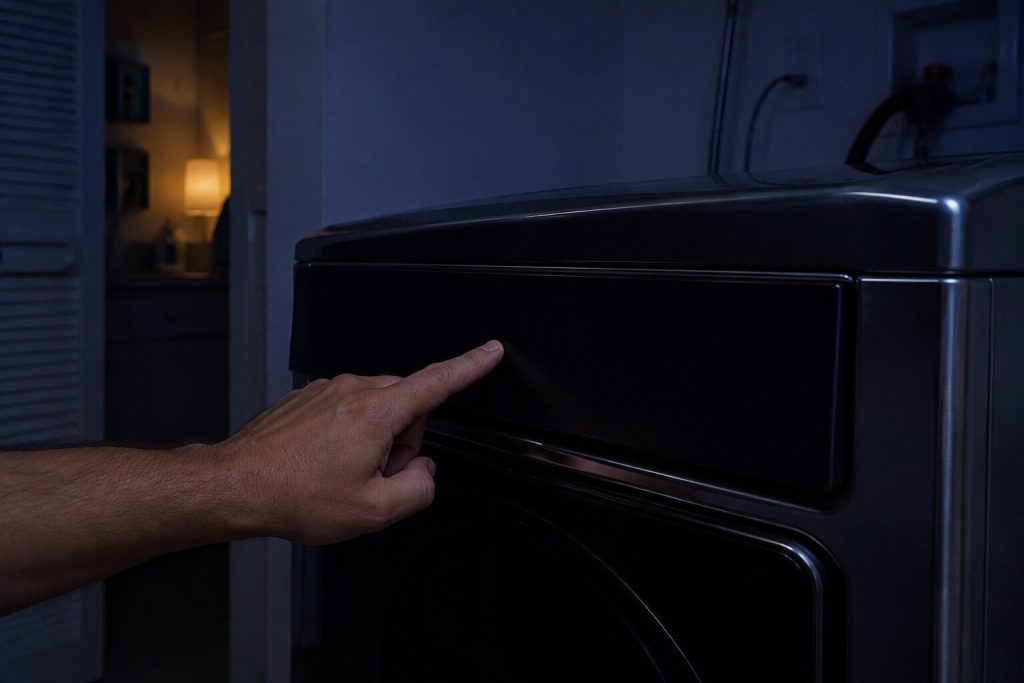
  • A finger pressed against the dark fascia of a dryer with nothing lit under it anywhere, the laundry closet in deep blue shadow
    The panel may light, the drum does not turn, and pressing start does nothing

    Dryer will not start

    A dryer that will not begin is either not being allowed to or not being powered, and the two look identical from the front. On this badge the first question is always whether the display is showing anything at all, because a dark panel and a lit one send us to opposite ends of the machine.

    • PF means the machine lost power mid-cycle and is waiting to be told what to do
    • A control lock stops everything and is easy to set by accident
    • A door that does not latch is the most common reason a dryer sits still
    What it usually means

Worth knowing

A condition is an address, not a diagnosis

What the appliance prints is where to look, not what to replace. A condition reported on the water inlet means the machine did not get the water it expected in the time it expected — which is a closed tap, a scaled inlet screen, a hose, or a valve, in that order of likelihood and cost. Replacing the part the code seems to name, without checking the four things in front of it, is how somebody ends up with a new valve and the same problem.

Before you search

The questions this archive gets asked

The code cleared itself. Should I still book?

If the behavior has gone as well, watch it for a few days. If the behavior is still there and only the display cleared, book — a condition that appeared once during a storm is a different thing from one that appears every cycle.

I cannot find my code here.

Check the appliance filter first, and check the spacing. If it is genuinely not in the archive, tell us what it is when you call — this archive is what the maker publishes, and some machines show service-mode readings that were never meant for owners.

Does a code mean the machine needs a part?

Often not. A good share of them name a condition rather than a component, and the condition frequently turns out to be a tap, a hose, a filter or a duct. Every page here puts the free checks before the parts.

My dishwasher blinks instead of showing a code.

That is normal on this badge and those patterns are in this archive as entries of their own. Count the flashes and the pause before you reset anything, because the reset erases the report and keeps the problem.

In more detail

What this archive is, and what it is not

Quoted where it is quoted

The strings, the appliances they belong to and the maker’s own sentence about each are the maker’s, marked as such. The reading around them is ours: what the condition tends to mean in practice, which free checks come before which parts, and what it usually turns out to be in a house on this coast with this water and this humidity. Keeping those two apart is the whole discipline of a page like this.

Nothing invented

Where the maker names a condition and publishes no mechanism behind it, the page says so. Where it publishes no condition at all — every freezer and every ice maker on this badge — there is no page, and the symptom archive carries the appliance instead. An archive that quietly fills its own gaps is worse than a shorter one, because you cannot tell which parts of it to trust.

Have the code and the model ready.

Those two together usually let us name the likely part before anybody sets off, which is the difference between one visit and two.

This article is based on:

  • Official manufacturer documentation
  • Internal repair procedures
  • Technician repair history
  • Company quality standards
Call (305) 853-8839